Most people think raising chickens is simple…
Feed them, give them water, collect eggs.
But if you’ve had chickens for any amount of time, you already know that’s not the full picture.
The difference between a healthy, productive flock and constant problems almost always comes down to one thing:
Consistency
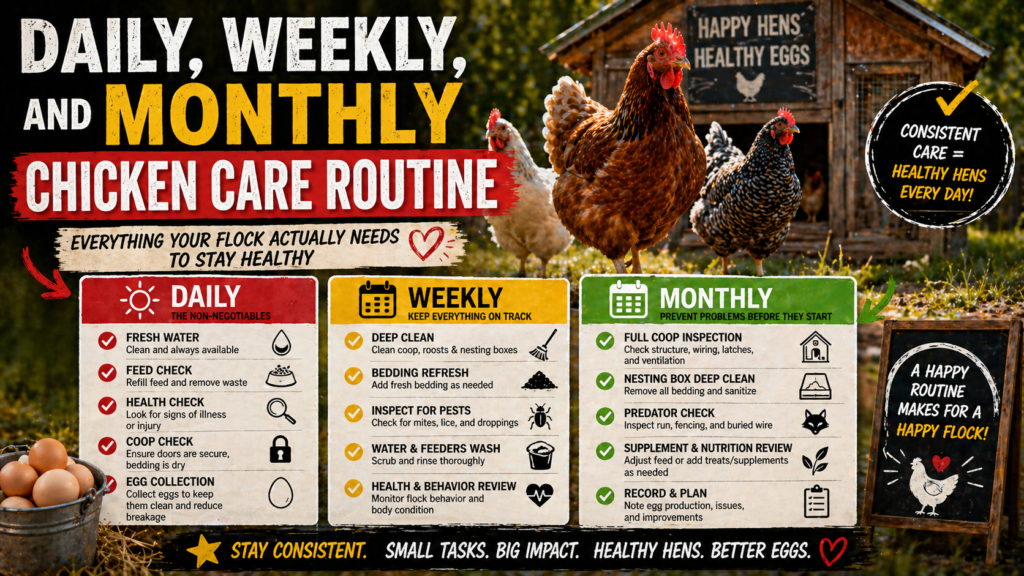
Once you lock in a simple routine, problems drop off fast, eggs stay consistent, and your flock becomes way easier to manage.
Quick Answer
A proper chicken care routine includes daily feeding and watering, weekly coop cleaning and behavior checks, and monthly health inspections. Staying consistent prevents most common issues like egg loss, mites, stress, and poor flock health. When a health inspection reveals mites, the Chicken Mite Spray: What Actually Works and How to Use It Right outlines the treatment choices and retreatment considerations.
Daily Chicken Care (Where Most Problems Start or Are Prevented)
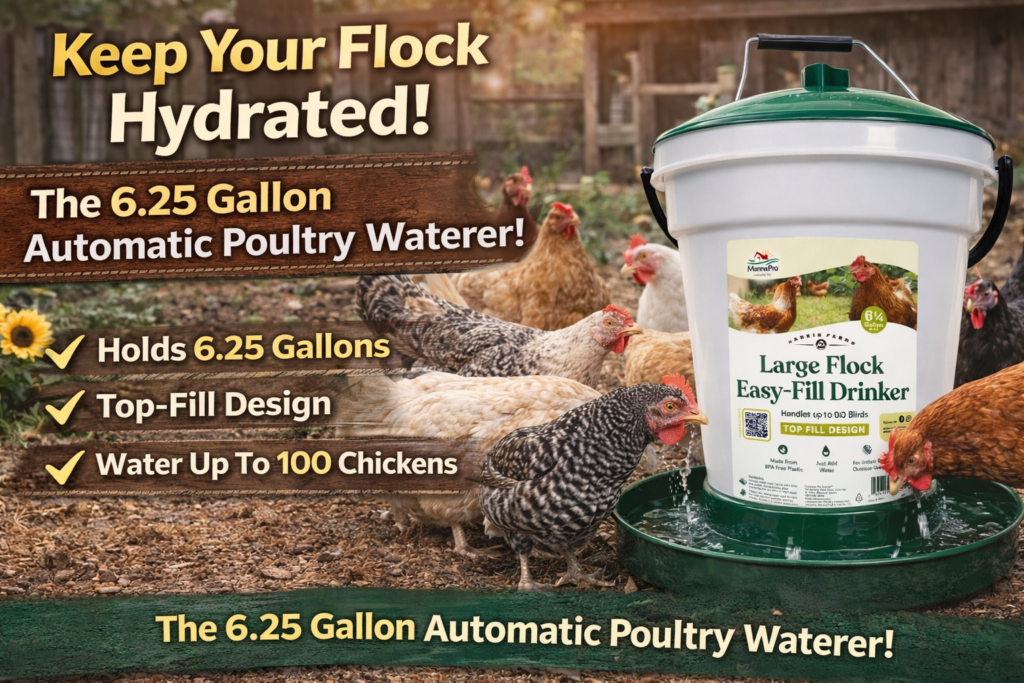
Daily care is your first line of defense. This is where you catch problems early before they turn into bigger issues. A large-capacity chicken waterer can make this essential daily task much easier: This Large Chicken Waterer Saved Me Time Every Single Day.
Check Water First Every Day
If there’s one thing that causes problems faster than anything else… it’s water.
Every day, make sure:
- Water is clean
- Water is full
- No algae buildup
- Not frozen in winter
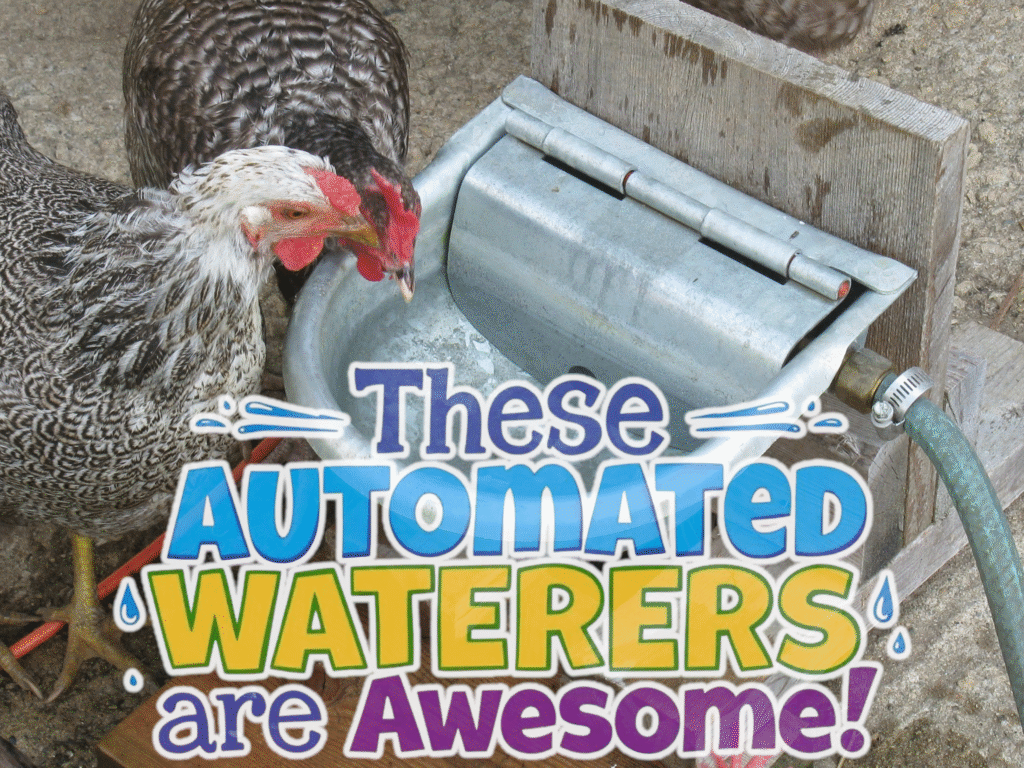
If you’re constantly dealing with dirty or low water, upgrading your system makes a huge difference. A lot of flock owners swear by automatic chicken waterers that stay cleaner longer.

Algae is another big issue that creeps up fast. If you’re seeing green buildup, this guide on how to stop algae in chicken water naturally helps fix it quickly. Some people even experiment with using copper in chicken water to control algae, but it’s important to understand how to do it safely.
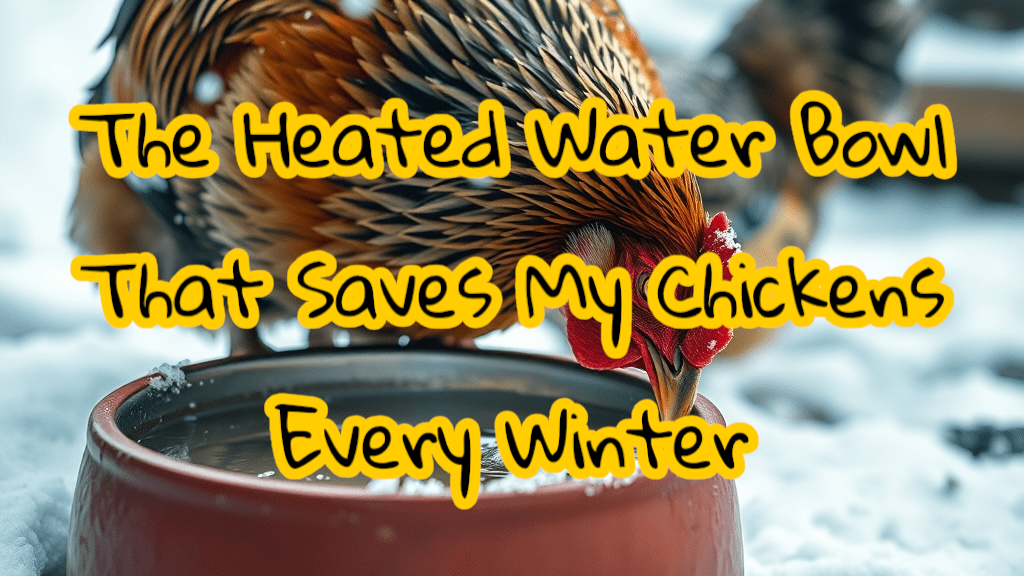
In winter, water becomes even more critical. Frozen water can shut down egg production almost immediately, which is why setups like this heated water bowl that keeps water from freezing are such a game changer.
Feed and Watch Behavior

Feeding time is more than just feeding. It’s your daily health check. When a closer check is needed, a The Simple Chicken Holder Bag That Makes Trimming Nails and Handling Chickens Way Easier can make routine handling calmer and easier.
Watch for:
- Chickens not eating
- Slow movement
- One chicken isolating
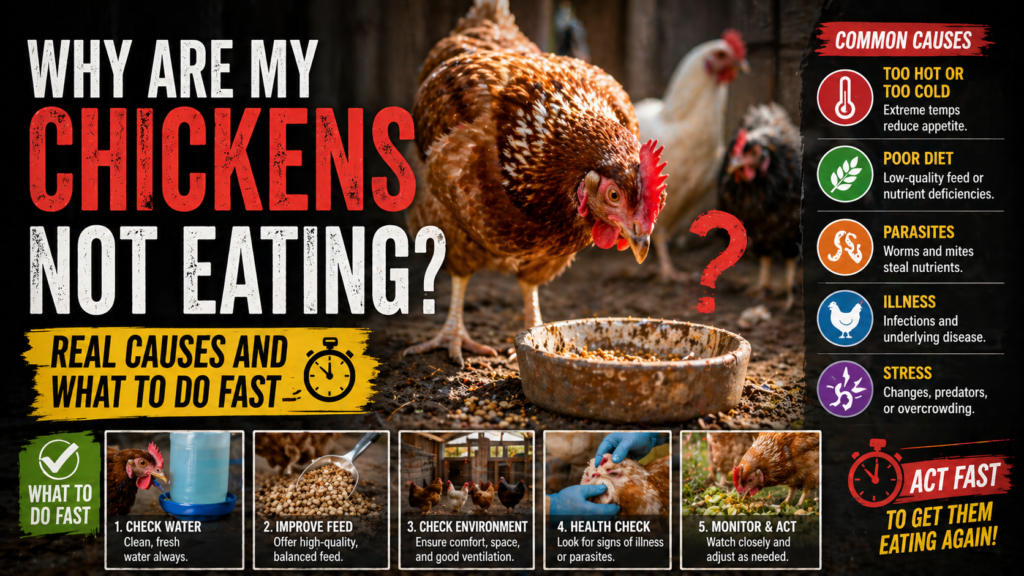
If a chicken suddenly ignores food, don’t brush it off. Start with why chickens stop eating and what to do fast to troubleshoot it.

Behavior changes are usually the first sign something is off. That’s why it helps to understand what it means when a chicken starts acting weird and how to respond early.
Sometimes it’s not physical at all. Chickens under stress can act completely different, which is why it’s worth knowing the real causes of a sad or withdrawn chicken.
Collect Eggs Daily
Leaving eggs sitting too long creates problems fast.
You’ll start seeing:
- Broken eggs
- Dirty shells
- Chickens eating eggs
If you’ve ever dealt with that, you know how frustrating it is. Fixing it starts with understanding why chickens eat their own eggs and how to stop it.

And if you want to go deeper, it helps to understand the real reasons chickens start eating eggs in the first place.
Weekly Chicken Care (Where You Stay Ahead of Problems)
Weekly tasks keep your coop under control and prevent buildup before it turns into work.
Clean High-Traffic Areas
Focus on:
- Nesting boxes
- Wet bedding
- Areas under roosts
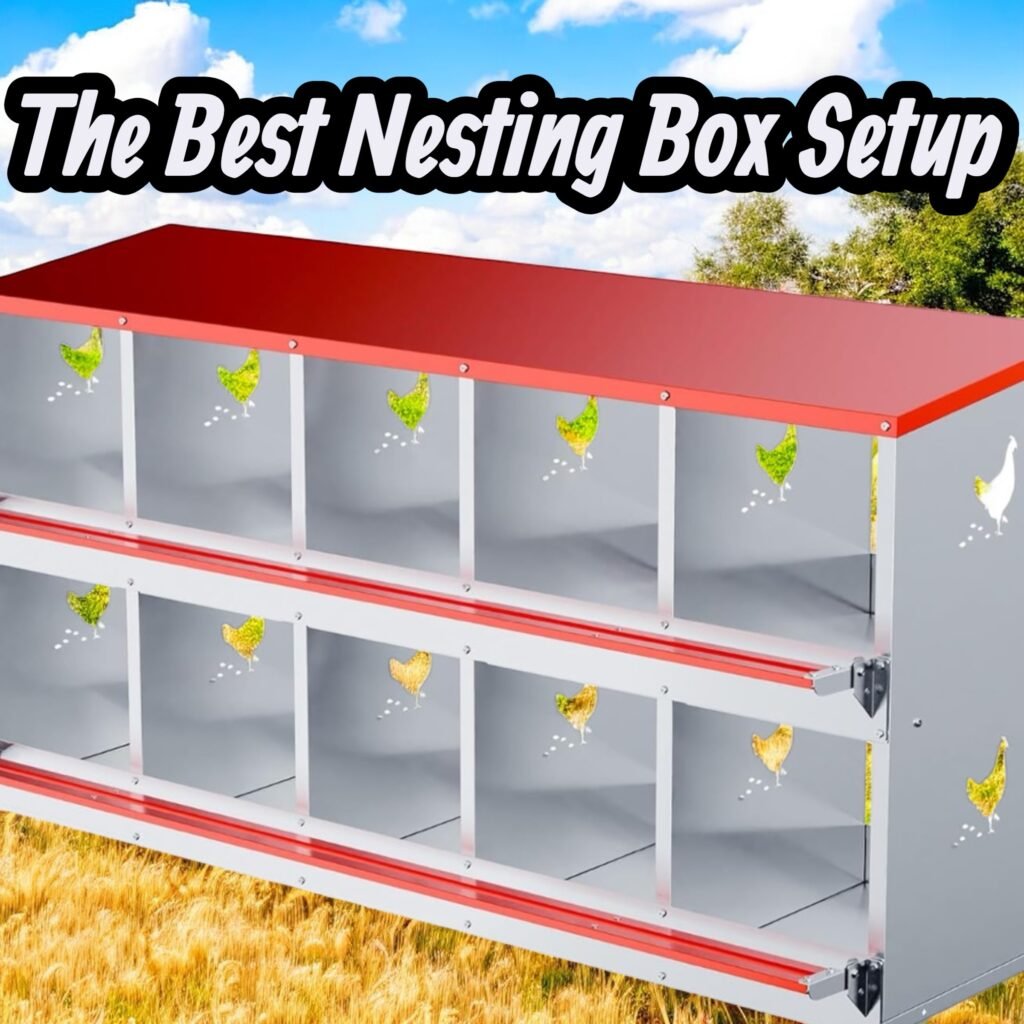
A clean nesting setup alone solves a ton of issues. If you haven’t dialed this in yet, check out the nesting box setup that finally ended the egg hunt.
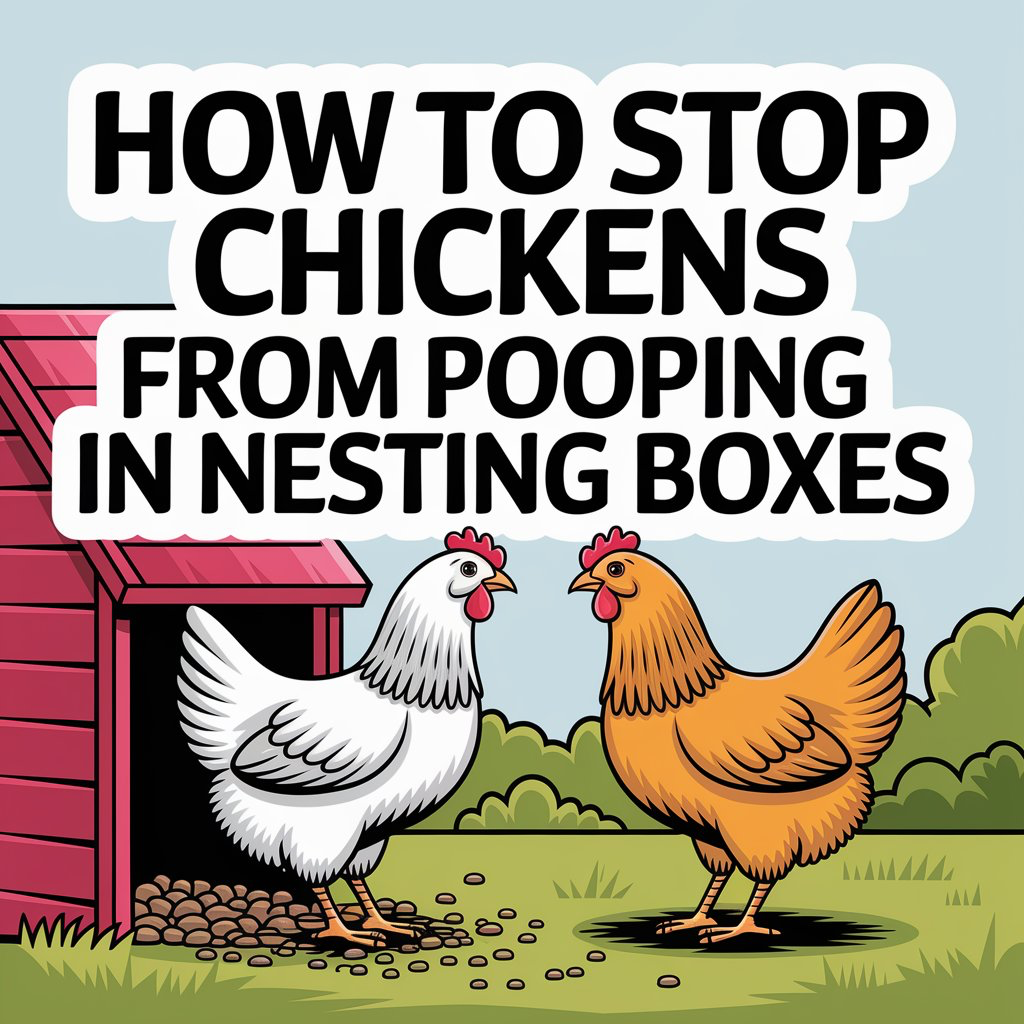
And if you’re constantly dealing with dirty boxes, you’ll want to fix that with how to stop chickens from pooping in nesting boxes.
Watch for Pecking and Aggression
Weekly checks help you catch behavior problems early before they get out of control.
Look for:
- Missing feathers
- Bullying
- Chickens avoiding others
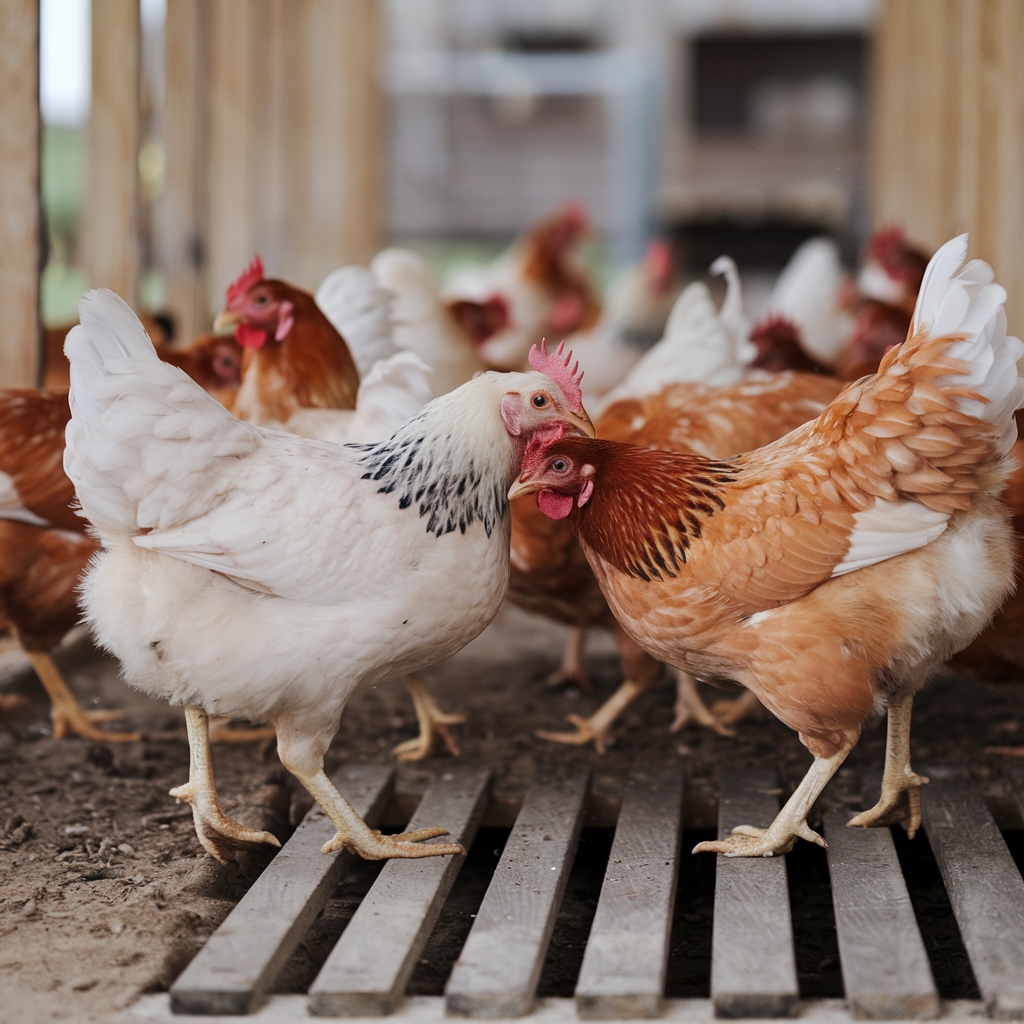
If it’s starting, don’t wait. This guide on how to stop chickens from pecking each other can save you a lot of trouble.
Feather damage is often connected, so it’s also worth understanding why chickens eat feathers and how to stop it.
Check Feed Setup and Waste
Feed waste adds up fast if your setup isn’t right.
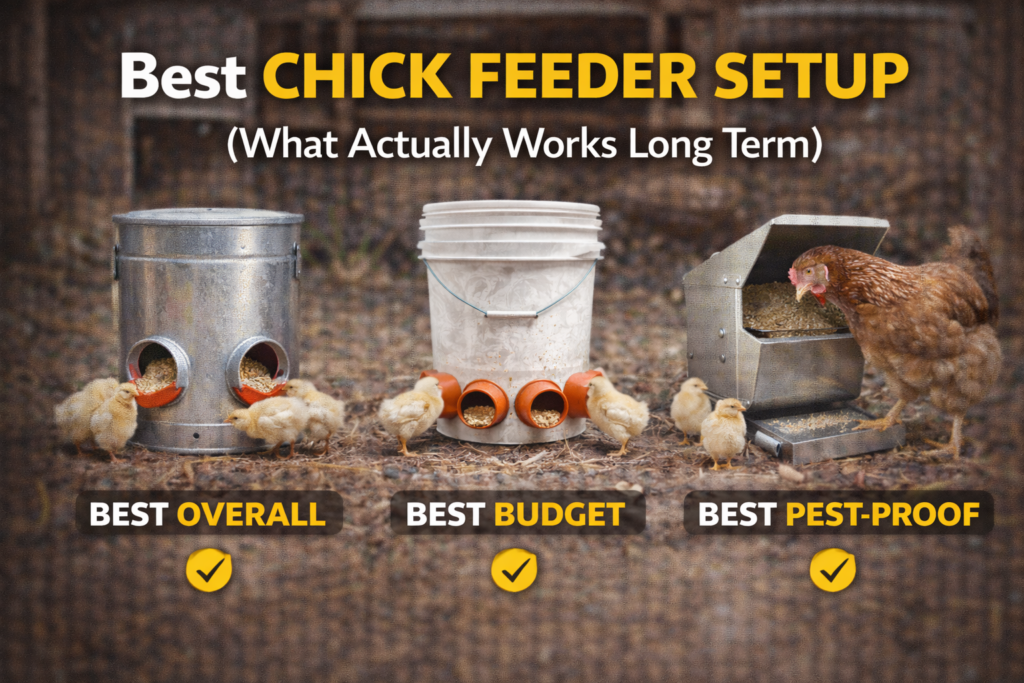
If you’re seeing feed everywhere, you’ll want to fix your system using a better chick feeder setup that actually works long term.
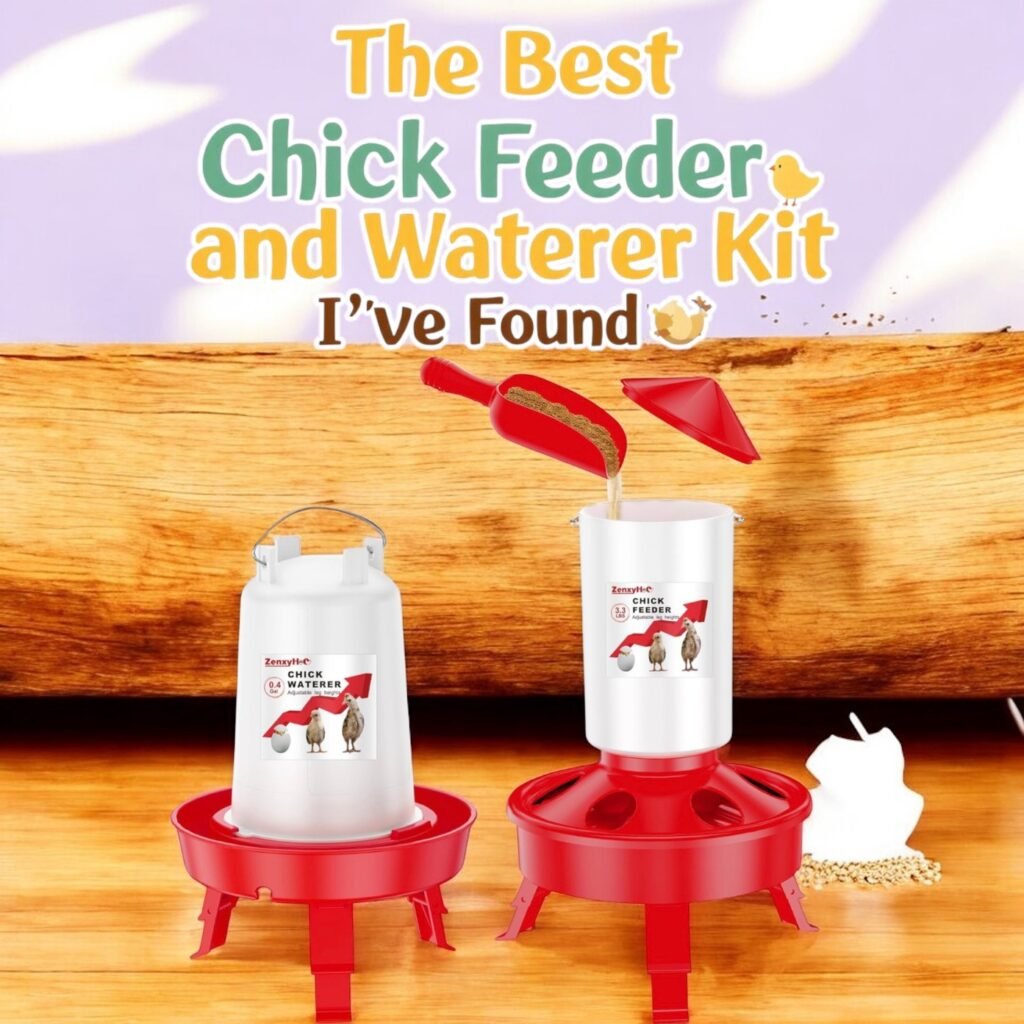
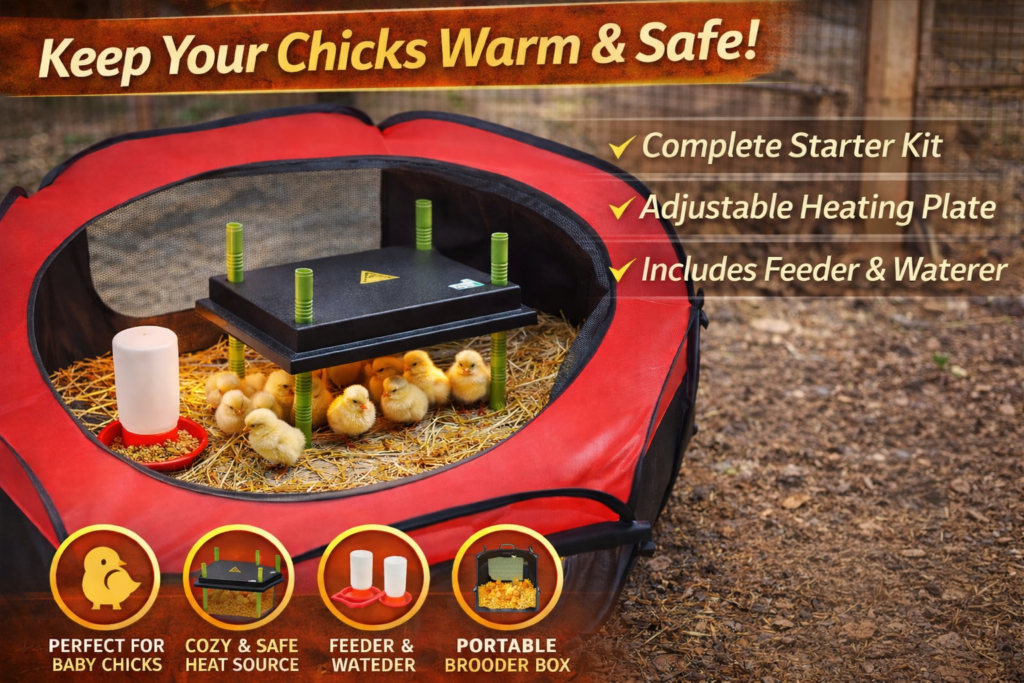
And if you’re raising chicks, a good starting point is a feeder and waterer kit that simplifies everything early on.
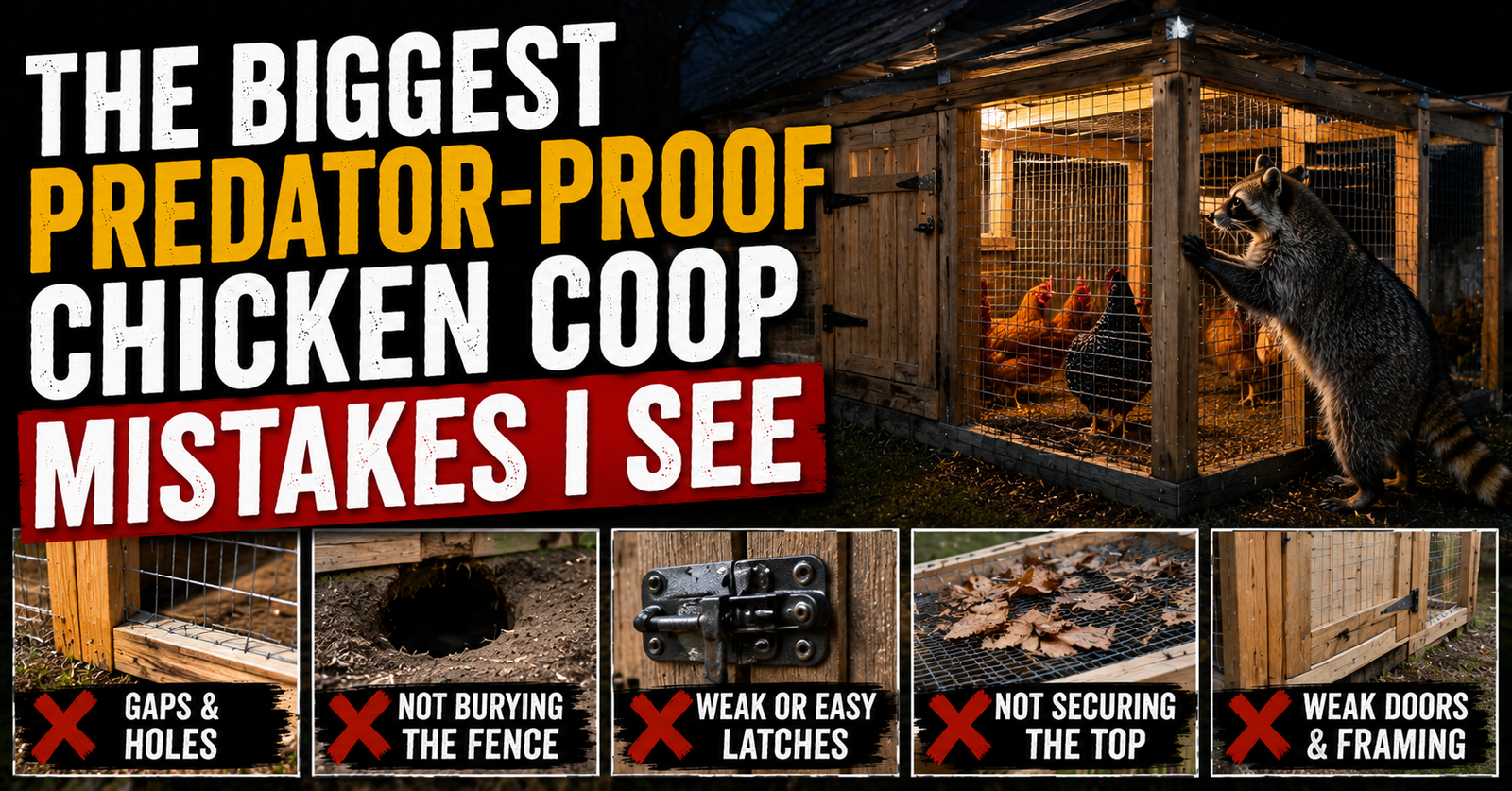
One thing I never skip during my weekly routine is walking around the outside of the coop looking for fresh digging, bent fencing, loose latches, or other clues that predators have been investigating overnight. If you’re not sure what signs to look for, Signs a Predator Is Visiting Your Chicken Coop at Night covers the most common warning signs.
Monthly Chicken Care (Where Long-Term Health Is Built)
This is where most people fall off… and where long-term problems begin.
Check Nutrition and Supplements
Every month, take a close look at your feeding setup.
Make sure your chickens are getting:
- Balanced feed
- Consistent calcium
- Proper grit
Calcium is one of the biggest factors in egg quality. If shells are weak, start with this calcium boost that improves egg strength fast.
Having the right setup matters too. A lot of people simplify things with a two-in-one oyster shell feeder that keeps everything organized.
Grit is just as important for digestion. If you’re unsure about it, read the truth about whether chickens actually need grit and how to choose the best grit for adult laying hens.
Check for Mites and Parasites
This is one of the most missed problems in backyard flocks.
Look for:
- Restlessness
- Feather damage
- Pale combs
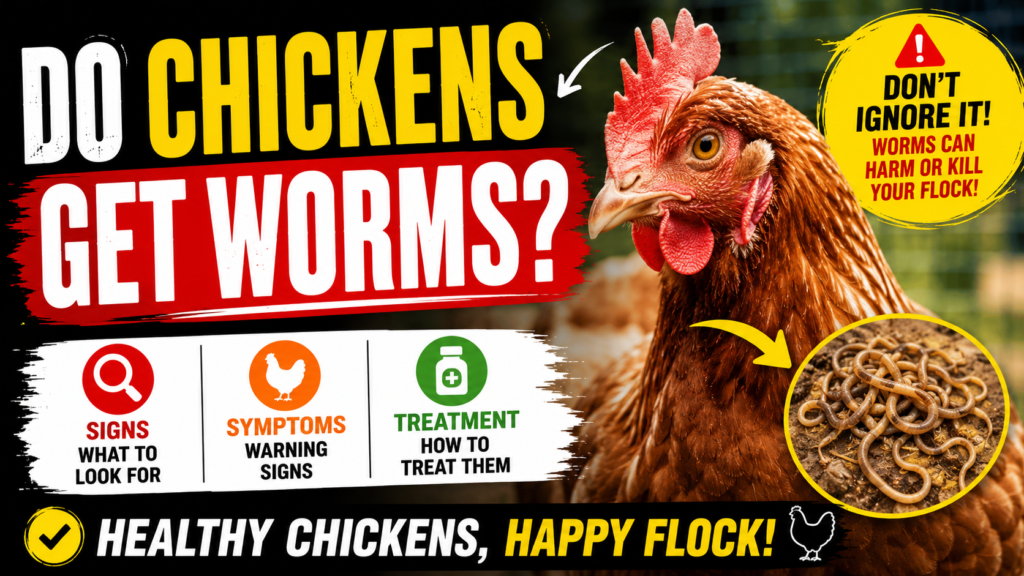
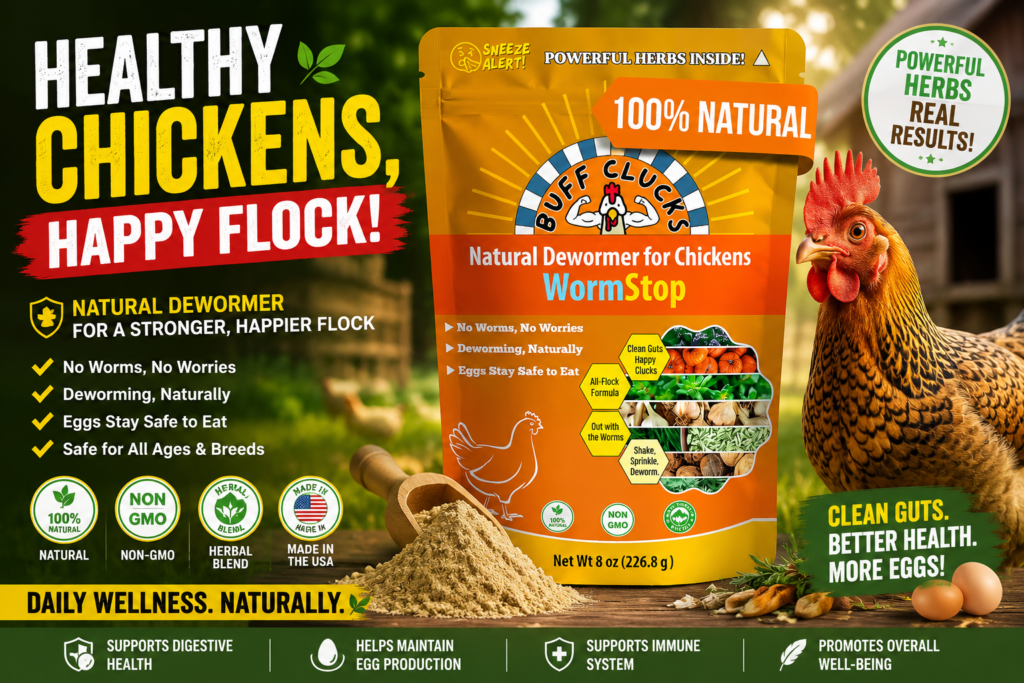
If you spot any of that, don’t wait. Use this proven method to treat mites in chickens before it spreads.
Evaluate Your Coop Setup
Once a month, step back and look at everything.
Ask yourself:
- Is the coop clean and dry?
- Is there enough space?
- Are chickens stressed?
If anything feels off, revisit your complete chicken coop setup checklist and compare it to what you have now.
It also helps to go back to basics with what chickens actually need to survive and stay healthy.
What Happens If You Don’t Follow a Routine
This is where most people struggle.
Without a routine:
- Small problems turn into big ones
- Egg production drops
- Stress builds in the flock
That’s when you start seeing issues like why chickens suddenly stop laying eggs or ongoing problems like chickens not laying and how to fix it.

Beginner Mistakes That Cause Constant Problems
Being Inconsistent
Skipping daily checks leads to missed problems
Ignoring Early Signs
Behavior always changes before health declines
Poor Water Management
This alone causes a huge percentage of issues
Overfeeding Treats
Too many treats can throw everything off, especially when you don’t understand the benefits and risks of feeding mealworms
Quick Routine Checklist
Daily
- Check water
- Feed chickens
- Watch behavior
- Collect eggs
Weekly
- Clean nesting areas
- Check for aggression
- Inspect feed setup
Monthly
- Check nutrition balance
- Inspect for mites
- Evaluate coop setup
Common Questions
How much time do chickens need daily?
With a good setup, usually 10–20 minutes.
What’s the most important part of chicken care?
Water and nutrition. Everything else depends on those.
Can you skip days?
You can… but that’s when problems start stacking up fast.
About the Author
Ryan Calloway
Backyard Chicken Keeper & Flock Management Writer
Ryan has spent years raising backyard chickens with a focus on simple routines, efficient setups, and long-term flock health. His hands-on experience helps chicken owners avoid common mistakes and keep their flocks healthy without overcomplicating things.