
If you’ve ever been jolted awake at 4am by a rooster going full volume, you already know the question. But why does he do it — and is there anything you can actually do about it? The answer is more interesting than you’d think.
It’s 4:17am. You’re sound asleep. Then it starts.
That unmistakable sound cuts right through the dark — loud, proud, and completely indifferent to the fact that the sun hasn’t even thought about coming up yet. If you’ve got a rooster, you know exactly what I’m talking about.
The funny thing is, most people assume roosters crow at sunrise. That’s the postcard version. The reality is they often start well before dawn, and they don’t exactly have an off switch once they get going. So what’s actually driving it? And is there anything you can do to dial it back?
The answer turns out to be pretty fascinating — and more useful than you’d expect.
The Real Reason Roosters Crow in the Morning
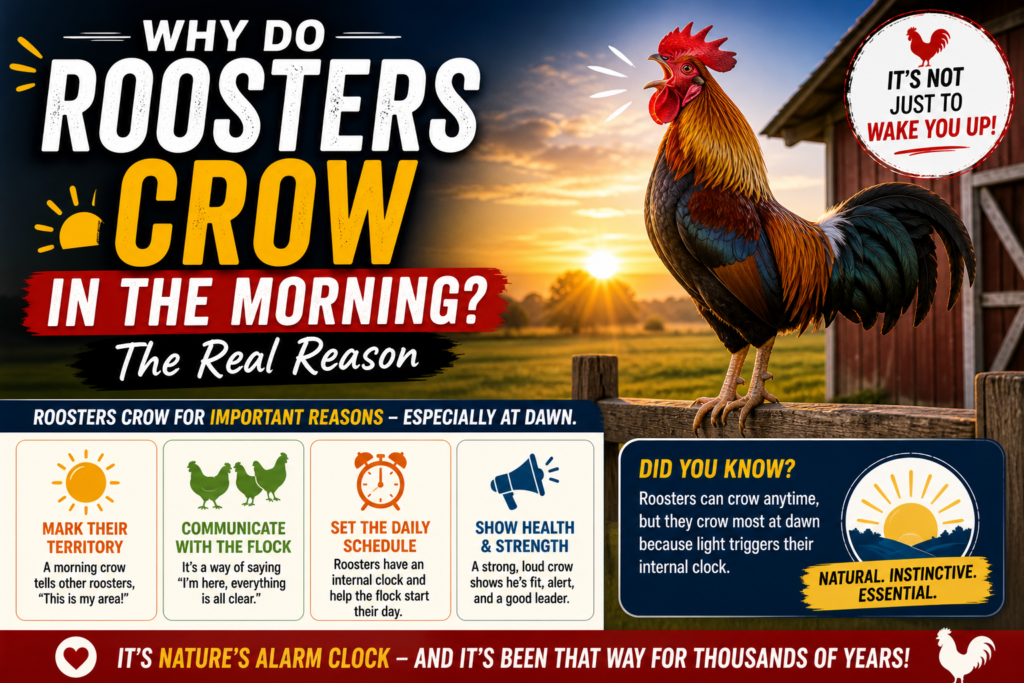
Roosters don’t crow in the morning because of the sunrise itself. They crow because of an internal biological clock — a circadian rhythm that anticipates light before it actually arrives.
Research has confirmed that roosters have an internal timekeeping system that ramps up hormone activity in the hours before dawn. Specifically, testosterone and other hormones surge in the early morning hours, which triggers the crowing response. It’s not a reaction to seeing light — it’s a prediction of it. The rooster’s body is essentially set to go off like an alarm clock at the same time every morning, regardless of whether the sun cooperates.
This is why roosters often start crowing at 3 or 4am rather than waiting for actual sunrise. Their internal clock fires first, and the crowing follows. When light does appear, it can amplify and extend the crowing — but it didn’t cause the initial burst.
From an evolutionary standpoint, it makes sense. In the wild, a rooster’s morning crow serves multiple purposes: it announces his territory to rival males, it signals to hens that he’s present and on watch, and it establishes the pecking order before the flock starts moving for the day. It’s communication — urgent, loud, non-negotiable communication.

If you want to go deeper on how roosters behave and why, the backyard chicken facts article covers some of the more surprising rooster behaviors most people don’t expect when they first add one to the flock.


It’s Not Just Morning — Why Roosters Crow All Day Too
Here’s where a lot of people get surprised. Roosters don’t confine their crowing to dawn. Once they’re up and going, almost anything can set them off throughout the day.
The morning crow is the most predictable and the loudest, but a rooster will also crow in response to sounds, movement, perceived threats, other roosters, and sometimes apparently nothing at all. It’s an ongoing communication tool, not a once-daily announcement.
Multiple roosters in the same flock will trigger each other in a chain reaction — one starts, and the others feel compelled to respond. This is especially pronounced in the morning when the territorial instinct is at its peak, but it continues through the day whenever one bird gets going.
For a full breakdown of why roosters crow throughout the day and what each type of crowing means, the article on why roosters crow all day goes deep on the daytime behavior specifically. And if your rooster is crowing at night too — which is a different problem with different causes — there’s a separate piece on why roosters crow at night and how to calm them down worth checking out.

What Triggers a Rooster to Crow
Beyond the internal clock, several external factors can trigger or intensify morning crowing. Understanding these gives you actual leverage to work with.
Light — natural and artificial. Even before sunrise, any light source can amplify crowing. A streetlight hitting the coop, headlights from a passing car, a porch light flicking on — all of it can register as a dawn signal and kick things into high gear. This is one of the most common reasons roosters crow earlier than expected in suburban or semi-rural setups.
Sound. Roosters respond to noise. A car starting, a dog barking, a door slamming — any sudden sound can trigger a crow. In the early morning when everything is quiet, even small sounds register as significant to a bird that’s already primed to announce himself.
Other roosters. If your neighbors have a rooster, yours will respond every time that bird crows. Distance doesn’t matter much — roosters can hear each other from surprising distances and feel compelled to answer. It becomes a call-and-response that can go on for a long time.
Perceived threats. A rooster who senses a predator — or thinks he does — will crow as an alarm. Raccoons, foxes, and hawks that move through the area at night or early morning can set off extended crowing sessions that have nothing to do with dawn.
Flock dynamics. A rooster that feels his position in the flock is challenged will crow more. If you’ve recently added new birds or the pecking order has shifted, expect louder and longer morning sessions until things settle. This ties into the broader question of how chickens establish and maintain their social structure — something covered well in the piece on how chickens recognize and bond with their owners, which gets into flock communication and behavior.
When Do Roosters Start Crowing and How Long Does It Last?
There isn’t one exact start time for every rooster. Some begin around 3 or 4am, while others wait until the first light of dawn. The internal clock gets the morning session started, but sunrise, artificial light, sounds, nearby roosters, and perceived threats can all move the timing earlier.
The first burst may be brief, but morning crowing often comes in repeated rounds rather than one continuous session. A rooster may crow, settle down for a while, and start again when he hears another bird or notices movement. Once the flock is active, the crowing can blend into the normal daytime communication that roosters use throughout the day.
That is why keeping the coop dark and quiet can delay the first crow without necessarily stopping all crowing later. If the noise suddenly lasts much longer than usual, look for a trigger such as a predator, a new bird, a nearby rooster, or a light source reaching the coop.

Is There a Way to Stop a Rooster from Crowing in the Morning?
Completely stopping a rooster from crowing isn’t realistic — it’s hardwired behavior. But you can reduce the frequency, delay the start time, and lower the volume impact on you and your neighbors. Here’s what actually works.
Control the light in the coop. Since light amplifies the crowing response, keeping the coop dark longer delays the morning crow. Blackout curtains over windows, or a solid coop with no light gaps, can push the start time back by an hour or more. This is one of the most effective practical interventions available.

A solar automatic coop door with a light sensor and timer is useful here — it lets you control exactly when the coop opens to daylight rather than having gaps that let pre-dawn light seep in. When the coop stays dark, the rooster stays quieter longer. I’ve found this makes a real difference in the summer months when sunrise starts creeping earlier and earlier.
Reduce nighttime light sources. If there’s a streetlight, floodlight, or motion-activated light near the coop, block it or reposition the coop away from it. Artificial light at 3am is one of the most underrated causes of early crowing that people overlook.

Lower perch height. Some keepers report that roosters crow less when they can’t get to a high perch. A rooster on the ground tends to crow less than one elevated and feeling dominant. It’s not a guaranteed fix but worth trying if you have flexibility in coop design. A practical roosting perch setup can help you adjust the coop layout while testing this approach.
Keep only one rooster. Multiple roosters dramatically increase crowing frequency through the competitive call-and-response dynamic. If crowing is a serious problem, reducing to a single rooster makes a noticeable difference.
Anti-crow collars. These exist and do reduce volume significantly by limiting the air the rooster can take in for a crow. They’re controversial — opinions differ on whether they’re comfortable for the bird long-term. If you’re in a situation where noise is genuinely causing problems with neighbors, it’s an option worth knowing about.

A solar security camera on the coop can also help you identify what’s actually triggering early crowing — whether it’s a predator moving through, a light source, or the rooster just being a rooster. Knowing the cause makes the fix obvious.
When Morning Crowing Becomes a Problem
For most backyard keepers in rural areas, rooster crowing is just part of the deal. But in suburban neighborhoods or areas with close neighbors, it can become a real issue — noise complaints, ordinance violations, and strained relationships with people next door.
If you’re in a situation where the crowing is causing genuine problems, be honest about your options. Light control and single-rooster management buy you some relief. Beyond that, the realistic choices are rehoming the rooster or accepting the situation.
It’s also worth checking your local ordinances before you find yourself in a conversation you didn’t want to have. Many suburban areas have restrictions on roosters specifically — not just on chickens generally. Knowing where you stand legally gives you time to plan rather than react.
On the flip side, if you’re in a rural setting and the crowing is just an annoyance rather than a problem, give yourself a few weeks to adjust. Most people habituate to it faster than they expect. A rooster that seems unbearably loud in week one becomes background noise by week four for most keepers.

There are real advantages to having a rooster in the flock — flock protection, fertilized eggs if you want to hatch chicks, and a social dynamic that many keepers say changes the whole energy of the flock. The advantages of free ranging are amplified even further with a rooster watching over the hens. And if you’re still figuring out the full setup your flock needs, the 7 essentials for chickens to survive and thrive is a solid starting point.
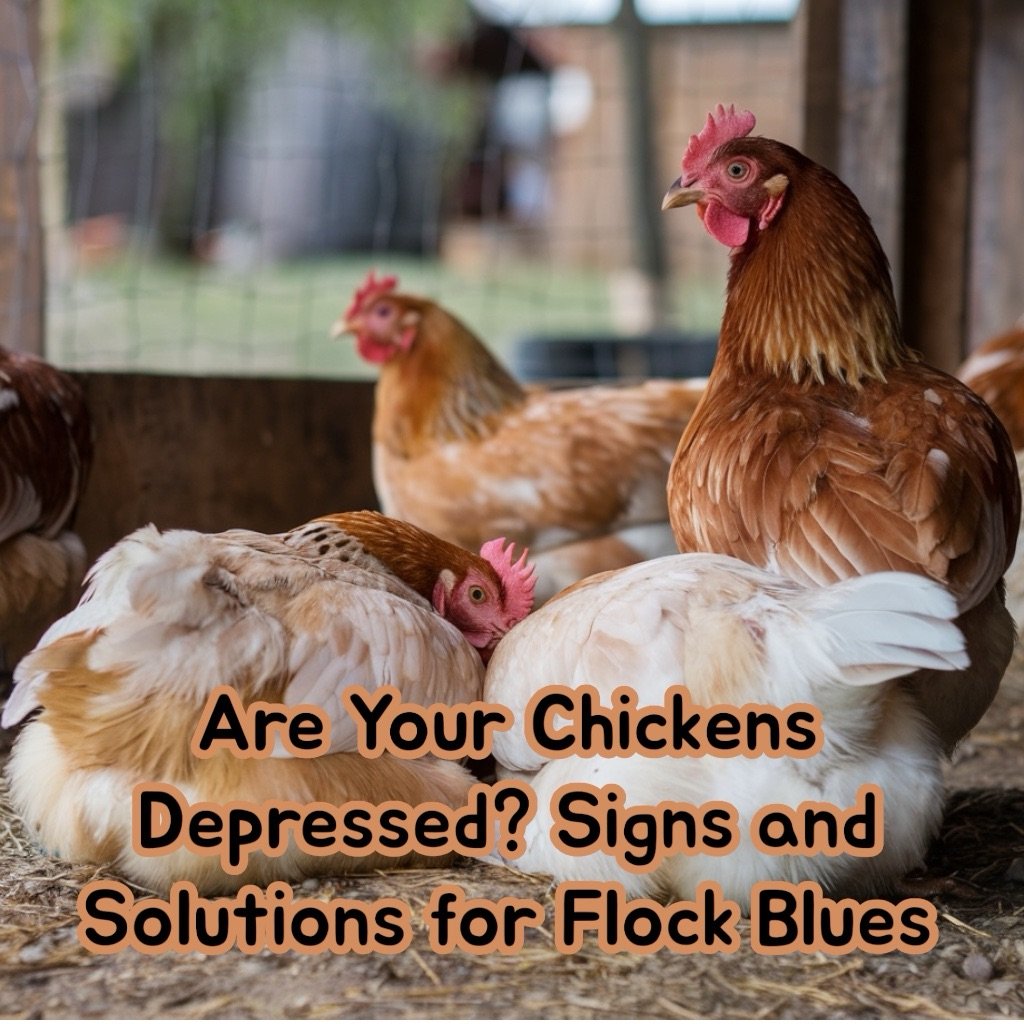
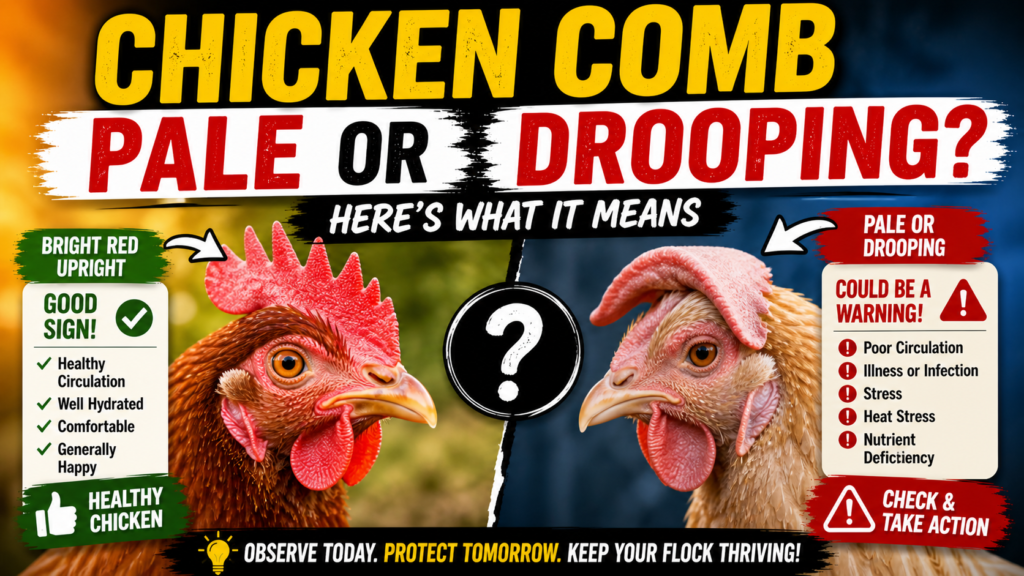
If you notice your rooster seems stressed, overly aggressive, or is crowing far more than seems normal even after accounting for the above, check in on the flock dynamic. A stressed or challenged rooster escalates everything. The article on signs of flock stress and depression covers behavioral red flags that apply to roosters as much as hens.


4am Is Early, But at Least Now You Know Why
A rooster crowing before dawn isn’t broken, confused, or trying to make your life difficult. He’s running exactly the program nature gave him — an internal clock that fires before sunrise, a territorial instinct that demands he announce himself, and a sensitivity to light and sound that keeps him on high alert in the early morning hours.
You can’t reprogram that. But you can work with it. Darkening the coop, controlling light sources, keeping one rooster instead of several — these aren’t workarounds, they’re legitimate management strategies that make a real difference.
And if none of it helps and you’re still getting a 4am alarm call every morning? At some point you just accept that you chose the farm life, and the farm life comes with a rooster.
About the Author: Ryan Callahan has kept backyard chickens for eight years and has learned most of what he knows the hard way — including everything a rooster is capable of at an unreasonable hour of the morning.