It sounds like an odd question until you’ve spent enough time with chickens to know it isn’t. A hen that seems off, withdrawn, or flat isn’t being dramatic — she’s communicating something real. Here’s how to figure out what it is. This practical breakdown of what may be behind a sad chicken helps connect withdrawn behavior with the underlying causes and next steps.
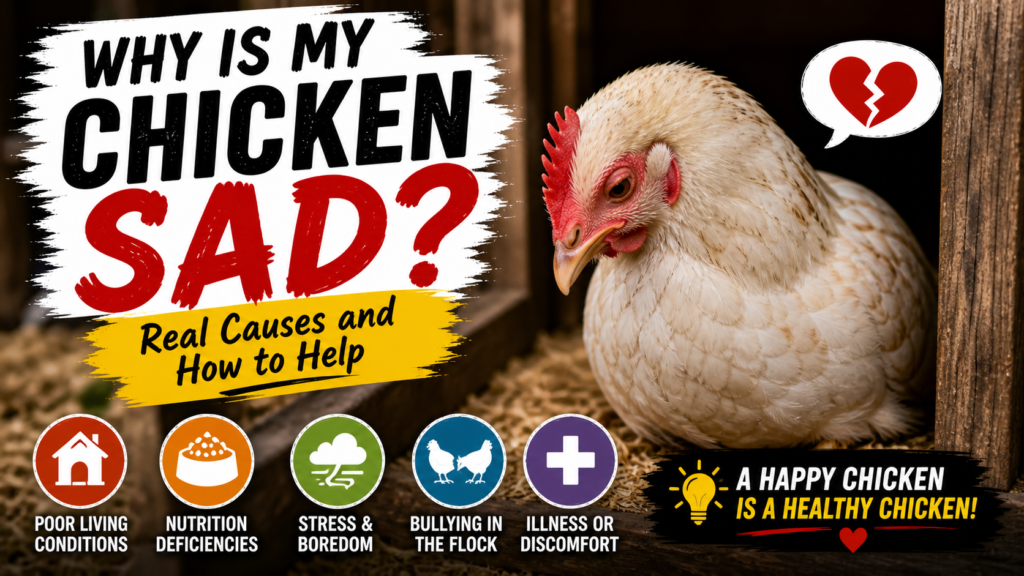
It sounds like an odd question until you’ve spent enough time with chickens to know it isn’t. Anyone who’s kept a backyard flock for more than a season has seen it — a hen that just seems off. She’s not sick exactly. She’s not injured. But something about the way she’s moving through her day, standing apart from the flock, or staring into the middle distance tells you something isn’t right.
Calling it “sad” is imprecise, but it’s not wrong. Chickens have measurable emotional states. Research has confirmed they experience fear, frustration, and positive anticipation. They form social bonds, feel the absence of flock mates, and respond to isolation in ways that parallel depression in other animals.
So if your chicken seems sad, the question isn’t whether it’s a real thing — it is. The question is what’s causing it and what you can do about it.
Can Chickens Actually Get Sad?
The science on chicken cognition and emotion has moved significantly in the last decade. Chickens demonstrate empathy — hens show measurable physiological stress responses when their chicks are distressed, even without being able to see them. They have distinct personalities. They recognize individual flock mates and remember them after separation. They show clear preferences, anticipate positive events, and react to negative ones in ways consistent with emotional experience.
What this means practically: yes, a chicken can be sad. Not in the complex narrative way a person might be sad — but in the functional sense of experiencing a negative emotional state that changes behavior, reduces engagement with the environment, and diminishes wellbeing. And that state has real causes that can be identified and addressed.
The behaviors people describe when they say their chicken seems sad map pretty directly onto what animal behaviorists would call depression-adjacent states: withdrawal, reduced activity, loss of interest in food, isolation from flock mates, and a general flatness of behavior that’s distinct from the bird’s normal personality.
Signs Your Chicken Is Sad or Emotionally Distressed
The challenge with emotional distress in chickens is that the signs overlap with early illness. A sick chicken and a sad chicken can look remarkably similar from the outside. This is actually useful information — it tells you to take both possibilities seriously rather than dismissing the behavior as personality quirks.
Withdrawal from the Flock
This is the most reliable indicator. Chickens are fundamentally social animals — isolation is not their natural state, and a hen who chooses to be alone when she could be with the flock is communicating something important. She might stand in a corner of the run while everyone else forages. She might stay near the coop when the others range. She might roost separately from the group.
One hen occasionally spending time alone isn’t a crisis. A hen who consistently withdraws over multiple days is worth paying attention to. The question is whether she’s withdrawing by choice or being pushed out — a low-ranking hen at the bottom of the pecking order may not be sad so much as bullied, which is a different problem with a different solution.
Reduced Foraging and Exploration
A happy, engaged chicken spends most of her waking hours scratching, pecking, investigating, and moving. It’s relentless — the foraging instinct in a healthy, unstressed bird is almost constant. A chicken in a negative emotional state contracts this dramatically. She’ll stand in one spot, move less, scratch less, and engage with her environment far less than normal.
This one is easy to miss because reduced foraging can look like resting. The difference is duration and consistency. A hen that rests in a sunspot for twenty minutes and then goes back to scratching is normal. A hen that stands in the same spot for hours, day after day, is not.
Loss of Interest in Treats
Most chickens will practically knock you over for a mealworm. A hen who ignores treats she previously went crazy for is showing a significant behavioral change. Reduced appetite and loss of interest in food rewards is one of the clearest behavioral indicators of emotional distress in animals, and chickens are no exception.
This one also helps distinguish emotional distress from illness — a hen who won’t eat at all is more likely physically unwell, while a hen who eats her regular feed but ignores treats may be in a negative emotional state rather than a health crisis.
Decreased Vocalization
Chickens are communicative animals. A flock has a constant background of soft clucking, murmuring, and contact calls between birds. A hen who goes quiet — who stops making the normal soft sounds that indicate contentment and social engagement — is showing a measurable behavioral change. If a hen who normally chatters has gone silent, that silence means something.
Hunched Posture and Fluffed Feathers
A bird standing hunched with feathers slightly puffed, eyes partly closed, and tail slightly lowered is uncomfortable. Whether that discomfort is physical or emotional, the posture is a signal. A hen in this posture who has no obvious physical symptoms — no discharge, no swelling, normal droppings, eating adequately — may be in emotional distress rather than physical illness.
Disrupted Laying
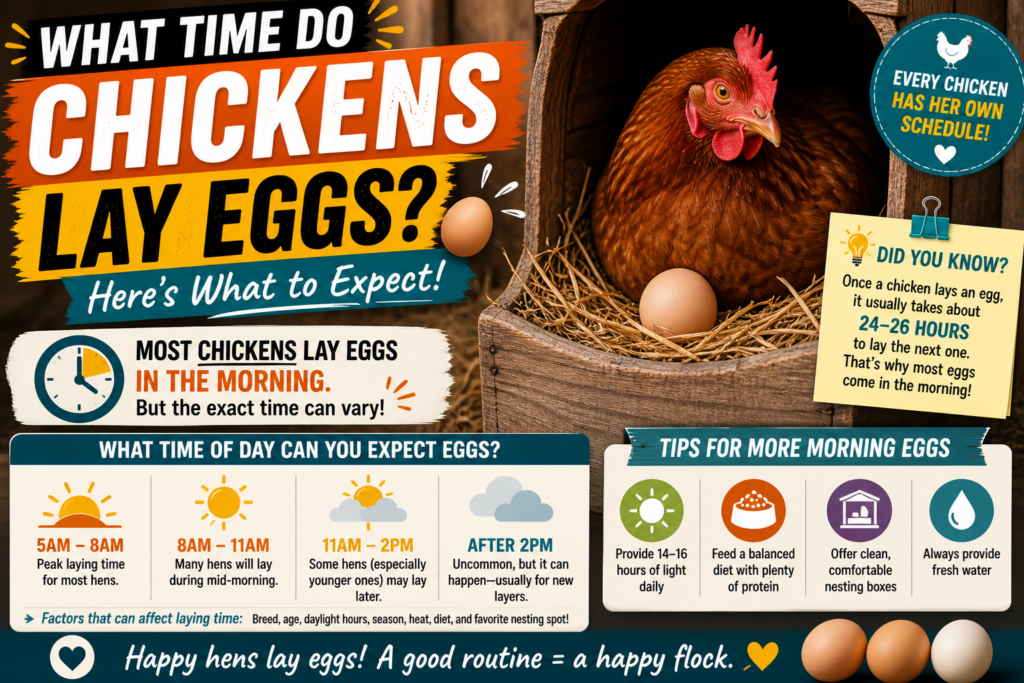
Emotional distress affects egg production reliably. Cortisol — the stress hormone — directly suppresses the reproductive cycle in hens. A hen under sustained emotional distress will lay less frequently, may skip days, and in severe cases may stop laying entirely. If a consistent layer suddenly becomes inconsistent with no obvious physical or seasonal explanation, her emotional state is worth considering as a factor. Stress can affect not only whether a hen lays but also when her usual laying pattern changes, which this guide to how stress changes laying patterns explains.
There’s more on the full range of reasons hens stop or slow laying in the guide to why chickens aren’t laying — worth cross-referencing if production drops are part of what you’re seeing.
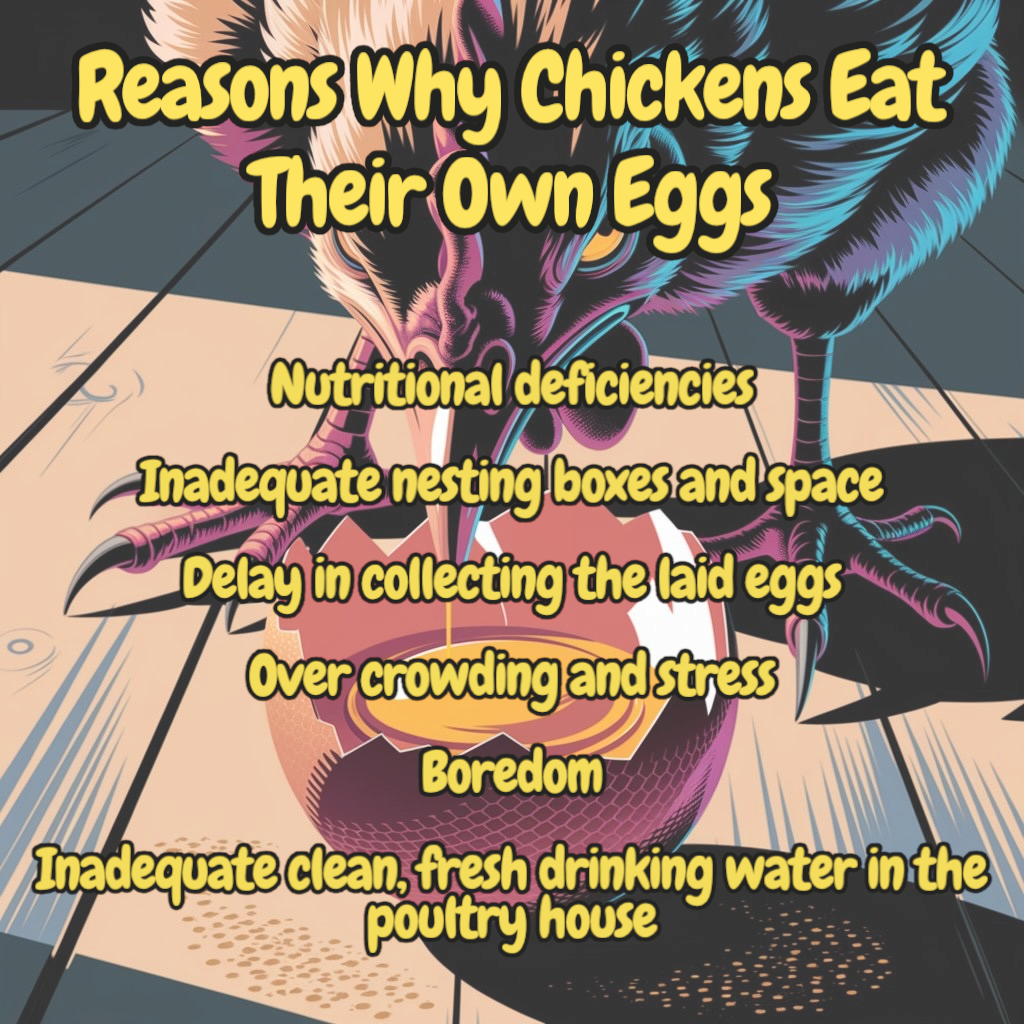
The Most Common Reasons a Chicken Gets Sad
Loss of a Flock Mate
This is probably the single most common cause of what keepers describe as a sad chicken — and it’s also the most emotionally intuitive. Chickens form genuine bonds with individual flock mates. They have preferred companions — hens they spend more time near, forage alongside, and roost next to. When that bird dies or is removed from the flock, the remaining hen experiences something that functions very much like grief.
The behavioral signature is recognizable: the bereaved hen looks for the missing bird, calls for her, and then gradually withdraws as the search goes unanswered. She may stop eating well, lose interest in her environment, and spend time near the spot where the other hen used to rest. This can last days or several weeks depending on the strength of the bond.
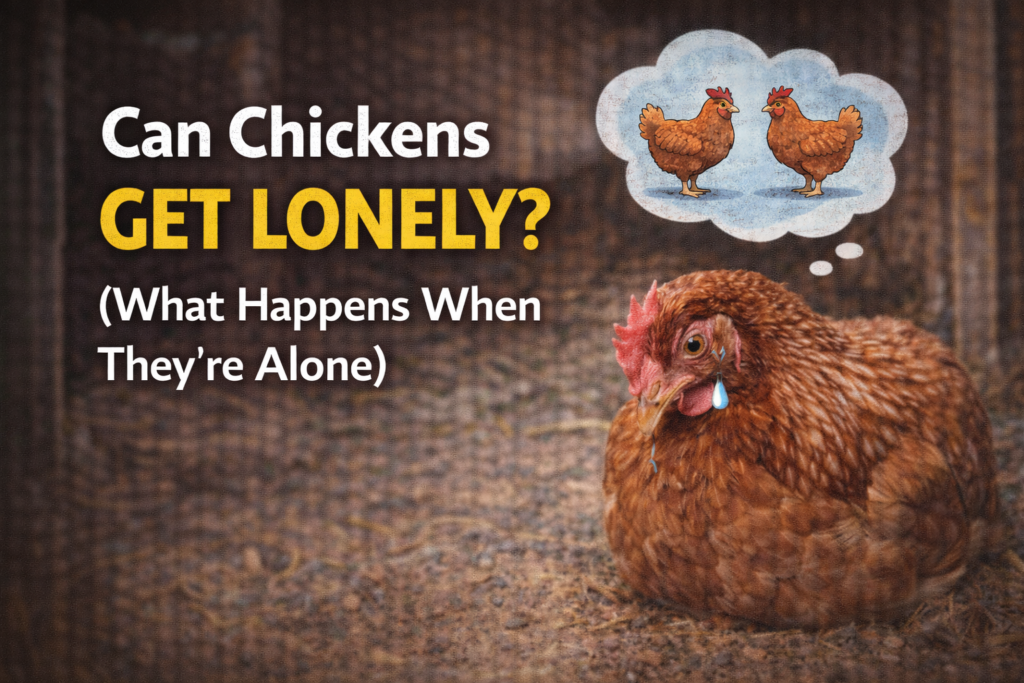
The most effective response is time and increased social engagement from you and from the remaining flock. If the flock is now very small — two hens down to one — the surviving hen is genuinely alone in a way that’s difficult for her, and adding new flock mates (done carefully) is the most direct solution. The full piece on whether chickens get lonely covers this dynamic in depth.
Being Isolated or Kept Alone
A single chicken kept without flock mates is, by any reasonable measure, in a state of chronic emotional deprivation. Chickens are social animals whose entire behavioral repertoire is organized around flock life — foraging together, dust bathing together, communicating constantly, roosting in a group. A solitary chicken can’t do any of these things in a meaningful way. These social behaviors are part of what makes the species so fascinating, as the backyard chicken behavior facts explains.
The sad behaviors in a solitary chicken are almost inevitable: pacing, excessive calling, lethargy, reduced foraging, and eventually a kind of resigned flatness. If you have a single chicken by circumstance — you lost the rest of the flock, you’re starting over after a predator event — getting her companions is genuinely important for her wellbeing, not just a nice thing to do.
Even a chicken temporarily isolated for health reasons — quarantined after illness, separated after injury — will show distress signs from the separation itself. Position the quarantine area so she can see and hear the flock even if she can’t be with them. It makes a real difference to how she handles the isolation.
Low Pecking Order Position with Active Bullying
Every flock has a pecking order, and every flock has a bird at the bottom. Being at the bottom isn’t inherently distressing — chickens accept hierarchy naturally and a stable pecking order is actually less stressful than an unstable one. What becomes a welfare problem is when the low-ranking hen is actively and persistently bullied rather than simply deferred to.
A bullied hen is constantly stressed. She can’t access feeders or waterers without being chased. She can’t use the nest boxes without being displaced. She can’t rest or roost without being pecked. Over time this produces exactly the sad, withdrawn behavior people notice — she’s not depressed in a philosophical sense, she’s exhausted and defeated from constant conflict she can’t escape.
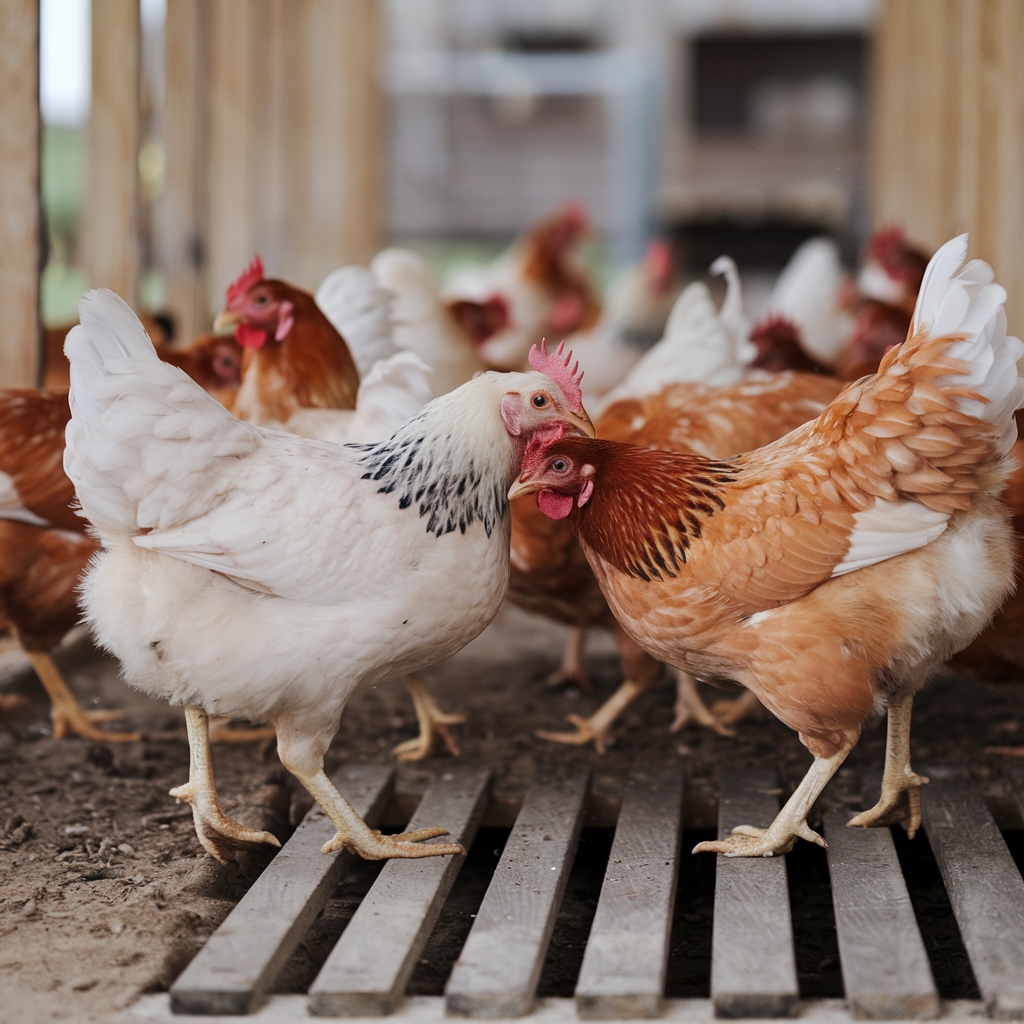
The fix is identifying who’s doing the bullying, ensuring adequate resources (multiple feeding and watering stations, enough nest boxes so no single bird can guard them all), and providing enough space that the low-ranking bird can get distance. Occasionally the bullying is severe enough that the aggressor needs to be removed temporarily. More on managing this in the guide to stopping flock pecking.
Environmental Stress and Chronic Fear
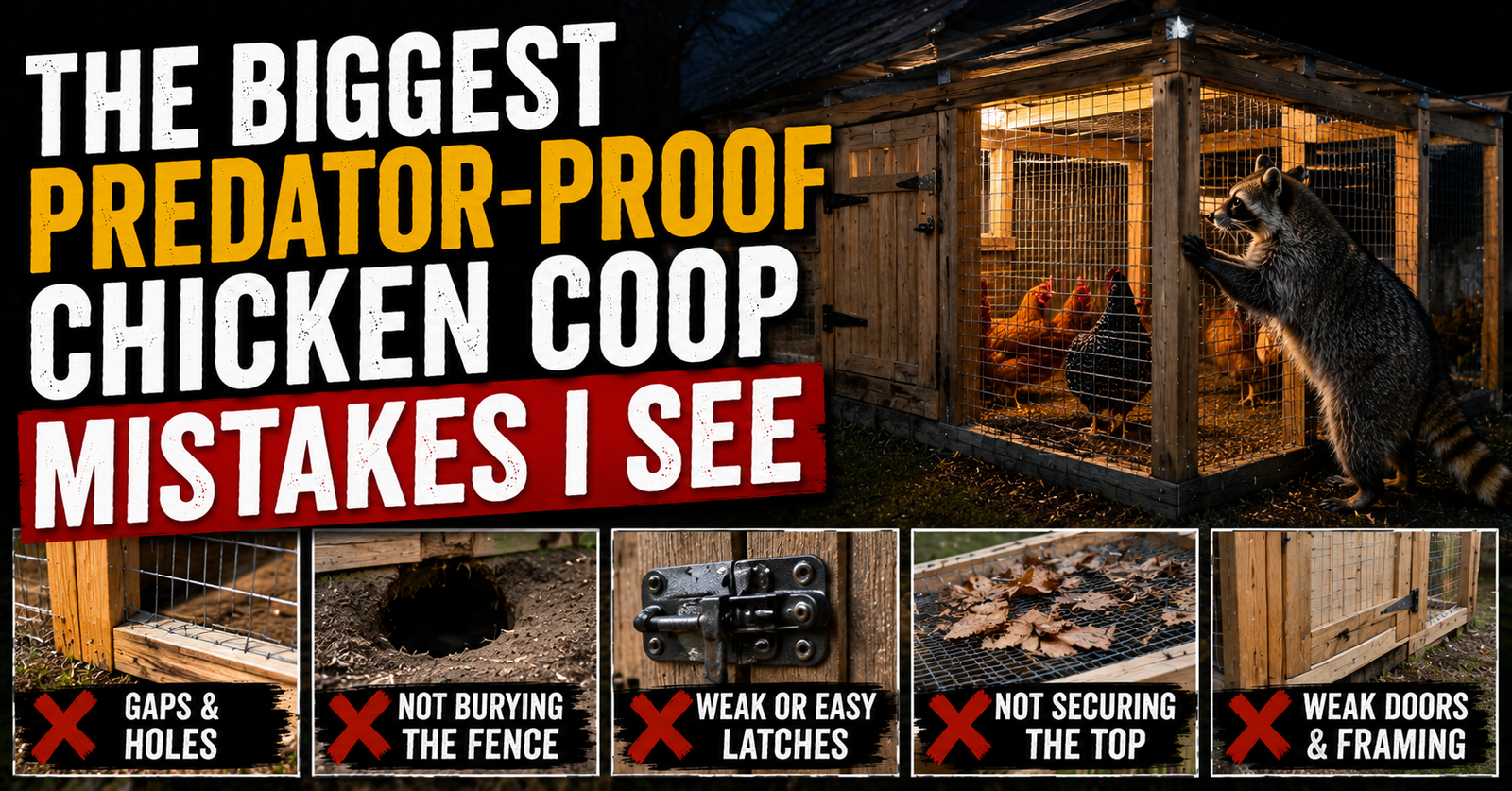
A flock that lives under constant predator pressure is a flock under chronic stress — and individual birds, particularly more sensitive ones, can develop what looks very much like anxiety and depression from sustained fear. A hawk that makes daily passes, a fox that circles at dusk, or a dog that presses against the run fence creates ongoing threat signals that the birds can’t habituate to or escape from. Reducing that stress starts with addressing the enclosure weaknesses described in ways to reduce predator pressure.
The behavioral result is a flock that’s permanently on edge — quick to startle, reluctant to range, spending more time near cover, and engaging less fully with their environment. Individual hens who are more reactive by temperament show these effects more dramatically than more phlegmatic birds. They look sad because they are, in a functional sense — they’re living in a constant state of threat appraisal that leaves no room for the positive behaviors that make up a good day for a chicken.
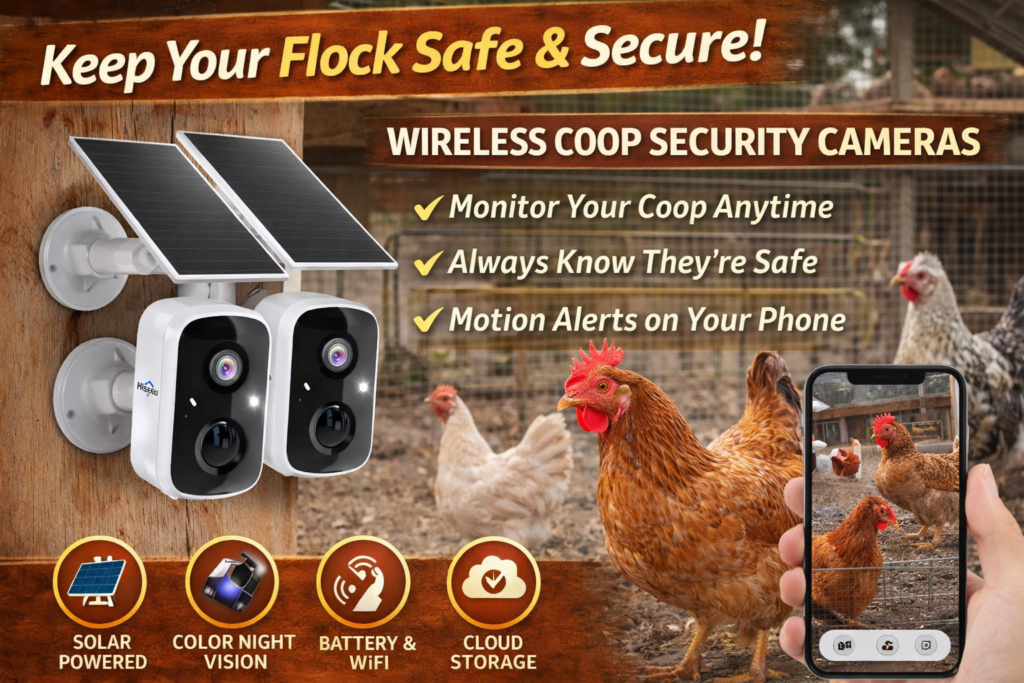
Solving this requires addressing the predator pressure, not just managing the hen’s symptoms. Better coop security, covered runs, and motion-activated deterrents all help. A solar security camera on the coop is genuinely useful here — it lets you see exactly what’s approaching at night and early morning so you can respond specifically rather than guessing at what’s causing the fear response.
Boredom in Confined Conditions
A chicken confined to a small, unstimulating space with nothing to do is not a content chicken. The foraging drive in hens is strong and persistent — in natural conditions they’d spend six to eight hours a day actively seeking food. When that drive has nowhere to go, it produces frustration, stress behaviors, and eventually a kind of behavioral flatness that reads as sadness.
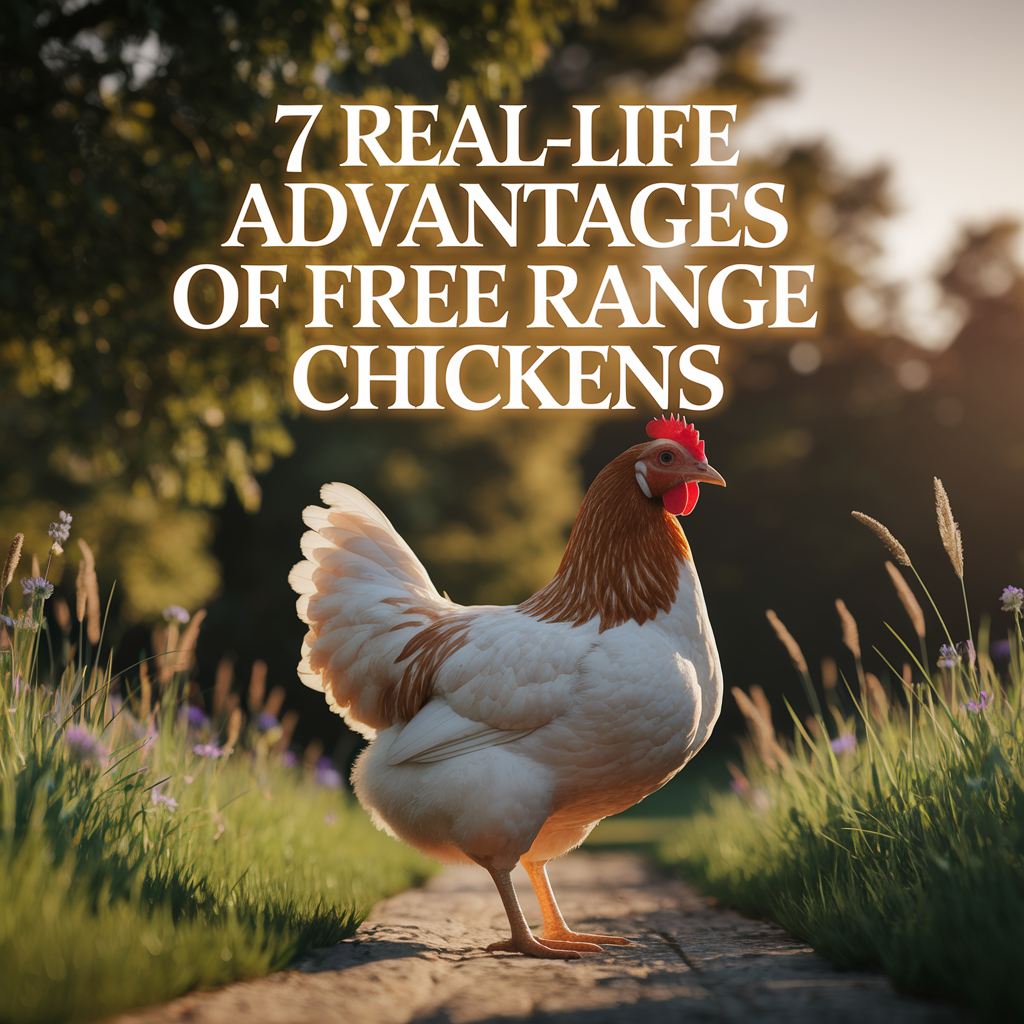
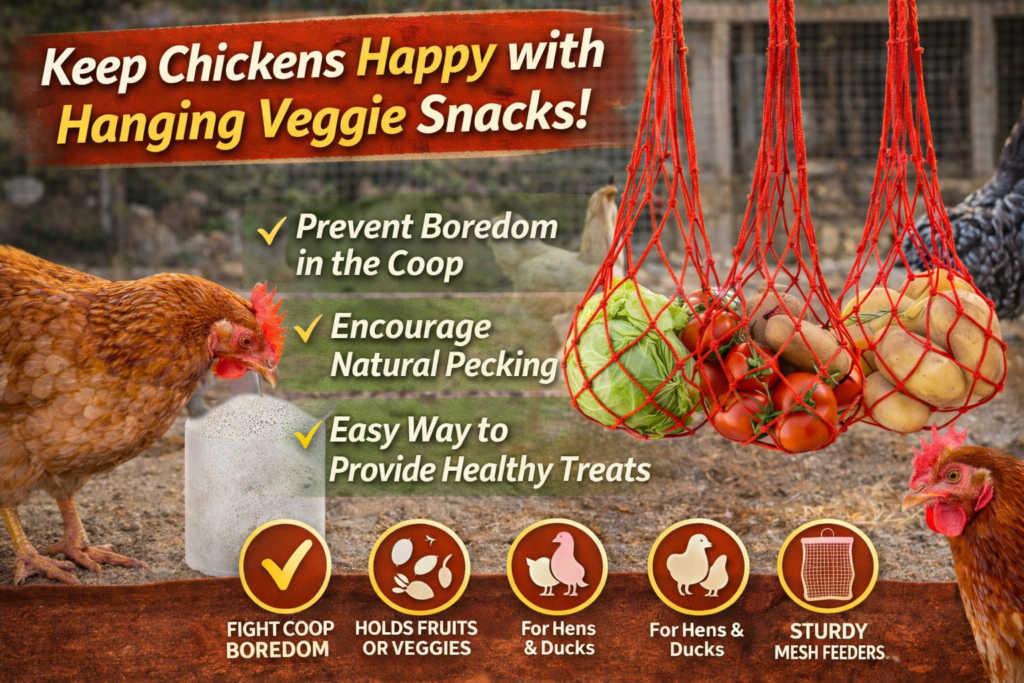
This is one of the most preventable causes of emotional distress in backyard flocks. Enrichment doesn’t have to be elaborate — a hanging vegetable feeder gives them something to work for, scatter feeding encourages natural foraging behavior, and access to a varied environment with different textures and things to investigate makes a measurable difference to behavioral engagement. Free ranging, even for limited periods, is probably the single most effective intervention for boredom-related distress. The advantages of free ranging go well beyond egg quality and feed cost savings.
Physical Illness or Discomfort
It bears repeating: a sad-looking chicken and a sick chicken look almost identical. Before attributing withdrawn, low-energy behavior to emotional causes, rule out physical illness. Check her eyes — bright and clear, or dull and sunken? Comb — normal color and texture, or pale, shrunken, or discolored? Breathing — quiet and regular, or labored? Droppings — normal, or loose, discolored, or absent?
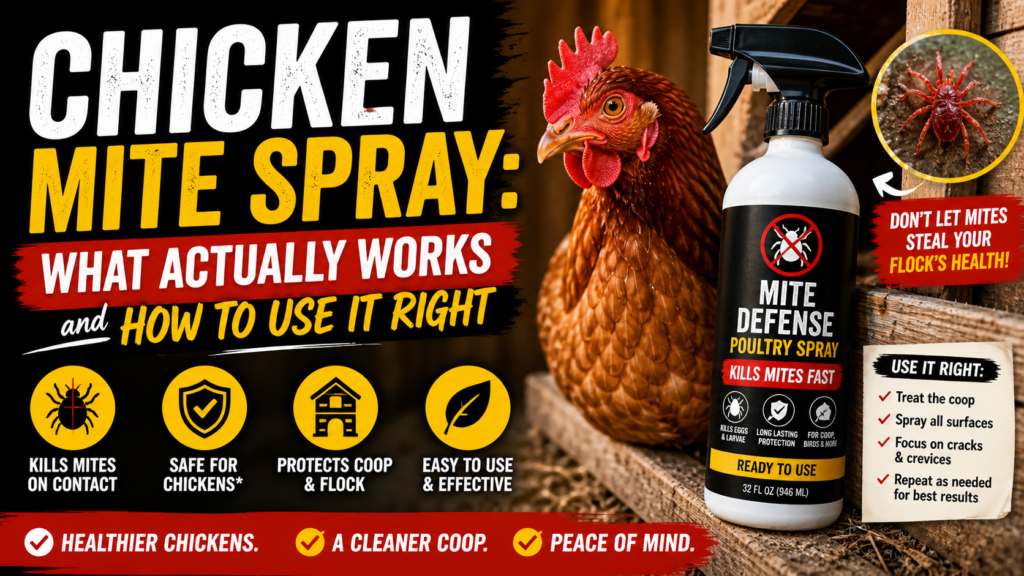
Mites are a particularly sneaky cause of what looks like sadness. A heavy mite infestation causes anemia, skin irritation, and disrupted sleep — all of which produce the kind of lethargy, withdrawal, and dull behavior that reads as emotional distress. Check the skin around the vent and under the wings before concluding a hen is sad rather than infested. If you find mites, treat the birds and the coop at the same time — treatment that covers only one side of the equation almost always fails.

Nutritional deficiency is another physical cause of behavioral depression. A hen lacking adequate protein, vitamins, or minerals isn’t just physically compromised — she’s behaviorally flat. A quality poultry vitamin supplement is worth adding during any period when you suspect nutritional shortfalls — during molt, in winter when free-range foraging drops off, or any time hens seem off without a clear environmental explanation.
How to Help a Sad Chicken
The approach depends entirely on the cause, so identifying the cause comes first. Run through the checklist: Has anything changed recently in the flock? Lost a bird? Added new birds? Changed the environment? Is there predator pressure? Is she being bullied? Does she have access to enough space and enrichment? Have you checked her physically?
Once you’ve identified the most likely cause, the interventions are usually straightforward:
If she’s grieving a lost flock mate: Give her time, increase your own interaction with her, and consider adding new companions if the flock is now very small. Don’t rush the process — a hen who’s lost a close companion may take several weeks to fully reintegrate into normal behavior.
If she’s being bullied: Improve resource availability — more feeders, more waterers, more nest boxes — and create more space for her to get distance. Consider separating the aggressor temporarily. Make sure she’s eating and drinking adequately despite the competition.
If she’s bored or confined: Add enrichment, increase foraging opportunities, and give her access to more space. A few hours of supervised free ranging daily transforms the behavioral profile of a confined hen more than almost any other single intervention.
If predator pressure is the cause: Address the security situation. No amount of enrichment or social support helps a bird who is genuinely afraid for her safety. Better coop security, covered runs, and active predator deterrence are the path forward.
If she’s physically unwell: Treat the underlying illness. The sad behavior follows the physical state — fix the health problem and the behavior normalizes. If you’re not sure what’s wrong, a hands-on physical examination and observation over 24–48 hours usually clarifies the picture. The guide to chickens acting weird covers the diagnostic process for behavior changes with no obvious cause.
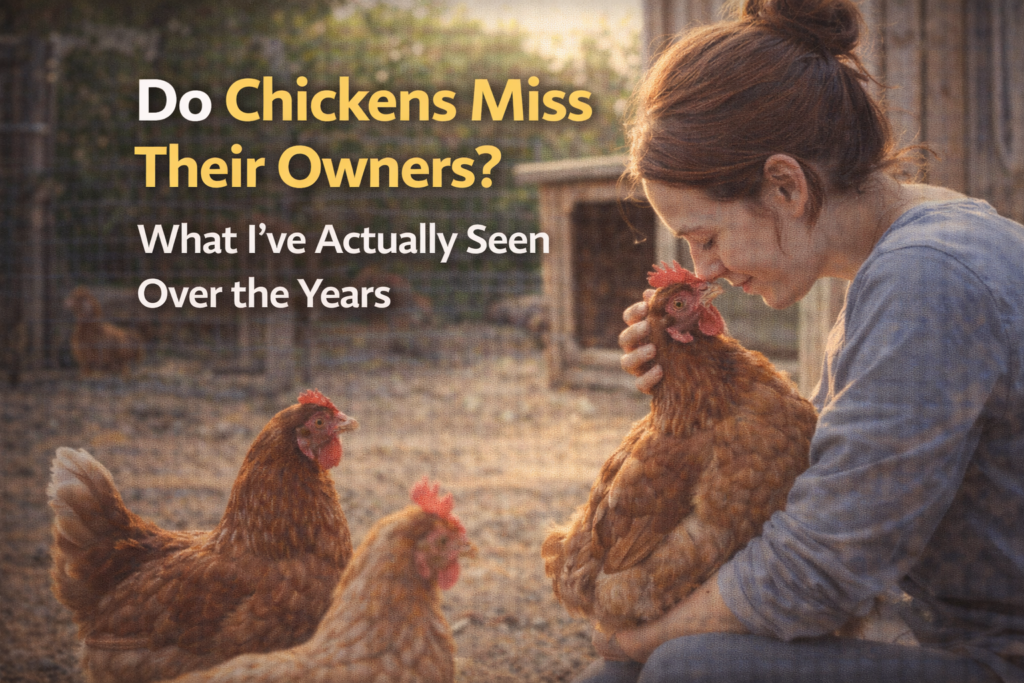
In all cases, spend more time with her. This sounds simple and it is, but it works. Chickens who have regular positive interaction with their keepers — who associate you with treats, calm handling, and safety — are more resilient to stressors than birds who rarely interact with humans. Sit with the flock. Let them approach you. Hand feed. The bond between keeper and chicken is real, and it has measurable effects on how birds handle difficult periods. The piece on whether chickens miss their owners gets into this relationship in a way most people find surprising.
When to Worry vs. When to Wait
Not every sad-looking chicken needs urgent intervention. A hen who’s just lost a flock mate and is a bit withdrawn for a few days, a bird who’s adjusting to a new environment, a hen at the tail end of molt who seems tired — these are situational responses to real events, and time plus a stable supportive environment is the right medicine.
The signals that should prompt faster action: not eating or drinking for more than 24 hours, significant weight loss, complete disengagement from the environment, physical symptoms alongside the behavioral changes, or rapid deterioration rather than stable low-level sadness. These point toward illness rather than emotional distress and need more than watchful waiting.
The honest truth is that a keeper who knows their flock well rarely has to guess whether a hen is sad or sick — the difference becomes readable over time. But that knowledge comes from consistent observation, regular hands-on contact, and treating each bird as an individual rather than a unit of the flock. The investment pays off when something actually goes wrong and you catch it early enough to matter.
Your Chicken Isn’t Being Dramatic — She’s Telling You Something
The instinct to dismiss a sad-looking chicken — to chalk it up to “just being a chicken” — is understandable but worth resisting. The same behavioral signals that read as sadness in a hen are the ones that, left unaddressed, precede illness, serious injury from bullying, complete laying cessation, or death from a predator problem that escalated while you weren’t paying attention.
A chicken who seems sad is communicating something real about her state and her situation. Whether the cause is grief, fear, boredom, social conflict, or physical illness, the behavior is information — and responding to it thoughtfully is what separates a keeper who loses birds unnecessarily from one who maintains a genuinely healthy, thriving flock.
Pay attention to your individual birds. Know their personalities. Notice when something shifts. That habit is worth more than any single piece of equipment or supplement in your coop.
About the Author: Sarah Holloway has kept backyard chickens for nine years and writes from the perspective of someone who has learned to read chicken behavior as carefully as she reads anything. She believes the emotional lives of chickens are consistently underestimated — by science and by backyard keepers alike.