Stress is one of the most underdiagnosed problems in backyard flocks. By the time it’s obvious, it’s been building for weeks. Here’s what chicken stress actually looks like — and how to stop it before it becomes a real problem. When stress shows up as unusual behavior, Why Is My Chicken Acting Weird? (Common Causes Most People Miss) helps sort those signs from other common causes.
Chickens are good at hiding when something is wrong. It’s a survival instinct — in the wild, a visibly sick or stressed bird is a target. By the time a hen is obviously struggling, the problem has usually been building for a while.
Stress is one of the most underdiagnosed issues in backyard flocks. It’s easy to dismiss as “she’s just molting” or “the flock is sorting out pecking order stuff” — and sometimes that’s exactly right. But chronic stress quietly tanks egg production, suppresses immune function, and leaves birds vulnerable to illness in ways that show up weeks later when the connection isn’t obvious anymore.
Knowing what chicken stress actually looks like — the real symptoms, not just the dramatic ones — is one of the most useful things a backyard keeper can develop. Here’s the full picture.
Why Chickens Get Stressed — The Root Causes
Before getting into symptoms, it helps to understand what’s actually stressing your flock. Stress in chickens isn’t one thing — it’s a category of responses to environmental, social, nutritional, and physical pressures. The same symptoms can point to very different causes, and fixing the symptom without fixing the cause just delays the problem.
Predator pressure. This is the most underestimated stressor for backyard flocks. A predator doesn’t have to get into the coop to cause serious stress — it just has to show up regularly. A fox that circles the run at dusk, a hawk that makes passes overhead, a raccoon that rattles the coop door at night — these create chronic low-level fear that compounds over days and weeks. Hens that are being stalked by a predator will show stress symptoms even if every bird is physically unharmed.
Overcrowding. The standard recommendations exist for a reason — 4 square feet per bird inside the coop, 10 square feet per bird in the run. Under those numbers, stress behaviors escalate predictably. Feather pecking, aggression, reduced laying, and suppressed immune function all follow overcrowding in a fairly linear way. More birds in the same space equals more stress, full stop.
Flock social disruption. Chickens establish pecking order for a reason — it creates predictability and reduces ongoing conflict. When that order is disrupted — by adding new birds, losing a bird, introducing a rooster, or moving the flock to a new space — the resulting instability is genuinely stressful for the whole group, not just the birds being pecked.
Environmental changes. Chickens are creatures of habit to a degree that surprises most new keepers. Moving the coop, changing the feed, rearranging the nest boxes, switching bedding types — these seem trivial from a human perspective but can trigger measurable stress responses in hens. The more changes stack up at once, the worse the response.
Temperature extremes. Heat stress is well documented in poultry — birds pant, wings droop, and production tanks. Cold stress is less dramatic but real, particularly when birds don’t have adequate shelter or are wet. The transition seasons — rapid temperature swings in fall and spring — can be as stressful as the extremes themselves.
Nutritional deficiencies. A hen whose diet is missing key nutrients is under physiological stress even if everything else in her environment is fine. Protein deficiency, calcium deficiency, and vitamin shortfalls all create internal stress that manifests as behavioral and physical symptoms. It’s one of the most common causes of stress symptoms that gets misdiagnosed as an environmental problem.
Illness and parasites. Pain, discomfort, and the immune response to infection or infestation are inherently stressful. A bird dealing with mites, worms, respiratory infection, or other health issues will show stress symptoms alongside the primary illness symptoms — and treating the illness resolves both.

Chicken Stress Symptoms to Watch For
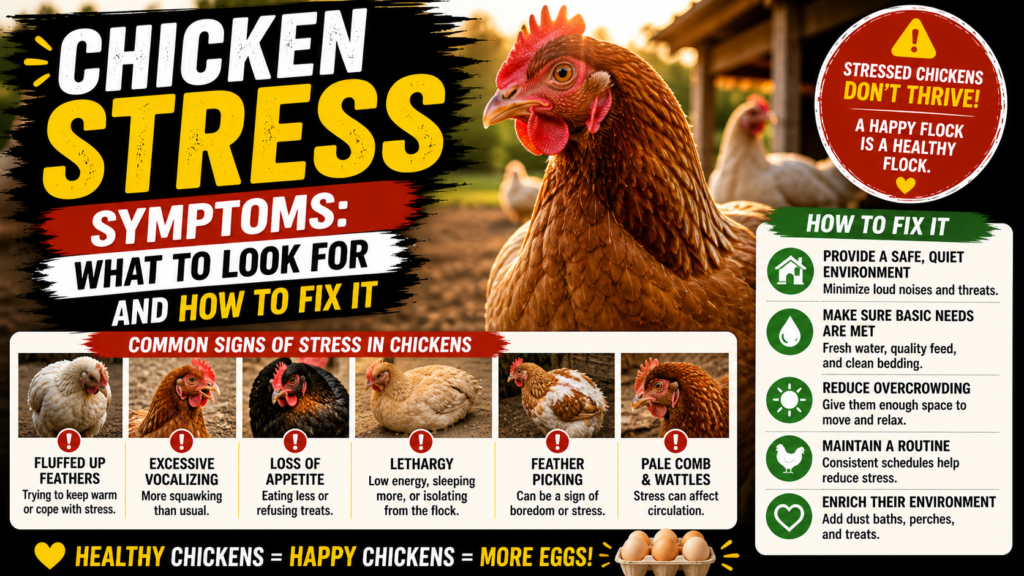
Stress in chickens shows up across three main categories: behavioral changes, physical changes, and production changes. A stressed bird usually shows symptoms in more than one category, which helps distinguish stress from a single isolated issue.
Behavioral Stress Symptoms
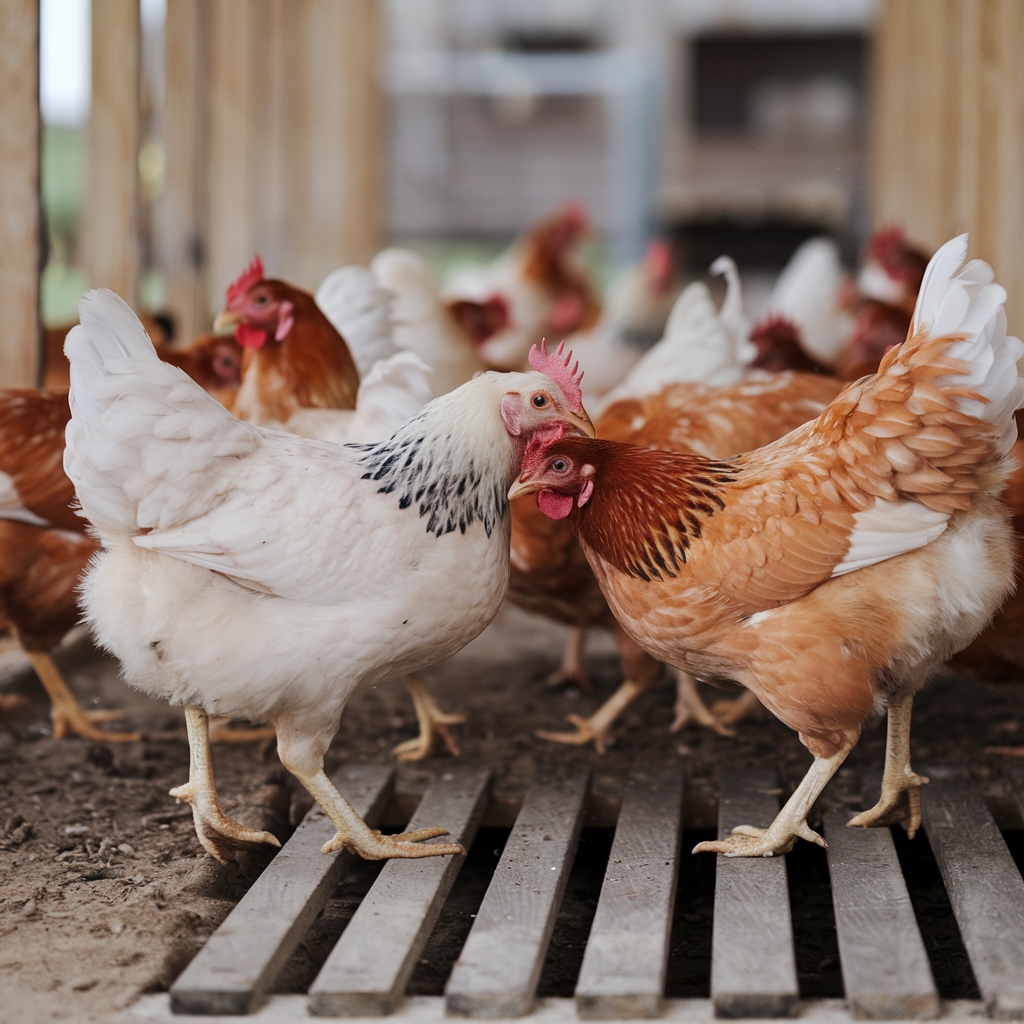
Feather pecking and cannibalism. One of the most reliable indicators that something is wrong in the flock. When birds start pecking at each other’s feathers — and especially when they start eating them — it almost always points to stress from overcrowding, nutritional deficiency, or boredom. The behavior itself becomes a stressor for the birds being targeted, creating a feedback loop that escalates fast. The guide to stopping chickens from pecking each other covers the intervention side of this in detail.
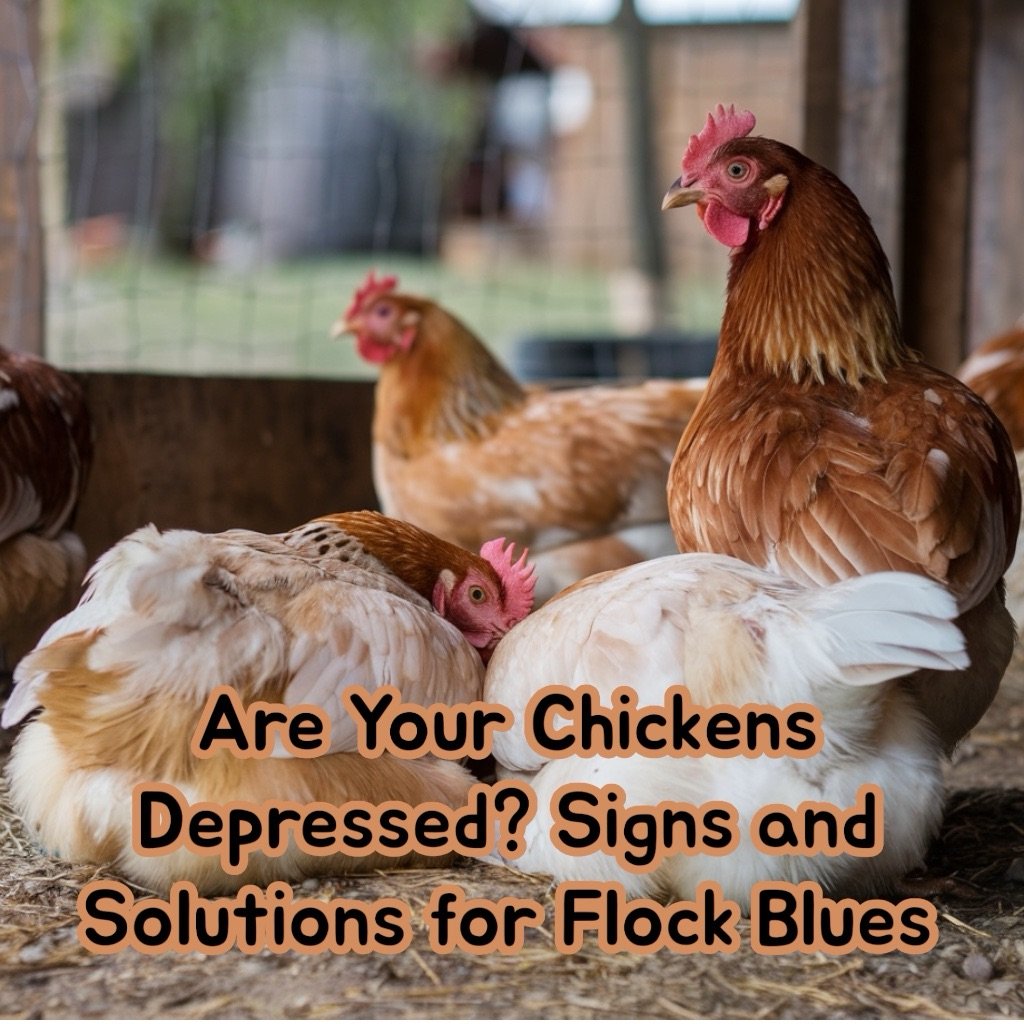
Hiding and withdrawal. A hen that suddenly starts spending time alone, hiding in corners, or avoiding the flock is showing a classic stress response. Chickens are social animals — isolation is abnormal and worth taking seriously. It can indicate social stress from being low in pecking order, physical discomfort, or the early stages of illness. The full breakdown of depressed and stressed chickens covers this behavior pattern in depth.
Pacing and restlessness. Birds that pace the run fence repeatedly, can’t settle, or seem unable to relax are showing signs of anxiety — often from predator presence or inadequate space. This is especially notable at dusk when birds are trying to roost but something is disturbing their sense of safety.
Reduced foraging and exploration. A relaxed, unstressed chicken spends most of her waking hours scratching, pecking, and exploring. A stressed hen contracts her world — she stays near the coop, sticks close to the flock, and engages less with her environment. If your normally active foragers are standing around rather than scratching, pay attention.
Aggression between flock members. Elevated aggression — beyond normal pecking order maintenance — is a stress indicator. When birds that coexisted peacefully start fighting, something in their environment has shifted. Overcrowding, resource competition (feeders, waterers, nest boxes), and new bird introductions are the most common triggers.
Dustbathing obsessively or not at all. Dust bathing is a self-regulating behavior — birds do it to maintain feather and skin condition and to manage parasites. A hen that dust bathes constantly may be dealing with mite irritation. A hen that stops dust bathing entirely may be too stressed or unwell to engage in normal comfort behaviors.
Vocalization changes. Chickens communicate constantly, and their vocalizations have meaning. An alarm call is obvious — but a flock that is consistently louder, more agitated-sounding, or strangely quiet compared to their baseline is worth investigating. Hens that have been under predator pressure at night often seem unsettled and vocal the following morning in a way that’s distinct from their normal morning activity.
Physical Stress Symptoms
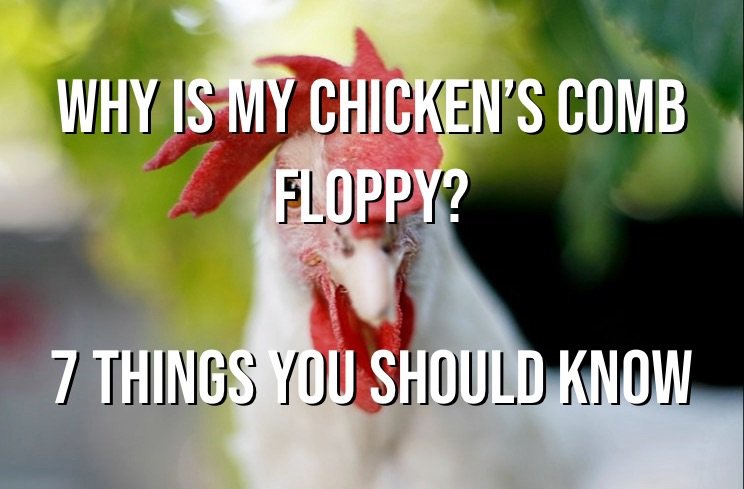
Pale or discolored comb. The comb is one of the best health indicators available. A pale, shrunken, or discolored comb can indicate stress, anemia from mite infestation, dehydration, or illness. A hen whose comb goes from bright red to pale pink over a few days is telling you something is wrong. There’s more on reading comb condition in the guide to floppy and abnormal combs.
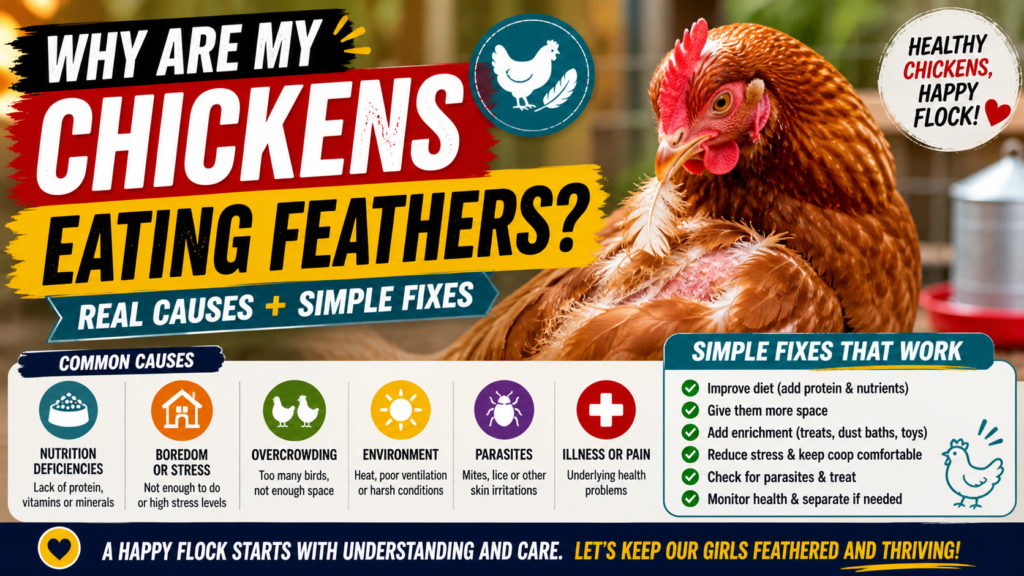
Feather loss outside of molt. Some feather loss from pecking order behavior is normal. Significant feather loss — bare patches on the back, neck, or vent area — outside of molt season is a stress signal. It can be from being pecked by flock mates, from self-over-preening due to mite irritation, or in severe cases from self-inflicted stress behavior. The article on chickens eating feathers covers the nutritional and social drivers of this.
Hunched posture. A hen that stands with her feathers fluffed, back hunched, and eyes half-closed is uncomfortable. This posture is a general indicator of not feeling well — it can mean illness, cold, injury, or chronic stress. A bird in this posture who doesn’t perk up within a few hours of observation needs a closer look.
Diarrhea or abnormal droppings. Chicken droppings are genuinely useful diagnostic tools. Stress causes cortisol release, which affects gut function and produces loose, watery, or abnormally colored droppings. Cecal droppings — the brown, strong-smelling ones that look alarming — are normal and produced every several cycles, not a sign of illness. But consistently watery, green, or foamy droppings that don’t resolve are worth investigating.
Weight loss. A hen under chronic stress eats less, absorbs nutrients less efficiently, and burns more energy on the stress response itself. Weight loss that isn’t explained by molt or illness is often a stress indicator. Pick your birds up regularly — hands-on handling lets you feel changes in body condition that aren’t visible through feathers.
Increased vulnerability to illness. Stress suppresses immune function in chickens the same way it does in mammals. A flock under chronic stress will get sick more frequently, recover more slowly, and be harder to treat successfully. If you’re dealing with recurring respiratory issues, persistent parasites, or illness that keeps cycling through the flock, chronic stress as an underlying factor is worth taking seriously.
Production Stress Symptoms
Sudden drop in egg production. This is usually what gets a keeper’s attention first. A flock that was laying consistently and suddenly drops production by 30–50% is under stress of some kind. The challenge is that many things cause production drops — molt, shorter days, nutritional deficiency, illness, and stress all look similar from the egg count alone. But if the drop is sudden and coincides with a change in the environment or flock, stress is the first place to look.
For a full diagnostic on production drops, the guide to why chickens aren’t laying and the article on why chickens stop laying cover the full range of causes.
Soft-shelled or thin-shelled eggs. Shell quality is nutritionally driven — calcium is the primary factor — but stress affects shell quality too. A hen under stress may push an egg through before the shell is fully formed, or the stress response may interfere with calcium absorption even when dietary calcium is adequate. If you’re seeing soft shells alongside other stress symptoms, address both the nutrition and the stressor. The guide to preventing soft eggs covers the full picture.
Eggs laid outside the nest box. Hens that feel unsafe or crowded in the nest boxes will lay elsewhere — on the floor of the coop, in corners of the run, or in hidden spots you have to hunt for. This is a stress response to the nest box environment specifically. Overcrowded boxes, boxes that are too bright, boxes positioned where hens feel exposed, or a dominant hen that guards the boxes can all cause this.
Smaller eggs than usual. Chronic stress over time tends to produce smaller eggs. The hen’s body is allocating resources differently under sustained stress, and egg size reflects that. It’s a subtle symptom that’s easy to miss unless you’re paying close attention to your eggs over time.

How to Confirm Stress vs. Illness
The tricky part about stress symptoms is that they overlap significantly with illness symptoms. A pale comb, reduced production, and withdrawal from the flock can point to stress or to Marek’s disease, respiratory infection, internal laying, or a dozen other health issues.
The practical approach is to look for a cause first. If you can identify a clear stressor — new birds introduced last week, a predator that’s been circling, a heat wave, a feed change — that’s strong evidence the symptoms are stress-driven. Remove or address the stressor and monitor for improvement over 7–14 days.
If you can’t identify a cause, or if symptoms aren’t improving after the stressor is removed, start ruling out illness. Look for other illness indicators — respiratory sounds, discharge from eyes or nostrils, swelling, unusual droppings, or neurological symptoms. A bird that’s truly ill rather than stressed typically deteriorates rather than stabilizing, and usually shows more than just behavioral changes.
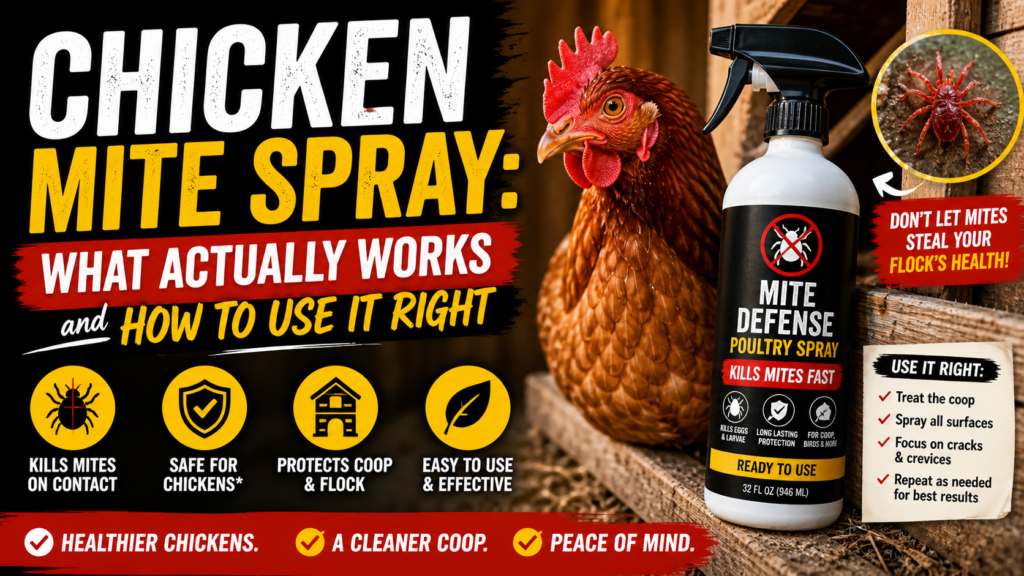
Mites are worth checking proactively any time stress symptoms appear. They’re common, easy to miss, and produce stress symptoms that look almost identical to environmental stress. Check the vent area and under wings in good light. If you find mites, treat the birds and the coop at the same time — treating one without the other is the main reason mite treatments fail.
How to Reduce Stress in Your Flock
Once you’ve identified stress as the issue, the response depends on the cause. But several interventions help across the board regardless of what’s driving the stress.
Stabilize the environment. Minimize changes. If you need to make multiple adjustments — new feed, new birds, coop rearrangement — space them out rather than stacking them. Give the flock two to three weeks to adjust to one change before introducing another.

Address predator pressure. If predators are circling, reinforce the coop and run rather than hoping it resolves. Hardware cloth over chicken wire, a secure latch on every door, and no gaps at ground level go a long way. A solar security camera on the coop lets you see what’s happening at night — which is often more than you’d expect. Knowing what predator you’re dealing with lets you respond specifically rather than guessing.
Check and improve space. If you’re under the recommended space minimums, the stress will keep coming back regardless of what else you fix. More square footage per bird is the single most effective intervention for overcrowding-driven stress behaviors.
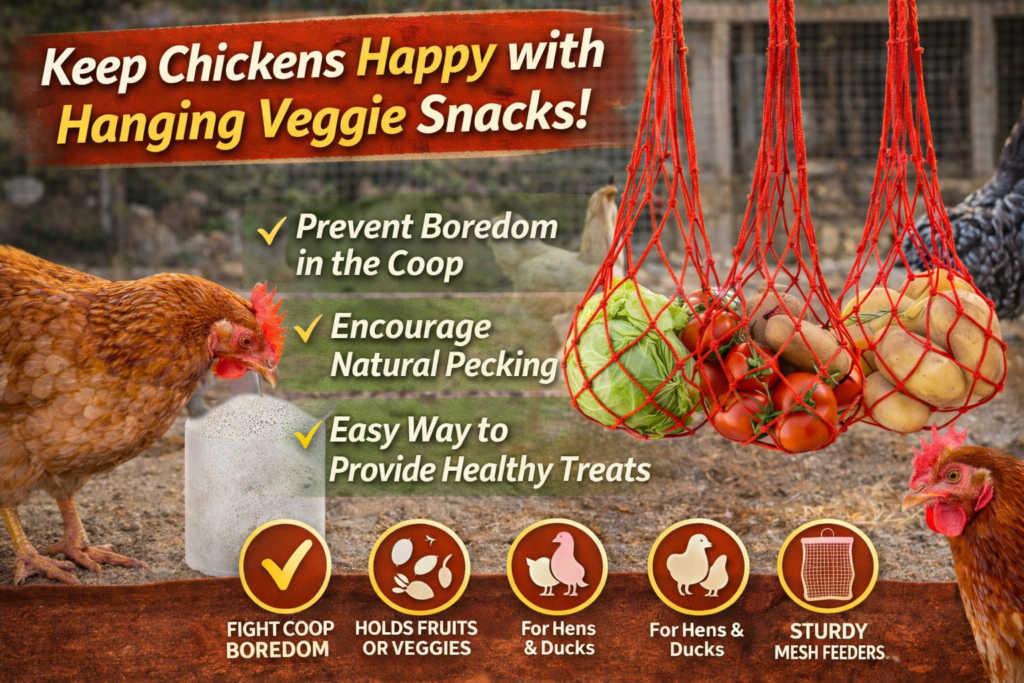
Add enrichment. Boredom and understimulation compound stress in confined birds. Hanging a head of cabbage, adding a vegetable hanging feeder, providing logs or stumps for perching, or even scattering scratch in the run to encourage foraging gives stressed birds a constructive outlet. It won’t fix a serious stressor on its own, but it consistently reduces the intensity of stress behaviors.

Audit nutrition. Stress increases nutritional demands. A flock under any kind of pressure needs adequate protein, calcium, and micronutrients more than a flock in a stable environment. Check the protein percentage of your feed — layer hens need 16–18% — and make sure calcium (oyster shell) is available free-choice at all times. A quality poultry vitamin supplement added during high-stress periods helps shore up the micronutrients that get depleted fastest under stress.
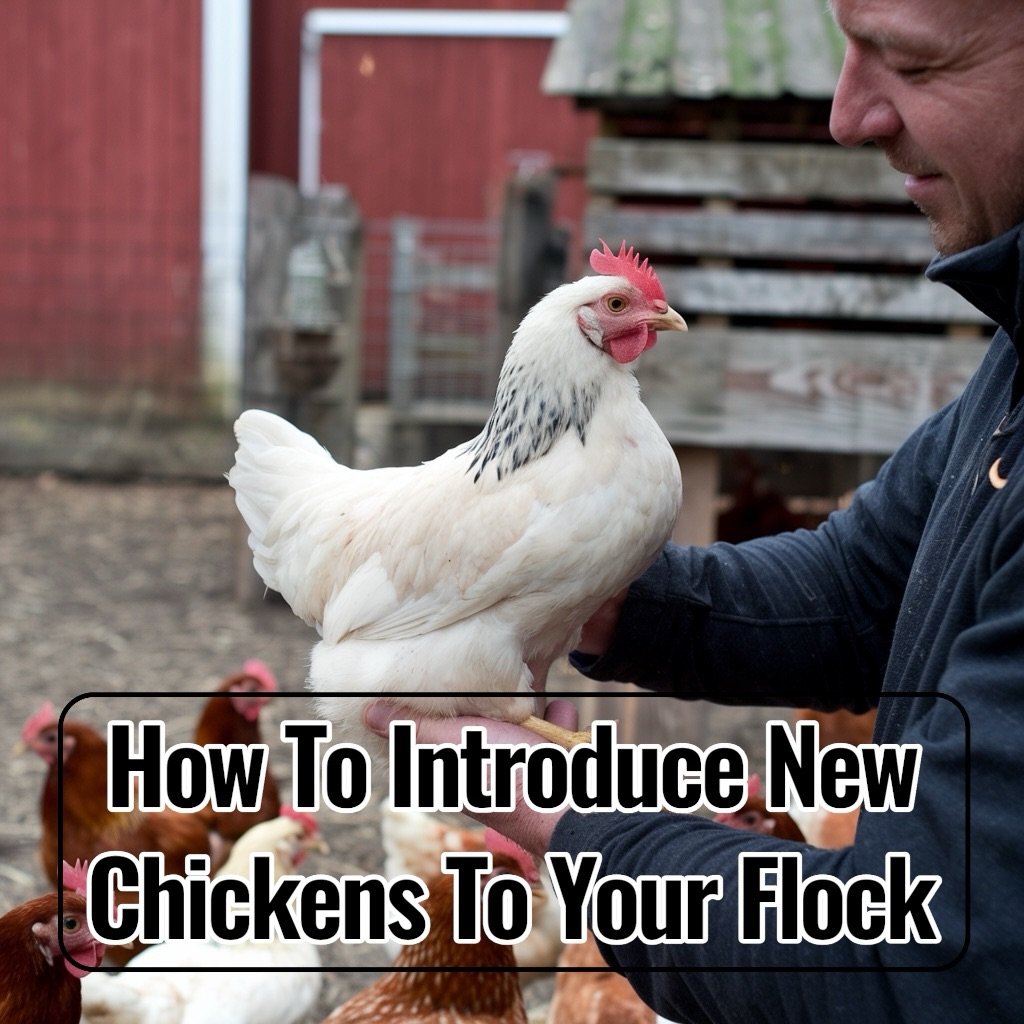
Manage flock introductions carefully. Adding new birds is one of the most predictable stress triggers in backyard flocks. The guide to introducing new chickens covers the see-but-don’t-touch quarantine and introduction process that minimizes the disruption. Skipping the process and dropping new birds directly into the flock almost always produces a stress response in the established birds.
Give free ranging time when possible. A flock that can free range — even a few hours a day — handles stress significantly better than a permanently confined one. The ability to move, forage, and spread out reduces the intensity of most stress behaviors. The advantages of free ranging go well beyond just cost savings on feed.

The Flock That Looks Fine Usually Isn’t — Until It Is
Stress in chickens is cumulative. A single stressor that resolves quickly usually doesn’t leave lasting effects. But multiple stressors running simultaneously — a predator circling, an overcrowded coop, a nutritional gap, new birds disrupting the pecking order — compound on each other in ways that are genuinely hard on the flock even when no individual bird looks dramatically unwell.
The keepers who catch stress early are the ones who know their flock’s normal. They know what their hens sound like on a typical morning, how much they’re eating and drinking, what their usual activity level looks like, and what the eggs have been looking like. When something shifts — even subtly — they notice.
You don’t need to be paranoid about it. But regular observation, hands-on handling of your birds a few times a week, and a habit of connecting changes in behavior or production to changes in the environment will catch most problems before they become serious ones.
A settled, low-stress flock is more productive, healthier, and honestly more enjoyable to keep. It’s worth putting the work in to get there and keep it that way.
About the Author: Diane Holloway has kept backyard chickens for over a decade across three different properties and has learned to read flock stress the hard way — usually after missing it longer than she should have. She writes about practical flock management with an emphasis on prevention over reaction.