Worms are one of those flock health issues that most backyard keepers don’t think about until something makes them think about it. A hen who’s losing weight despite eating well. A drop in production that doesn’t have an obvious explanation. A bird who just looks rough — dull feathers, pale comb, less energy than she used to have. Those changes can be easy to dismiss, so chicken behavior warning signs may help you identify what else could be behind an off-looking bird.
By the time those signs show up clearly, the worm burden has usually been building for weeks or months. That’s the nature of internal parasites — they’re invisible, their early effects are subtle, and chickens are good at masking discomfort until it reaches a level they can’t compensate for anymore.
Here’s everything you need to know about worms in backyard chickens — the signs, the types, how to confirm it, and how to address it both naturally and pharmaceutically depending on the severity of what you’re dealing with.
Do Backyard Chickens Get Worms?
Yes — reliably and repeatedly. Internal parasites are a normal part of life for any chicken with access to soil, insects, or outdoor environments. Chickens pick up worm eggs and larvae constantly through their natural behaviors: scratching in dirt, eating earthworms, consuming insects, and foraging in areas where other birds have been.
The key distinction is between a chicken carrying some worms — which is nearly universal in any outdoor flock — and a chicken carrying a worm burden heavy enough to affect her health. A healthy hen with a strong immune system and good nutrition can carry a moderate parasite load without showing symptoms. The problem develops when that load exceeds what her body can manage, when her nutritional status is compromised and she can’t mount an effective immune response, or when a particularly pathogenic species establishes itself in large numbers.
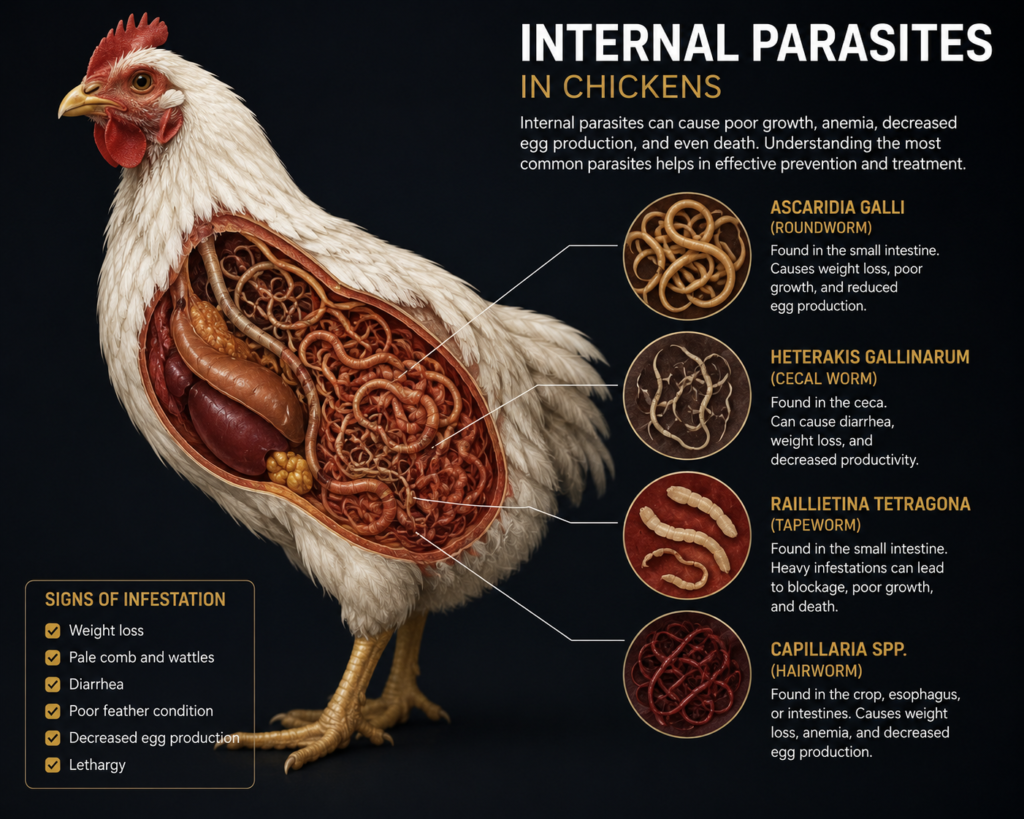
Free ranging birds have higher exposure than confined birds, but confined birds on soil are not protected — worm eggs can persist in soil for months, and even birds in runs encounter earthworms, beetles, and other potential intermediate hosts. The only chickens with truly minimal worm risk are those kept entirely on hardware cloth or concrete with no soil contact — and that’s not most backyard flocks. Understanding the advantages of outdoor ranging can help keepers weigh the health and management tradeoffs of outdoor access.
Types of Worms That Affect Chickens
Not all worms behave the same way or cause the same problems. Knowing which types exist helps you understand what you’re dealing with and why certain treatments work better than others.
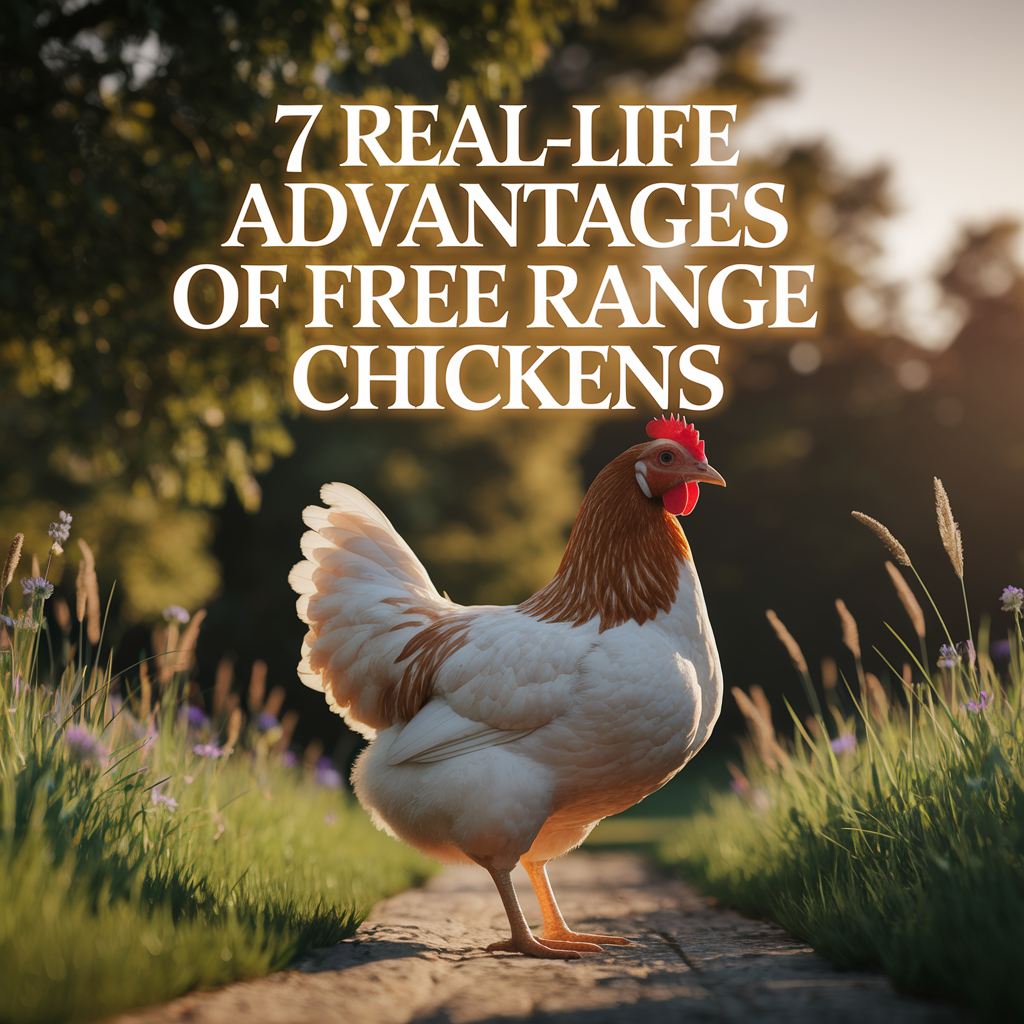
Roundworms (Ascaridia galli)
The most common intestinal worm in backyard chickens. Roundworms live in the small intestine and can grow up to several inches long — large enough to be visible to the naked eye in droppings or when a bird is processed. Light infestations cause reduced nutrient absorption and production drops. Heavy infestations cause significant weight loss, intestinal blockage in severe cases, and can be fatal in young birds.
Chickens pick up roundworms directly from contaminated soil or by eating earthworms that carry the larvae. The life cycle is direct — no intermediate host required — which makes environmental contamination build up quickly in a heavily stocked area.
Cecal Worms (Heterakis gallinarum)
Cecal worms live in the ceca — the two blind pouches at the junction of the small and large intestine. On their own, cecal worms cause relatively minor problems even at significant numbers. The real concern with cecal worms is that they carry Histomonas meleagridis — the protozoan that causes blackhead disease, which is devastating in turkeys and can affect chickens as well. If you keep turkeys and chickens together, cecal worm control becomes significantly more important.
Capillary Worms (Capillaria species)
Capillary worms — sometimes called hairworms or threadworms — are tiny, hair-thin worms that can inhabit the crop, esophagus, or intestines depending on the species. They’re harder to see than roundworms and can cause significant damage to the intestinal lining even at relatively low numbers. Symptoms include weight loss, ruffled feathers, decreased appetite, and in severe cases, bloody droppings.
Some capillary worm species require an earthworm as an intermediate host, making free-ranging birds particularly vulnerable. They’re also harder to treat than roundworms — not all dewormers are equally effective against capillary worms.
Tapeworms (Cestodes)
Tapeworms require intermediate hosts — beetles, earthworms, slugs, or other insects — to complete their lifecycle. Chickens pick them up by eating these insects during normal foraging. Tapeworms attach to the intestinal wall and absorb nutrients directly from the host, causing weight loss, reduced production, and general unthriftiness. Visible tapeworm segments in droppings look like small grains of rice or flat white fragments.
Tapeworms are less common than roundworms or cecal worms in most backyard flocks, but they do occur and are worth knowing about if a bird shows symptoms without an obvious cause.
Gapeworms (Syngamus trachea)
Gapeworms live in the trachea rather than the digestive tract, which makes them distinctly different from other poultry worms. A bird with gapeworms will shake her head, stretch her neck, and gasp — behaviors sometimes described as “gaping,” which gives the worm its name. Heavy infestations can cause suffocation in young birds. Gapeworms are less common than intestinal worms in most backyard flock situations but more immediately dangerous when they occur.
Signs Your Chickens Have Worms
The challenge with worm symptoms is that they’re nonspecific — most of them point to “something is wrong” rather than “definitely worms.” Ruling out other causes while keeping worms in mind is the right approach.
Weight Loss Despite Good Appetite
This is the most telling sign of a significant worm burden. A hen who approaches the feeder eagerly, eats normally, but continues to lose weight and feel lighter when you pick her up is showing the classic worm presentation. The worms are intercepting nutrition before the hen can absorb it — she’s eating for herself and her parasites, and the parasites are winning.
Get in the habit of picking your birds up regularly so you have a feel for normal body condition. A chicken’s feathers hide a lot — a bird can look completely normal from a distance while being significantly underweight. Running your hand along the keel bone (the ridge of the breastbone) tells you a lot: a prominent, sharp keel bone with little muscle on either side indicates weight loss that deserves investigation.
Pale Comb and Wattles
Pallor in the comb and wattles indicates anemia — reduced red blood cell count. A heavy worm burden, particularly from roundworms or capillary worms that cause intestinal bleeding, produces genuine anemia over time. The comb goes from bright red to pink to pale, and the bird’s overall energy reflects that reduced oxygen-carrying capacity.
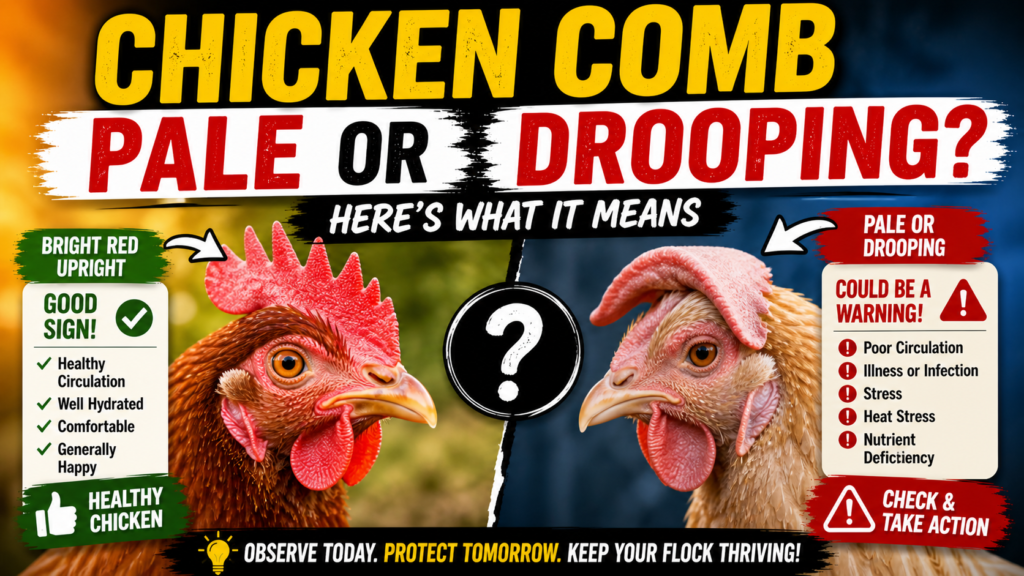
Pale combs have multiple possible causes — mites being another significant one — so a pale comb alone doesn’t confirm worms. But combined with weight loss and production drop, it’s a strong part of the picture. The full guide on comb color and what it means covers the full differential for comb pallor.
Decreased Egg Production
A hen under significant parasite burden redirects resources away from egg production toward basic survival. A flock that was laying consistently and drops production without a seasonal or nutritional explanation is showing a systemic health signal — and worms are always on the list of possible causes alongside stress, nutritional deficiency, and illness.
If production drops coincide with other symptoms — weight loss, pale combs, looser droppings — the case for worms strengthens considerably. The guide to why chickens stop laying covers the full range of causes and helps narrow down which one you’re dealing with.
Loose, Abnormal, or Blood-Tinged Droppings
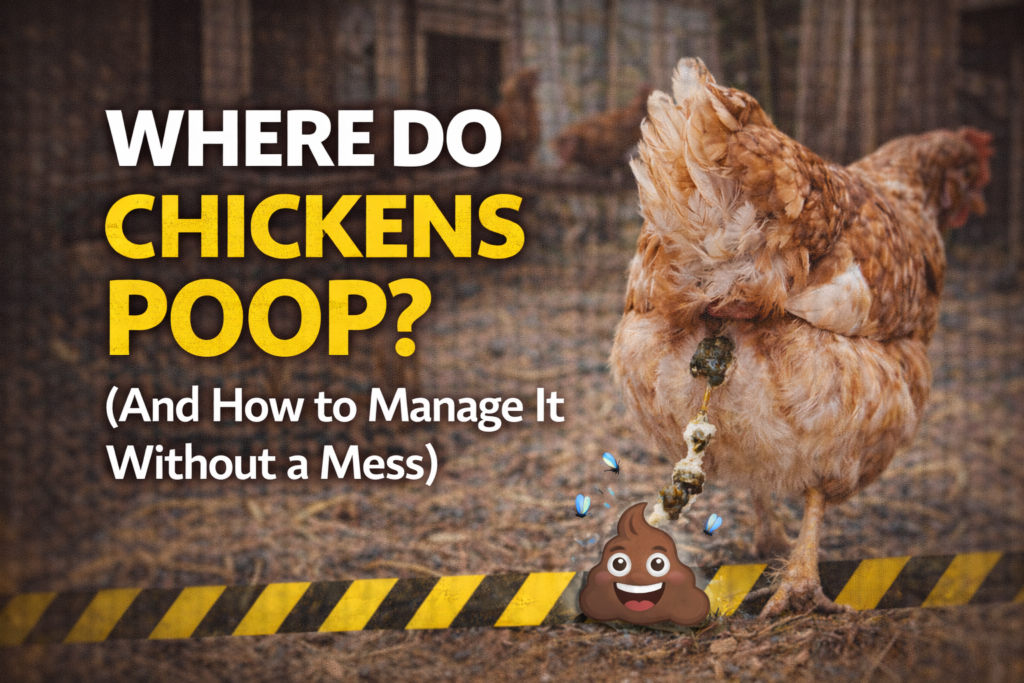
Worms in the intestinal tract cause inflammation and irritation that affects stool consistency and appearance. Loose, watery, or unusually foul-smelling droppings that persist over multiple days — rather than the occasional off dropping that every chicken has — point to digestive disruption. Blood-tinged droppings can indicate capillary worm damage to the intestinal lining and warrant urgent attention. Knowing what is normal makes it easier to manage waste and recognize when understanding chicken droppings may signal a problem.
Note: cecal droppings — the dark brown, strongly-scented droppings that look alarming — are normal. Every chicken produces them periodically. They’re not blood-tinged and they’re not a sign of illness.
Lethargy and Reduced Activity
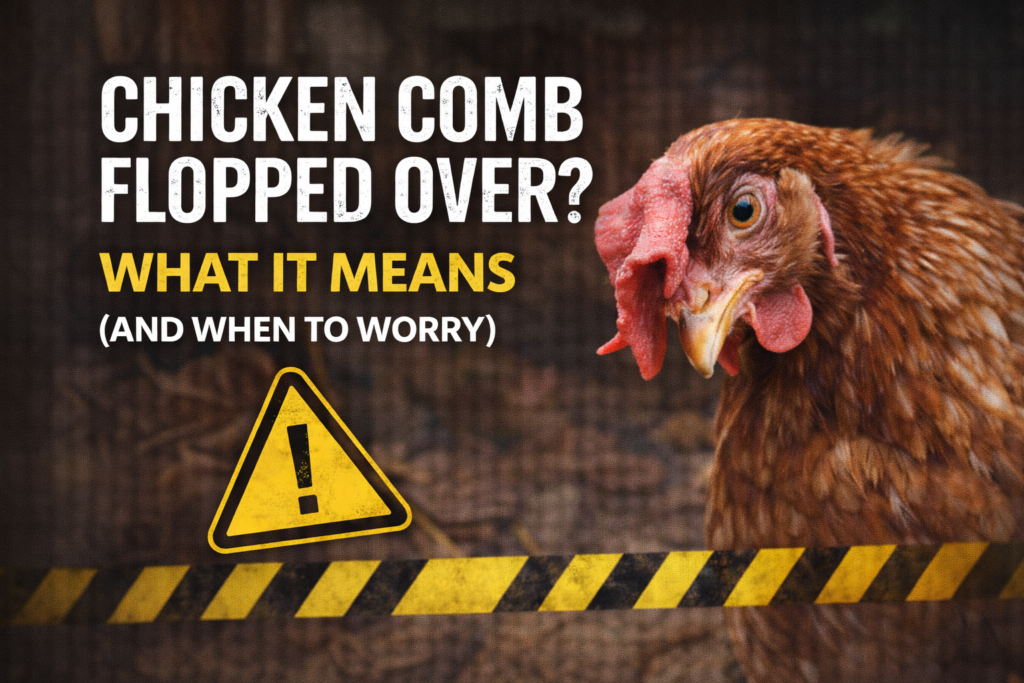
A bird with a heavy worm burden is essentially malnourished regardless of food access, and malnourishment shows as reduced energy. Less foraging, less engagement with the environment, more time standing still or roosting during the day. Combined with weight loss and pale comb, lethargy forms the classic triad of significant internal parasite burden. Because comb changes can have several causes, compare these signs with pale and drooping combs before assuming parasites are responsible.
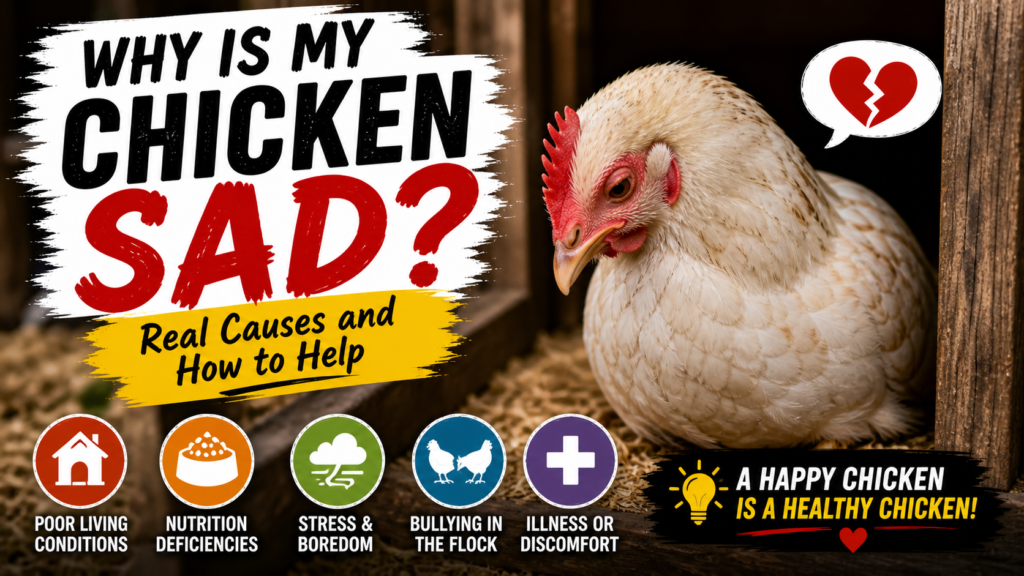
Lethargy from worms can look very similar to lethargy from stress or illness — which is another reason the full picture of symptoms matters more than any single sign. The guide to sad or withdrawn chickens covers how to read behavioral changes and narrow down the cause.
Visible Worms in Droppings
In heavy roundworm infestations, worms are sometimes visible in droppings — pale, spaghetti-like strands several inches long. Tapeworm segments look like small flat white fragments or rice-grain-sized pieces. Seeing actual worms confirms the diagnosis immediately and indicates a burden severe enough to need prompt treatment.
Head Shaking and Neck Stretching
These specific behaviors — particularly if accompanied by a rasping sound when breathing — point specifically to gapeworm infestation in the trachea rather than intestinal worms. A bird that repeatedly stretches her neck, opens her beak, and shakes her head as if trying to dislodge something needs urgent assessment for gapeworm.
How to Confirm Worms
The most reliable confirmation is a fecal float test — a simple laboratory procedure where a stool sample is processed to float worm eggs to the surface for microscopic identification. Many veterinarians offer this at reasonable cost, and some backyard keepers learn to do basic fecal floats at home with inexpensive equipment.
A fecal float tells you which species are present and gives a rough sense of the burden level, which helps determine whether natural support is appropriate or whether pharmaceutical treatment is warranted. It’s worth doing at least once in any flock where you suspect worms — having actual species identification rather than guessing shapes the treatment approach significantly.
If a vet visit isn’t practical, treating based on symptoms and observation is reasonable — but lean toward pharmaceutical treatment for any bird showing serious symptoms rather than starting with natural support alone.
Natural Deworming — What Works and What Doesn’t
The natural deworming world has a lot of folklore mixed in with genuinely useful approaches. Being clear about what’s supported and what isn’t helps you make good decisions for your flock.
What Has Real Support
Pumpkin seeds contain cucurbitacin, a compound that paralyzes certain intestinal parasites and allows the bird’s system to expel them. Best used as prevention and maintenance rather than treatment for heavy burdens — but genuinely effective in that role.
Garlic creates an inhospitable gut environment for parasites through allicin and supports immune function that helps the bird manage parasite loads on her own. Long-standing use in livestock management with reasonable supporting evidence.
Wormwood (Artemisia absinthium) contains compounds directly antiparasitic to several intestinal worm species and has been studied in commercial poultry production as part of antibiotic-free management programs.
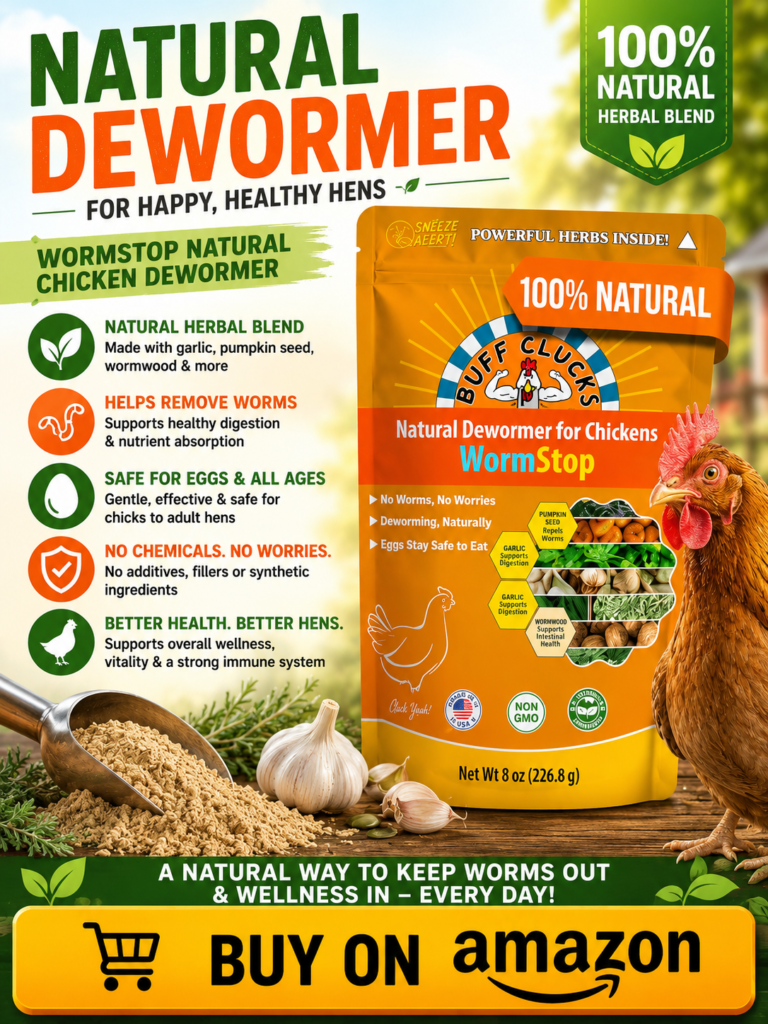
These three ingredients form the backbone of quality natural dewormer formulas — and they’re the active ingredients in the WormStop Natural Chicken Dewormer Powder, which I use for routine maintenance in my own flock. The powder format makes it easy to mix into feed on a regular schedule with no egg withdrawal concerns — important for laying flocks where pharmaceutical withdrawal periods create real management complications.
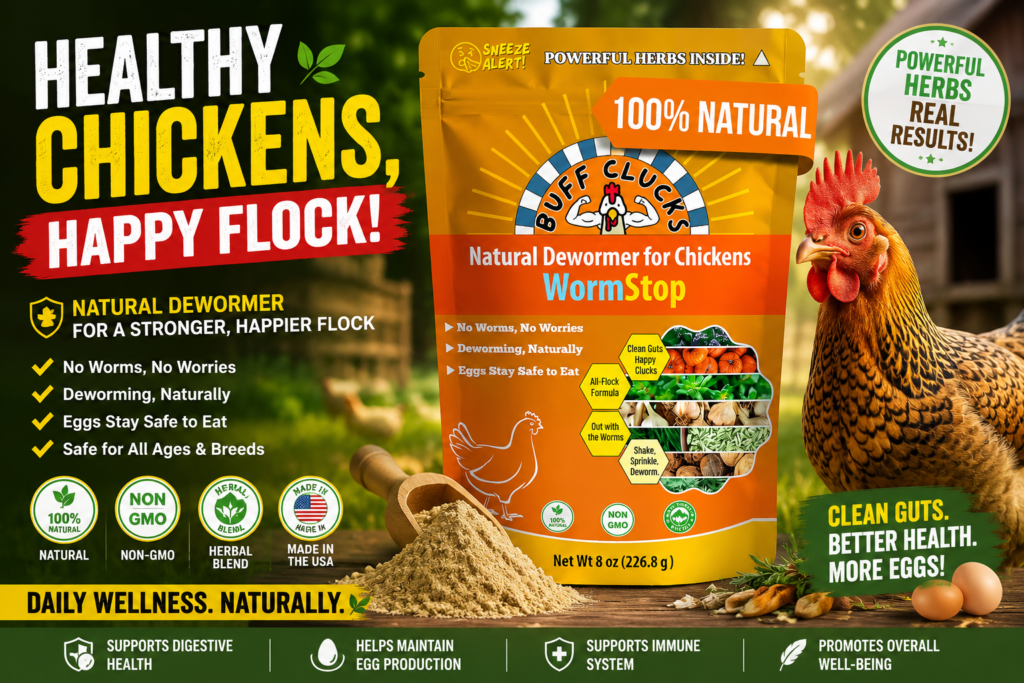
For a full breakdown of how WormStop works, the ingredient science behind each component, and how to incorporate it into a flock health routine, the full WormStop review covers all of it in detail.
What Doesn’t Hold Up
Apple cider vinegar is often cited as a natural dewormer. It has genuine benefits for gut health and may have some mild antimicrobial properties — but there’s no meaningful evidence it affects worm populations. Use it for general gut health support if you want, but don’t rely on it as a dewormer.
Diatomaceous earth works as a mechanical pesticide against external parasites when applied topically — it damages the exoskeleton of mites and lice. Internally, the digestive process neutralizes the mechanism before it can affect worms. It’s a useful tool for mite management but not for internal parasites.
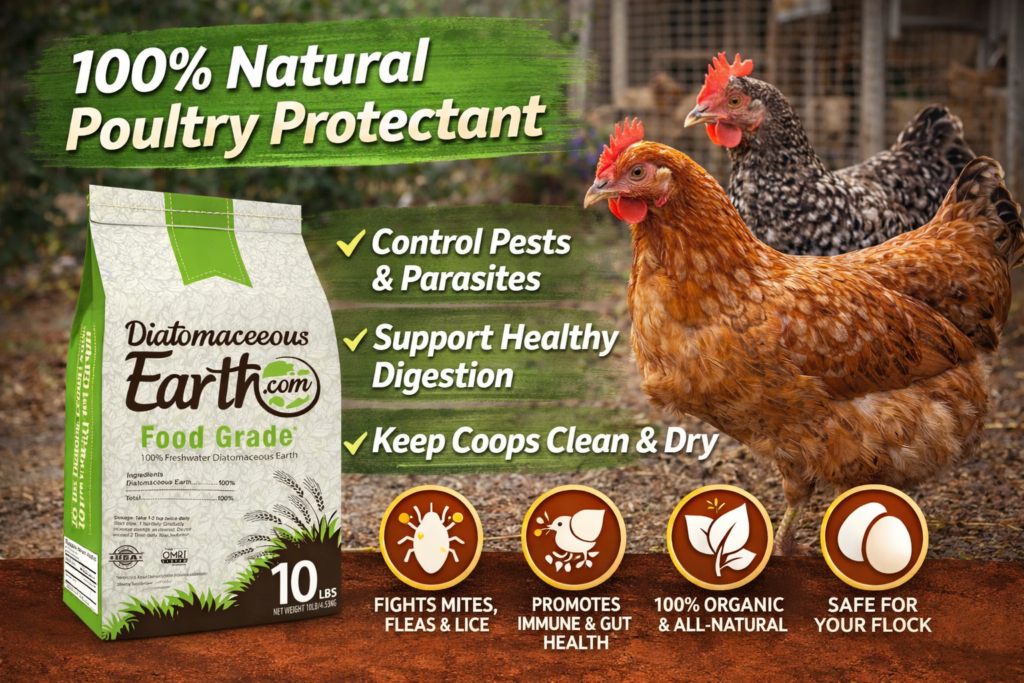
The guide to using natural powder for mite control covers diatomaceous earth properly — it’s genuinely useful for what it’s actually designed for.
When to Use Pharmaceutical Dewormers
Natural prevention and maintenance have a real and important role in flock management. But there are situations where pharmaceutical treatment is the right call — and being honest about this matters for your birds’ welfare.
Use pharmaceutical treatment when: a bird is showing serious symptoms — significant weight loss, anemia, visible worms in droppings; a fecal float confirms a heavy worm burden; natural approaches have been consistently used but symptoms persist or worsen; or a young bird is affected, as chicks handle worm burdens less well than adults.
Fenbendazole (sold as Panacur or SafeGuard) is the most commonly used pharmaceutical dewormer in backyard flocks. It’s effective against most intestinal worm species. It’s not FDA-approved for laying hens in the US, which means there’s no official egg withdrawal period established — most backyard keepers who use it observe a 14-day egg withdrawal as a conservative standard. Work with a veterinarian if possible when using pharmaceutical dewormers, particularly for chicks or birds in poor condition.
After pharmaceutical treatment resolves an acute burden, transitioning to a natural maintenance program like WormStop makes sense for ongoing prevention without the egg withdrawal concern.
Preventing Worms — The Long Game
Prevention is genuinely more effective than repeated treatment cycles, and it’s less stressful on the birds and on you.
Pasture rotation is the single most effective environmental intervention. Moving the flock to fresh ground breaks the worm lifecycle — larvae and eggs in soil die off when the flock isn’t present to reinfect themselves from it. Even rotating between two sections of a yard on a monthly basis makes a real difference to the worm pressure the flock is exposed to.
Avoid overloading stocking density. More birds on the same ground equals more rapid contamination of that ground with worm eggs. If your run is stocked heavily, worm pressure builds faster than in a lightly stocked or free ranging situation.

Support immune function with good nutrition. A nutritionally replete hen handles parasite burdens better than a hen who’s deficient in protein, vitamins, or minerals. Layer feed with adequate protein, free-choice oyster shell for calcium, and a supplement program that fills micronutrient gaps — including a quality poultry vitamin supplement — supports the immune response that keeps worm loads in check.
Run a consistent natural dewormer schedule. The maintenance approach — regular addition of a natural dewormer powder to feed throughout the seasons when worm exposure is highest — keeps burdens from building to problematic levels without the complications of pharmaceutical treatment. Spring through fall, when birds are most active on pasture and worm transmission is highest, is the priority period for consistent supplementation.
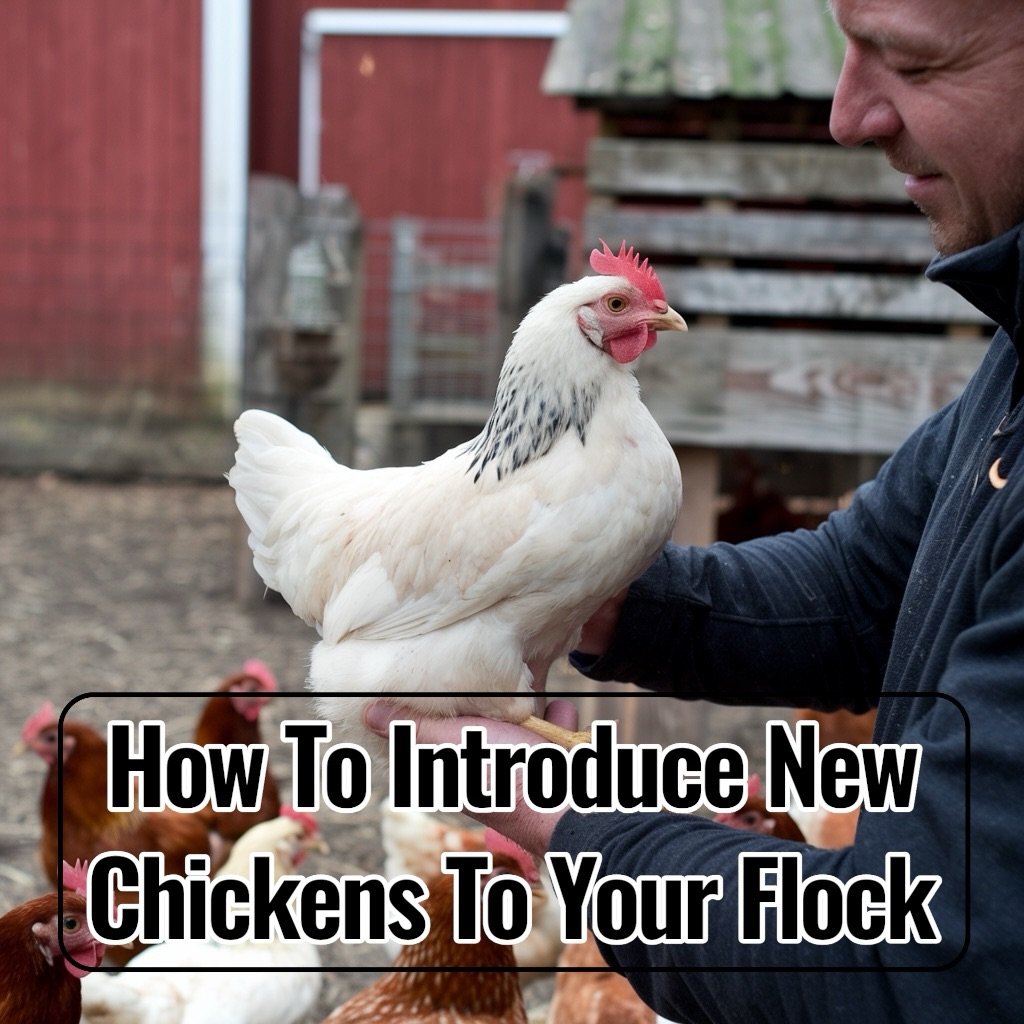
Quarantine new birds. Incoming birds are the most common way new worm species enter a clean flock. A 30-day quarantine — ideally with a fecal float test early in that period — lets you identify and treat any worm burden before it becomes the whole flock’s problem. The guide to introducing new chickens covers the full quarantine and introduction process.
Worms Are Manageable — With the Right Approach
Internal parasites are a permanent feature of backyard chicken keeping rather than a problem you solve once. The birds will always have some exposure. The goal is managing that exposure so it never rises to the level where it affects health, production, and quality of life for your flock.
Regular observation — hands-on, consistent, attentive to the individual birds you know well — catches the early signs before they become serious. A natural deworming maintenance program keeps burdens lower between those observations. Good nutrition and environmental management give the birds the best possible baseline for handling the parasites they inevitably carry.
That combination isn’t complicated. It’s consistent attention to the basics — which is ultimately what good backyard flock management always comes down to.
About the Author: Ryan Callahan has kept backyard chickens for eight years and learned to take internal parasites seriously after a hen he thought was just aging turned out to have a significant worm burden. He writes about practical flock health with an emphasis on prevention and early detection.