
I Finally Saw a Chicken Run That Made Me Question Building With Wood
I’ve looked at a lot of backyard chicken coops and runs over the years. Some are beautiful. Some are incredibly expensive. Others look great in pictures but probably won’t survive many years of weather or determined predators.
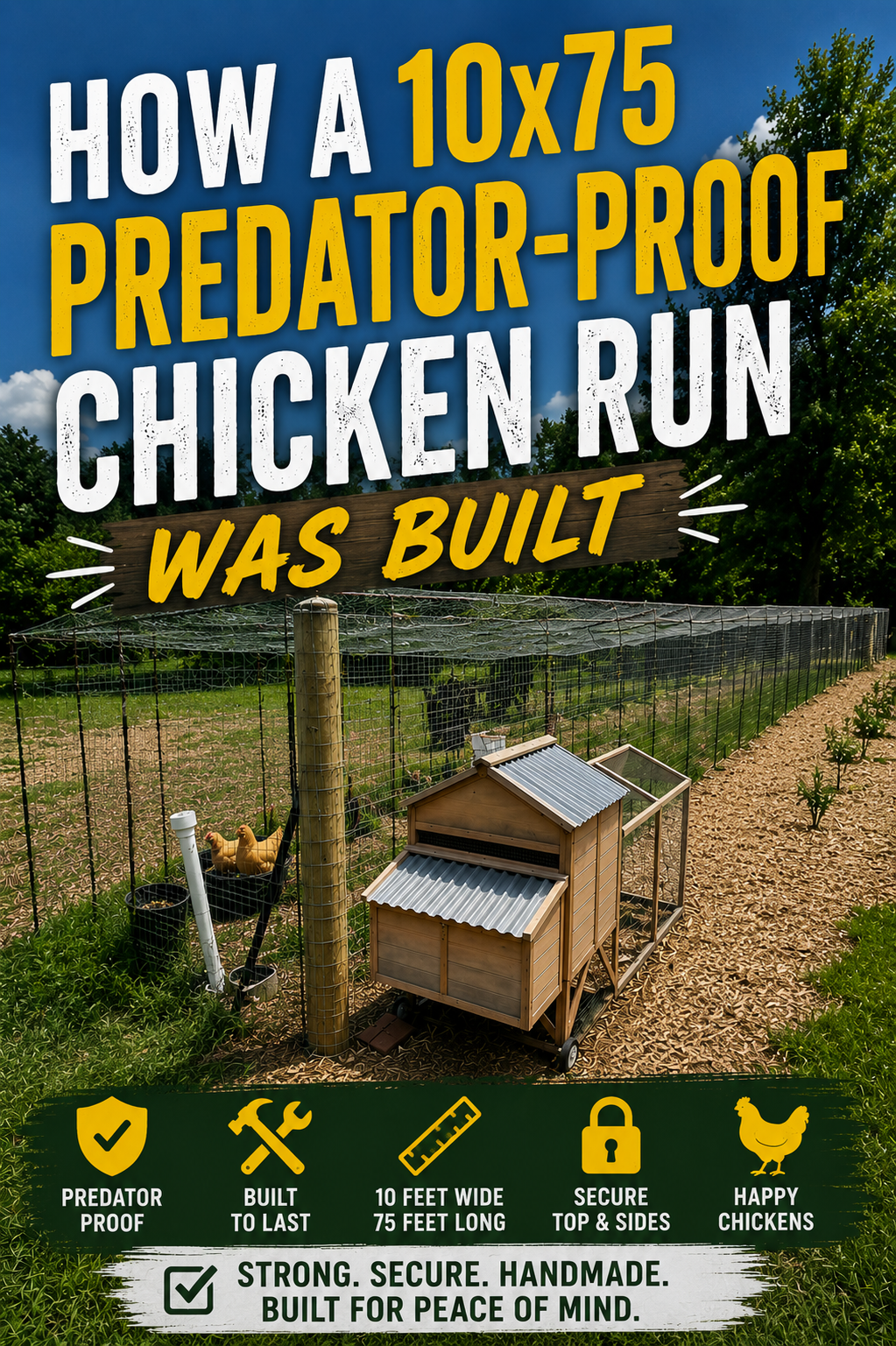
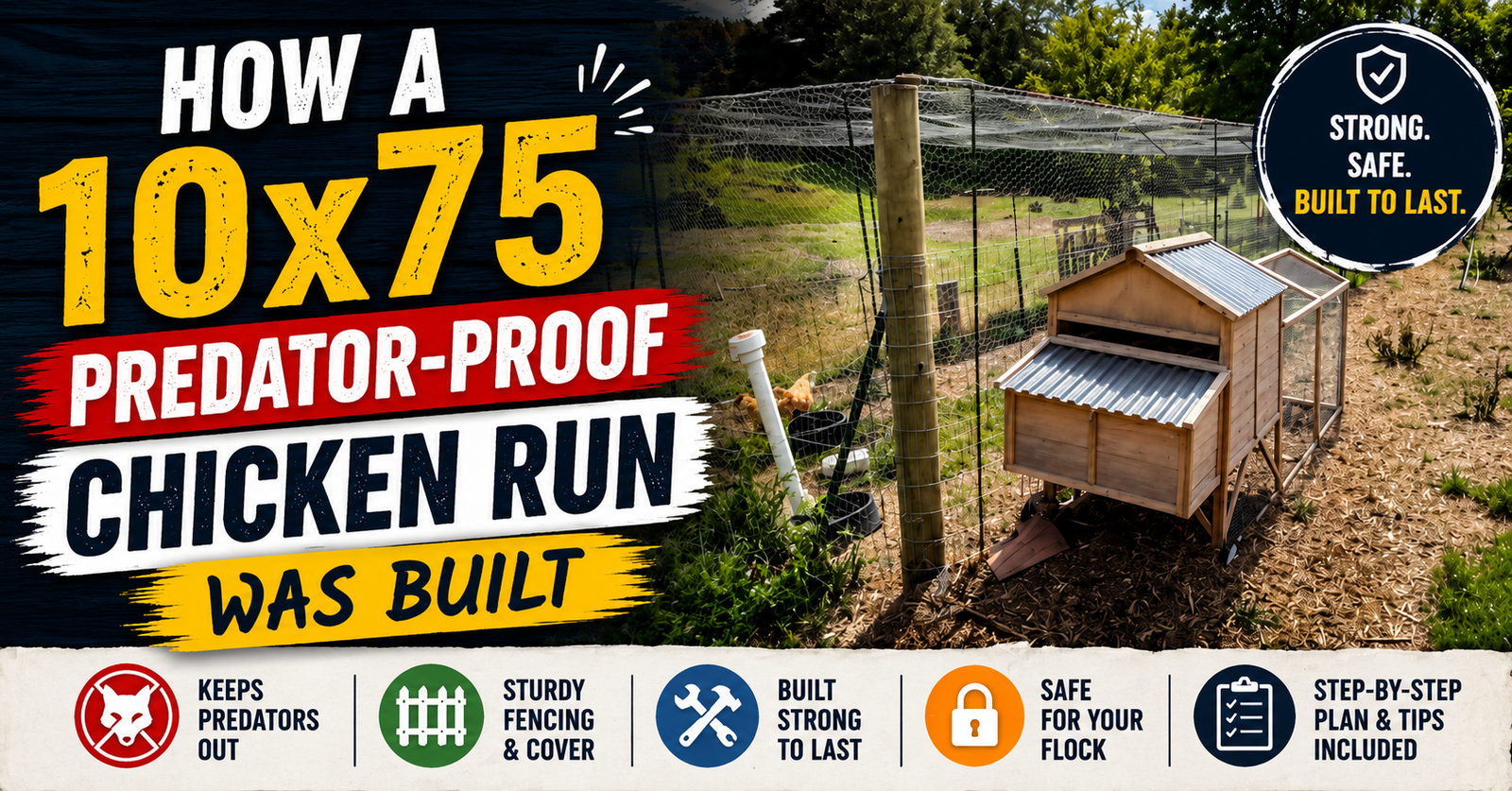
Recently I had the chance to spend some time at Weaver Family Farms, where Daxon walked me through the massive chicken run he built for his flock. As we walked around it, he explained every decision he made, why he skipped traditional lumber almost entirely, and how he designed it to keep predators out while giving the chickens far more room than most backyard flocks ever get.
I honestly left with pages of notes.
What impressed me wasn’t just the size. It was how practical everything was.
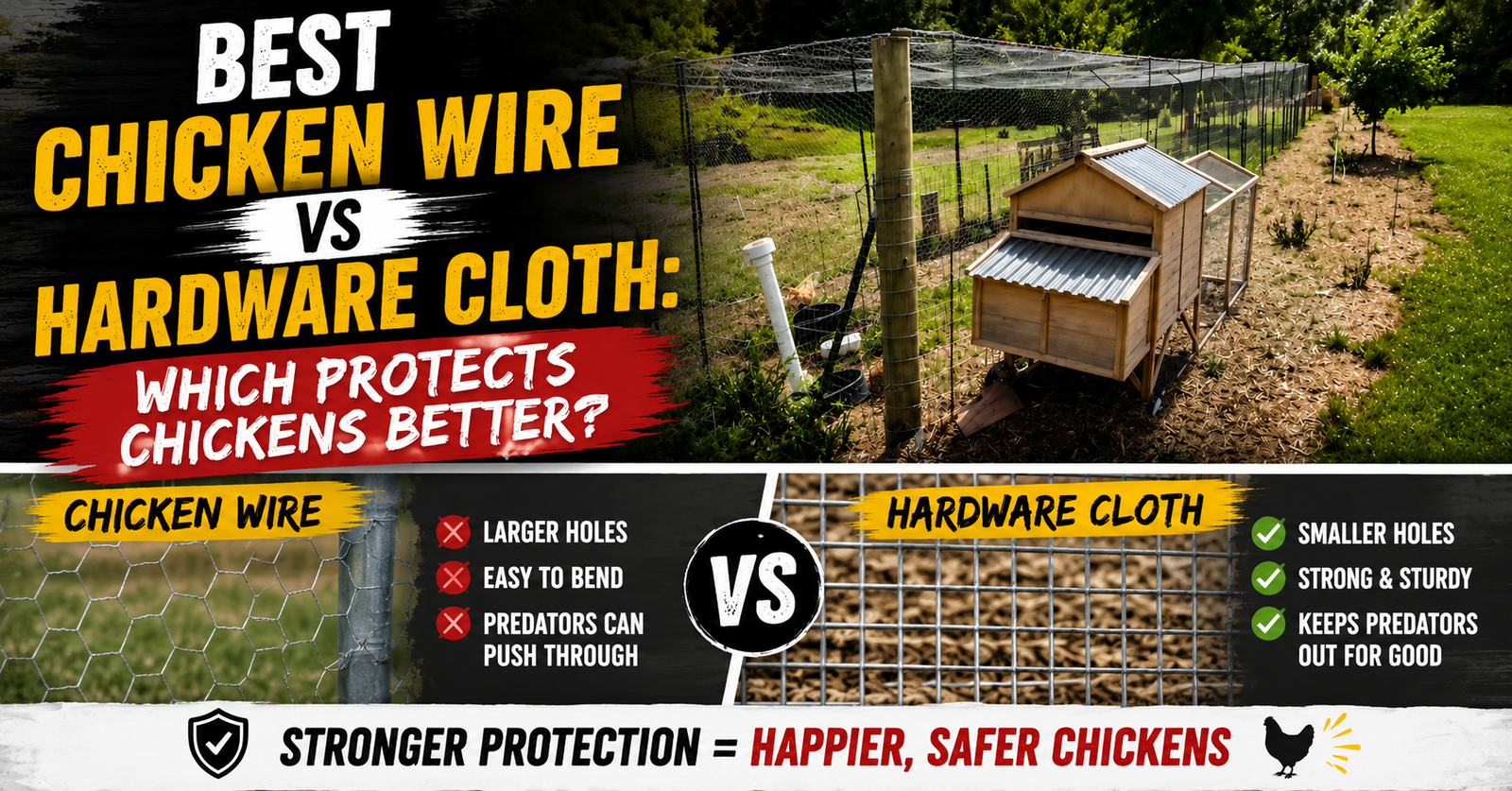
Nothing about this build was done just because it looked nice. Every piece of rebar, every section of fencing, and every measurement had a purpose. Understanding different fencing choices helps explain the practical decisions behind Chicken Wire vs. Hardware Cloth: Which Protects Chickens Better?.

If you’ve been thinking about building a predator-proof chicken run, I think you’ll find several ideas here worth stealing. A strong run also needs protection below ground, so review Can Foxes Dig Under a Chicken Coop? Here’s How to Stop Them before finalizing the perimeter.
The First Thing That Stood Out Was Just How Big It Is
Photos don’t do this run justice.
Standing beside it, I realized just how long 75 feet actually is.
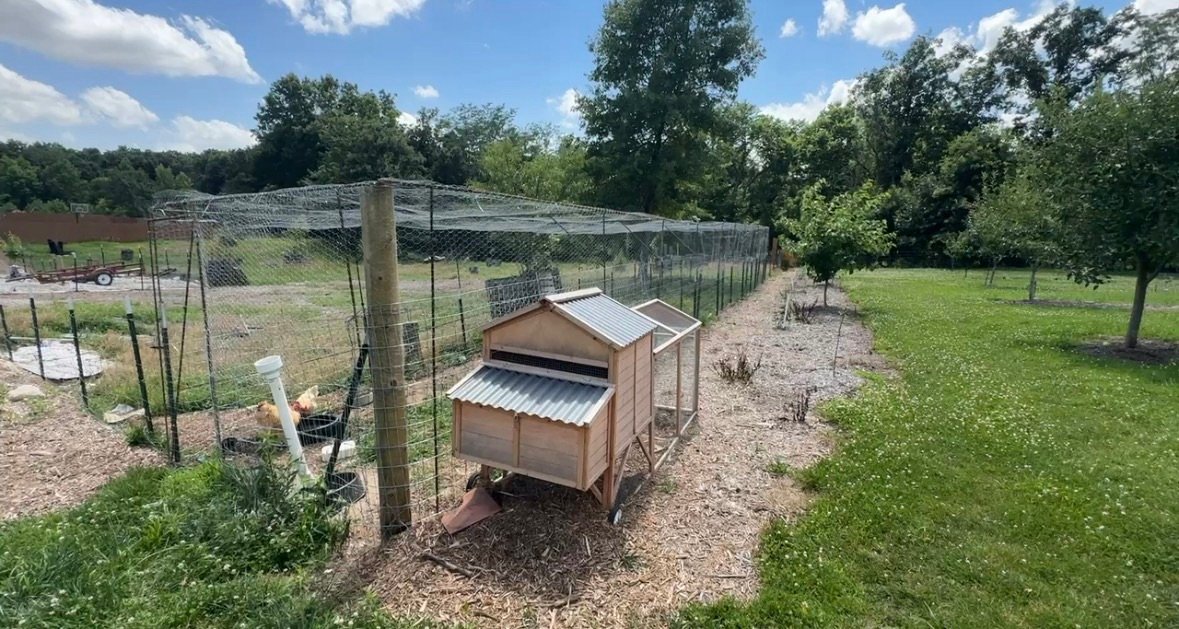
The enclosure measures roughly 10 feet wide, 75 feet long, and about 7 feet tall, giving the flock approximately 750 square feet of protected outdoor space.
That immediately changes how the chickens behave.
Instead of pacing around a small pen waiting for treats, they’re constantly moving.
Some scratch through the grass looking for bugs.
Others dust bathe.
A few wander off on their own while others stay together.
Watching them reminded me how much chickens enjoy having room to simply be chickens.
It’s one of the reasons I’ve become such a fan of larger runs whenever they’re possible.
Even if your property won’t allow something this size, giving your flock more space almost always pays off.

I actually thought about our article on 7 Real-Life Advantages of Free-Range Chickens while I was there because this setup gives birds many of those same benefits while keeping them protected from predators.
Why Rebar Instead of Wood?
This was probably my biggest question.
Like most people, I expected to see treated lumber.
Instead, nearly the entire frame is welded rebar.
As Daxon explained why he chose it, everything started making sense.
Wood is expensive.
Wood eventually rots.
Wood twists.
Wood cracks.
Wood requires maintenance.
Rebar doesn’t.
Once it’s welded together, it creates an incredibly rigid frame that isn’t going to warp after a few seasons outside.
Looking closely, I also realized something else.
The open framework made attaching fencing surprisingly simple because there are attachment points almost everywhere.
Instead of trying to fasten wire to large wooden posts every several feet, the fencing can be secured throughout the entire structure.
For a project this size, it was a smart decision.
Honestly, after seeing it in person, I’d seriously consider rebar before lumber if I ever build a permanent chicken run.
Bigger Doesn’t Always Mean More Expensive
One thing people often assume is that a run this large must have cost a fortune.
That wasn’t really the goal.
The goal was building something that would last.
Because rebar was used instead of constructing a massive wooden frame, much of the cost stayed surprisingly reasonable considering the overall size.
Even better, there shouldn’t be the same ongoing maintenance that many wooden structures eventually require.
Sometimes spending money once is actually cheaper than repairing something every few years.
That philosophy seemed to guide almost every decision throughout the build.
Seven Feet Tall Makes a Huge Difference
This might sound like a small detail until you actually walk inside.
Most backyard runs force you to duck.
You bump your head.
You crouch while cleaning.
Carrying feed buckets becomes annoying.
Inside this run, none of that happens.
At around seven feet tall, walking inside feels comfortable.
You can carry supplies, rake bedding, inspect fencing, or simply spend time with the flock without constantly bending over.
It may not sound like much on paper, but after walking through it myself, I wouldn’t want anything shorter.
Every Side Is Protected…Including the Top
One thing I appreciated immediately was that this wasn’t simply a fenced yard.
The enclosure is completely surrounded with wire.
The roof is enclosed.
The sides are enclosed.
The ends are enclosed.
That matters because predators don’t always approach from ground level.
Hawks.
Owls.
Climbing raccoons.
Even neighborhood cats can create problems for younger birds.
By enclosing the roof, the flock stays protected no matter where predators approach from.
If hawks are common where you live, I’d also recommend reading 5 Proven Ways to Protect Chickens From Hawks Easily since it covers several additional ideas that work well alongside a fully enclosed run.
One of the Smartest Features Is Underground
As we walked around the outside, Daxon pointed toward the base of the fencing.
That’s where one of the smartest parts of the project disappears from sight.
Wire fencing was buried around the perimeter.
That extra step helps discourage predators that naturally try digging under fences.
Coyotes.
Foxes.
Dogs.
Raccoons.
Instead of hoping predators wouldn’t dig, the design assumes they will.
That’s exactly how predator-proof structures should be built.
Planning for the worst usually prevents it from happening.
When I saw that detail, it reminded me why so many people lose chickens even though they believe their coop is secure.
Many focus only on the walls while forgetting what happens below ground.
Multiple Layers Add Even More Security
Something else I noticed while examining the fencing was that this wasn’t just one thin layer wrapped around the frame.
Certain sections have additional overlapping protection.
When I asked about it, the explanation was simple.
Predators are persistent.
A determined raccoon doesn’t give up after one tug.
Coyotes test weak spots.
Dogs chew.
Instead of relying on one barrier, the design uses multiple obstacles wherever extra protection makes sense.
It costs a little more during construction, but replacing chickens after a predator attack costs much more.
It felt like money well spent.
The Chicken Tractor Is a Simple but Smart Coop
Instead of building one enormous permanent coop inside the enclosure, a chicken tractor is attached directly to the side of the run.
I really liked this approach.
The tractor serves as the chickens’ secure place to sleep, lay eggs, and get out of the weather.
The large enclosure becomes their living room.
That leaves almost the entire run open for scratching, exploring, and dust bathing instead of having a huge building taking up valuable space.
It also makes future changes much easier.
If improvements are ever needed, the coop can be worked on without redesigning the entire enclosure.
While we talked about the project, Daxon also pointed me toward his complete walkthrough of the construction process. If you’re interested in seeing the project from the builder’s perspective, I definitely recommend reading How I Built a 10×75 Predator-Proof Chicken Run (DIY Guide). It covers the build in much greater detail and pairs nicely with what I learned while touring it.

Walking Through It Made Maintenance Look Surprisingly Easy
One thing I always pay attention to when I visit someone’s chicken setup is how easy it will be to maintain six months or even five years down the road.
A lot of coops look fantastic on day one, but after a year they’re a headache to clean.
This run didn’t give me that impression.
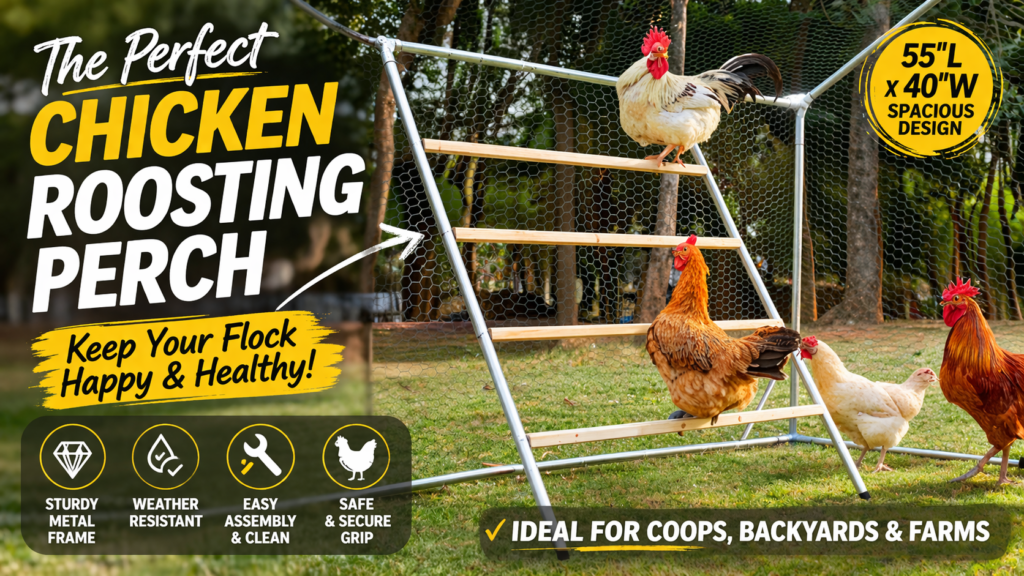
Because it’s about seven feet tall, you can comfortably walk from one end to the other carrying buckets, feed, tools, or a wheelbarrow. There wasn’t any crawling around on your hands and knees or trying to squeeze through tiny access doors.
That might not seem important when you’re first building a chicken run, but after hundreds of trips inside to collect eggs, refill feeders, or make repairs, you’ll appreciate every extra inch of space.
I could tell this run was designed by someone who actually takes care of chickens every day.

The Orchard Gives the Chickens Natural Shade
Another thing I noticed was where the run sits.
Instead of being in the middle of an open field with no protection from the summer sun, it’s located among fruit trees that naturally provide shade throughout much of the day.
That creates a much more comfortable environment for the flock during Missouri’s hot summers.
The trees also encourage insects, which gives the chickens even more opportunities to forage throughout the day.
Watching them scratch beneath the trees reminded me why chickens are such a valuable part of a homestead. They’re constantly turning over leaves, eating insects, and helping clean up fallen fruit before pests become a problem.
It’s another example of designing everything to work together instead of treating the chickens as a completely separate project.
If you’ve ever wondered how chickens can benefit an entire property, you’ll enjoy reading Can Chickens Boost Your Homestead’s Sustainability? after this one.
Fresh Water Was Clearly a Priority

While we were talking, Daxon mentioned that having a large run also means paying more attention to water. A waterer for a large chicken run can make it easier to keep clean water available as the flock spreads out.
The farther chickens roam, the more important it becomes to keep clean, fresh water available all day.
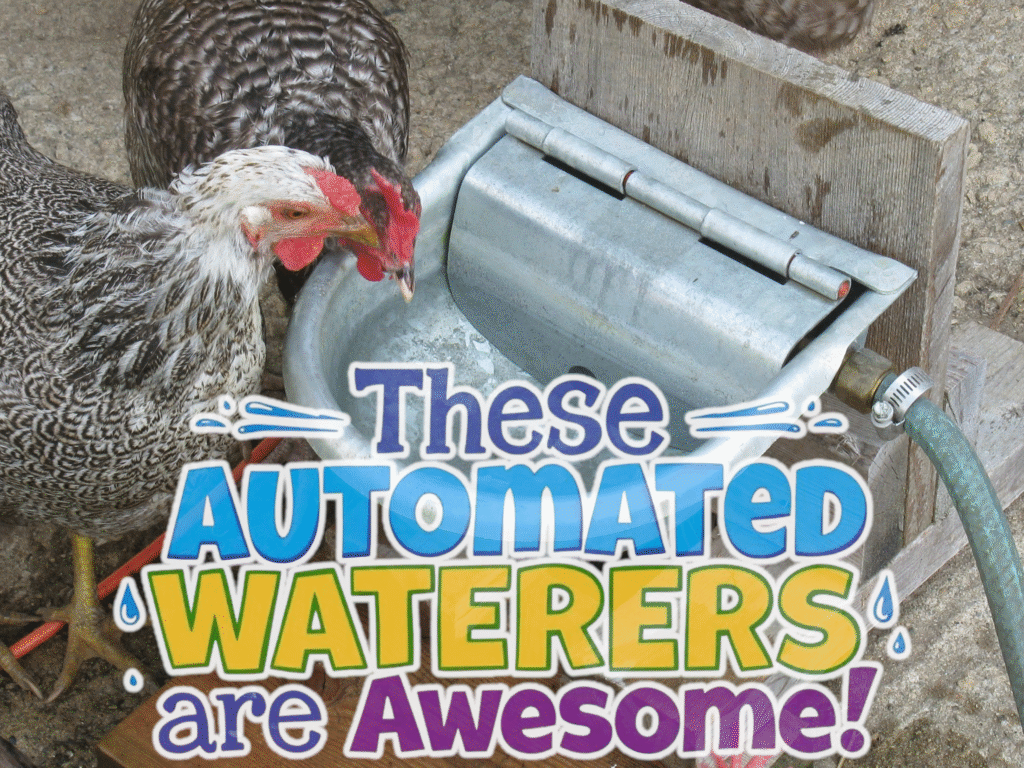
If you’re still using a small waterer that needs constant refilling, I’d recommend checking out These Automatic Chicken Waterers Are Awesome. Larger waterers save a surprising amount of time, especially with bigger flocks.

Algae can also become a problem during warm weather. If you’ve been fighting green water, our article How to Stop Algae in Chicken Water the Easy, Natural Way explains several simple methods that actually work.

Plenty of Space Doesn’t Mean You Can Ignore Nutrition
Giving chickens hundreds of square feet to explore is fantastic, but it doesn’t replace a balanced diet.
As I watched the flock wandering around, they spent plenty of time hunting insects and scratching for natural snacks. Even so, Daxon explained that good layer feed, grit, calcium, and fresh water are still essential. For the calcium portion of that routine, oyster shells for chickens can be considered alongside a balanced layer diet.

For anyone new to raising chickens, I’d suggest reading Chicken Grit vs. Oyster Shell: What’s the Difference and Do You Need Both? because those two supplements often get confused.

If your hens are already laying eggs, I also found This Calcium Boost Gave Me Stronger Eggs in a Week to be another helpful resource.
More Room Usually Means Happier Chickens
One thing I couldn’t help noticing was how relaxed the flock seemed.
There wasn’t much chasing.
Very little pecking.
No birds packed tightly together.
Instead, they spread themselves throughout the enclosure.
Some stayed under the trees.
Others wandered near the chicken tractor.
Several spent nearly the entire time scratching through the grass looking for bugs.
When chickens have enough room to establish their own space, many common behavioral issues become less frequent.
That’s one reason I often recommend giving birds as much room as your property allows.

Of course, introducing new birds still requires planning, regardless of how much space you have. If you’re expanding your flock, Introducing New Chickens to the Flock Like a Pro is worth reading before you bring new hens home.

This Run Was Built With the Future in Mind
Something else I appreciated was that the project doesn’t feel “finished.”
That might sound strange, but it’s actually a compliment.
The layout leaves room for future improvements.
Additional feeders could easily be added.
Watering systems could be expanded.
Roosts or enrichment areas could be installed without redesigning the entire enclosure.
That’s smart planning.
Too many backyard projects are built with only today’s flock in mind.
As your flock grows, your setup should be able to grow with it.
What I Took Away From Touring This Chicken Run
After spending time walking through the enclosure and talking with Daxon about why he built it this way, I came away realizing this wasn’t just a big chicken run.
It was a carefully planned system.
The rebar frame keeps costs down while creating an incredibly strong structure.
The enclosed roof protects against aerial predators.
The buried fencing helps stop digging animals before they ever reach the chickens.
The attached chicken tractor keeps the sleeping area separate from the flock’s daytime living space.
Most importantly, the chickens have plenty of room to do what chickens naturally want to do.
If you’re planning your own predator-proof chicken run, you don’t have to copy every measurement exactly. But I do think many of the ideas used here are worth considering before you start buying lumber or drawing up plans.
Seeing it in person gave me a completely different appreciation for how thoughtful the design really is, and I left with more than a few ideas I’d happily borrow for my own future chicken projects.
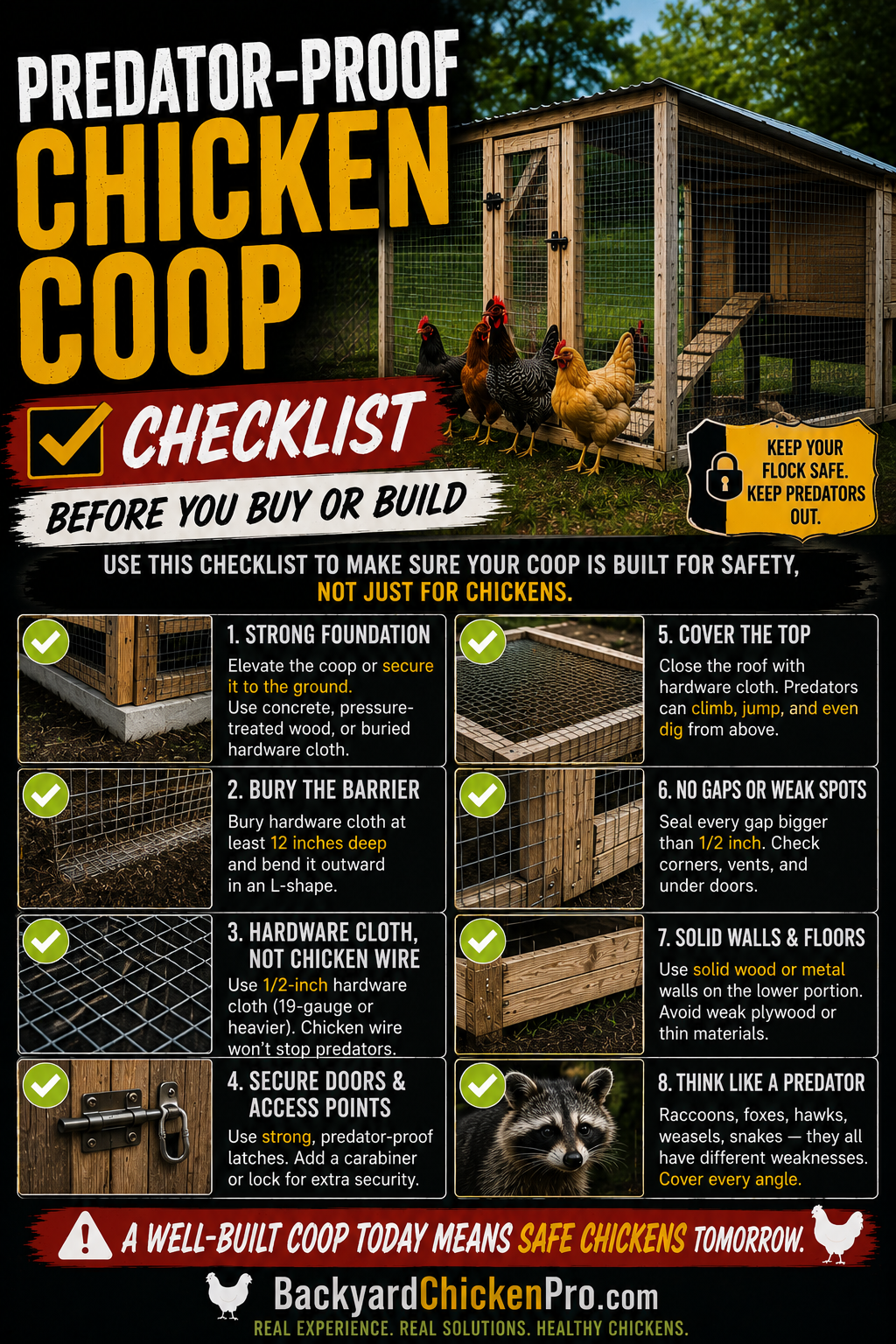
Walking through this run also reminded me that building a secure enclosure is only half the battle. Over time, it’s the little details that make the biggest difference. I recently put together a Predator-Proof Chicken Coop Checklist Before You Buy or Build that covers the same ideas I saw throughout this project. If you’re planning your own chicken run, it’s a helpful way to make sure you don’t overlook something important before your first chickens move in.

Frequently Asked Questions
Is rebar a good material for building a chicken run?
After seeing this project firsthand, I was impressed by how sturdy the welded rebar frame felt. It offers excellent strength and doesn’t have many of the long-term maintenance concerns that come with wood.
Why bury wire around a chicken run?
Many predators instinctively try to dig under fencing instead of climbing over it. Burying wire around the perimeter creates another barrier that helps protect the flock.
Is a roof necessary on a chicken run?
If hawks, owls, or climbing predators are common where you live, I’d absolutely recommend enclosing the top. It provides peace of mind and offers much better overall protection.
How much space do chickens really need?
Every flock is different, but after watching these chickens use all 750 square feet, I can confidently say they’ll take advantage of every bit of extra room you give them.
Can a chicken tractor be used as the main coop?
Absolutely. This setup proved that a chicken tractor can work extremely well as the sleeping and nesting area while a large attached run provides plenty of daytime space.
About the Author
Nathan Holloway
Nathan Holloway is a longtime backyard chicken enthusiast who enjoys visiting farms, learning from experienced poultry keepers, and sharing practical ideas that everyday flock owners can actually use. He spends much of his time researching coop designs, predator prevention, chicken health, and flock management so readers can avoid costly mistakes and build better homes for their birds. At Backyard Chicken Pro, Nathan focuses on hands-on experiences, real-world observations, and advice gathered directly from people who live the backyard chicken lifestyle every day.