
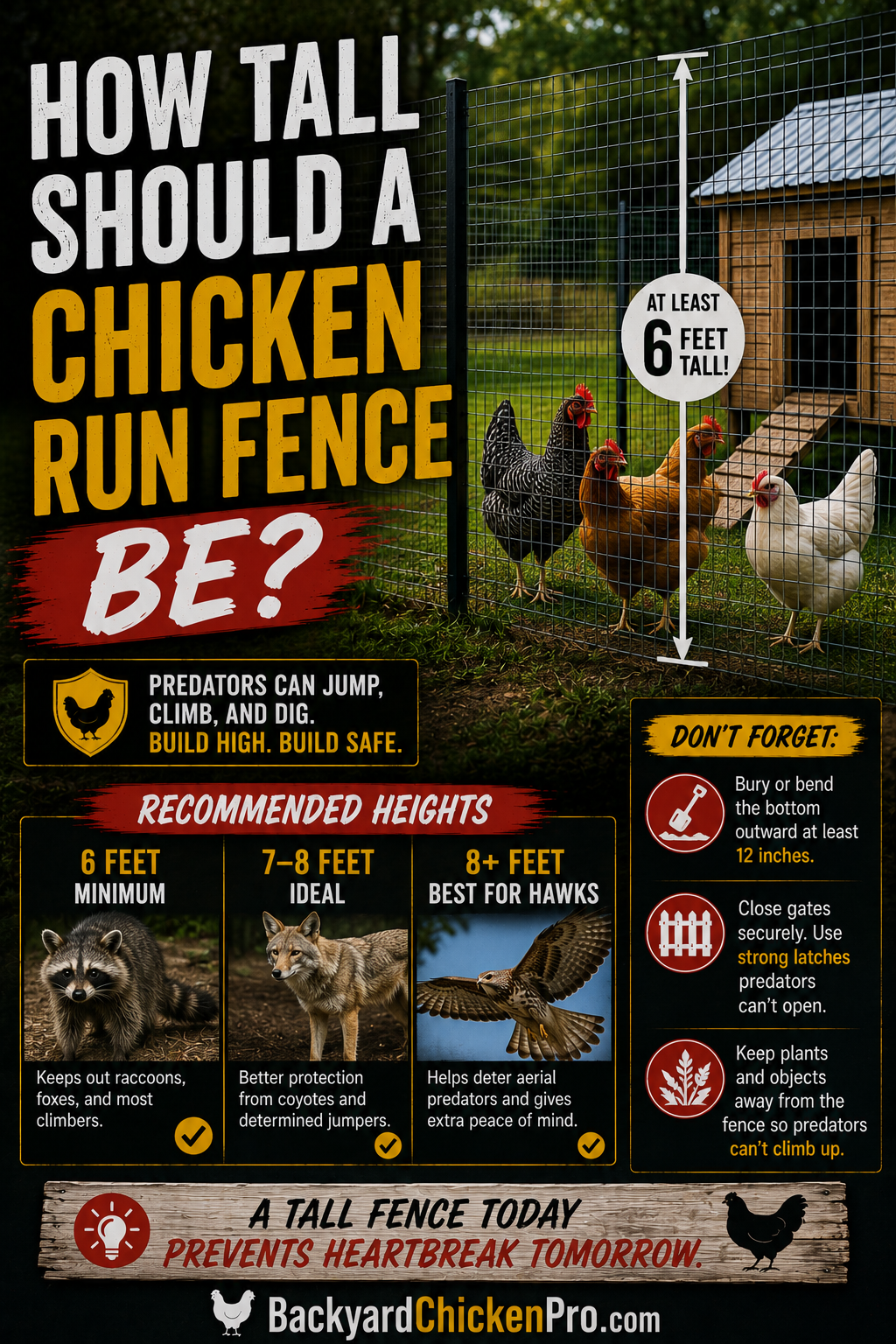
When most people start building a chicken run, they’re focused on one question.
“What kind of fencing should I buy?”
That’s definitely important.
But another question deserves just as much attention.
“How tall should the fence actually be?”
After spending time walking through the predator-proof chicken run at Weaver Family Farms, I realized height wasn’t chosen by accident.
The run stands about seven feet tall.
At first, I assumed that was mainly for convenience so people could comfortably walk inside.
Daxon explained that the extra height also made the enclosure more practical, more secure, and much easier to work in every day.
That conversation changed how I think about chicken run design.
Fence height isn’t only about keeping chickens in.
It’s also about making life much harder for predators trying to get in.
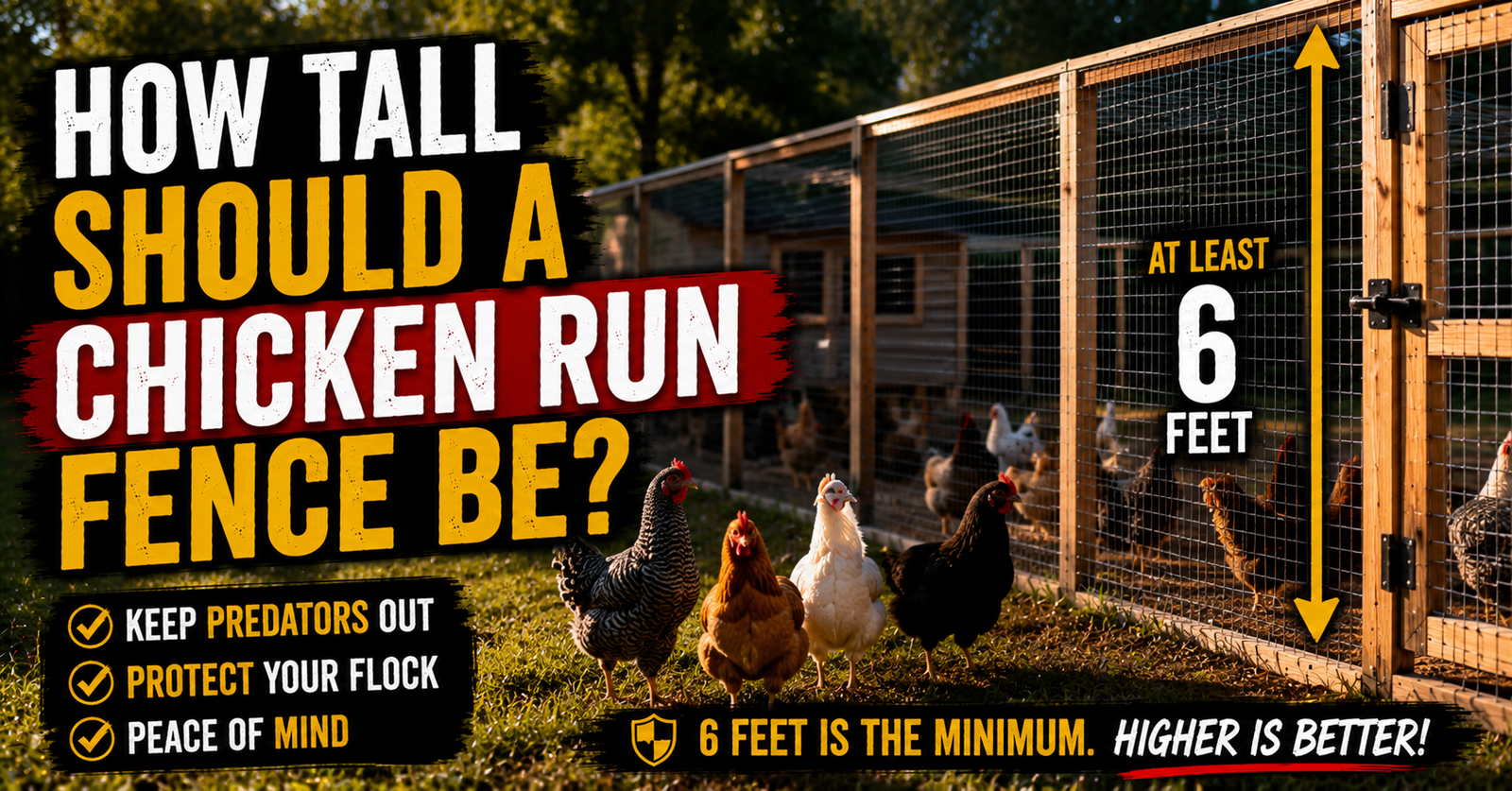
The Right Height Depends on Your Flock
Not every chicken breed behaves the same.
Heavy breeds like Orpingtons and Brahmas rarely challenge a tall fence.
Lighter birds are a different story.
Leghorns.
Anconas.
Hamburgs.
Many Mediterranean breeds are much better flyers and can easily clear shorter fencing if something startles them.
That’s why I always tell people to think about the chickens they’re raising before deciding on fence height.
A setup that works perfectly for one flock might be frustrating for another.

Four Feet Usually Isn’t Enough
I’ve seen plenty of four-foot fences around backyard flocks.
Sometimes they work.
Sometimes they don’t.
A curious hen, a frightened pullet, or a bird trying to reach greener grass on the other side can surprise you.
Once one chicken figures out how to escape, the others often start experimenting too.
Even if your flock stays inside, a shorter fence offers very little challenge to larger predators.
Six Feet Is a Big Improvement
For many backyard chicken owners, a six-foot fence provides a much better balance.
It discourages most chickens from attempting to fly over.
It also makes climbing or jumping much more difficult for predators.
That said, I still wouldn’t rely on fence height alone.
Predators don’t always go over.
Many prefer going under.
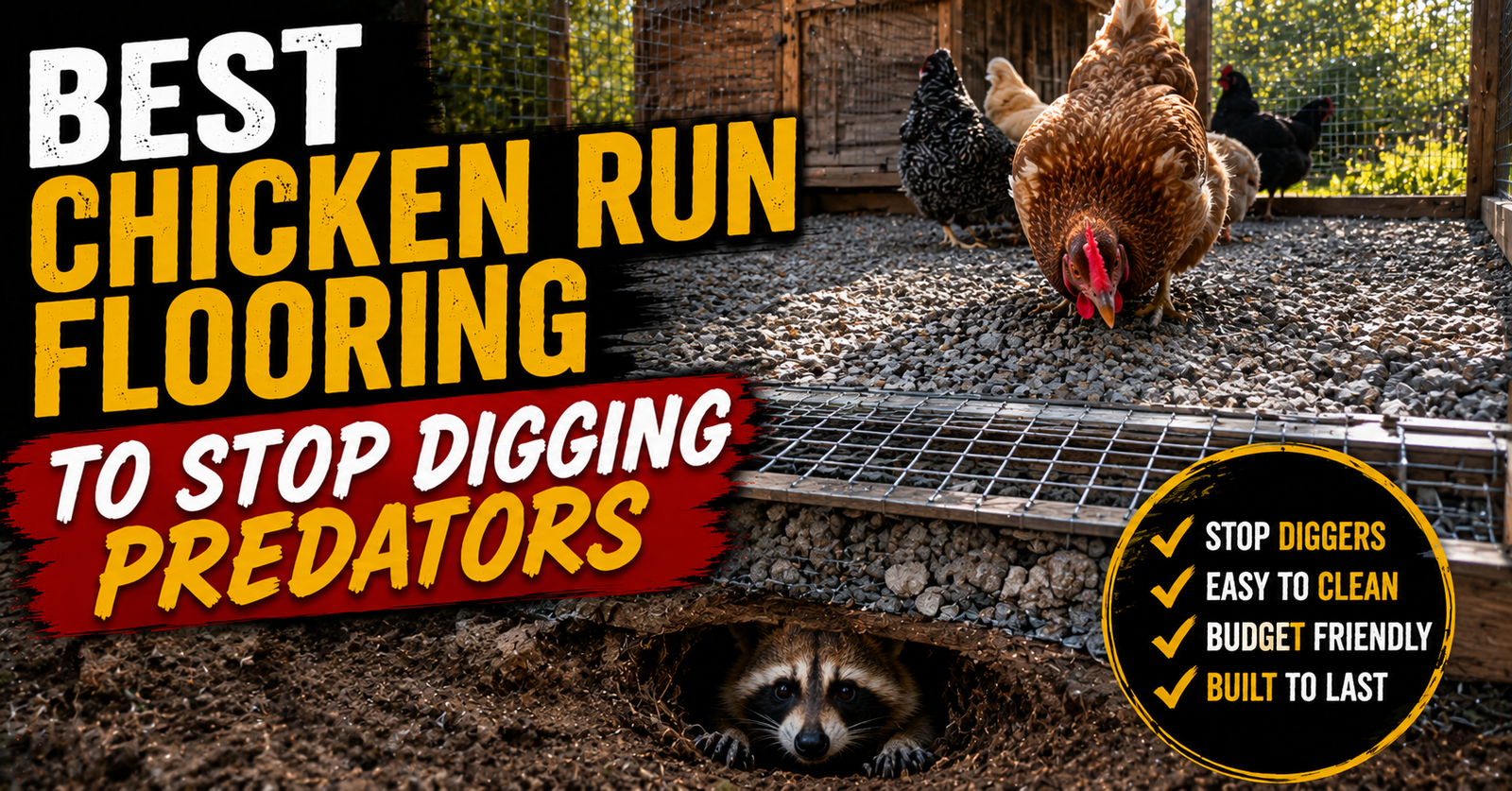
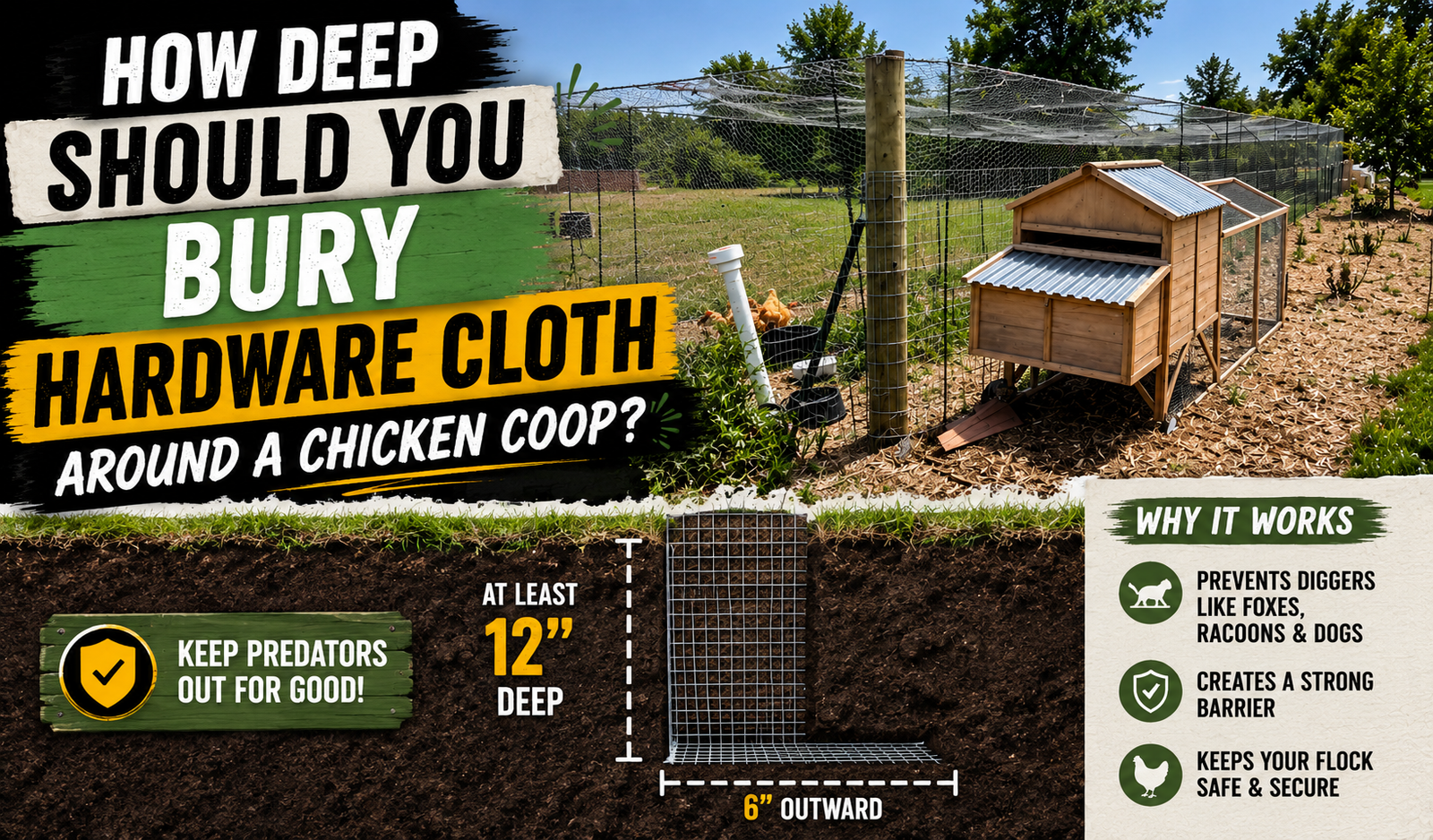
That’s why earlier I shared the best chicken run flooring for stopping digging predators because what happens below ground is often just as important as what happens above it.
Seven Feet Gives You More Than Security
One thing I immediately appreciated while touring the Weaver Family Farms run was how comfortable it felt walking inside.
I wasn’t ducking.
I wasn’t bumping into the roof.
There was plenty of room to carry buckets, feeders, and equipment without feeling cramped.
That extra foot doesn’t sound like much on paper.
In real life, it makes everyday chores much easier.
It also gives your chickens a more open feeling while providing additional separation from predators outside the enclosure.
Don’t Forget About Predators That Climb
When people think about fence height, they usually picture something trying to jump over it.
That’s only part of the problem.
Some predators would rather climb than jump.
Raccoons are excellent climbers and spend plenty of time investigating anything they think might lead to food.
A taller fence gives them another obstacle, but I still wouldn’t rely on height alone.
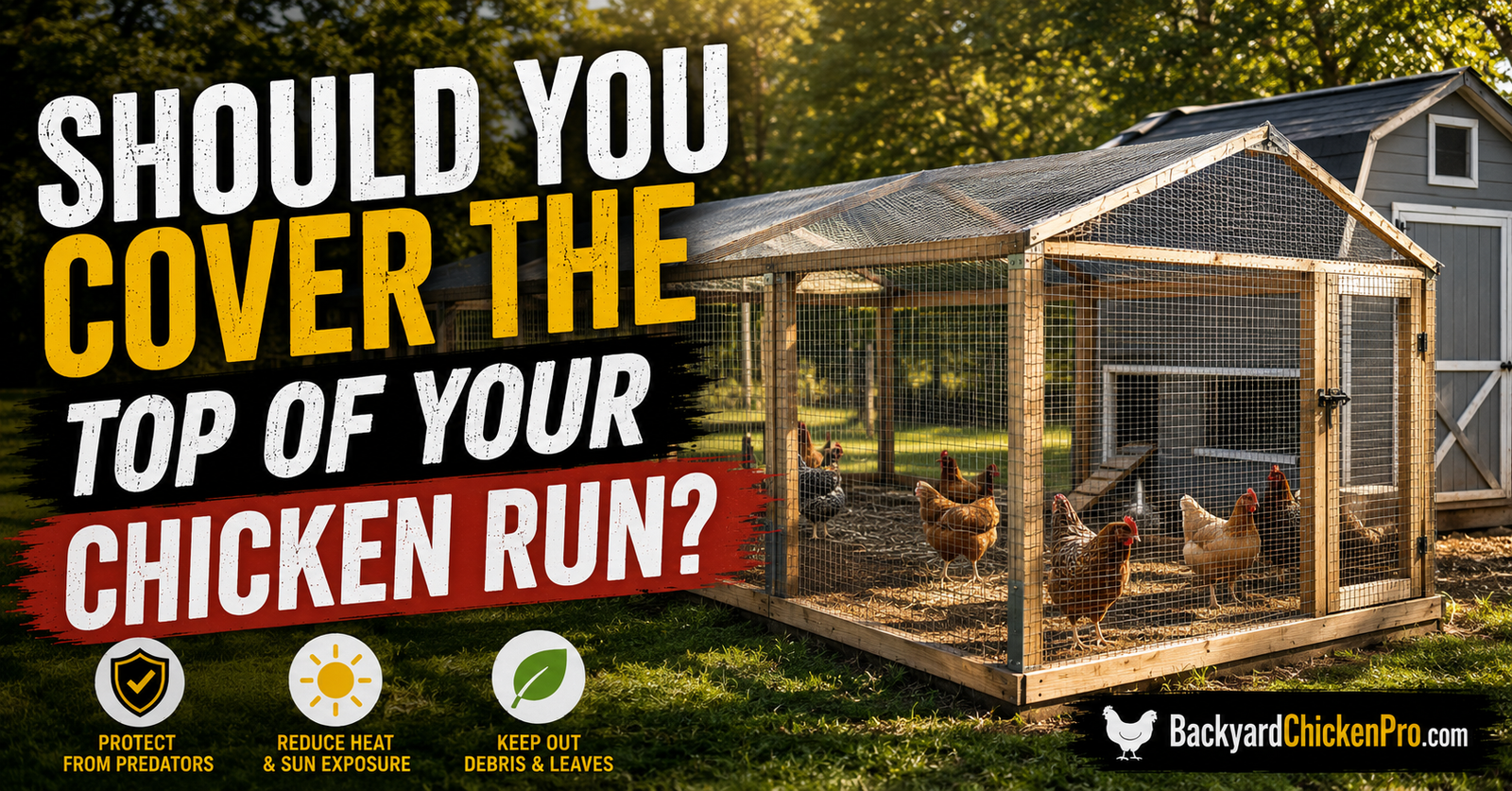
That’s one reason I believe a covered run is one of the smartest upgrades you can make. Earlier I explained why covering the top of your chicken run adds another important layer of protection, especially if climbing predators are common where you live.
Taller Fences Make Daily Chores Easier
One benefit people rarely mention has nothing to do with predators.
Comfort.
If you’ve ever spent half an hour inside a short chicken run cleaning waterers or collecting eggs, you know exactly what I mean.
Constantly bending over gets old in a hurry.
Walking through the seven-foot-tall enclosure at Weaver Family Farms felt completely different.
I could stand comfortably.
Carry buckets.
Use a rake.
Move feeders around.
Even if predator protection wasn’t part of the equation, I’d still appreciate the extra height simply because it makes caring for chickens much easier every single day.

Should You Extend an Existing Fence?
If you already have a four-foot or five-foot fence, don’t assume you have to tear everything down and start over.
Many chicken keepers successfully add extensions to existing fencing.
Depending on your setup, extending the height by another foot or two may be enough to discourage curious chickens while making it much harder for predators to climb or jump inside.
Sometimes upgrading what you already have makes much more financial sense than rebuilding the entire enclosure.
Don’t Forget About Gates
One mistake I’ve seen more than once is building a nice tall fence…
Then installing a much shorter gate.
Predators don’t care that the fence is six or seven feet high if they can simply work around the weakest section.
When planning your chicken run, try to make the gate just as secure as the surrounding fencing.
Strong hinges.
Quality hardware.
A secure latch.
Everything should work together.
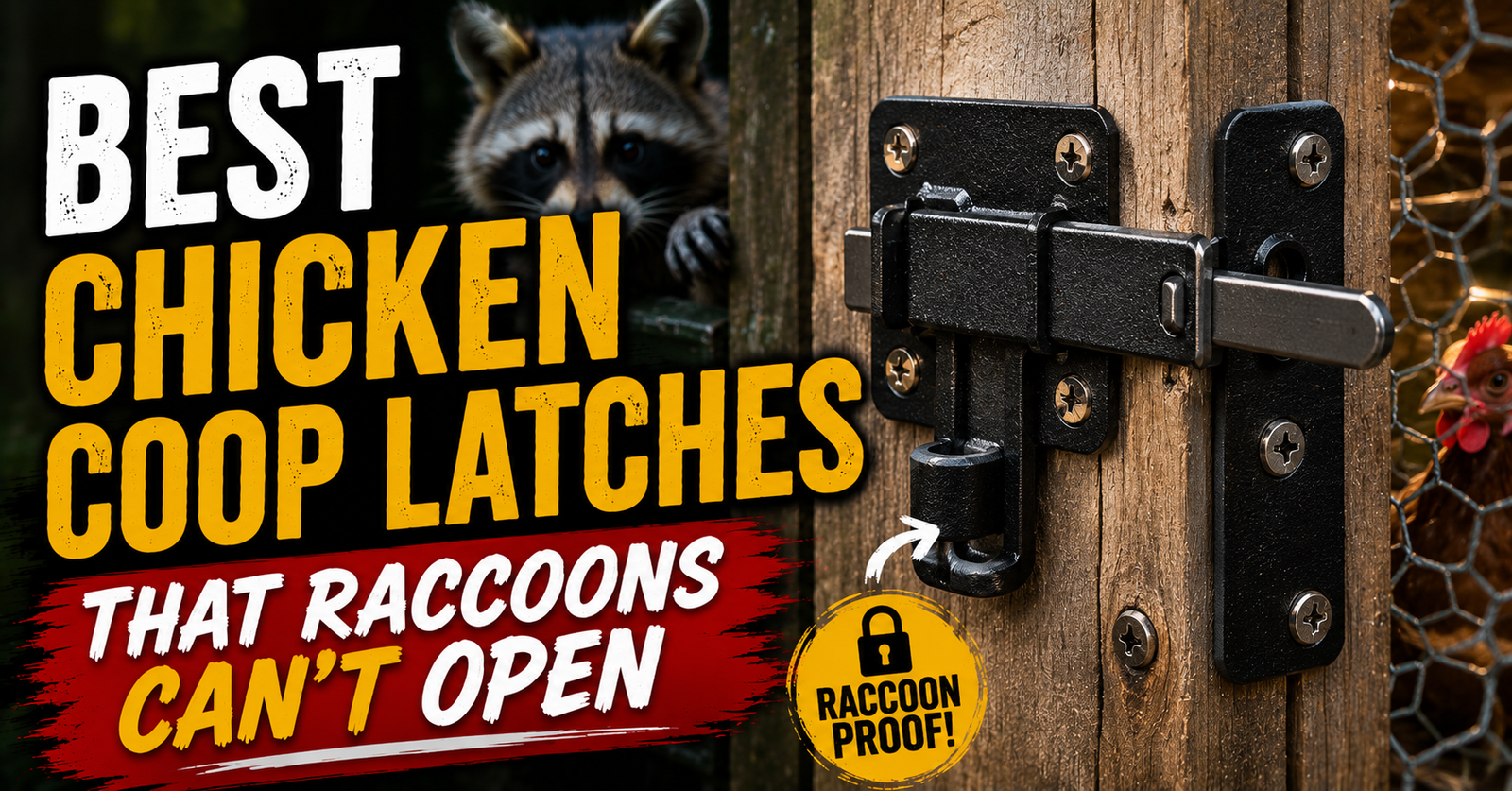
If you’re still using a simple hook latch, Best Chicken Coop Latches That Raccoons Can’t Open explains why a better latch may be one of the cheapest predator-proofing upgrades you’ll ever make.
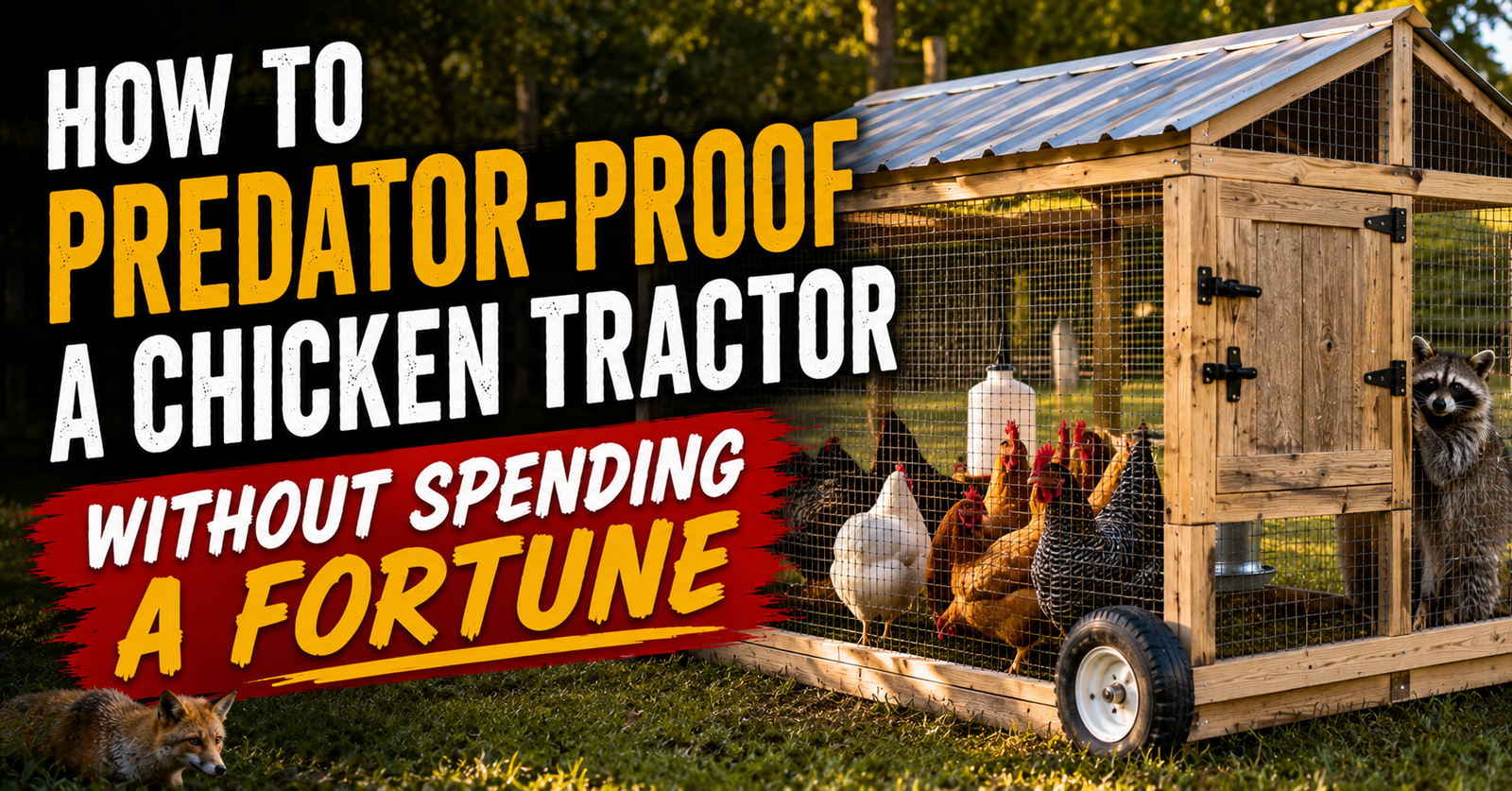
Height Alone Won’t Stop Coyotes or Foxes
This is probably the biggest misconception I hear.
People assume that building a taller fence automatically solves every predator problem.
Unfortunately, predators don’t always cooperate.
Coyotes and foxes often begin by checking underneath the fence instead of trying to jump over it.
That’s why I always encourage people to think about their entire setup instead of one measurement.
Good fencing.
Underground protection.
Covered roofing.
Secure doors.
Routine inspections.
All of those pieces work together.
A seven-foot fence with large gaps underneath is still vulnerable.
Think About the Future
One piece of advice I’d give anyone building a new chicken run is this:
Build slightly bigger and slightly taller than you think you’ll need.
Most people eventually add more chickens.
Bigger feeders.
Larger waterers.
More nesting boxes.
Extra roosts.
A little additional height makes all of those future upgrades easier.
Looking at the Weaver Family Farms enclosure, it was obvious the run wasn’t built only for today’s flock.
It was built with future expansion in mind as well.

My Recommendation
After seeing different backyard chicken setups and spending time inside one of the most thoughtfully designed predator-proof runs I’ve visited, I’d personally choose a walk-in run that’s around seven feet tall whenever space and budget allow.
That height is comfortable to work inside.
It gives chickens a spacious environment.
It creates another challenge for predators.
Most importantly, it leaves room to comfortably maintain your flock for years to come.
Just remember that fence height is only one piece of the puzzle.
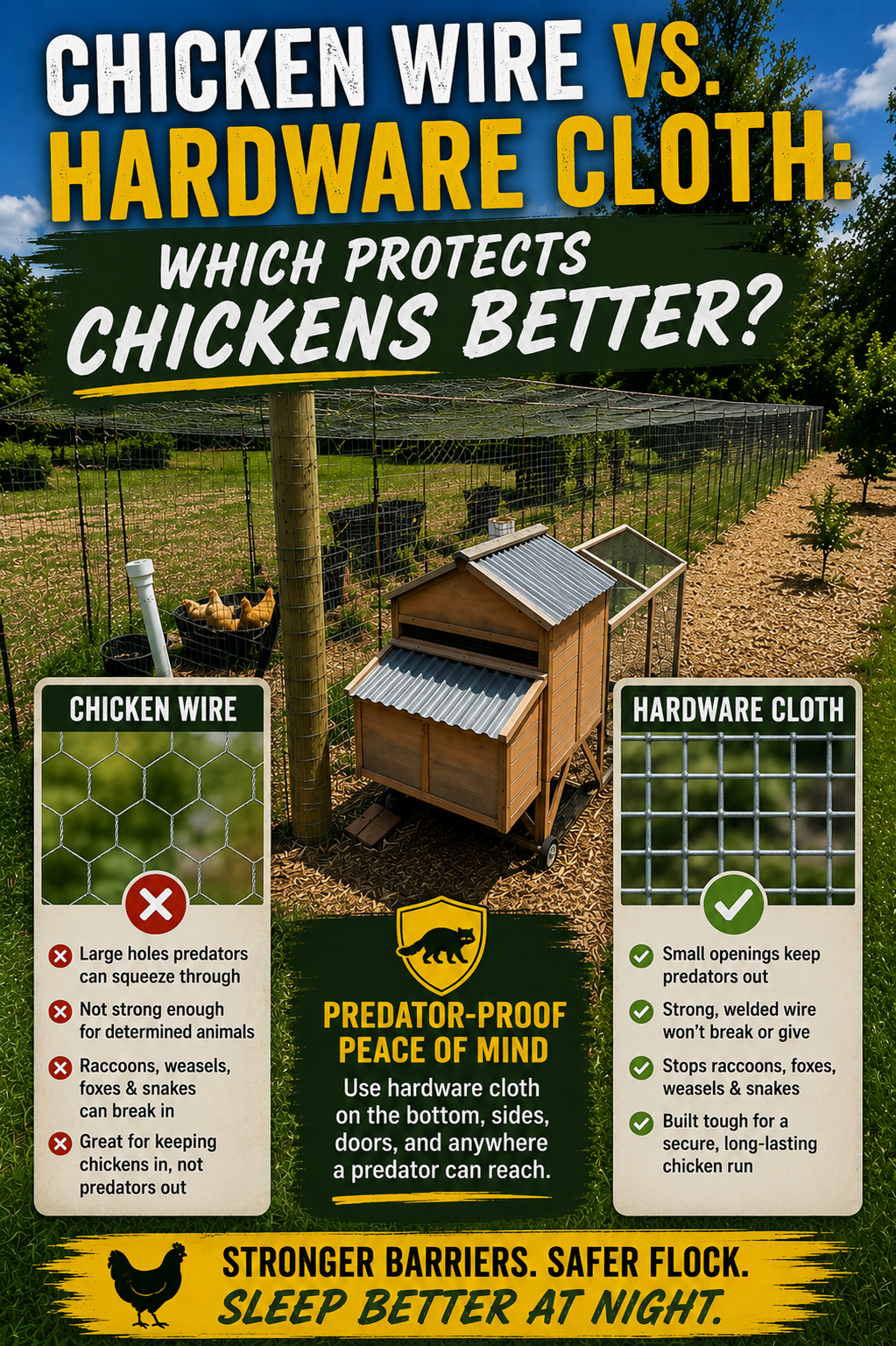
The strongest chicken runs combine good height with quality fencing, secure latches, underground protection, and regular maintenance. Choosing the right mesh for each section is just as important as getting the height right; matching fencing to each part of the run breaks down the key differences.
When those features work together, predators usually decide your chickens aren’t worth the effort.
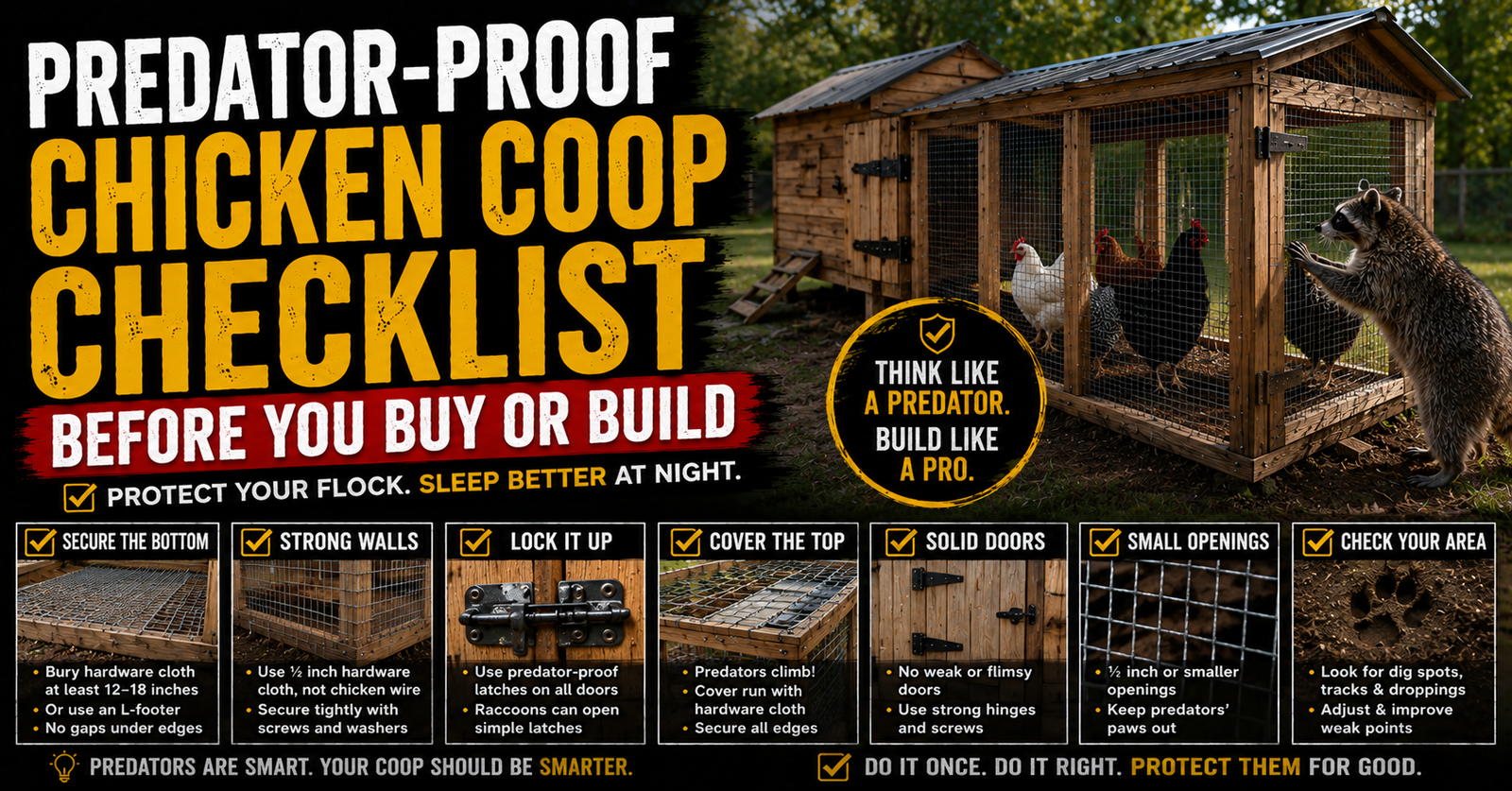
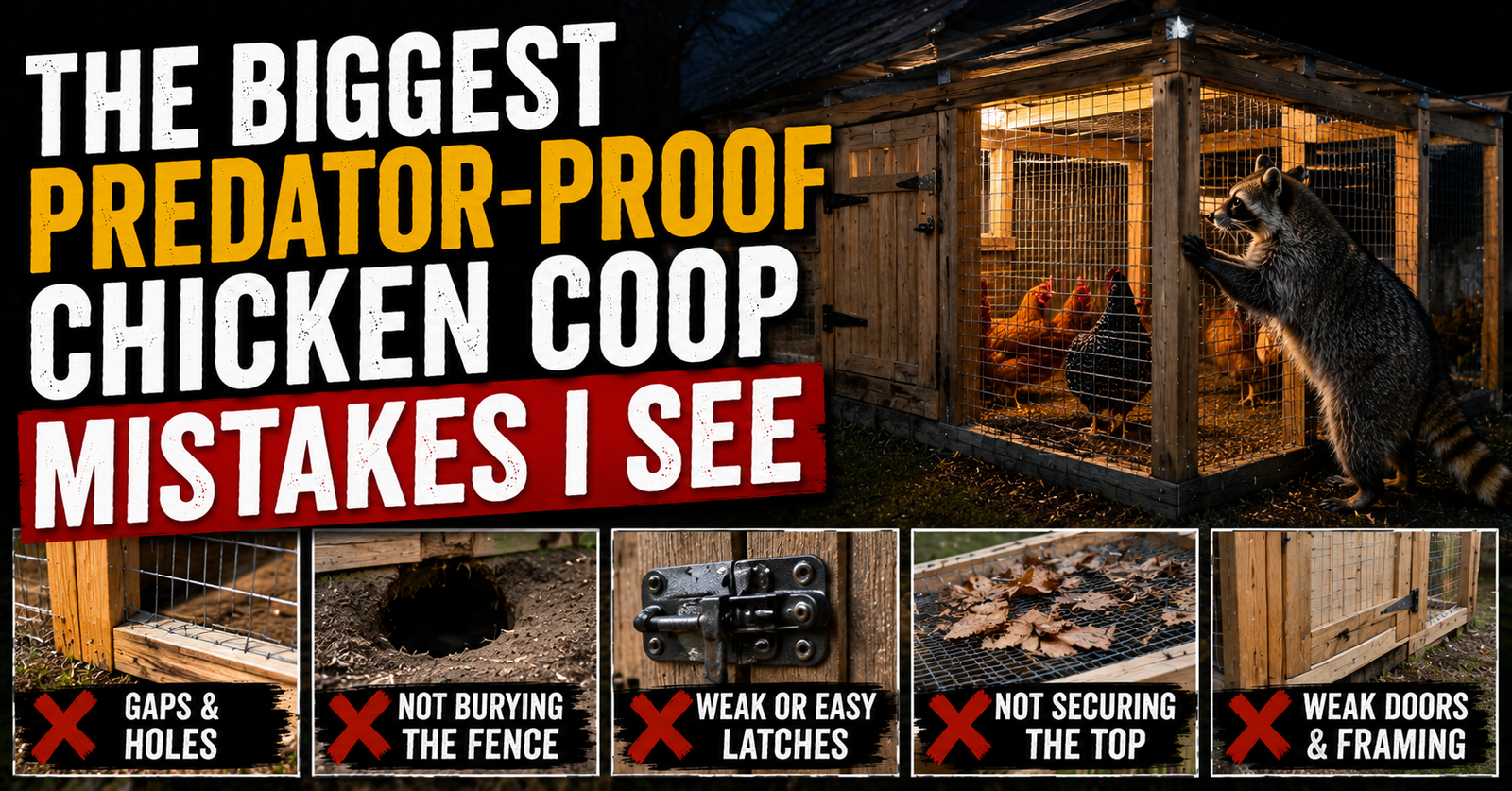
Once you’ve decided how tall your enclosure should be, it’s worth taking a few minutes to review the rest of your predator protection plan. I put together a Predator-Proof Chicken Coop Checklist Before You Buy or Build that brings together everything from fencing and flooring to latches, roofs, and routine inspections.
Frequently Asked Questions
What is the ideal height for a chicken run fence?
For most backyard flocks, a fence between six and seven feet tall offers a great balance of security, convenience, and room to work inside the enclosure.
Can chickens fly over a six-foot fence?
Some lighter breeds can, especially if they’re startled or motivated. Heavy laying breeds are much less likely to clear a fence that tall.
Is a taller fence enough to stop predators?
No. While extra height helps discourage climbing and jumping, predators may still dig underneath or investigate doors and weak spots.
Should I build a walk-in chicken run?
If your budget and space allow, absolutely. Being able to comfortably walk inside makes feeding, cleaning, collecting eggs, and maintaining the run much easier.
Does a covered roof matter if my fence is already tall?
Yes. A covered roof helps protect against hawks, climbing predators, and adventurous chickens that might otherwise fly over the fence.
About the Author
Nathan Holloway
Nathan Holloway specializes in predator prevention, chicken coop construction, and practical backyard flock security. He regularly visits farms, studies real-world chicken housing designs, and learns directly from experienced poultry keepers to discover what works in everyday backyard flocks. Through Backyard Chicken Pro, Nathan shares practical observations, proven construction ideas, and straightforward advice that help backyard chicken owners build safer coops, stronger chicken runs, and long-lasting protection for their flocks.