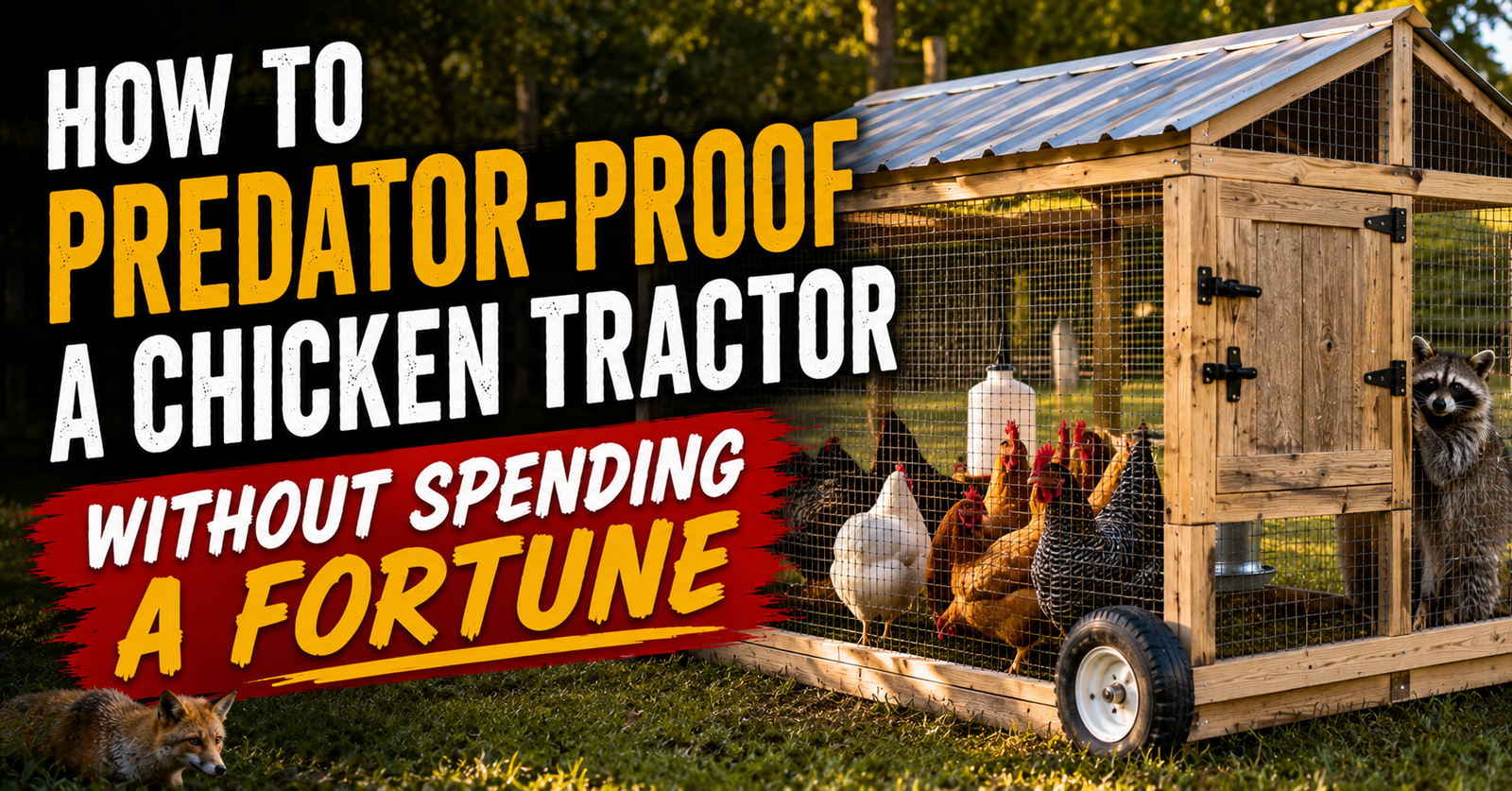
I’ve always liked the idea of a chicken tractor.
Being able to move chickens onto fresh grass, let them hunt bugs, and spread their manure naturally makes a lot of sense. Those advantages are explored in benefits of letting chickens free range, including how access to grass, insects, and outdoor space can benefit a flock.
But one thing I’ve noticed after talking with experienced chicken keepers is that many people spend all their time thinking about mobility and very little time thinking about security.
That’s where problems begin.
While visiting Weaver Family Farms, I had the chance to look over Daxon’s setup, where a chicken tractor connects directly to a much larger predator-proof chicken run. Seeing that combination in person gave me several ideas about how movable coops can be made much safer without spending thousands of dollars.
The biggest lesson I walked away with was simple.
A chicken tractor shouldn’t become the weakest link in your predator protection plan.
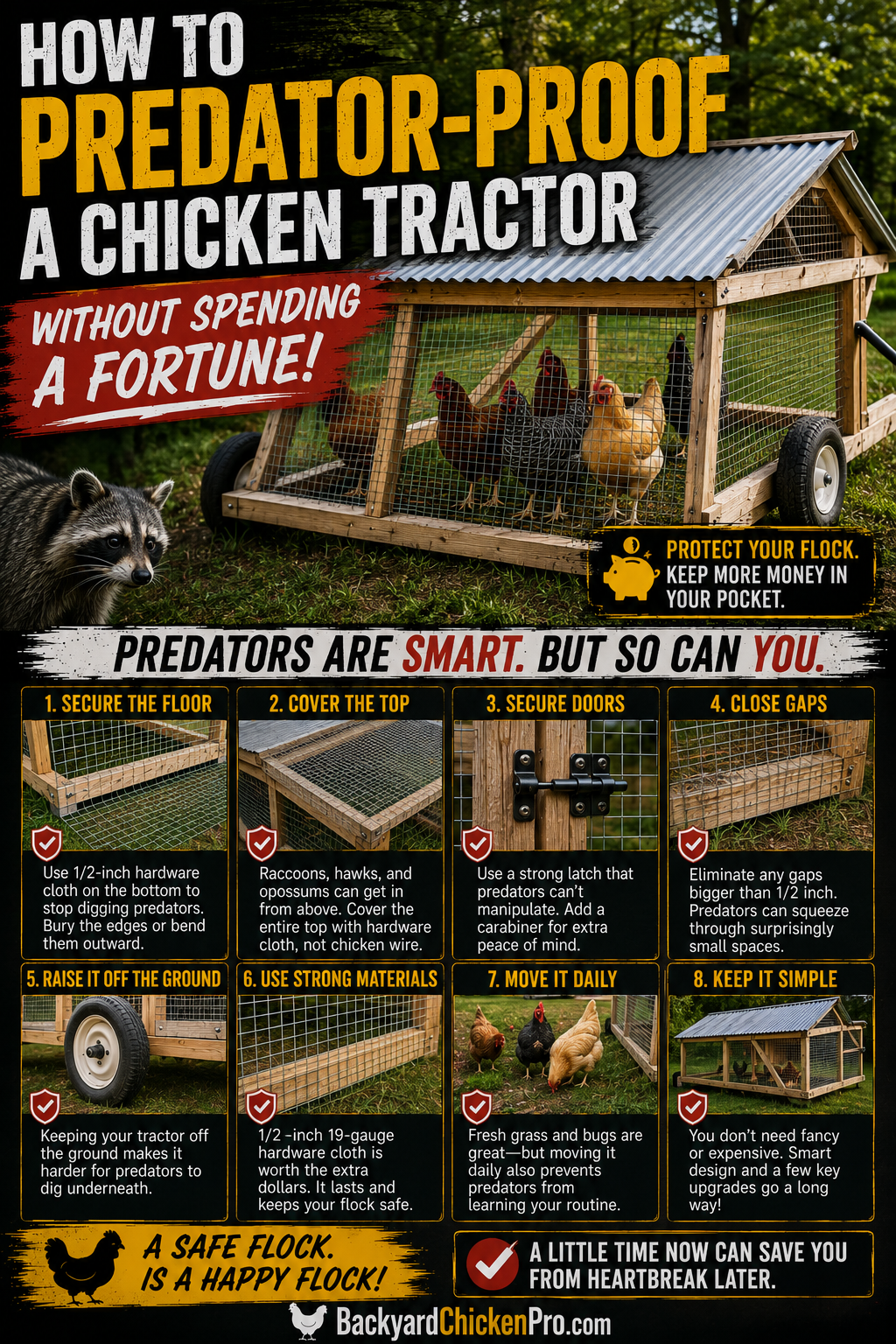
Why Chicken Tractors Need Extra Attention
Unlike permanent coops built on heavy foundations, chicken tractors are designed to move.
That’s one of their biggest advantages.
It’s also one of their biggest weaknesses.
Small gaps can appear underneath as the tractor moves over uneven ground.
Doors may loosen over time.
Wire can flex.
Predators quickly notice those little imperfections.
If you’ve got foxes, coyotes, raccoons, or even neighborhood dogs in your area, those small openings deserve your attention.
Start With a Strong Frame
The frame is the backbone of every chicken tractor.
If it twists every time you move it, your doors stop lining up correctly and your fencing begins pulling away from the frame.
One thing I appreciated about the Weaver Family Farms setup was how solid the supporting structure felt.
Nothing wobbled.
Nothing sagged.
Everything stayed square.
That’s exactly what you want before adding fencing or hardware.
Even though a chicken tractor is movable, it still benefits from the same planning as a permanent enclosure. If you’re building both at the same time, my Predator-Proof Chicken Coop Checklist Before You Buy or Build is a simple way to make sure neither one ends up with overlooked weak spots.
Use Hardware Cloth Where It Matters Most
One mistake I see fairly often is wrapping an entire chicken tractor in inexpensive fencing without thinking about where predators are most likely to attack.
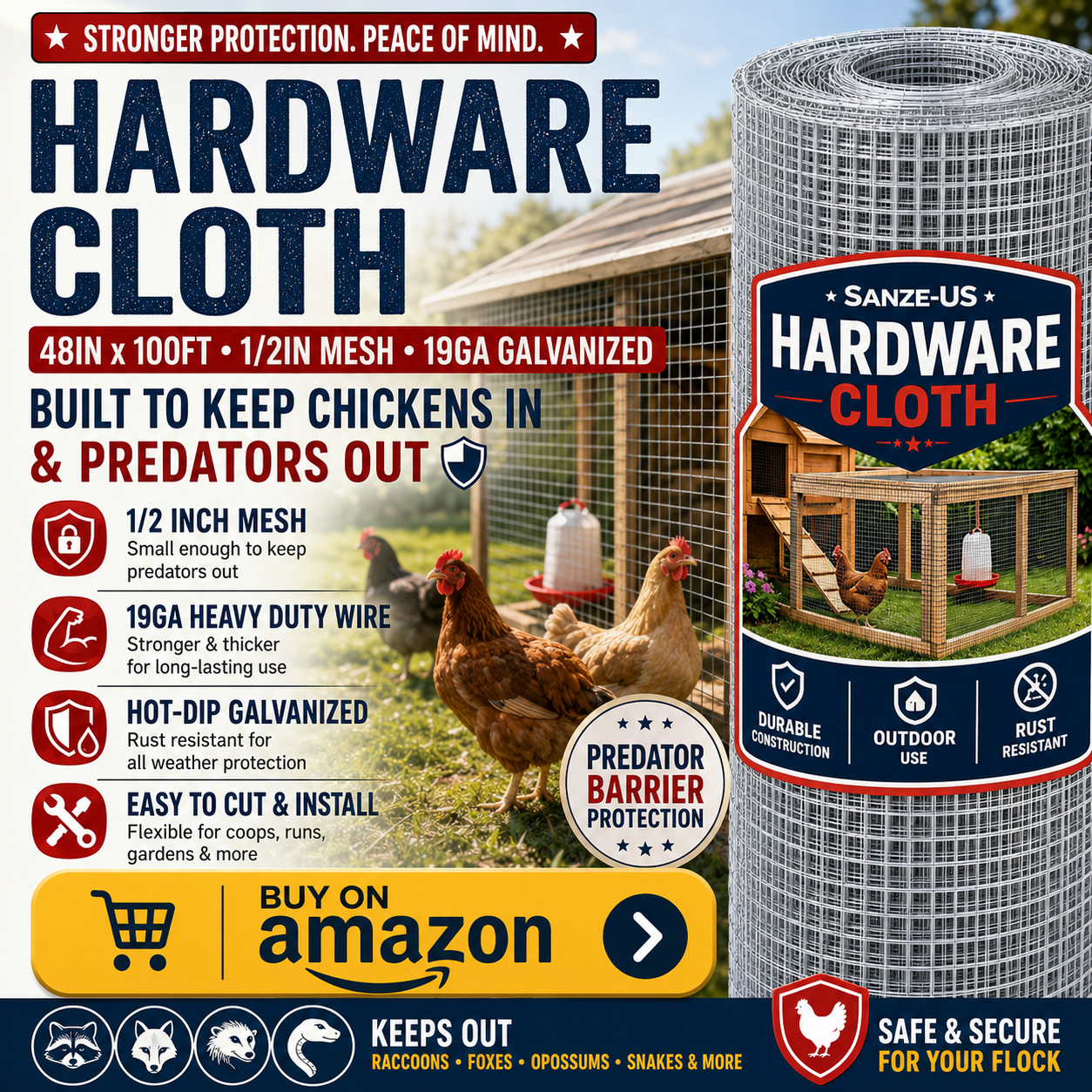
If I were building one today, I’d use a 48-inch x 100-foot roll of galvanized ½-inch hardware cloth around the lower portions, doors, and any area where predators could pull, push, or reach through.
Those are the spots that receive the most abuse over time.
Using stronger materials there gives you much better long-term protection.
Chicken Wire Still Makes Sense for Larger Sections
That doesn’t mean you have to build the entire tractor from hardware cloth.
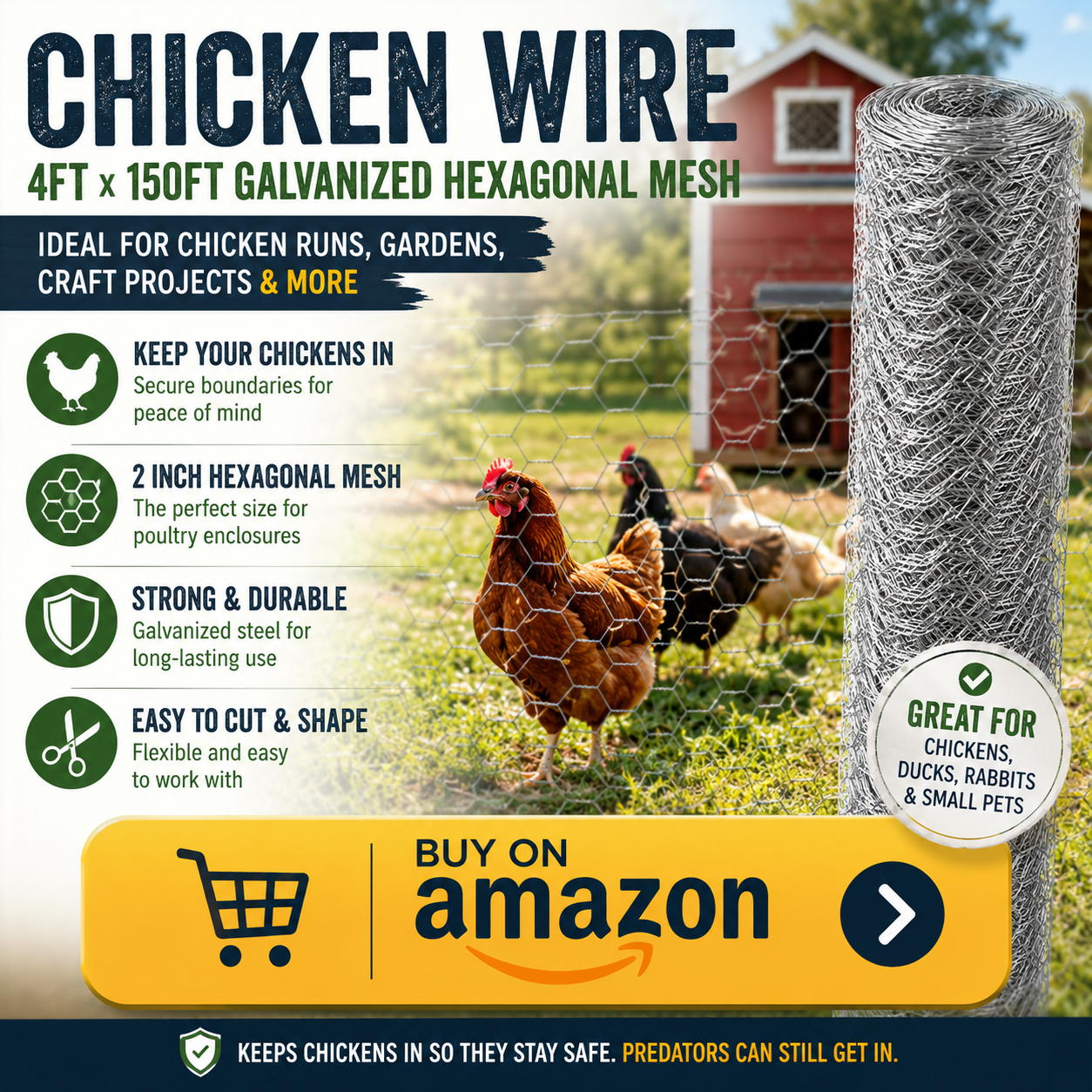
For larger side panels or overhead sections where keeping costs reasonable is important, a 150-foot roll of galvanized chicken wire fencing can still be a practical option.
Using both materials together often gives you the best balance between durability and affordability.
If you’re still deciding which fencing belongs where, my guide comparing chicken wire and hardware cloth explains the strengths of each in much more detail.
Pay Close Attention to the Bottom Edge
The bottom of a chicken tractor is where many predator problems begin.
Unlike permanent coops, tractors often sit directly on the ground.
If the ground is uneven, gaps appear.
Foxes.
Raccoons.
Coyotes.
Dogs.
They all look for those openings.
Every time you move your tractor, take a quick walk around the perimeter before letting your flock back inside.
Five minutes of checking can prevent a serious problem later.
Doors Deserve Just as Much Attention
Predators don’t always attack the fencing.
Sometimes they investigate the doors first.
As I looked over the Weaver Family Farms setup, I noticed every access point felt just as sturdy as the surrounding structure.
Nothing seemed like an afterthought.
That’s exactly how a predator-proof chicken tractor should be built.
If you’re still using a simple hook latch, I’d also recommend reading Best Chicken Coop Latches That Raccoons Can’t Open because stronger hardware is one of the easiest upgrades you can make.
Don’t Leave the Roof Unprotected
One thing that surprised me when I first started learning about chicken tractors was how many people leave the top partially open.
That may work until a hawk discovers your flock.
A fully enclosed roof adds another important layer of protection while also helping keep adventurous chickens where they belong.
After touring the large run at Weaver Family Farms, I came away believing every predator-proof enclosure should be designed with protection from above just as seriously as protection from the sides.
Move Your Chicken Tractor Before the Ground Gets Torn Up
One of the biggest advantages of a chicken tractor is giving your flock fresh grass on a regular basis.
The longer it stays in one spot, the more problems you’ll create.
The grass disappears.
Mud develops.
Waste builds up.
Insects become less plentiful.
Moving the tractor regularly keeps the ground healthier while encouraging your chickens to scratch through fresh vegetation and hunt for bugs.
It’s one of the reasons so many homesteaders enjoy using movable coops in the first place.

Always Look Over the New Location
Every time you move your chicken tractor, take a minute to inspect where it’s going.
I’ve learned that predators don’t need a huge opening.
A shallow depression in the ground can create enough space for trouble.
Before settling the tractor into place, I like checking for:
- Low spots.
- Large rocks.
- Old animal burrows.
- Sticks or branches preventing the frame from sitting flat.
- Areas where water tends to collect.
Those small checks only take a minute but can prevent predators from finding an easy way underneath.
Lock Your Chickens Up Every Evening
Even the most secure chicken tractor shouldn’t become your chickens’ overnight home unless it’s specifically designed for that purpose.
At Weaver Family Farms, the chicken tractor connects directly to the larger predator-proof enclosure, giving the flock a secure place to spend the night.
That setup really impressed me because it combines the benefits of a movable coop with the added security of a permanent predator-resistant run.
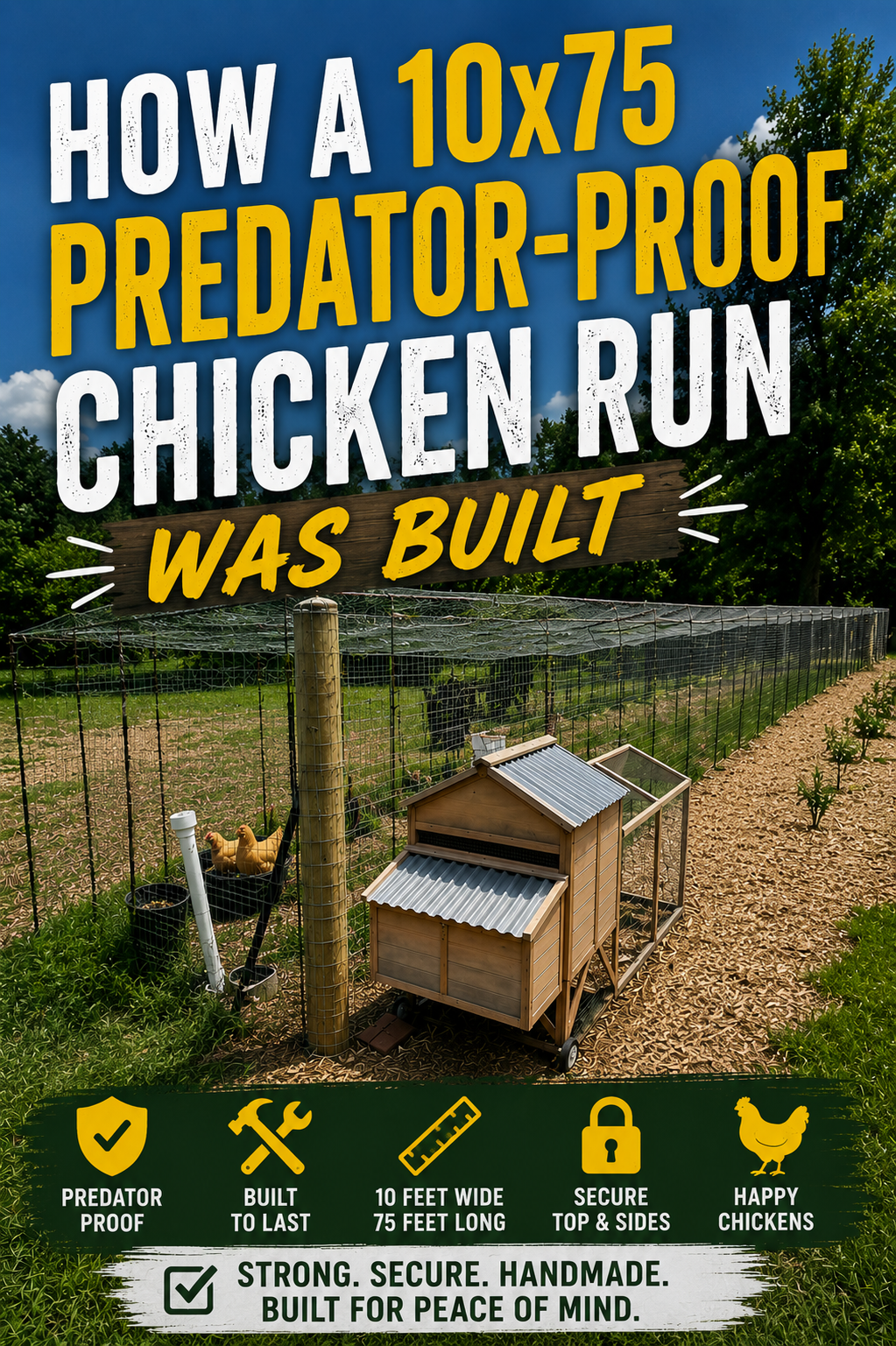
If you’re building something similar, How a 10×75 Predator-Proof Chicken Run Was Built does a great job showing how thoughtful planning can make every part of the system work together.
Think Like a Predator Every Time You Move It
This is probably the biggest habit I’ve picked up from talking with experienced chicken keepers.
Don’t look at your chicken tractor like a chicken owner.
Look at it like a hungry predator.
Walk around it.
Crouch down.
Look underneath.
Ask yourself:
“If I were a fox, where would I start digging?”
“If I were a raccoon, which corner would I investigate first?”
That simple change in perspective often helps you notice problems you’d otherwise miss.
Don’t Forget About Nighttime Visitors
Most predators aren’t interested in your chickens at noon.
They’re interested after dark.
That’s why I like knowing what’s happening around the coop when everyone is asleep.
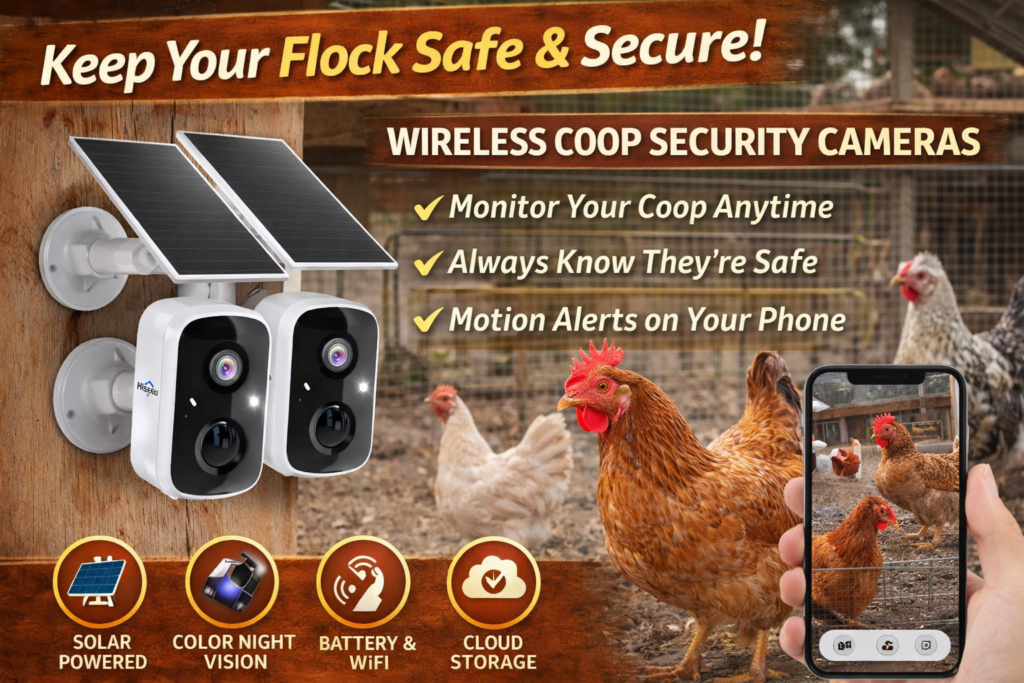
A solar-powered wireless security camera system is an easy way to keep an eye on your chicken tractor without running electrical wires across your yard. It’s especially useful if you’re trying to figure out whether you’re dealing with raccoons, foxes, coyotes, or another nighttime visitor.
Knowing exactly what’s showing up makes solving the problem much easier.
Build Several Layers of Protection
The more time I spend around experienced chicken keepers, the more I notice they rarely rely on one single solution.
Instead, they stack protections together.
Strong framing.
Quality fencing.
Secure latches.
A covered roof.
Routine inspections.
Good placement.
Each layer makes your chicken tractor a little harder to break into.
Eventually, predators decide it’s simply not worth the effort.
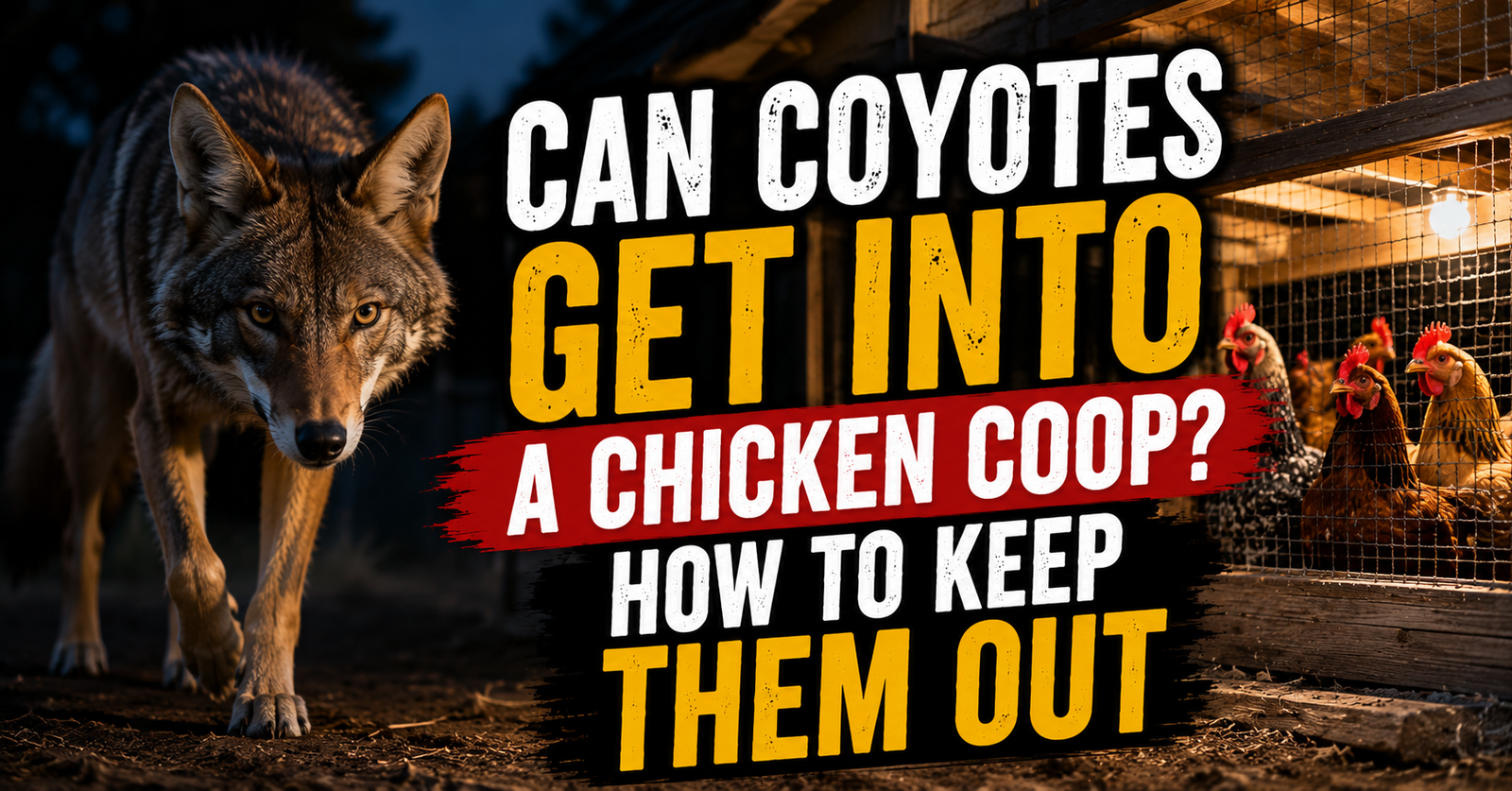
Earlier I explained how to keep coyotes out of a chicken coop, and that same idea applies here. The harder you make access, the better your chances of keeping predators moving down the trail instead of stopping at your flock.


My Biggest Takeaway
After seeing how thoughtfully the chicken tractor and predator-proof run worked together at Weaver Family Farms, I came away believing that mobility and security don’t have to compete with each other.
You can absolutely enjoy fresh pasture for your chickens without making them vulnerable.
The key is paying attention to the little details.
Keep the frame solid.
Close every gap.
Use stronger fencing where predators are most likely to attack.
Check your latches.
Move the tractor onto level ground.
Inspect it often.
Those small habits add up to a much safer home for your flock.
Frequently Asked Questions
Are chicken tractors safe from predators?
They can be, but only if they’re built with security in mind. Strong framing, quality fencing, secure latches, and careful placement all make a big difference.
Should I leave chickens in a tractor overnight?
That depends on the design. A well-built, predator-resistant chicken tractor may be suitable, but many owners prefer connecting it to a more secure coop or enclosed run after dark.
What is the best fencing for a chicken tractor?
Hardware cloth works well around vulnerable areas because it’s difficult for predators to bend or pull apart. Chicken wire is often used on larger sections where keeping costs reasonable is important.
How often should I move a chicken tractor?
That depends on your flock size and available grass, but many chicken keepers move their tractor every day or every few days to provide fresh forage and prevent muddy conditions.
Can foxes or coyotes get under a chicken tractor?
Yes, especially if it’s sitting on uneven ground. That’s why checking for gaps every time you move the tractor is one of the best habits you can develop.
About the Author
Nathan Holloway
Nathan Holloway specializes in predator prevention, chicken coop construction, and practical backyard flock security. He regularly visits farms, studies real-world chicken housing designs, and learns directly from experienced poultry keepers to discover what truly works in everyday backyard flocks. Through Backyard Chicken Pro, Nathan shares practical observations, construction ideas, and straightforward advice to help chicken owners build safer coops, stronger chicken runs, and better long-term predator protection.