
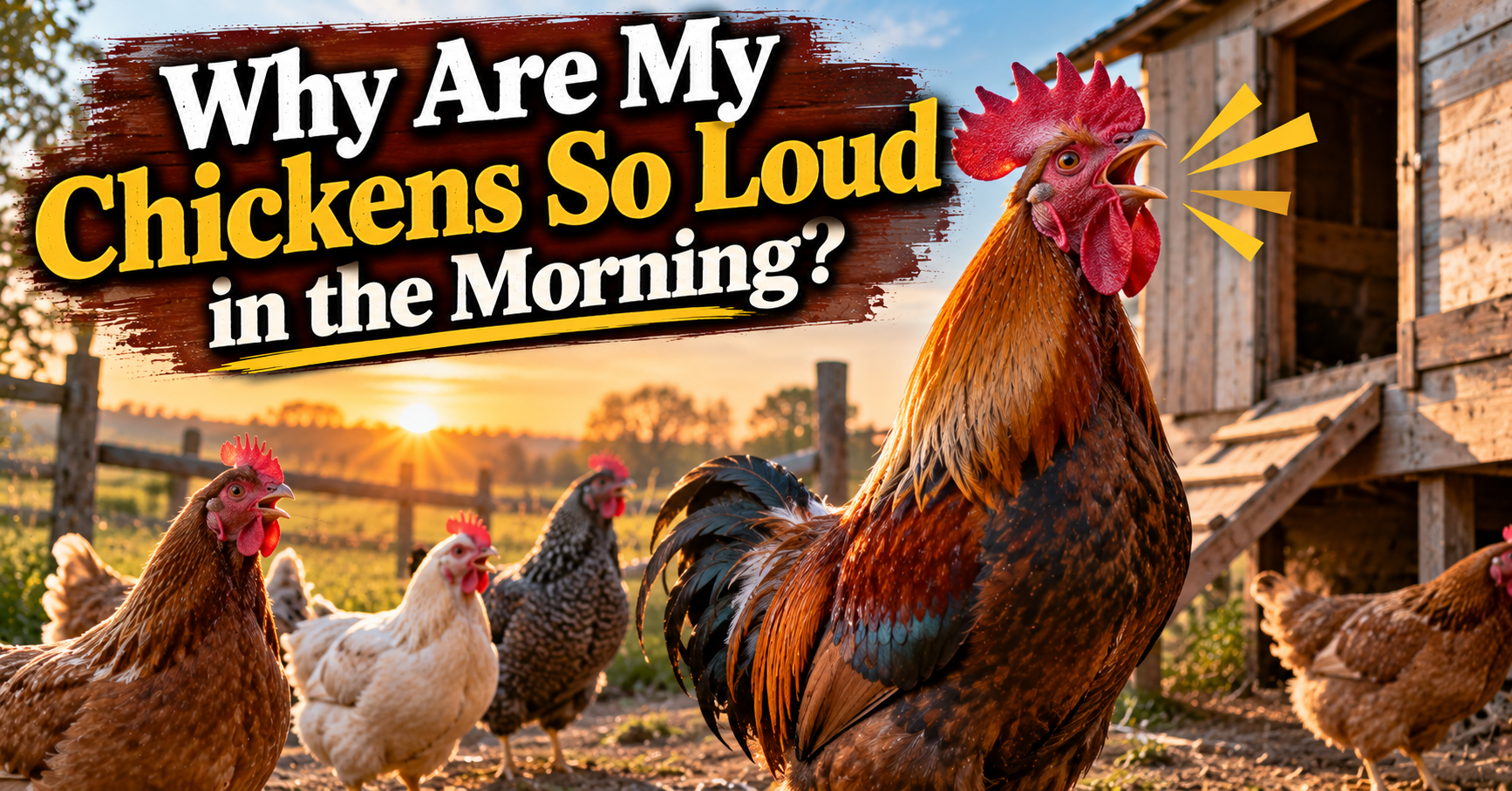
If you’ve ever walked outside first thing in the morning and wondered why your hens suddenly sound like they’re holding an argument nobody invited you to, you’re definitely not imagining it.
Chickens can get surprisingly loud in the morning.
And I’m not talking about a rooster crowing.
Hens can cackle, yell, call back and forth, complain from the nesting boxes, announce that they’ve laid an egg, demand to be let outside, and sometimes make enough noise that you’d swear something terrible was happening.
Then twenty minutes later the entire flock is quietly scratching around like nothing happened.
I’ve learned that morning chicken noise usually makes a lot more sense once you pay attention to what the flock is doing when the noise starts.
A hen yelling from inside the coop is different from a hen cackling after laying an egg.
A whole flock carrying on when they see you is different from an alarm call.
And a chicken repeatedly screaming from one nesting box may simply be furious that another hen is sitting in the box she wanted.
Chickens actually have a surprisingly varied collection of vocalizations. University of Maryland Extension notes that chickens use different calls around food, danger, laying, frustration, social interactions, and other situations.
So when the flock gets loud in the morning, the first thing I try to figure out is what they’re trying to accomplish.
Morning Is One of the Busiest Times in a Chicken’s Day
Morning seems to pack several important chicken activities into a short window.
They wake up.
Come off the roost.
Want food and water.
Want outside.
Start foraging.
Reestablish who’s standing where in the flock.
And, for many hens, get serious about laying an egg.
Research into chicken vocal activity has also found that hens can be more vocally active during morning hours, when feeding and egg-laying activity are occurring.
That matches what makes practical sense around a backyard flock.
Evening tends to be about settling down.
Morning is when everybody has somewhere to be.
And chickens are not always quiet about it.


Your Hens May Be Announcing an Egg
This is probably one of the biggest reasons hens get loud during the morning.
The famous egg song is real.
A hen may make repeated cackling sounds before or after laying an egg, sometimes loud enough that you’d think she had just accomplished something far more impressive.
University of Kentucky poultry guidance describes both a pre-lay call and a post-laying cackle. The post-lay cackle typically includes repeated shorter sounds followed by a longer vocalization.
Once you learn the sound, it becomes pretty easy to recognize.
The funny part is that sometimes other hens join in.
One hen lays an egg.
Suddenly half the coop seems interested in discussing it.
That can make a small flock sound much larger than it really is.


Chickens Don’t Always Wait Until After the Egg to Get Loud
This is where people sometimes get confused.
A hen can become vocal before laying too.
She may pace.
Visit nesting boxes.
Leave.
Come back.
Call repeatedly.
Act like none of the nesting boxes are acceptable even though they’re exactly the same boxes she used yesterday.
That pre-laying activity can be surprisingly dramatic.
So if one hen starts making a lot of noise in the morning but otherwise looks healthy, I pay attention to whether she’s also inspecting nesting areas.
Sometimes the explanation shows up in the nesting box shortly afterward.
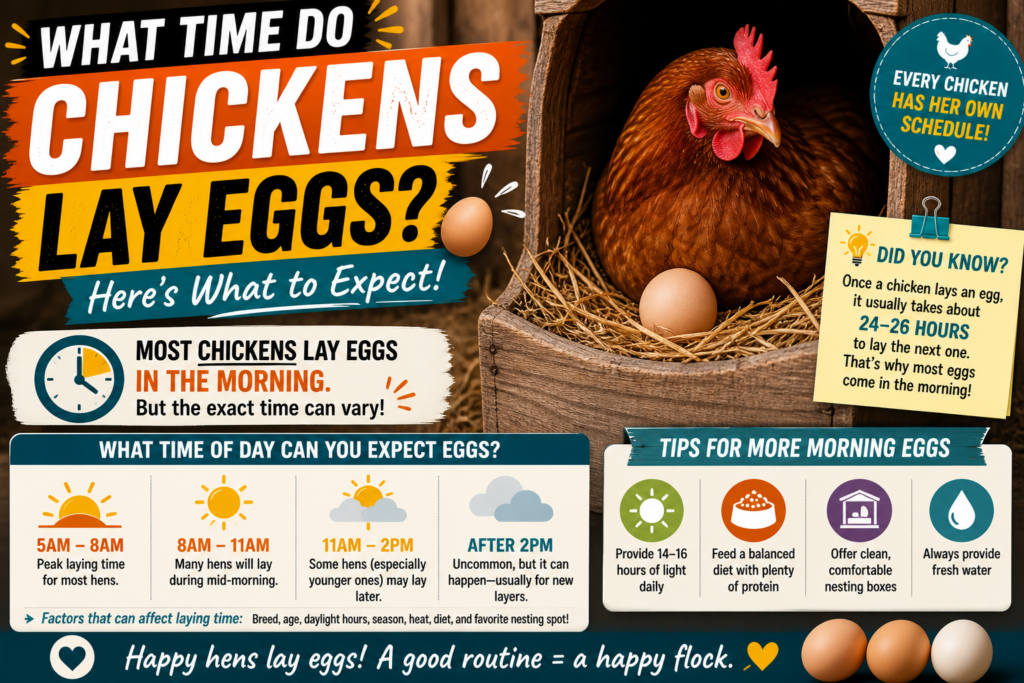
If you’re still learning your flock’s laying routine, what time chickens usually lay their eggs can help make sense of why so much of this commotion happens during the earlier part of the day.
Sometimes They’re Yelling Because They Want Out
This one is incredibly simple.
The flock wakes up.
They know there’s a world outside the coop.
And apparently they would like you to open the door immediately.
If your chickens are used to being released at roughly the same time every morning, they’ll learn that routine.
Then you oversleep.
Or get busy.
Or decide you’d like one peaceful cup of coffee before doing chicken chores.
The flock may have other plans.
Chickens are good at learning repeated routines. When something they expect doesn’t happen, some birds become much more vocal.
University of Maryland Extension describes a hen vocalization known as a gakel call, which has been associated with frustration and changes in expected resources such as food availability.
I wouldn’t label every impatient chicken sound as a specific scientific call, but the broader point is useful.
Chickens absolutely can get noisy when reality doesn’t match the routine they’ve learned.

An Automatic Door Can Change the Whole Morning Routine
This is one place where chicken equipment can genuinely make daily life easier.
If your flock starts complaining at sunrise because they’re waiting for someone to open the coop, an automatic door removes that part of the equation.

We’ve had good reason to like this solar automatic chicken coop door with a timer and light sensor because it can open consistently without requiring somebody to walk outside at exactly the same time every morning.
That doesn’t guarantee silent chickens.
Nothing does.
But if the morning yelling stops as soon as the door opens, you’ve probably figured out what they were complaining about.
They May Be Waiting for Breakfast
Chickens learn food routines ridiculously fast.
The sound of a feed bucket.
The door opening.
Your footsteps.
A container rattling.
Sometimes simply seeing you walk toward them is enough.
If breakfast normally arrives shortly after sunrise, your flock may begin vocalizing when they see the person associated with food.
It doesn’t necessarily mean they’re starving.
They’ve learned a sequence.
Morning happens.
Human appears.
Food happens.
And chickens are extremely good at encouraging you to move that process along.

This connects nicely with something we’ve already seen in the behavior cluster. Chickens can become very responsive to familiar people and routines, which is one reason chickens may follow you all over the yard once they’ve learned that interesting things tend to happen around you.


Sometimes the Loudest Hen Just Wants a Particular Nesting Box
This is one of my favorite examples of chicken logic.
Imagine several perfectly good nesting boxes.
Most of them empty.
One hen is sitting in Box #2.
Another hen has decided that Box #2 is the only acceptable place on Earth to lay an egg.
Now everybody gets to hear about it.
Hens can become surprisingly particular about nesting locations.
You may see a bird pacing outside an occupied box, calling loudly, looking inside repeatedly, and acting as though her entire morning has been ruined.
Meanwhile the box beside it is completely empty.
That’s chickens.
If this happens regularly, adding another nesting option can sometimes help, but don’t be shocked if they all continue wanting the same one anyway.
Nesting Box Problems Can Make Morning Noise Worse
If hens are consistently fighting over where to lay, I look at the nesting setup itself.
Are there enough boxes?
Are they dark enough to feel private?
Are they clean?
Are hens sleeping in them and filling them with manure?
Is one box positioned somewhere the flock clearly prefers?
Sometimes adjusting the nesting area can reduce a surprising amount of morning drama.

Our article on the nesting box setup that finally ended the egg hunt goes deeper into creating a setup hens are actually willing to use.
A Loud Morning Flock May Simply Be Communicating
Not every chicken sound means:
“Feed me.”
“Let me out.”
“I laid an egg.”
Sometimes chickens are just talking.
They maintain contact with the flock through vocalizations.
They react to changes.
They respond to other birds.
They call around food.
They make sounds related to danger and social activity.
Alabama Cooperative Extension notes that chickens have more than 30 vocalizations associated with different information such as contentment, frustration, danger, food, nesting, courtship, and distress.
That’s one reason a healthy flock can occasionally sound like absolute chaos while nothing is actually wrong.
You’re hearing a social group communicate.
One Chicken Can Set Everybody Else Off
This happens constantly.
One hen sees something.
She calls.
Another responds.
Suddenly several chickens are talking.
Sometimes it’s a legitimate alert.
Sometimes it’s an egg song.
Sometimes I’m convinced the others simply didn’t want to be left out of the conversation.
The important thing is to watch what the flock does along with the sound.
If everybody freezes and stares toward the same place, I take that differently than several hens casually wandering around while cackling.
Body language gives context to the noise.


Morning Alarm Calls Sound Different From Normal Chatter
This is one distinction worth learning.
Chickens have vocalizations associated with danger, including different responses to aerial and ground threats.
When a flock suddenly becomes alert and vocal at the same time, I look around.
Hawk overhead?
Dog near the run?
Cat sneaking along the fence?
Something moving through the woods?
A predator doesn’t have to actually attack for the chickens to react.
They may notice it long before you do.
That’s why I don’t assume every loud morning is just hens being dramatic.
Sometimes they’re telling you something is nearby.
Your Chickens May Notice Predators Before You Ever Do
This ties directly into the predator work we’ve done on the site.
A fox or raccoon may visit around dawn.
A hawk may begin moving once daylight arrives.
Neighborhood dogs may suddenly become active.
If your flock is consistently making alarm-like sounds at the same location or time each morning, I’d start looking for a pattern.
Fresh tracks.
Digging.
Something moving along the fence.
Birds staring toward one side of the property.
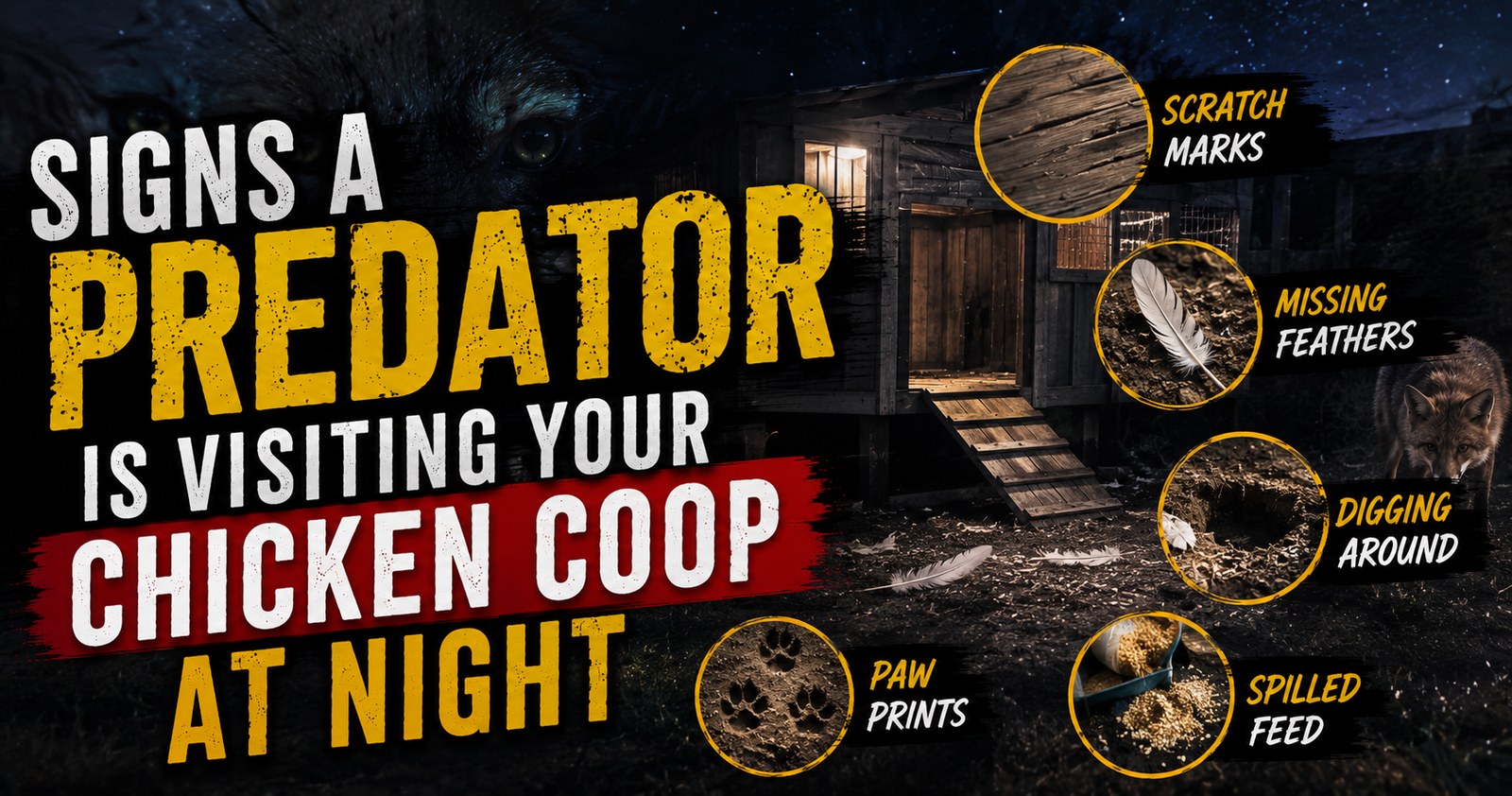
If you suspect something has started watching the flock, the warning signs that a predator is visiting your chicken coop at night are worth checking before dismissing the noise as ordinary chicken chatter.
Some Chickens Are Just Louder Than Others
This is something I think gets overlooked when people ask why their flock is noisy.
Chicken personality matters.
You may have ten hens.
Nine are relatively quiet.
One apparently believes every thought should be announced publicly.
I’ve seen huge differences between birds.
Some quietly go about their business.
Others comment on everything.
Nesting.
Food.
Another chicken in the wrong place.
A person walking past.
A gate opening.
A leaf moving suspiciously.
If the same healthy hen is always the loud one, that’s useful information.
It may simply be part of her normal personality.
Breed Can Affect How Noisy a Flock Feels
I wouldn’t promise that every chicken of Breed A is quiet and every chicken of Breed B is loud.
Individual personalities vary too much.
But some breeds and lines are generally known for being more vocal than others.
That matters if you’re keeping chickens in a neighborhood where sound travels easily.
A flock of hens is still usually much quieter than keeping a rooster. Extension guidance notes that hens generally forage quietly but will cluck and cackle, particularly around laying, while roosters produce the more persistent nuisance noise people often associate with chickens.
Still, “hens are quieter than roosters” does not mean “hens are silent.”
Anybody who’s heard a determined egg song knows that.
Don’t Confuse Hen Noise With Rooster Crowing
This article exists partly because these are different search intents.
You already have rooster articles.
A rooster crowing at sunrise, 3 AM, or throughout the day is one behavior.
A flock of hens cackling and calling in the morning is another.
If the sound you’re hearing is an actual repeated rooster crow before daylight, why roosters crow at night and how to calm them down is the more useful guide.
Here, we’re talking about the chorus of noises hens can make once the morning gets going.
Why Does My Hen Scream in the Morning?
“Scream” is obviously a human description, but I know exactly why people search it that way.
Some hens get LOUD.
If a hen suddenly starts producing harsh repeated calls, I ask:
Is she trying to get into a nesting box?
Did another hen take her spot?
Is she waiting for the door to open?
Does she see something threatening?
Did she just lay an egg?
Is she pacing?
Does she appear distressed?
One word like “scream” doesn’t tell us enough.
The situation does.
A perfectly healthy hen yelling at an occupied nesting box doesn’t concern me nearly as much as a hen screaming while injured or panicked.
Why Do Chickens Yell When I Come Outside?
You’re probably important to their routine.
Food.
Water.
Treats.
Freedom.
Interesting things.
Chickens quickly learn which person tends to provide those things.
So when you appear, the flock may suddenly become much more animated.
They may follow you.
Call.
Run.
Flap their wings.
Gather at the gate.
This is where the different behavior articles we’ve been building start fitting together nicely.
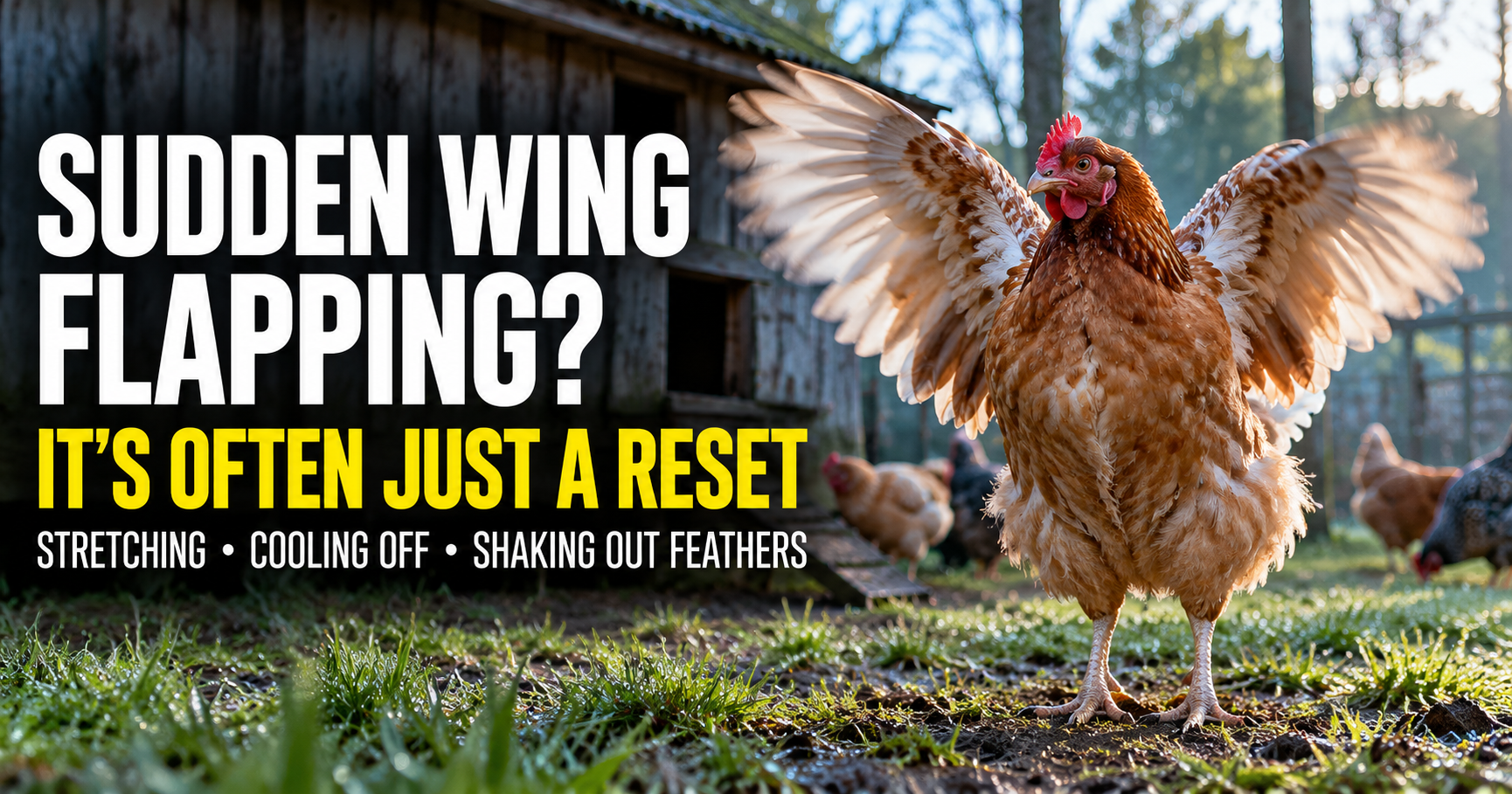
A chicken that suddenly flaps her wings when she sees you may simply be excited and trying to reach you faster, while the vocalizing adds another piece to the same reaction.
That’s very different from distress.
Why Are Chickens Quiet at Night but Loud in the Morning?
Chickens are strongly influenced by the light-dark cycle.
At night, healthy chickens generally settle onto their roosts and become far less active.
Morning reverses that.
Light returns.
Activity increases.
Feeding begins.
Laying starts.
Social interactions resume.
A 2025 study of chicken vocalizations found time-of-day patterns in vocal activity, and researchers have continued studying how chicken calls vary across daily activity periods.
So a big jump in noise after sunrise isn’t particularly surprising.
The chickens basically went from sleep mode to chicken mode.
Artificial Light Can Affect When the Morning Starts
This is worth remembering if your chickens suddenly start making noise earlier than expected.
Outdoor lights.
A porch light.
Security lighting.
Coop lighting.
Even seasonal changes in sunrise.
All can affect the flock’s daily rhythm.
University of Kentucky guidance specifically notes that timing of morning lighting can influence when hen noise begins.
So if your hens used to stay quiet until 7 AM and suddenly begin carrying on much earlier, look around.
Did something change?
Are lights coming on sooner?
Has sunrise shifted?
Did an automatic door schedule change?
Sometimes the explanation is environmental rather than behavioral.
Hungry and Frustrated Don’t Always Sound the Same
This is another reason I don’t lump every call together.
Chickens can vocalize around food.
They can also vocalize around frustration.
If the feeder is unexpectedly empty first thing in the morning, the sound may be much more demanding than the normal happy chatter around breakfast.
I like feeders that provide enough capacity that the flock isn’t completely dependent on me showing up at one exact minute every morning.
That helps avoid unnecessary competition too.
Especially with a larger flock, several feeding locations can keep lower-ranking birds from being pushed away.
Morning Noise Can Get Worse When Chickens Are Crowded
Space affects a lot of chicken behavior.
When everybody wakes up and tries to use the same doorway, feeder, waterer, and nesting boxes, tension can rise quickly.
More pushing.
More pecking.
More frustration.
More noise.
If the coop or run feels chaotic every morning, I wouldn’t only focus on the sound.
I’d look at the setup.
Can birds move around each other?
Can lower-ranking birds reach food?
Can several hens access nesting areas?
Is the run large enough?
Sometimes the noise is only the symptom of a management problem.
Pecking-Order Drama Is Often Loudest Around Resources
Feeders.
Doors.
Nesting boxes.
Favorite roosts.
Those are all places where chicken social rank becomes noticeable.
One hen moves another.
The second hen complains.
Somebody chases somebody.
Then everyone gets involved.
Occasional social disagreements are completely normal.
Constant bullying is not.
If one bird is being repeatedly driven away from food or water, that’s when I’d move beyond “noisy chickens” and start addressing the social problem directly.
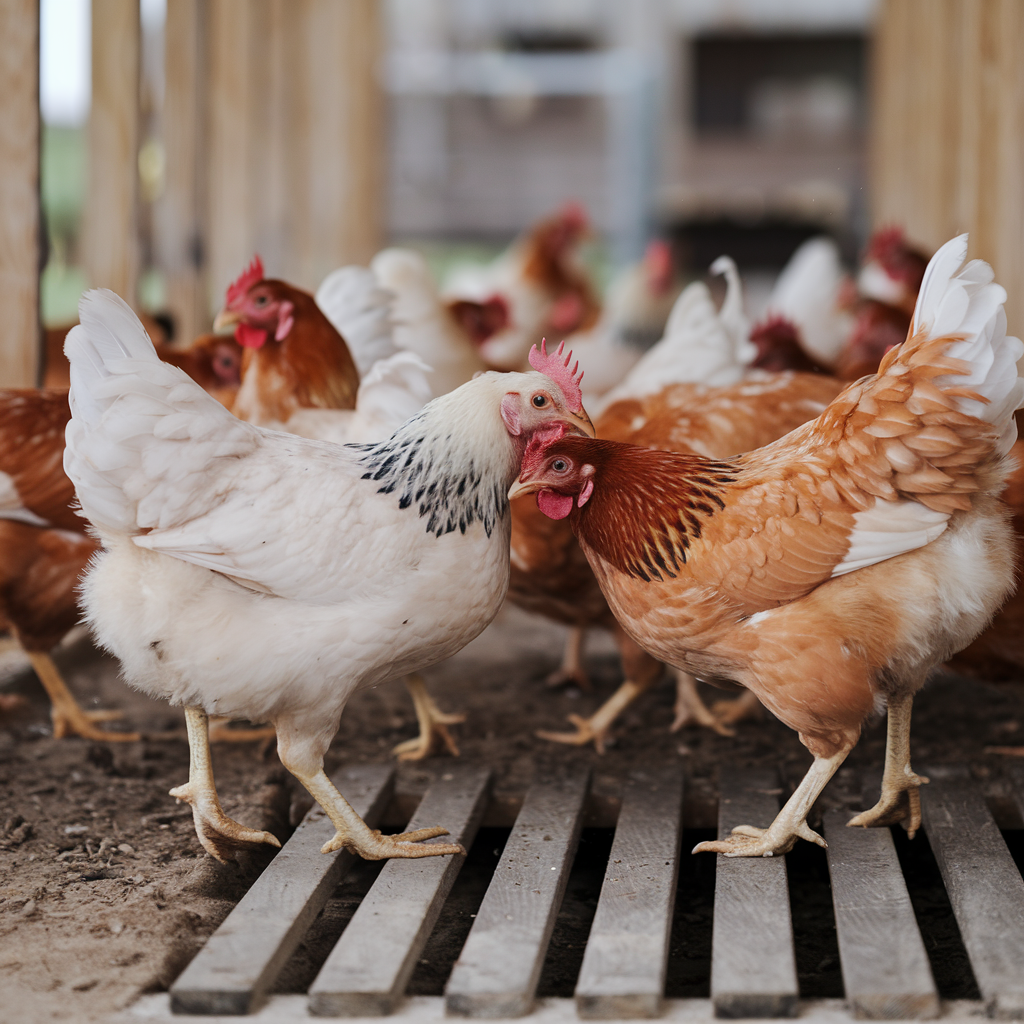
Our guide on stopping chickens from pecking each other covers the bigger warning signs.
A Broody Hen Can Add Her Own Special Morning Attitude
Broody hens have opinions.
Strong ones.
A broody hen sitting in a nesting box may growl, cluck, puff herself up, or complain when another chicken or human gets too close.
If the nesting area is already busy in the morning, one broody bird can add considerably more noise to the situation.
Again, body language helps.
A hen glued to the nest, puffing herself up and protesting every visitor, probably isn’t singing an egg song.
She’s defending what she considers her nest.
Why Does the Whole Flock Join the Egg Song?
This is one of those chicken mysteries that makes backyard keeping entertaining.
Sometimes one hen begins cackling and several others join.
Researchers have studied the post-lay cackle and its reproductive/social function, but backyard observations often make the whole thing look like a group announcement.
Whatever the exact motivation in each flock, the important practical point is that one laying hen can make several chickens noisy.
So don’t assume six noisy hens means six things are wrong.
Sometimes one egg starts the morning concert.
Should I Try to Make My Hens Quieter?
Usually, I don’t try to stop normal chicken communication.
They’re chickens.
They’re going to cluck.
They’re going to cackle.
Occasionally they’re going to make an absurd amount of noise over something that appears completely unimportant to us.
What I do try to fix are unnecessary triggers.
A door opening too late.
An empty feeder.
Not enough nesting options.
Predators hanging around.
Crowding.
Something making the flock chronically stressed.
If the environment is good and the chickens are healthy, some morning noise is just part of keeping chickens.
What If You Have Close Neighbors?
This is where management matters more.
If you live on acreage, a five-minute egg song may not matter at all.
If your coop is forty feet from someone’s bedroom window, it matters considerably more.
A few things can help:
Keep the coop farther from property lines where possible.
Use an automatic door so birds aren’t demanding release.
Avoid artificial lighting that starts their day unnecessarily early.
Keep food and water consistently available.
Provide enough nesting space.
And don’t keep a rooster where local rules or close neighbors make that unrealistic.
Hens aren’t silent, but you can avoid creating reasons for them to be louder than necessary.
Watch for a Sudden Change in Noise
This is the point where I pay more attention.
A flock that’s always noisy in the morning?
Probably normal for that flock.
A normally quiet flock suddenly going wild every morning?
I’d want to know what changed.
New predator.
New chicken.
Feed schedule changed.
Automatic door malfunction.
Nesting box problem.
Broody hen.
New rooster.
Construction nearby.
Something in the environment.
Changes are often more informative than the absolute volume.
That’s why I keep coming back to the same advice throughout this behavior cluster.
Learn what normal looks and sounds like for your own chickens.
Don’t Ignore Distress Sounds
Normal morning chatter should still look like normal chickens.
Eating.
Walking.
Scratching.
Laying.
Interacting.
If one bird is repeatedly vocalizing while showing signs of physical distress, that’s different.
Look closer if the sound comes with:
Limping.
Straining.
Heavy breathing.
Weakness.
Isolation.
Inability to stand.
Repeated attempts to lay without producing an egg.
Abnormal posture.
Not eating.
Those combinations deserve attention.
Chicken vocalizations can provide clues about health and welfare, but sound alone usually isn’t enough to diagnose a specific problem.
The Morning Noise Usually Makes Sense Once You Watch Long Enough
This is what I’ve learned to enjoy about chickens.
At first, every sound seems random.
After awhile, you start recognizing patterns.
That hen is looking for a nesting box.
That one just laid.
Those birds want the door open.
That call made everybody look toward the sky.
That hen is furious because another bird stole “her” nest.
And that entire flock is yelling because they saw the person who normally brings breakfast.
Once you connect the sounds to what the chickens are doing, the morning chaos feels a lot less mysterious.
It’s communication.
Sometimes useful.
Sometimes dramatic.
Sometimes ridiculously loud.
But usually, there’s a reason behind it.
Frequently Asked Questions
Why are my hens so loud first thing in the morning?
Common reasons include wanting out of the coop, anticipating food, preparing to lay eggs, making egg-song vocalizations, social communication, and reacting to something in the environment.
Why does my chicken scream every morning?
Look at what she’s doing when it happens. She may be waiting for a nesting box, demanding to be let outside, reacting to another chicken, laying an egg, or responding to something she considers threatening.
Why do hens cackle after laying eggs?
Hens commonly make a distinctive post-laying cackle. Poultry researchers have documented this vocalization and proposed social and reproductive functions for it.
Why do my chickens make noise before laying eggs?
Hens can produce pre-lay vocalizations while looking for or preparing to enter a nest. This is a recognized part of laying behavior.
Are hens normally noisy?
Hens are generally quieter than roosters, but they definitely aren’t silent. They cluck, cackle, give food and social calls, and can become particularly loud around laying or when frustrated.
Why are my chickens suddenly loud when they see me?
They may recognize you as part of a learned routine involving food, treats, release from the run, or other positive experiences.
Can chickens be too loud for neighbors?
They can occasionally be loud enough to annoy close neighbors, particularly around laying time. Good management, sensible coop placement, and avoiding roosters can reduce the biggest noise problems.
Should I worry if my chickens suddenly become much louder?
Not automatically, but a sudden change is worth investigating. Look for predators, resource shortages, nesting problems, flock conflict, environmental changes, or signs that one bird is distressed.
About the Author
Megan Whitaker covers chicken behavior and flock dynamics for Backyard Chicken Pro, focusing on the everyday sounds, movements, and habits that can seem confusing until you understand what the flock is communicating. Her work combines close observation of backyard chicken behavior with established poultry research, helping readers separate normal chicken drama from changes that deserve a closer look.