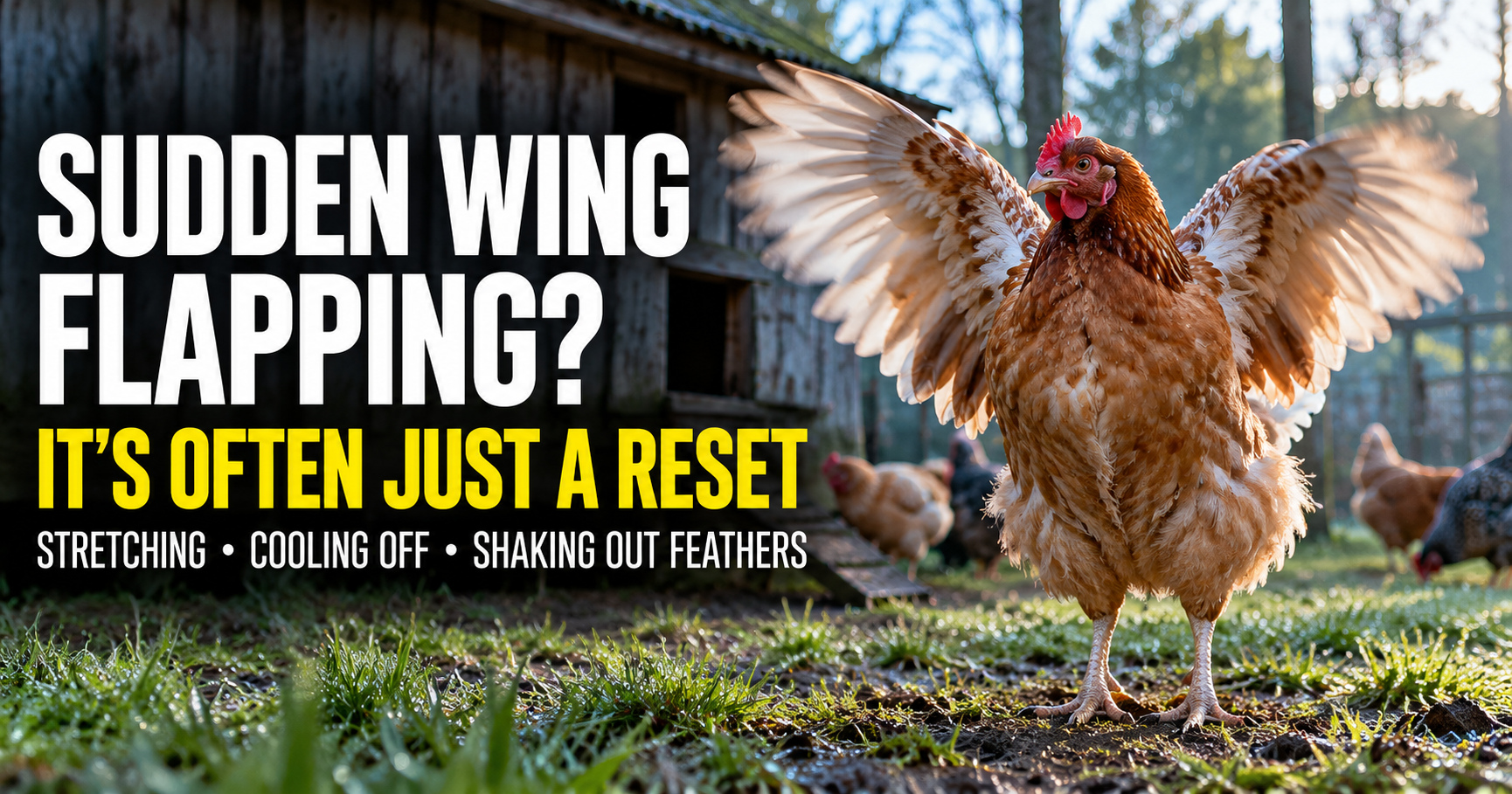
I’ve watched chickens flap their wings in situations that have absolutely nothing to do with trying to fly.
A hen walks out of the coop in the morning and gives several huge flaps.
Another chicken runs across the yard, stops, stretches up tall, and flaps like she’s celebrating something.
A rooster stands in the middle of the flock and suddenly makes himself look twice as impressive.
Then there are the chickens that flap when they see you coming, especially when they think food might be involved.
After you’ve watched a flock long enough, you start realizing that wing flapping is less of a single behavior and more like a tool chickens use for several different reasons.
Sometimes they’re stretching.
Sometimes they’re excited.
Sometimes they’re balancing.
Sometimes they’re communicating with another chicken.
And occasionally, wing movements can tell you something isn’t quite right.
The trick is looking at what the chicken was doing immediately before and after the flapping.
Chickens Don’t Only Use Their Wings for Flying
This sounds obvious once you think about it, but chickens use their wings constantly even though most backyard breeds aren’t exactly impressive long-distance flyers.
Their wings help them balance.
Jump onto roosts.
Slow themselves when jumping down.
Change direction while running.
Stretch.
Communicate.
Dry or rearrange feathers.
And make themselves look much bigger than they really are.
That’s why seeing a chicken flap her wings doesn’t automatically mean she’s trying to escape.
Most of the wing flapping I’ve watched lasts only a few seconds.
Then the bird folds her wings and continues whatever she was doing before.


Sometimes They’re Simply Stretching
This is probably the most common kind of wing flapping I see.
A chicken stands upright.
Raises her chest.
Extends the wings.
Gives several strong flaps.
Then everything gets folded neatly back into place.
It reminds me of the way we stretch after sitting still for too long.
You’ll often notice it after a chicken has been resting or roosting.
I’ve especially noticed birds doing it shortly after coming out of the coop.
They’ve spent hours sitting on a roost, so a good stretch makes plenty of sense.
Sometimes you’ll see a wing stretch paired with a leg stretch too.
The chicken extends one wing downward while stretching the leg on that same side backward.
It can look strange the first time you see it, but it’s completely ordinary.

Morning Wing Flapping Is Extremely Common
If I had to pick one time when I notice the most flapping, it would probably be early in the day.
The coop opens.
The flock comes pouring out.
Some stretch.
Some shake their feathers.
Some flap.
Others immediately start scratching around for breakfast.
It looks almost like everybody is resetting themselves after sleeping.
That’s one reason I wouldn’t worry about a healthy chicken giving several big flaps when she first gets moving in the morning.
The important thing is that the wings fold normally afterward.
Excitement Can Make Chickens Flap Too
I’ve seen chickens get visibly excited.
Food will do it.
Being released into a new area will do it.
Sometimes simply seeing the person they associate with treats is enough.
A chicken may run toward you with her wings slightly out, give a couple of hard flaps, then continue running.
That’s not really flight.
It’s excitement mixed with balance and speed.
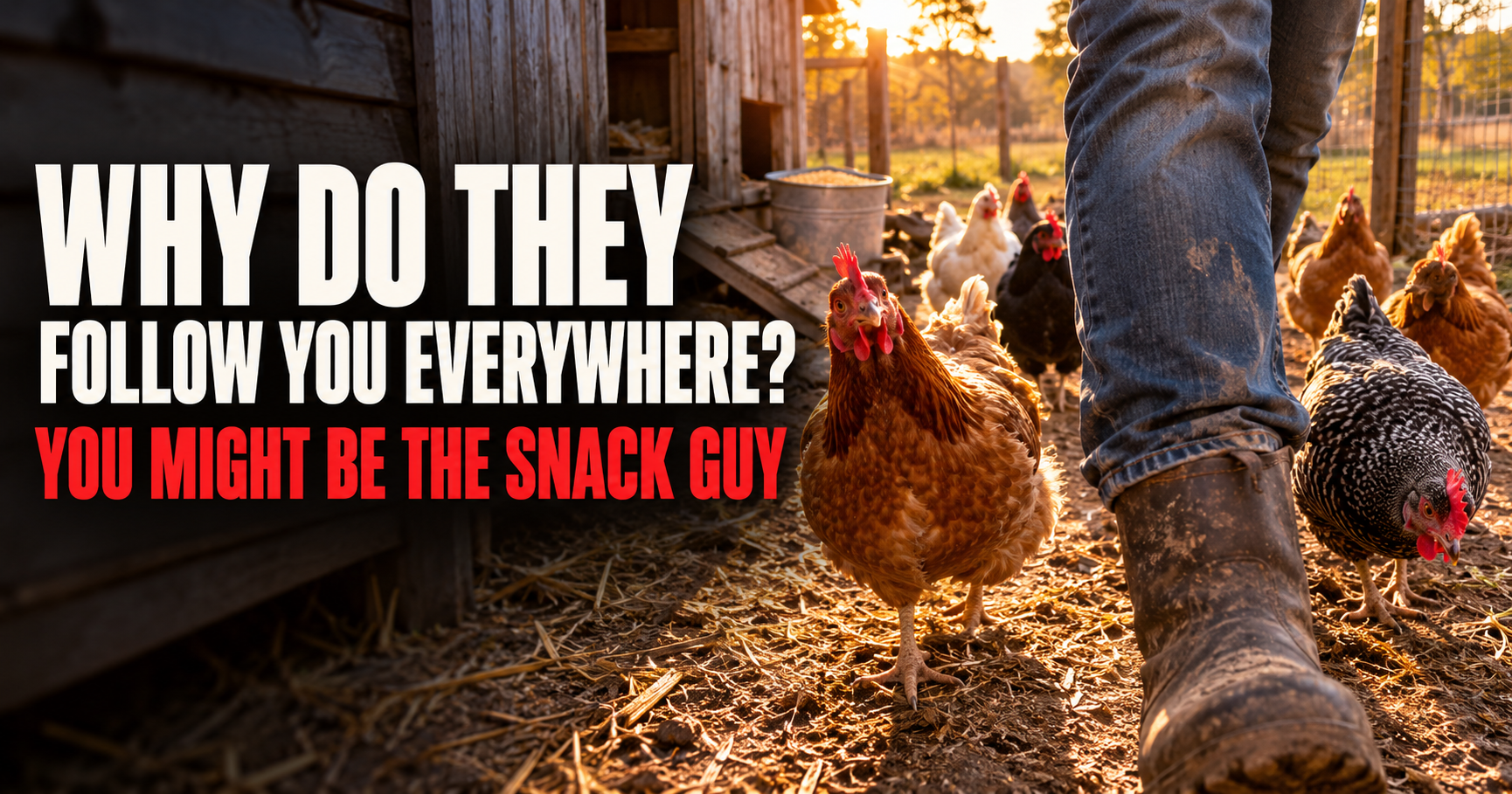
We recently talked about why chickens follow you everywhere and what I’ve learned from watching that behavior, and wing flapping sometimes becomes part of that same enthusiastic greeting.
Especially when they think you brought something good.
Running Chickens Often Use Their Wings for Balance
Chicken running is already funny enough.
Add wings and it gets better.
When a chicken moves quickly, especially over uneven ground, she may partially open or flap her wings to stay balanced.
You’ll see the same thing when she’s making a sharp turn.
The wings give her a little extra control.
This becomes especially obvious with younger birds that seem to have more speed than judgment.
They sprint.
Turn.
Flap.
Almost run into somebody.
Then act like the entire thing was planned.
Chickens Flap When Jumping Onto Roosts
Wings are incredibly useful when chickens move vertically.
A bird jumping onto a roost may flap several times to give herself extra lift.
Jumping down works the opposite way.
The wings help slow the descent and keep the bird balanced before her feet hit the ground.
That’s one reason roost placement matters.
If chickens have to make awkward jumps inside a cramped coop, you’re going to see a lot more frantic wing movement.
A good roosting setup gives them room to get up and down comfortably.
Your flock may also prefer different roost heights depending on breed and body size.


Hens Sometimes Flap After You Pet Them
This one connects nicely with another behavior we just covered.
A mature hen may squat when you approach or touch her back.
Then she stands up.
Shakes.
Flaps.
Rearranges her feathers.
And walks away.
That can look like she’s trying to shake off the entire experience.
But it fits naturally with feather rearrangement after that crouched posture.
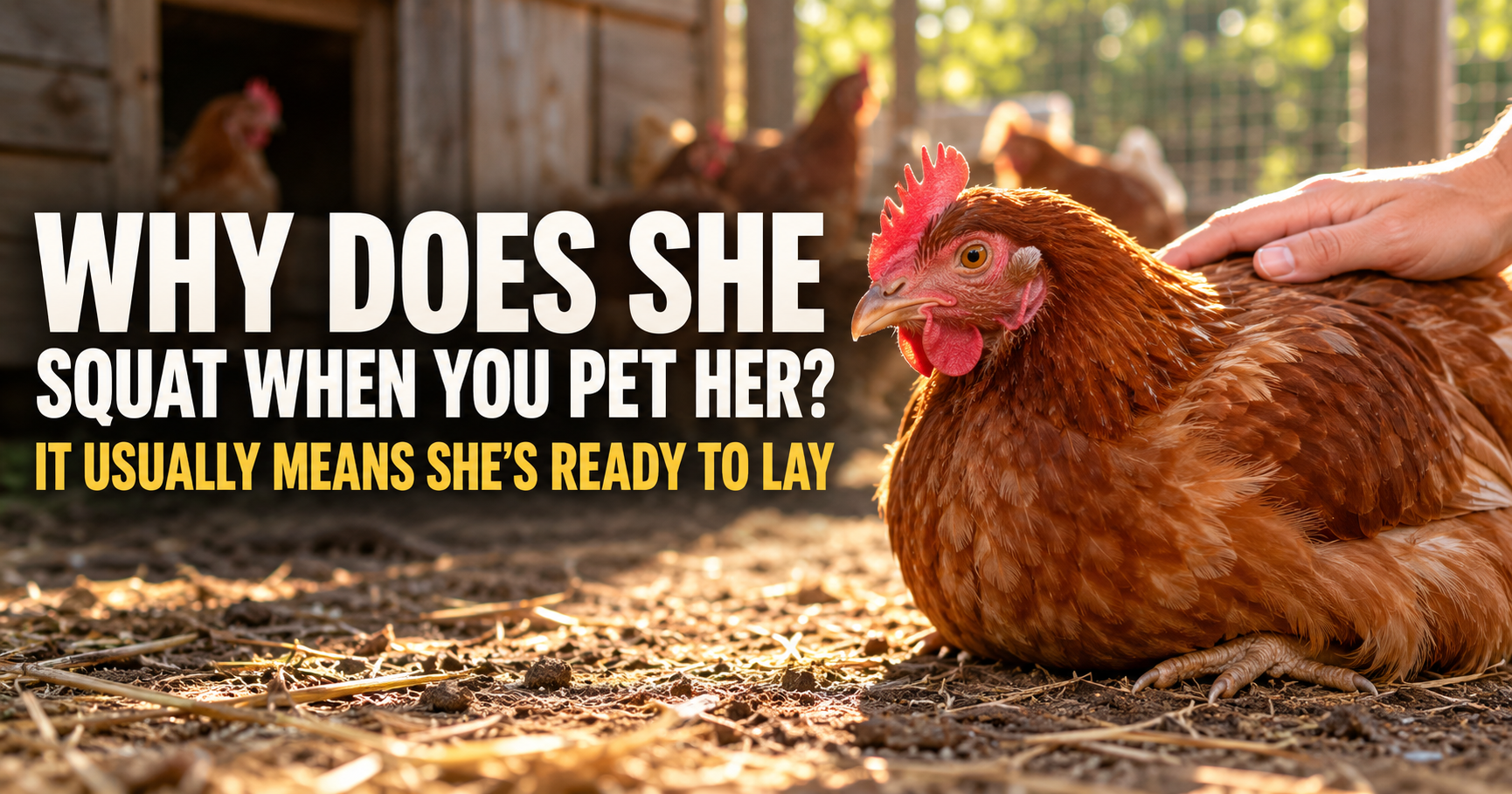
If you’re seeing the squat immediately before the wing movement, read why chickens squat when you pet them and what that behavior means because the two behaviors often appear together.
Wing Flapping Can Be Part of Preening and Feather Care
Chickens are constantly maintaining their feathers.
Preening.
Shaking.
Stretching.
Dust bathing.
Flapping.
One behavior often flows directly into another.
I’ve watched a hen finish preening, stand up, flap several times, and then settle everything back into place.
The flapping helps reposition feathers that have been loosened during grooming.
You may see something similar after a dust bath.
The bird stands.
Shakes out an unbelievable cloud of dirt.
Flaps.
Then begins putting the feathers back in order.
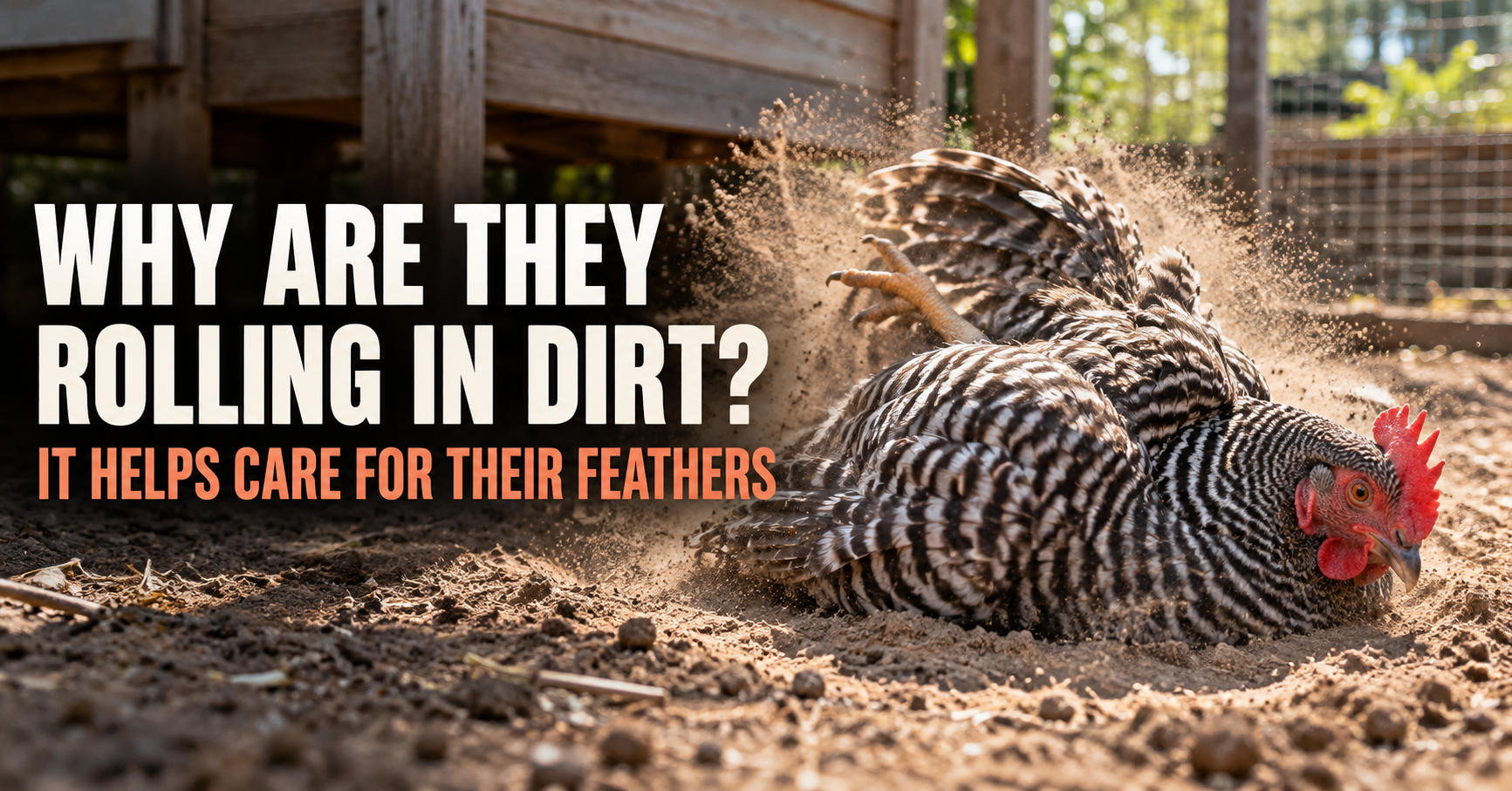
If you’ve ever wondered why chickens willingly cover themselves in dirt first, our article on why chickens dust bathe and what they’re actually doing explains that entire strange routine.
Roosters Use Wing Flapping Differently
Roosters add another layer to this behavior.
A rooster may flap strongly as part of a display.
He stands taller.
Puffs himself up.
Spreads or flaps his wings.
Suddenly he looks much more impressive.
That’s probably not accidental.
Roosters communicate constantly through posture.
Wing position.
Neck feathers.
Body height.
Movement.
Vocalizations.
A big wing-flapping display can help announce presence and confidence to the rest of the flock.
I’ve seen roosters do it even when nothing obvious was happening.
Sometimes they simply seem to feel like reminding everybody that the rooster is still there.
Flapping Can Be Part of Dominance Behavior
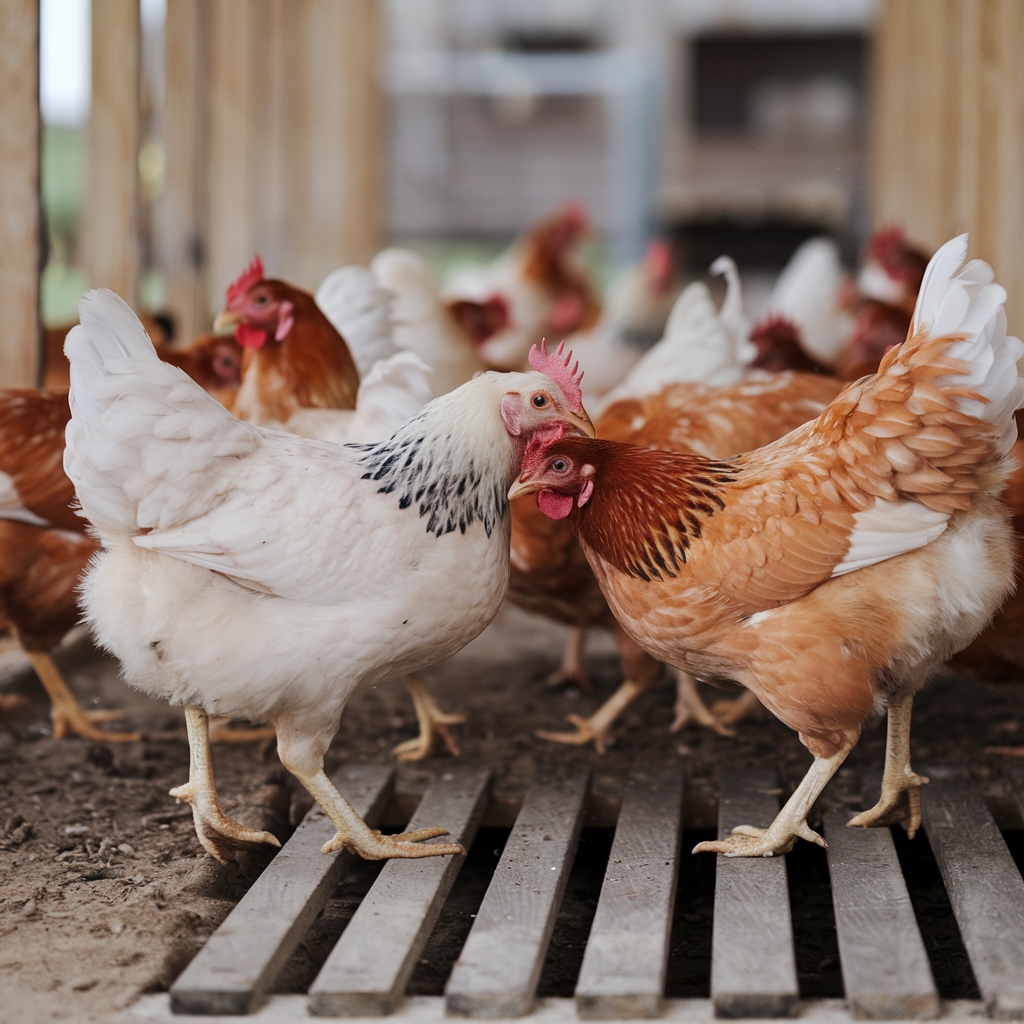
Watch chickens sorting out their pecking order and you’ll sometimes see wing movement mixed into the confrontation.
One bird stands taller.
Hackle feathers rise.
Wings may move outward.
There may be chasing.
Sometimes a quick flap makes the chicken appear larger.
That’s different from relaxed stretching.
The rest of the body tells you what you’re watching.
If two birds are facing each other stiffly and one suddenly flaps, I’m thinking about social behavior.
If a hen casually walks out of the coop, yawns in chicken language, and gives herself a big stretch, I’m not.
When those disagreements move beyond occasional posturing into constant attacks, our guide on how to stop chickens from pecking each other is a better fit.
A Chicken May Flap to Get Away From Another Chicken
Sometimes the wings aren’t about looking impressive.
They’re about getting out of there.
A lower-ranking hen being chased may run with her wings partly open.
The flapping helps her accelerate, jump over something, or quickly change direction.
That’s why occasional chasing isn’t automatically the same thing as serious bullying.
Chickens have social disagreements.
What matters is whether one bird is constantly being prevented from eating, drinking, resting, or moving comfortably through the flock.
Chickens May Flap When Startled
I’ve seen this plenty of times.
Something suddenly moves.
A bucket falls.
A dog appears.
A strange noise happens.
The chicken jumps and gives a burst of wing flapping.
That’s part escape response and part balance.
Sometimes several chickens react at once because one bird’s alarm sets off the others.
The interesting thing about flock behavior is how quickly one chicken’s reaction can spread.
One bird jumps.
Three others run.
Suddenly everybody is acting like something terrible happened even though nobody seems completely sure why.
Chickens Flap When They’re Happy Too
I don’t like assigning human emotions too casually to animals, but there’s no question that chickens show different activity levels depending on what’s happening around them.
I’ve seen birds run and flap when released into a favorite area.
I’ve seen them do it when treats appear.
I’ve seen young chickens behave almost playfully during short bursts of running and wing flapping.
I wouldn’t label every flap as happiness.
But when a healthy chicken is active, exploring, running, scratching, and occasionally bursting into a few wing beats, I usually take the entire picture as normal behavior.
Sunbathing Can End With a Big Wing Flap
A chicken can lie in the sun so still that she scares you, then suddenly stand up and flap hard several times.
That makes sense.
She’s been lying sideways with feathers spread out.
One wing may have been stretched open.
Everything needs to go back where it belongs.
Stand.
Shake.
Flap.
Preen.
Continue the day.
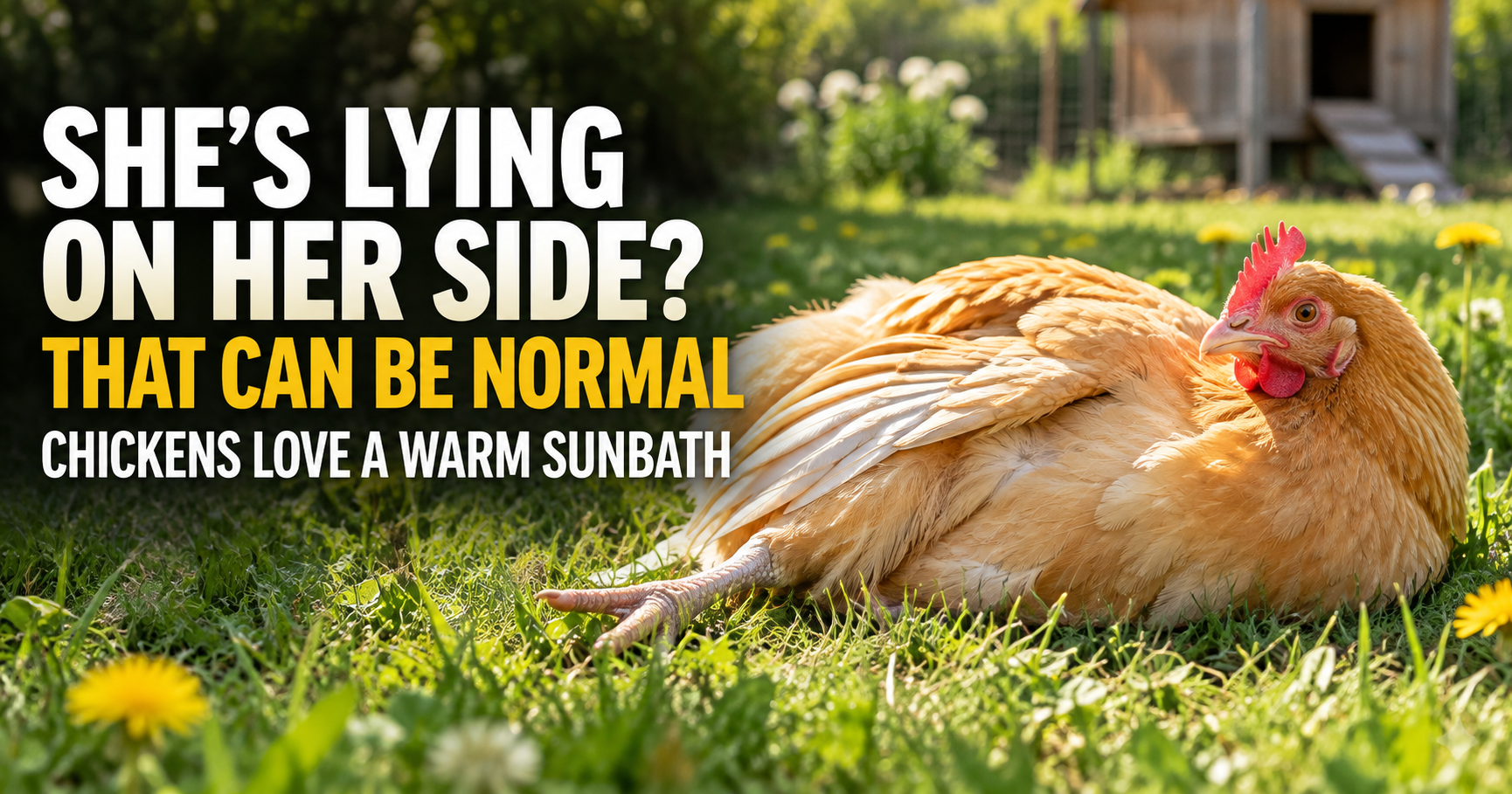
We just covered why chickens sunbathe and lie on their side, and that article is worth reading if the lying-down part worries you more than the flapping.
A Chicken Flapping at You Isn’t Automatically Aggressive
This one depends heavily on the rest of the body language.
A hen running toward you while giving a couple of excited flaps probably isn’t challenging you.
She’s probably excited, balancing, or expecting food.
A rooster approaching stiffly, staying tall, orienting his body toward you, raising hackles, and repeatedly displaying is something I interpret differently.
Never look at the wings alone.
Look at the feet.
Head.
Neck.
Direction of movement.
Sounds.
And what happens next.
Body language works as a package.
Why Does My Chicken Flap When I Pick Her Up?
Because many chickens don’t enjoy losing control of their feet.
Even tame hens sometimes flap when they’re first lifted.
The bird is trying to regain balance.
Sometimes she’ll settle once she’s properly supported.
Other times she’ll keep struggling because she wants down.
I’ve found that supporting the body securely makes a huge difference.
I don’t like letting the legs dangle while trying to control only the upper body.
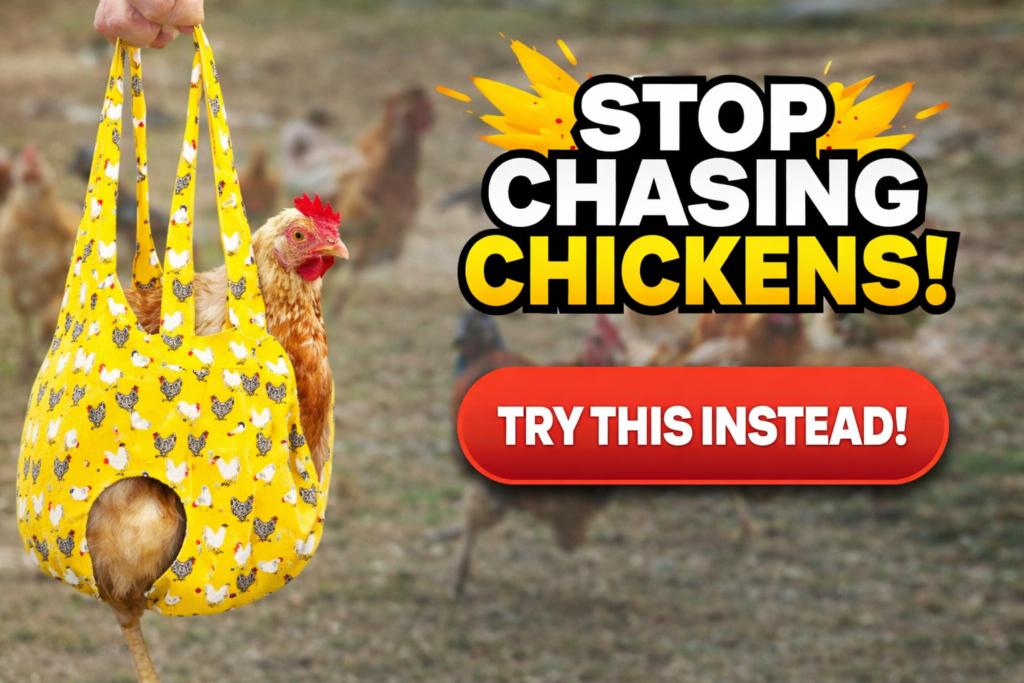
When I need a bird held more securely for something like nail trimming or an inspection, this chicken handling bag that makes routine care much easier can help keep everything under control without turning the job into a wrestling match.
Constant Frantic Flapping Is Different
This is where I stop calling it normal stretching.
One short burst?
Fine.
Several flaps after jumping?
Fine.
A chicken repeatedly flapping, struggling, falling over, unable to fold a wing, or acting distressed?
I’m looking closer.
Wing movement becomes concerning when the chicken appears unable to control it normally.
I want to know whether:
The wing folds correctly.
Both wings look symmetrical.
The chicken can walk.
She’s breathing normally.
She’s alert.
There’s swelling or injury.
She’s holding one wing lower than the other.
The flapping stops when whatever triggered it ends.
Those details matter.
A Drooping Wing Is Not the Same as Flapping
This distinction is important.
Healthy flapping involves intentional movement.
A drooping wing stays low.
If one wing suddenly hangs away from the body all day, I don’t treat that as normal wing-flapping behavior.
I’d check for injury.
Feel carefully for swelling.
Look for cuts.
Watch how the chicken moves.
And consider whether another bird or predator may have hurt her.
If the entire chicken also seems withdrawn or weak, I’m even more concerned.
Heat Can Change How Chickens Hold Their Wings
Hot chickens may hold their wings away from the body.
That’s different from a quick energetic flap.
They’re increasing airflow around the body.
You may also see panting.
That combination tells me much more about temperature than excitement.
If several chickens are standing with wings held away from their sides on a hot afternoon, I’m thinking about shade, water, and airflow.
Again, context solves most of the mystery.
Wing Position Can Help You Spot Stress
Chickens don’t have to be actively flapping for their wings to tell you something.
A stressed or unwell bird may hold herself differently.
That’s one reason I like comparing behavior to the individual chicken’s normal routine.
The hen who normally runs everywhere suddenly stands still.
The bird who usually follows you doesn’t come over.
Wings hang differently.
Appetite changes.
Now I have several clues instead of one.
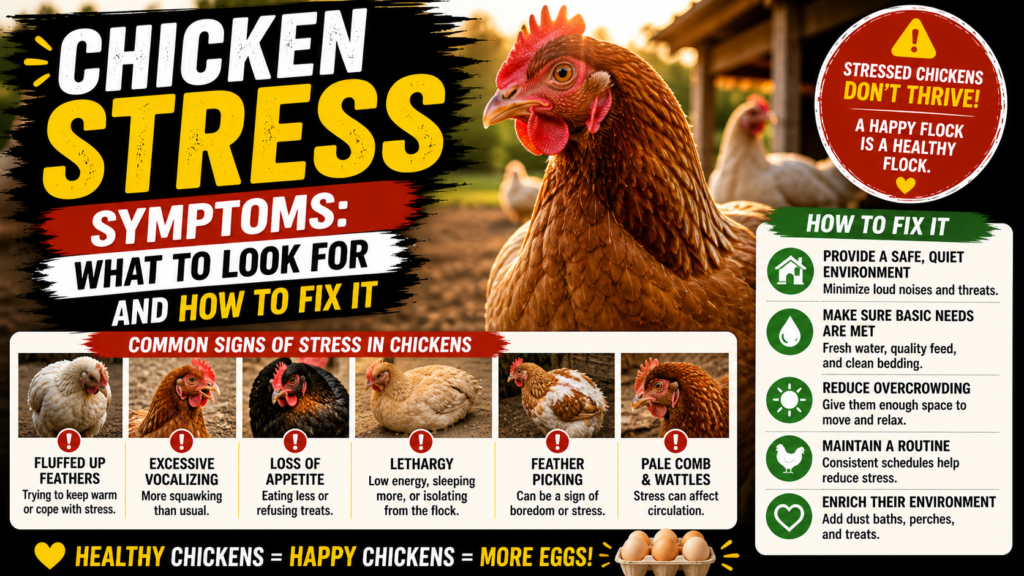
Our guide to chicken stress symptoms and what I look for is more helpful when the flapping is part of a larger behavior change.
Chickens Sometimes Flap After Being Chased
This can happen after a small flock disagreement or a predator scare.
The chicken gets away.
Stops.
Flaps.
Shakes.
Preens.
Then goes back to normal.
I sometimes think of it as a physical reset.
The bird has just been running with feathers out of position.
Now everything gets put back where it belongs.
It’s similar to the big shake you’ll see after handling.
Young Chickens Seem to Flap Constantly
Young birds are especially entertaining.
They haven’t quite mastered the relationship between wings, feet, speed, and common sense.
They run.
Hop.
Flap.
Launch themselves onto things.
Miss.
Try again.
Short bursts of wing-assisted movement are extremely common as chicks and pullets develop coordination.
If everything else looks healthy, I enjoy watching it rather than worrying about it.
Heavier Breeds and Lighter Breeds Can Look Very Different
Not every chicken uses its wings the same way.
A light, athletic breed may get significantly more lift from several strong wingbeats.
Heavy breeds may flap hard and barely leave the ground.
That’s why I never assume that because one chicken can clear a fence, the entire flock can.
Breed.
Body weight.
Age.
Wing condition.
Motivation.
All of those influence what they’re capable of.
This matters when you’re planning run height too.
Your enclosure should be designed around the birds you’re actually keeping rather than an imaginary average chicken.
Why Do Chickens Flap Right Before Crowing?
You’ll sometimes see roosters perform a big stretch or wing flap around the same time they’re vocalizing.
Crow.
Stretch.
Flap.
Stand tall.
Roosters are very expressive animals.
I don’t think every wing flap is directly causing or preparing the crow.
Instead, you’re seeing several normal rooster behaviors clustered together.
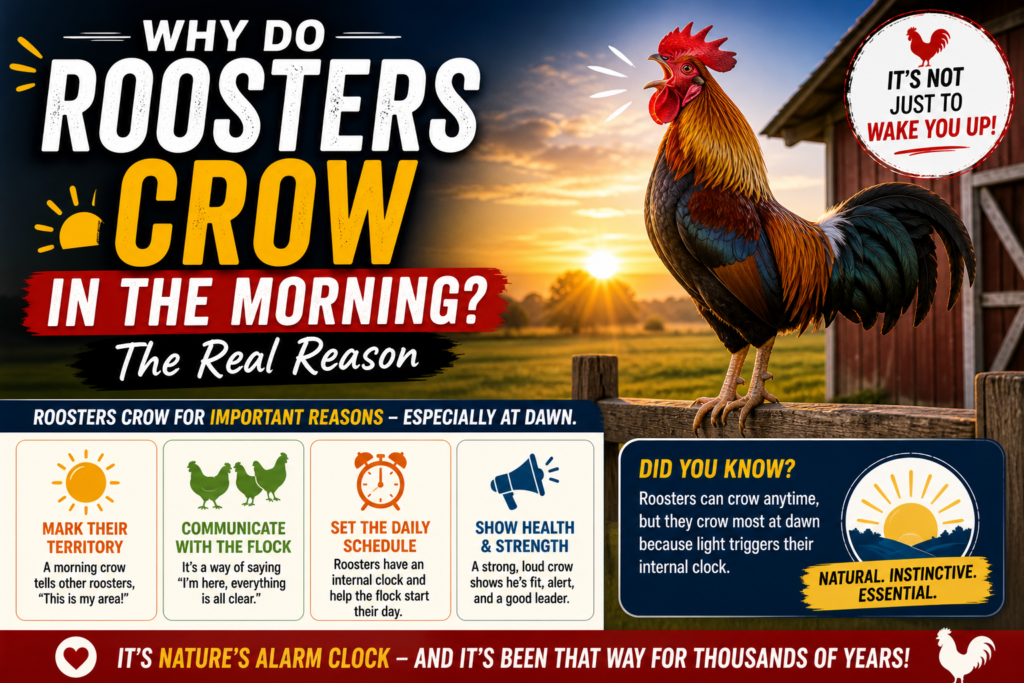
If your bigger question is why the noise happens at particular times, we already have separate guides on why roosters crow in the morning and why some continue crowing throughout the day.
Keeping those intents separate is important because wing flapping and crowing aren’t really the same search question.
Why Does My Chicken Flap When She Sees Me?
If she also runs toward you, I’m thinking excitement and learned association first.
Your presence may mean food.
Treats.
An open gate.
Fresh grass.
Attention.
Something interesting.
The stronger that association becomes, the more dramatic the greeting can get.
Some hens walk calmly toward you.
Others arrive like they’re responding to an emergency.
The flapping may simply help them get there faster.
Does Wing Flapping Mean a Chicken Is Happy?
Not by itself.
That’s too simple.
Chickens flap when relaxed.
Excited.
Startled.
Dominant.
Balancing.
Stretching.
Escaping.
So I wouldn’t use wing flapping as a happiness test.
Instead I look at the bigger picture.
A healthy flock that’s eating, scratching, dust bathing, preening, exploring, resting normally, and interacting comfortably gives me much more information than one movement.
Normal Behavior Usually Ends Normally
This is probably my easiest rule.
A normal flap has a beginning and an end.
Something happens.
The chicken flaps.
Then she goes back to normal.
A concerning behavior persists.
The wing keeps hanging.
The bird keeps falling.
She can’t settle.
She can’t breathe normally.
She can’t walk normally.
That’s the distinction I’ve found most useful.
You don’t have to understand every single movement chickens make.
You mainly need to recognize whether they return to baseline afterward.
Watch Healthy Chickens When Nothing Is Wrong
I keep repeating this throughout our behavior cluster because it’s probably the most useful thing a chicken owner can do.
Don’t only watch your chickens when you think one is sick.
Watch them when everything is normal.
You’ll see how often they flap.
Stretch.
Shake.
Squat.
Sunbathe.
Dust bathe.
Follow you.
Argue.
Run for absolutely no reason.
Once you’ve seen normal behavior enough times, strange-looking moments become much easier to interpret.
And you’ll also notice genuine changes faster.
That’s the real advantage of learning your flock.
Frequently Asked Questions
Why does my chicken flap her wings while standing still?
She may simply be stretching or rearranging her feathers. This is especially common after resting, roosting, preening, or dust bathing.
Why do chickens flap their wings when they see me?
They may be excited because they’ve learned to associate you with food, treats, access to new areas, or another positive routine.
Why does my rooster flap his wings?
Roosters may flap while stretching, displaying, balancing, or interacting socially with the flock. Body posture and what happens next help tell you which behavior you’re seeing.
Why does my chicken run and flap her wings?
The wings can help with balance, acceleration, turning, and short bursts of lift while running.
Why does my chicken flap after I pet her?
A hen may flap or shake afterward to rearrange her feathers. This can be particularly noticeable after she performs the normal squat response.
Is constant wing flapping a sign something is wrong?
It can be if the bird seems distressed, can’t fold a wing properly, repeatedly falls, struggles to breathe, or shows other unusual symptoms.
Why does one chicken hold her wing lower than the other?
That’s different from normal flapping and deserves a closer inspection for injury, swelling, pain, or another physical problem.
About the Author
Megan Whitaker writes about chicken behavior and flock dynamics for Backyard Chicken Pro, focusing on the everyday movements and habits that can look strange until you’ve spent enough time around a flock. Her work combines firsthand observation with practical poultry knowledge to help owners understand normal behavior, recognize individual patterns, and notice when something genuinely deserves a closer look.