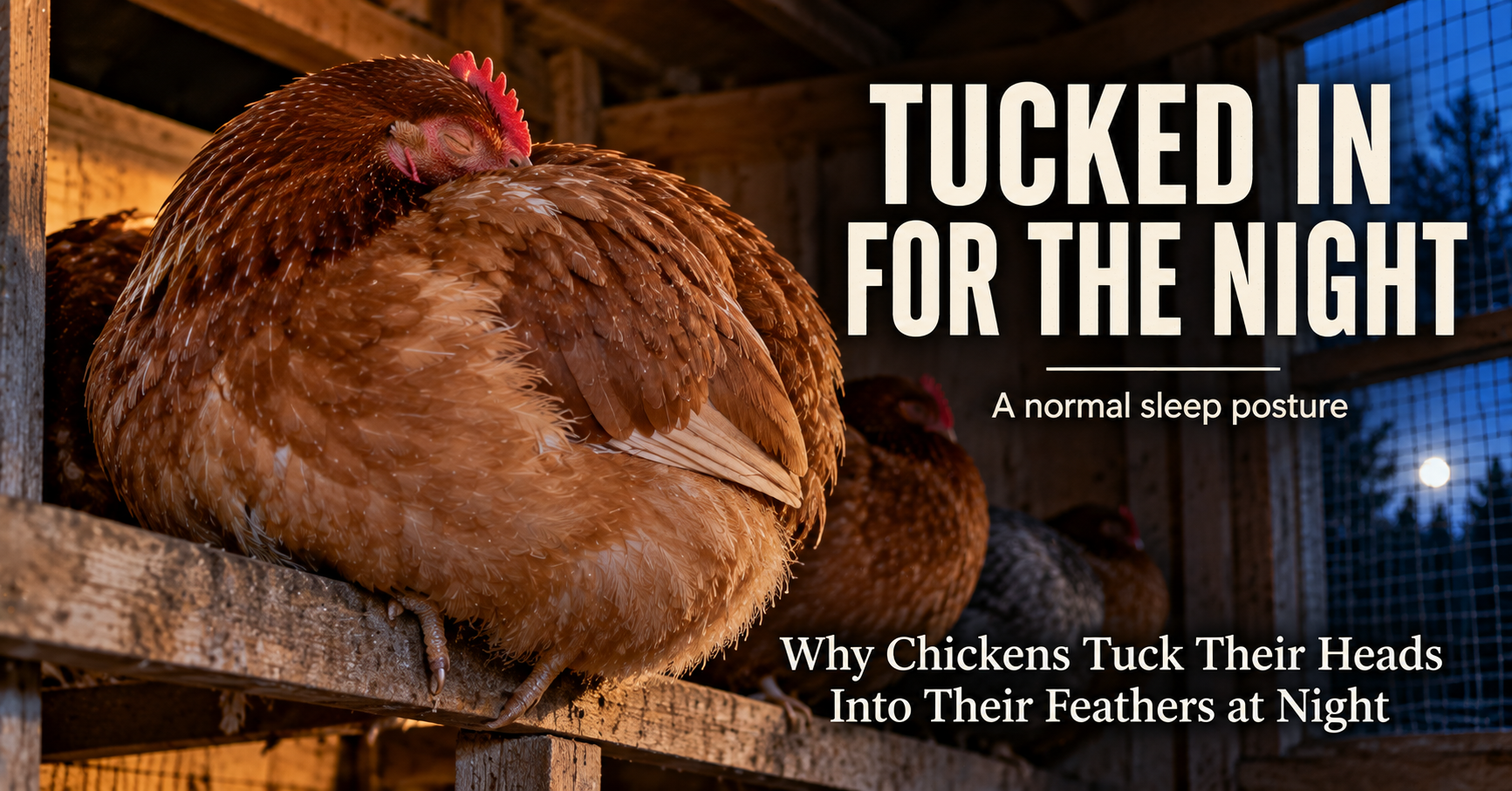
The first few times I checked chickens after dark, some of them barely looked like chickens anymore.
You see a round body sitting on the roost.
Feet disappeared underneath.
Neck gone.
Head apparently missing.
For a second, you wonder where the rest of the chicken went.
Then you realize her head is twisted backward and tucked down into her feathers.
Once you’ve seen it enough times, it becomes one of the most normal nighttime chicken positions there is.
People usually describe this as a chicken sleeping with her head under her wing.
That’s close enough for everyday conversation, but after watching chickens sleep, I’ve noticed it isn’t always literally underneath the wing itself.
A lot of birds turn their head backward and tuck the beak and face into the feathers along the shoulder and upper back.
Either way, the reason is pretty simple.
It’s comfortable, it helps protect the head and neck, and that feathered little pocket helps conserve warmth while the chicken rests.
Chickens Sleep in Some Pretty Strange Positions
If you’ve only ever seen chickens active during the day, nighttime can be surprising.
During daylight hours they’re constantly moving.
Scratching.
Pecking.
Following you.
Arguing over food.
Dust bathing.
Running for reasons known only to chickens.
Then darkness arrives and the same bird turns into a fluffy round lump sitting quietly on a roost.
The posture can look awkward to us, but chickens are built for it.
They settle their body down over their feet, fluff the feathers around themselves, relax onto the perch, and often turn the head backward into the feathers.
Some tuck more deeply than others.
Some barely tuck at all.
I’ve learned not to expect every chicken to sleep exactly the same way.

The Head Tuck Helps Keep Them Warm
This is probably the biggest practical reason.
A chicken’s body is wrapped in insulation.
Feathers trap pockets of air around the skin and help reduce heat loss.
The face, comb, wattles, and parts of the head obviously don’t have the same thick feather covering.
Turning the head back into the feathers gives some of those exposed areas additional protection while the bird rests.
It makes especially good sense on cold nights.
I’ve noticed chickens look much more compact when the temperature drops.
Feet disappear.
Necks shorten.
Feathers puff.
Heads get tucked deeper.
They essentially turn themselves into the smallest insulated chicken package possible.
That’s also why I don’t immediately assume a chicken needs supplemental heat just because she looks tightly tucked on a cold night.
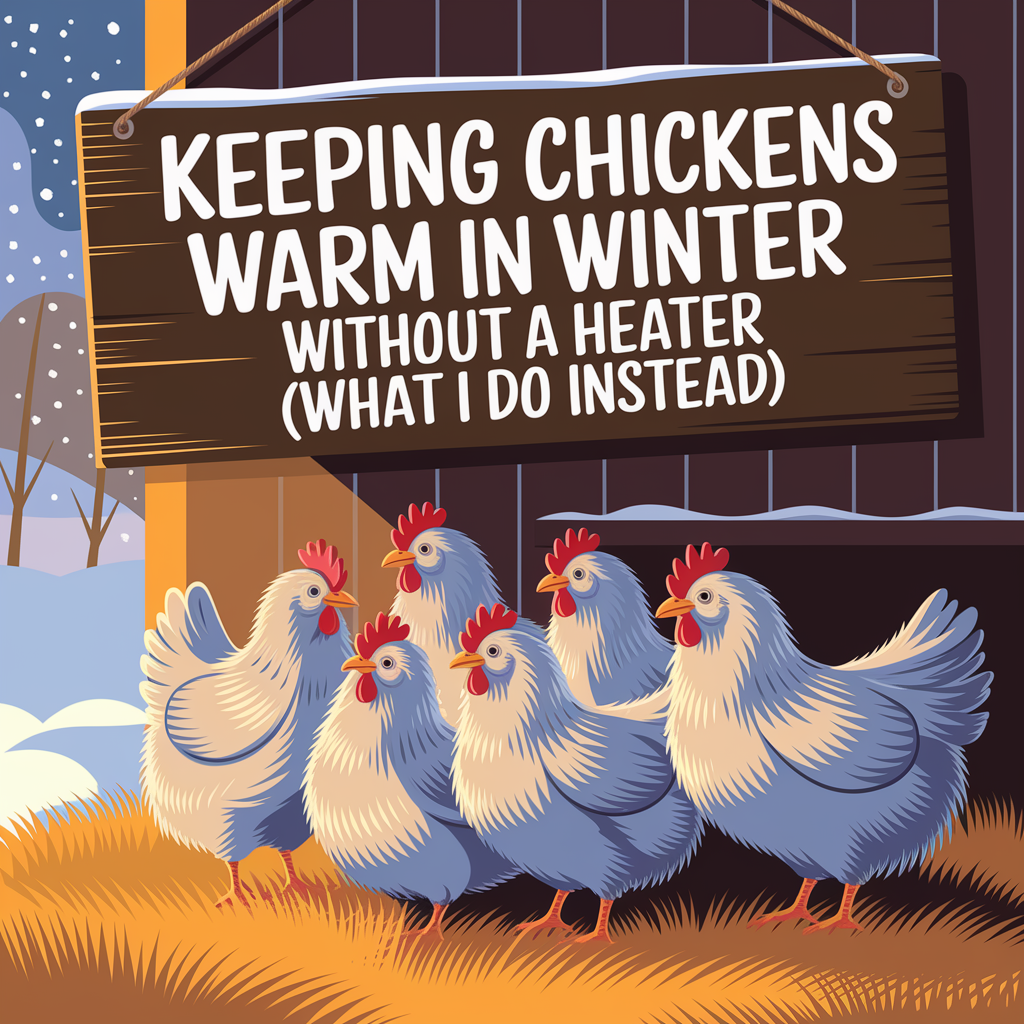
If you’re sorting out winter housing, whether chickens really need heat during winter goes into that question in much more detail.
They Don’t Always Put the Head Literally Under the Wing
This is something I think a lot of chicken articles oversimplify.
People say:
Chickens sleep with their head under their wing.
And sometimes it really does look that way.
But watch closely and you may notice the head is actually turned backward and resting into the feathers between the shoulder, back, and wing area.
The beak disappears.
Part of the face disappears.
The wing stays mostly folded normally against the body.
From several feet away, it looks like the head vanished underneath the wing.
Either way, I’m not terribly concerned about the technical wording when I’m standing in the coop at night.
The useful part is understanding that tucking the head backward into the plumage is a normal sleeping posture.
Why Can Chickens Twist Their Neck Like That?
Bird necks are dramatically more flexible than ours.
A chicken can turn her head backward far enough to settle it comfortably against her back.
If a person tried sleeping that way, we’d probably need medical attention by morning.
For a chicken, it’s normal anatomy.
You’ll see that neck flexibility all day long too.
They reach around to preen feathers.
Inspect their back.
Clean beneath wings.
Reach toward the tail.
Sleeping simply uses the same flexibility in a much more relaxed way.

Some Chickens Barely Tuck Their Heads at All
This is another reason I don’t use sleeping position as a strict health test.
One chicken may bury her entire face into the feathers.
The hen beside her may leave the head more exposed.
A rooster with a giant comb may sleep differently from a smaller hen.
Some birds seem to rest the beak along the back instead of burying it deeply.
That’s all variation I’ve come to expect.
As long as the chicken settles comfortably, stays securely on the roost, and behaves normally during the day, I don’t worry because she isn’t copying the exact sleeping position of the chicken beside her.
Roosting Is the Bigger Part of the Sleeping Routine
The head tuck gets all the attention because it looks strange.
But the roost itself matters much more.
Most adult chickens prefer sleeping off the ground on a perch.
That instinct makes sense when you remember chickens descended from wild jungle fowl that sought elevated sleeping locations away from many ground predators.
Even domestic chickens still strongly prefer a secure roost when the setup allows it.
That’s why I pay attention to:
Roost height.
Roost width.
Spacing.
How easy it is to get up.
How safely chickens can jump down.
Whether lower-ranking birds have room.
A good roost makes the whole nighttime routine smoother.


Chickens Don’t Really Sleep Standing Straight Up
This connects nicely with another behavior that confuses people.
A chicken sitting on a roost can look like she’s standing.
Her feet are gripping the perch.
Her body is upright.
But she’s usually settled down over those feet instead of rigidly standing like a horse.
That’s why “chickens sleep standing up” isn’t quite the best description.
They perch.
They settle.
They may tuck a foot.
They may tuck the head.
Then they sleep.
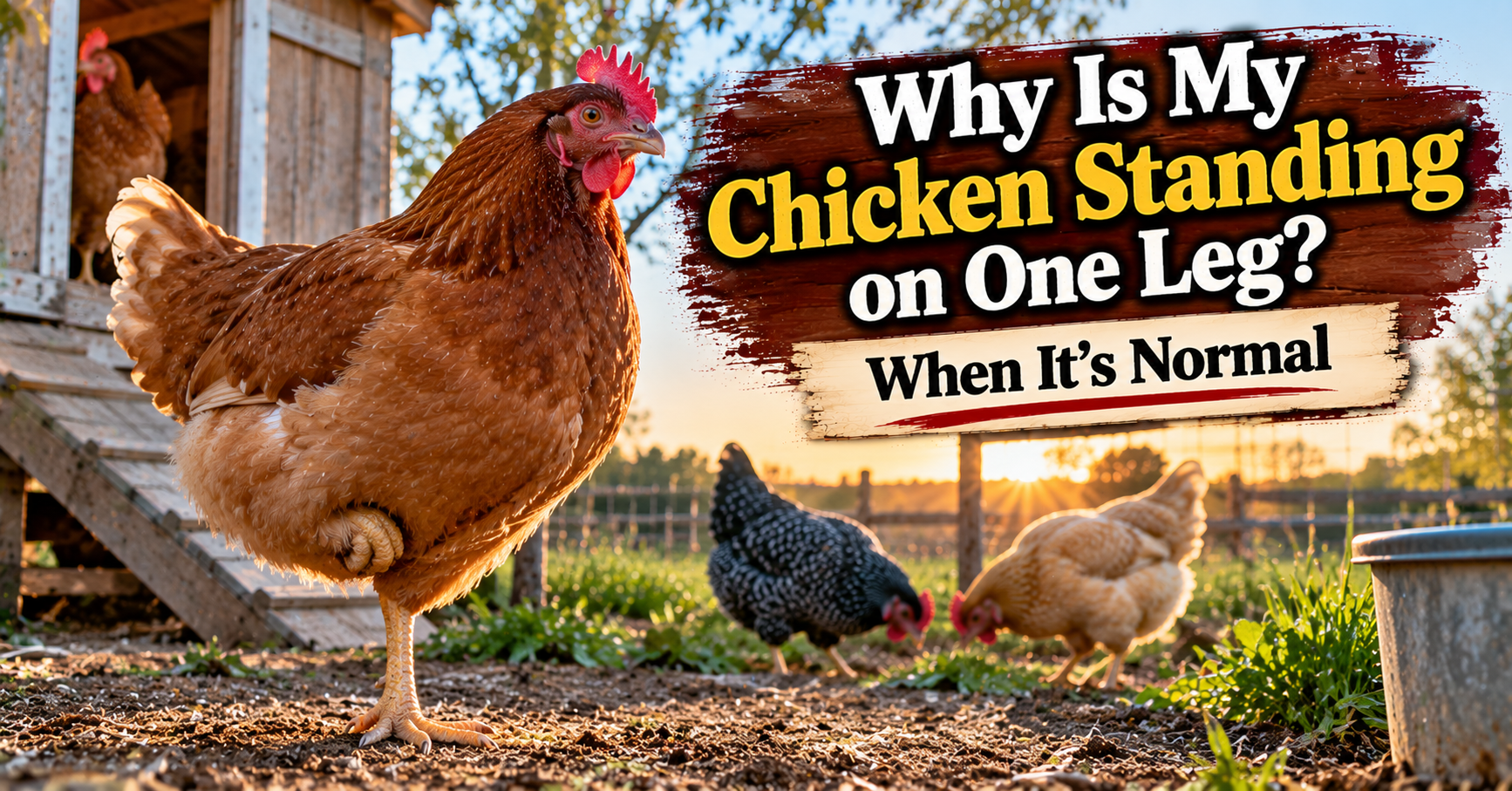
If the leg position is what caught your attention, why chickens sometimes stand on one leg explains the difference between normal resting and a chicken that’s avoiding an injured foot.
Their Feet Can Practically Disappear at Night
I think this surprises people almost as much as the missing head.
A chicken settles onto the roost and suddenly you can’t see her feet anymore.
She lowers the body over them.
Feathers hang around the sides.
The toes stay wrapped around the perch.
From outside the coop, the chicken looks like a round feathered loaf sitting on a stick.
That position also helps keep the feet warmer because the body feathers cover more of the exposed leg and foot.
Again, that’s exactly what I want to see during cold weather.
Compact bird.
Secure roost.
Dry coop.
No wind blasting directly across them.

Why Does My Chicken Sleep With Her Face Completely Hidden?
Some chickens really commit to the tuck.
The beak goes deep into the plumage.
Eyes disappear.
You can barely tell which direction she’s facing.
That’s usually fine.
If you quietly check on a healthy flock after dark, birds may look dramatically different from daytime.
I don’t start poking them awake just because I can’t immediately see a face.
Usually, if the bird is securely roosted with the rest of the flock and was normal before bedtime, I let her sleep.
The chickens already think my nighttime coop inspections are unnecessary enough.
Why Do Chickens Sleep With Their Head Turned Backward?
Comfort and heat conservation are the two explanations that make the most sense to me.
Turning backward lets the chicken support the head against her own body instead of holding the neck upright all night.
At the same time, the beak and face get nestled into insulating feathers.
It’s basically a built-in pillow and blanket.
Not a bad setup.


The Feathers Around the Head Matter
When people think about feathers, they often think about flight.
For chickens, insulation is just as important.
The body feathers create a protected layer around the bird.
When the chicken pushes her face into that layer, she’s taking advantage of insulation that’s already there.
That’s especially useful around the beak and face, where there isn’t a thick blanket of feathers covering everything.
The big combs and wattles obviously can’t disappear completely, particularly on some roosters.
But the head tuck still gets part of the vulnerable area closer to the protected body.
Cold Nights Make the Behavior More Obvious
I’ve noticed tucking and fluffing look much more dramatic in colder weather.
A summer chicken may sit more loosely.
A winter chicken often looks compressed into herself.
Head tucked.
Feet covered.
Feathers fluffed.
Everything pulled toward the center.
That’s exactly the kind of posture I’d expect from an animal trying to reduce exposed surface area.
Cold weather is also when good roost design becomes even more important.
Chickens shouldn’t need to stand in wet bedding all night.
They should have a dry place where they can settle comfortably.
Why Doesn’t My Rooster Tuck His Whole Head Away?
Sometimes he physically can’t hide everything.
A large rooster comb is hard to stuff into feathers.
Same with big wattles.
You may see him turn his head backward but still have part of the comb exposed.
That’s another reason proper winter coop management matters.
We shouldn’t expect a rooster to magically solve every cold-weather challenge by tucking harder.
Dry housing and good ventilation without direct drafts are still important.
Ventilation Matters Even When It’s Cold
This is one of the winter chicken lessons that sounds backward initially.
People think:
Cold outside.
Close everything.
Seal the coop.
Keep every bit of warmth inside.
But chickens create moisture through breathing and manure.
A damp coop can create its own problems.
The goal isn’t to put chickens in a sealed box.
It’s to provide ventilation while preventing strong drafts directly across the roost.
That distinction matters.
The birds can tuck into their feathers and handle cold much better when the environment stays dry.
Chickens Sometimes Sleep With Their Head Up
This is normal too.
Not every moment of the night is deep sleep.
Chickens wake.
Shift positions.
React to sounds.
Change where their head rests.
You may open the coop and see one bird with her head tucked while another is sitting upright staring directly at you like you’ve interrupted something important.
That doesn’t mean Chicken A sleeps correctly and Chicken B doesn’t.
They’re simply at different stages of resting or reacting.
They Can Wake Up Very Quickly
This is something I notice every time I try checking a flock quietly at night.
I think I’m being stealthy.
I open the door.
Three eyes immediately open.
Chickens are prey animals.
Even while sleeping, being capable of responding to disturbance is useful.
That doesn’t mean they’re awake all night.
It means sleep and alertness in birds can look different from the deep, oblivious sleep we sometimes expect from mammals.
Some Chickens Sleep With One Eye Open
Bird sleep is fascinating because birds can sometimes rest one brain hemisphere more deeply while the other remains more alert.
That can allow one eye to remain open while the other closes.
I’m not going to pretend I can diagnose which half of a chicken’s brain is sleeping by staring at her through the coop door.
But the behavior helps explain why birds can sometimes look partly awake while resting.
Again, nighttime chickens don’t always look like sleeping dogs or cats.
They’re still chickens.
Why Does My Chicken Tuck Her Head During the Day?
Sometimes she’s taking a nap.
Chickens can rest during daylight hours too.
You’ll occasionally see a bird settle somewhere comfortable, fluff up, close her eyes, and tuck the head.
Older birds may nap more.
Warm afternoons encourage resting.
Sometimes the flock simply hits a quiet part of the day.
If she wakes normally, gets up, eats, scratches, and rejoins the flock, I don’t automatically worry.
Daytime Head Tucking Plus Lethargy Is Different
This is where context changes everything.
A hen briefly napping with her head tucked?
Normal.
A chicken spending nearly the whole day hunched, puffed, eyes closed, head buried, not eating, and ignoring the flock?
That deserves attention.
The head position alone isn’t the problem.
The overall change in behavior is.
That’s exactly why I keep repeating the same general lesson throughout this behavior cluster.
One strange-looking behavior usually means very little without context.
Several changes happening together mean more.
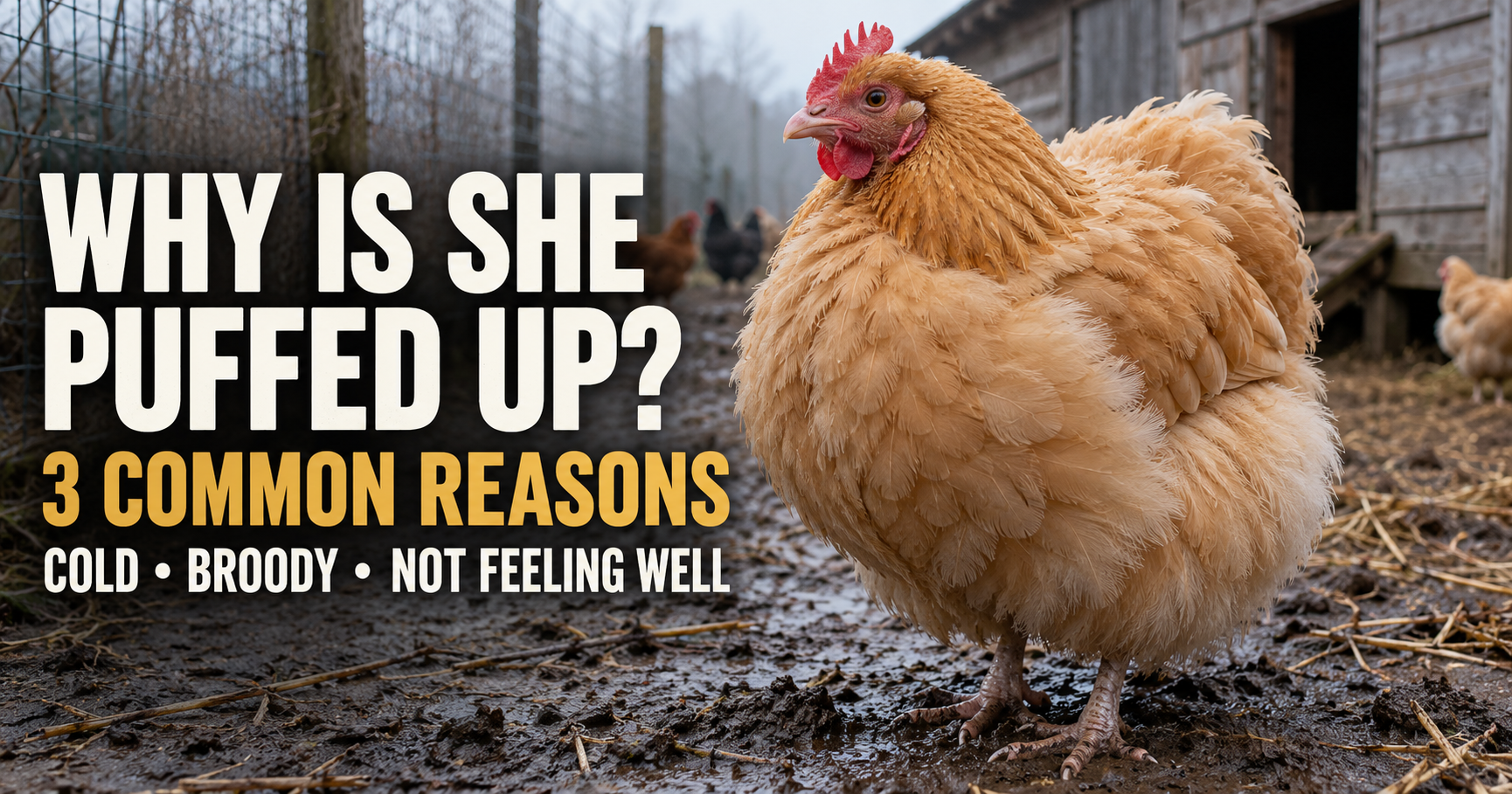
If the feather posture itself looks abnormal, why chickens puff up their feathers is a good place to compare normal resting with a bird that looks sick.
Why Does My Chicken Tuck Her Head and Purr?
That can simply be a relaxed bird settling down.
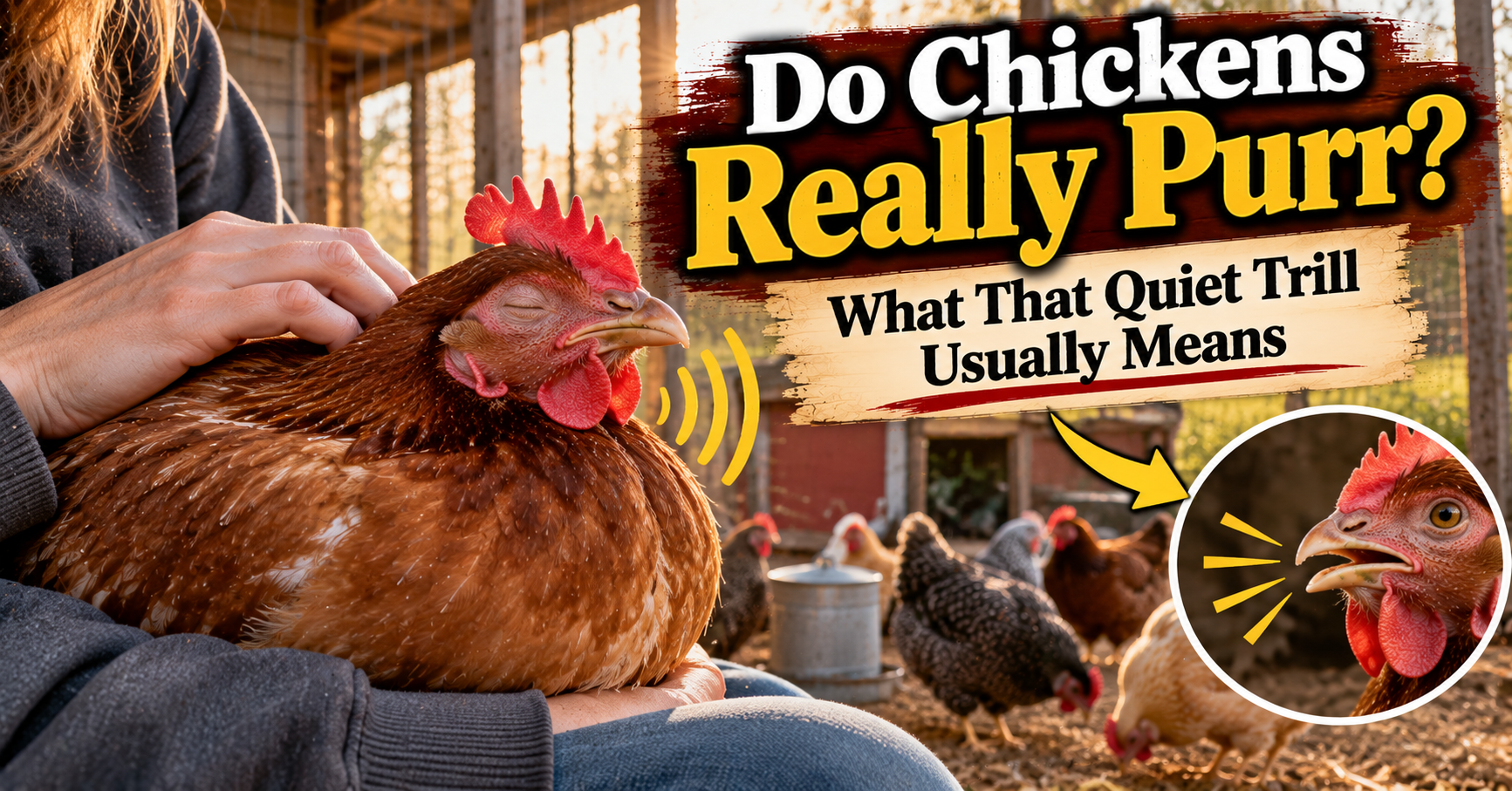
We just covered why chickens make purring and trilling sounds because those noises can mean different things depending on context.
A chicken settling onto the roost, fluffing up, tucking the head, and making soft little sounds doesn’t surprise me.
If the whole flock suddenly freezes and makes low alert sounds, that’s a different situation.
Same quiet noise.
Different body language.
Chickens Don’t Need Pillows
I’ve seen people joke that chickens look uncomfortable sleeping on a perch.
No cushion.
No blanket.
Head twisted backward.
Feet wrapped around a board.
From a human perspective, it looks miserable.
From a chicken perspective, it’s normal.
That’s an important lesson in animal care.
Comfort doesn’t always look like human comfort.
A chicken usually doesn’t want a tiny bed with a pillow.
She wants a safe place to roost.
Why Does My Chicken Sleep in a Nesting Box Instead?
This one is more complicated.
Some hens choose nesting boxes at night even though we’d rather they roost.
That can happen because:
The roost is uncomfortable.
The roost is too high.
The bird is being bullied off.
The nesting box sits higher.
The bird is broody.
The chicken is old or injured.
Or she simply developed a bad habit.
I don’t usually encourage regular nesting-box sleeping because chickens poop while they sleep.
That creates dirty nesting material and dirty eggs.
You already have a guide on how to stop chickens from pooping in nesting boxes, and nighttime sleeping is one of the first things I’d investigate when boxes are constantly filthy by morning.
A Better Roost Can Fix a Lot of Nighttime Weirdness
Sometimes chickens are telling you the roost isn’t working.
Too narrow.
Too slippery.
Too crowded.
Bad placement.
Hard to reach.
Unstable.
A comfortable roost should let the chicken settle securely without constantly struggling to balance.

We have an entire article about the roosting perch setup that made the coop feel more organized because sometimes small coop improvements make daily care noticeably easier.
For anyone needing another perch option, this large chicken roosting perch for backyard coops is also one of the chicken products already in our setup recommendations.
Don’t Put Roosts Directly Over Food and Water
This is just practical.
Chickens poop at night.
A lot.
If the roost sits directly above the feeder or waterer, you’ll know exactly what happened by morning.
When I’m thinking about sleeping arrangements, I think about what’s underneath just as much as what’s above.
Good coop layout saves work.
Bad coop layout creates chores.
Roost Spacing Can Affect Who Sleeps Where
Chicken social hierarchy doesn’t disappear at bedtime.
Higher-ranking birds may claim preferred positions.
Lower-ranking hens may get pushed.
One chicken may repeatedly lose her spot.
If there’s barely enough perch space for everyone, the lowest-ranking bird usually pays the price.
Sometimes the hen sleeping in the nesting box isn’t “being weird.”
She’s avoiding conflict.
Adding enough usable roosting space can solve a problem that looked like a sleeping preference.
Why Do Chickens Crowd Together at Night?
Security.
Warmth.
Flock behavior.
Chickens often prefer sleeping near other chickens.
That doesn’t necessarily mean they’re freezing.
They are social animals.
A row of hens sitting shoulder-to-shoulder on a roost can be perfectly normal.
During cold weather, staying closer also helps reduce heat loss.
But overcrowding is different.
Birds should have enough room to settle without constantly climbing over each other.
Chickens Know When Bedtime Is Coming
One thing I enjoy watching is the flock gradually shift toward bedtime before darkness fully arrives.
The day’s energy changes.
Birds start moving toward the coop.
Some enter.
Some come back out.
A few act like children who don’t want to go to bed.
Eventually everyone settles.
Day length is one of the biggest cues.
That’s why automatic coop doors can be useful too.
The birds already follow the light cycle, so a properly configured door can work with the routine instead of relying on someone being outside at the exact right minute every evening.
A Secure Coop Helps Chickens Actually Settle
Predator pressure can disrupt nighttime behavior.
If something has been prowling around the coop, the flock may become restless.
Birds may stay alert longer.
Roosters may respond.
Hens may react to noises.
That’s why nighttime security isn’t only about stopping an actual attack.
It’s also about giving the flock a place where they can settle without constant disturbances.

We built an entire predator-proof chicken coop checklist because good nighttime sleep depends partly on having a genuinely secure place to sleep.
A Camera Can Explain Strange Night Behavior
If your chickens suddenly stop settling normally, I’d rather know what’s outside than guess.
Raccoon?
Fox?
Cat?
Opossum?
Neighbor’s dog?
Something climbing on the run?

That’s one situation where a solar-powered wireless coop camera can be surprisingly useful.
You may discover the chickens aren’t suddenly developing strange sleeping habits at all.
Something is waking them.
Head Tucking Doesn’t Mean They’re Cold Every Time
I want to emphasize this because it’s easy to overinterpret.
Chickens tuck their head in warm weather too.
It’s a normal resting posture.
Cold temperatures can make the heat-conservation benefit more important, but the behavior isn’t a built-in alarm saying:
Turn on the heater.
The whole situation matters.
Temperature.
Dryness.
Ventilation.
Breed.
Body condition.
Flock behavior.
One tucked head alone doesn’t tell you much.
Why Does My Chicken Sleep With Her Head Hanging Down?
This one can look different from the classic tuck.
Some birds relax the neck more than others.
You may see a head droop forward or rest differently while the chicken is perched.
Again, if the bird wakes normally and behaves normally during daylight hours, unusual sleeping posture alone may just be individual variation.
What I would take more seriously is a chicken unable to hold her head normally while awake.
That’s a health question, not a sleeping-position question.
Chickens Sometimes Look Completely Headless at Night
I still find this funny.
You shine a flashlight into the coop.
Feather ball.
Feather ball.
Feather ball.
No heads.
Then one opens an eye from somewhere inside the feathers.
Once you understand what you’re looking at, it becomes reassuring rather than concerning.
Settled chickens usually mean the flock feels secure enough to sleep.
Try Not to Wake Them Just to Check
I’ve definitely been guilty of this.
You see a weird sleeping position.
You poke the chicken.
She wakes up annoyed.
Now you know she’s alive, but you also ruined her sleep because she looked too comfortable.
If I’m genuinely concerned, I’ll check.
But once you learn your flock’s normal bedtime postures, you don’t need to wake every bird that has buried her face in feathers.
Observe first.
Interfere when there’s an actual reason.
What Normal Nighttime Sleeping Looks Like to Me
A normal night in a healthy coop usually looks boring.
That’s good.
Birds settled on roosts.
Bodies relaxed.
Feet secure.
Some heads tucked.
Some heads less tucked.
Occasional shifting.
Quiet little noises.
Everybody staying put.
By morning, they’re alert and ready to eat.
That’s the picture I want.
When the Sleeping Position Would Make Me Look Closer
I’d investigate more if the chicken:
Can’t stay on the roost.
Falls repeatedly.
Sleeps alone on the floor unexpectedly.
Seems unable to use her legs.
Is breathing heavily while resting.
Has persistent head or neck abnormalities while awake.
Stops eating.
Acts lethargic throughout the day.
Suddenly changes sleeping location for no obvious reason.
Again, those are bigger behavioral changes.
The head tucked into feathers isn’t the concerning part.
What I’ve Learned From Checking Coops After Dark
Nighttime chickens look weird.
That’s the short version.
Their daytime shape disappears.
Heads vanish.
Feet vanish.
Bodies puff out.
Everybody sits in a row.
And after enough nights checking a flock, you stop seeing it as strange.
You start seeing a group of birds doing exactly what chickens are built to do.
Resting securely.
Conserving warmth.
Staying together.
And getting ready to wake up at sunrise and immediately start making noise again.
Frequently Asked Questions
Why do chickens tuck their heads under their wings?
They usually turn the head backward and nestle the beak and face into the feathers around the shoulder and back. The position supports the head while resting and can help conserve body warmth.
Do chickens actually put their whole head under the wing?
Not always. What looks like “under the wing” may actually be the beak and face tucked into the scapular or back feathers while the wing remains folded normally.
Is it normal for chickens to sleep with their head backwards?
Yes. Chickens have flexible necks and commonly turn their head backward while resting or sleeping.
Does head tucking mean my chicken is cold?
Not necessarily. Chickens use the posture during normal sleep in many temperatures, although tucking into the feathers can help conserve heat during cold weather.
Why does my chicken tuck her head during the daytime?
She may simply be napping. If she wakes normally, eats, walks, and behaves like herself afterward, occasional daytime resting is usually normal.
Why is my chicken sleeping with her head tucked and feathers puffed?
That can be a normal sleeping or cold-weather posture. If the same bird remains puffed, lethargic, isolated, or uninterested in food while awake, I’d look more closely.
Why won’t my chicken sleep on the roost?
Roost height, crowding, bullying, injury, age, broodiness, or an uncomfortable perch can all make a chicken choose another sleeping location.
Should chickens sleep in nesting boxes?
I generally discourage it because chickens poop overnight, which quickly creates dirty nesting material and eggs. A hen repeatedly sleeping there may be telling you something about the roost setup.
About the Author
Megan Whitaker writes about chicken behavior and flock dynamics for Backyard Chicken Pro, focusing on the strange-looking everyday habits that become much easier to understand once you’ve spent enough time around real chickens. Her work combines close flock observation with practical poultry knowledge, helping backyard keepers recognize normal behavior while knowing which changes deserve a closer look.