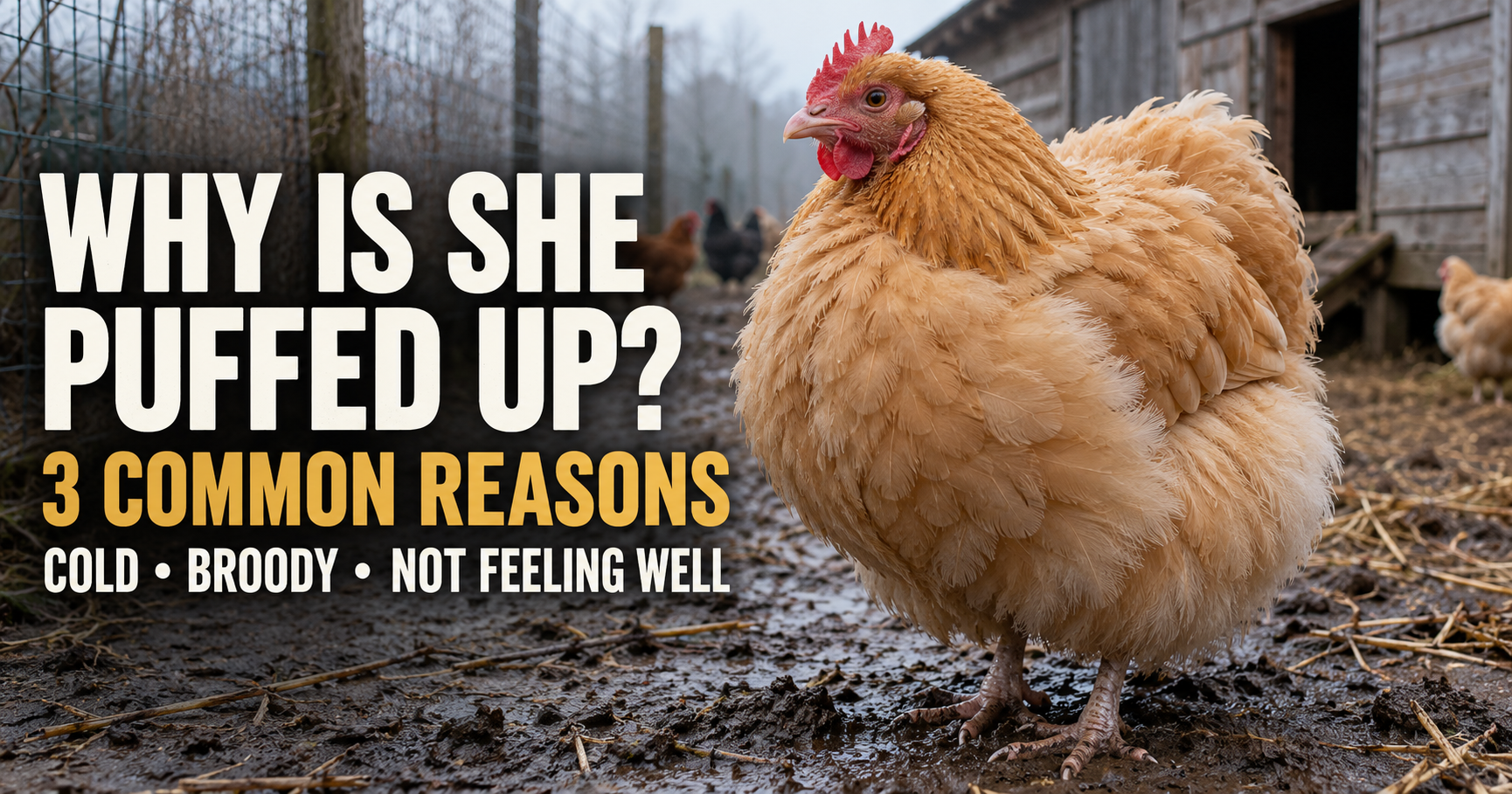
I’ve watched chickens puff themselves up so many times that I don’t immediately assume something is wrong anymore.
Sometimes a hen suddenly looks almost twice her normal size. Her feathers stand away from her body, her neck disappears a little, and she turns into what looks like a round ball of feathers.
Other times, though, that same puffed-up appearance is one of the first clues that makes me stop what I’m doing and watch a chicken more closely.
That’s the important distinction I’ve learned.
A chicken puffing up her feathers isn’t automatically sick.
Chickens fluff and puff their feathers for several completely normal reasons. They do it when they’re cold, comfortable, dust bathing, settling down to rest, and sometimes when interacting with other chickens.
What matters is everything happening along with those puffed feathers.
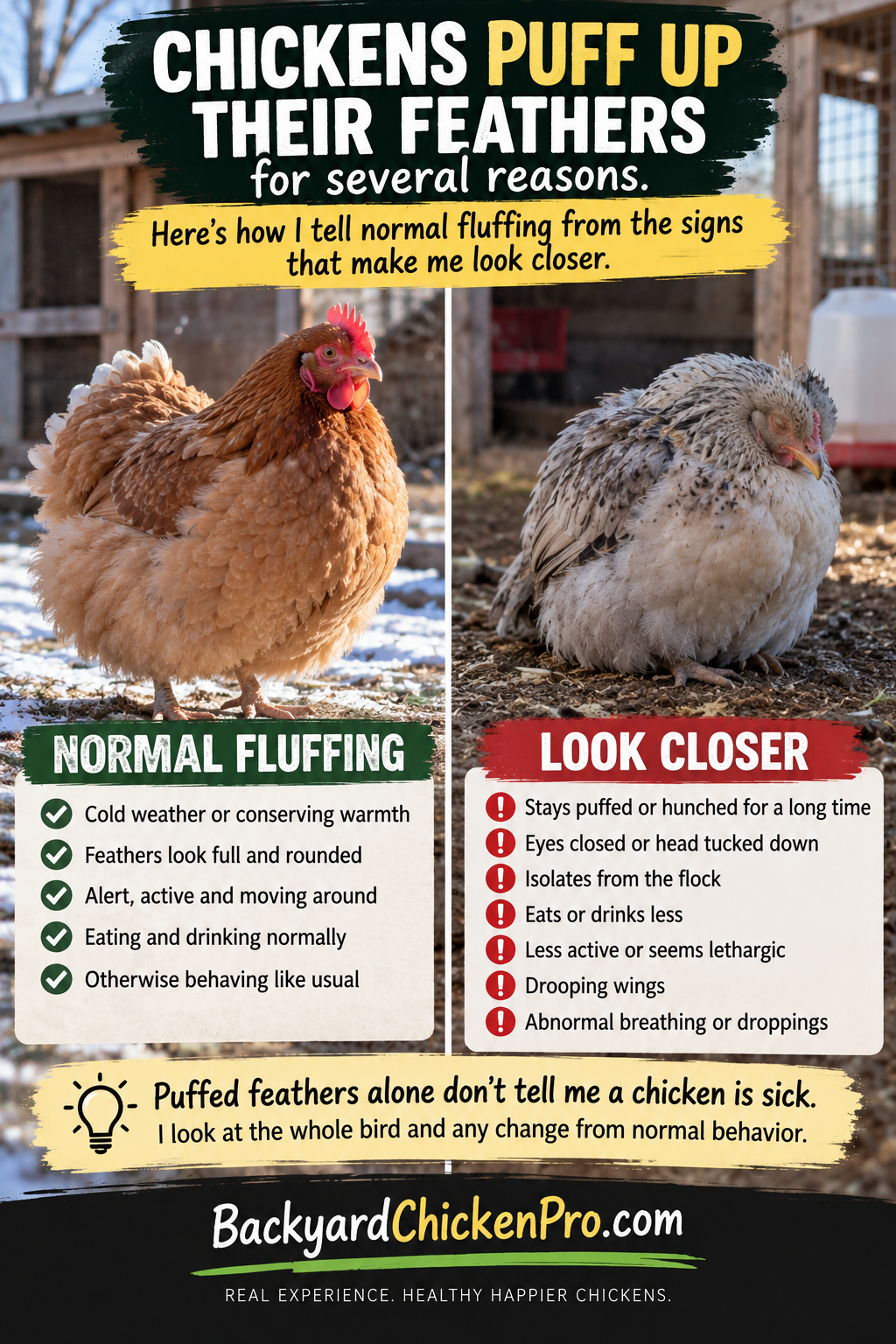
If the chicken fluffs up for a little while and then goes right back to scratching, eating, drinking, and following the flock, I usually don’t worry much.
If she’s puffed up for hours, standing hunched with her eyes partly closed, staying away from the flock, or refusing food, that’s when I start paying attention.
Here’s how I’ve learned to tell the difference.
The Quick Answer
Chickens puff their feathers to trap warm air when they’re cold, rearrange and maintain their feathers, relax, dust bathe, communicate with other chickens, or make themselves appear larger.
Puffed feathers can also accompany illness.
The feathers alone don’t tell me enough.
I look at the whole chicken.
Is she walking normally?
Is she interested in food?
Is she drinking?
Are her eyes bright?
Is she scratching around?
Is her comb its normal color?
Is she staying with the flock?
Those details tell me much more than fluffiness by itself.
That’s one reason learning your own flock’s normal behavior matters so much. Chickens tend to hide weakness, so changes in normal activity can sometimes be more useful than one isolated symptom.

Chickens Puff Their Feathers When They’re Cold
This is probably the easiest kind of puffing to recognize.
On a cold Missouri morning, I’ve seen chickens fluff their feathers until they look considerably larger than they did the afternoon before.
They’re essentially creating insulation.
Fluffing the feathers helps trap air close to the body, which helps the chicken conserve body heat. University of Minnesota Extension specifically lists puffed feathers, huddling, and holding a foot against the breast among signs chickens may be cold.
What I look for is whether the behavior makes sense for the conditions.
If it’s 25 degrees outside and several otherwise healthy hens are fluffed up, I’m not immediately concerned.
If it’s 75 degrees and one chicken is standing alone looking like a feathered basketball, I’m going to investigate.
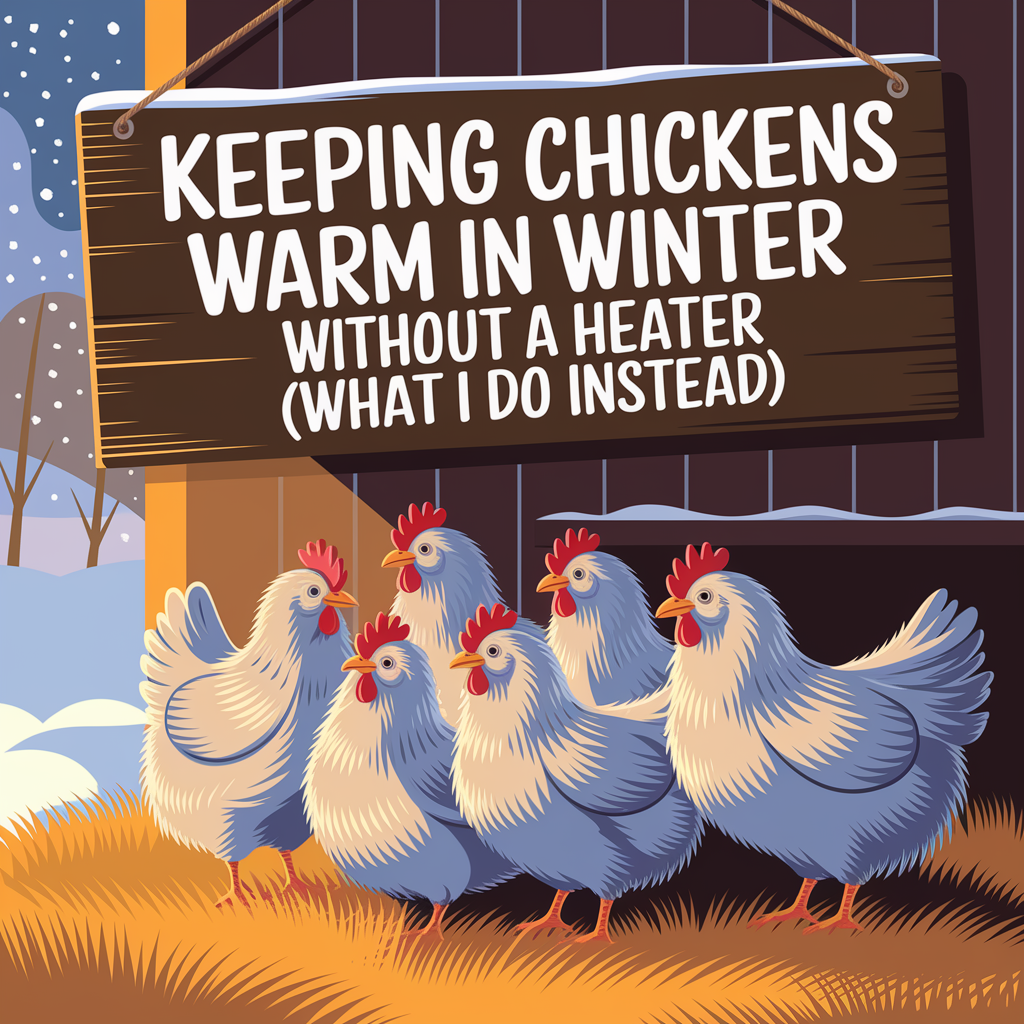
Cold-weather puffing also doesn’t automatically mean your chickens need a heat lamp. Chickens handle cold differently than people do, and there are safer ways to manage winter housing. I go into that much more deeply in Do Chickens Need Heat in the Winter?.

Sometimes a Puffed-Up Chicken Is Just Comfortable
This is probably the situation that worries newer chicken owners unnecessarily.
A relaxed chicken can fluff herself up.
You may see her sitting in a sunny spot with her feathers loose instead of held tightly against her body.
She may close her eyes.
She might tuck herself down and look incredibly comfortable.
Then twenty minutes later she’s running across the yard because somebody found a bug.
That’s completely different from a chicken that remains hunched and inactive for hours.
I’ve learned not to judge one snapshot.
I watch what happens next.
Dust Bathing Can Make a Chicken Look Ridiculous
The first time you watch a chicken really get into a dust bath, the whole thing can look wrong.
They roll.
Kick dirt everywhere.
Spread their wings.
Fluff their feathers.
Lean sideways.
Sometimes they lie so still for a moment that you’d swear something terrible happened.
Then they start throwing dirt again.
Dust bathing is normal chicken behavior. Chickens work loose material through their feathers and skin as part of feather and skin maintenance. Extension poultry guidance identifies dust bathing as a normal behavior and notes that chickens are strongly motivated to have access to material they can dust bathe in.
That’s one reason context matters so much.
A chicken fluffed up in a dusty hole while kicking dirt over herself isn’t giving me the same signal as a chicken standing motionless in a corner.

Chickens Can Puff Up to Look Bigger
This is another kind of feather puffing that has nothing to do with being cold or sick.
Watch two chickens sorting out a disagreement and you’ll sometimes see the feathers around the neck stand up.
Those are the hackle feathers.
Making those feathers stand out makes the chicken look larger and more intimidating.
I’ve seen it happen during little flock disagreements where neither bird is actually hurt. There’s some staring, puffing, posturing, and maybe chasing before everybody gets back to normal.
An Extension poultry educator has similarly described chickens raising their hackle feathers during fighting or pecking-order behavior to make themselves appear larger.
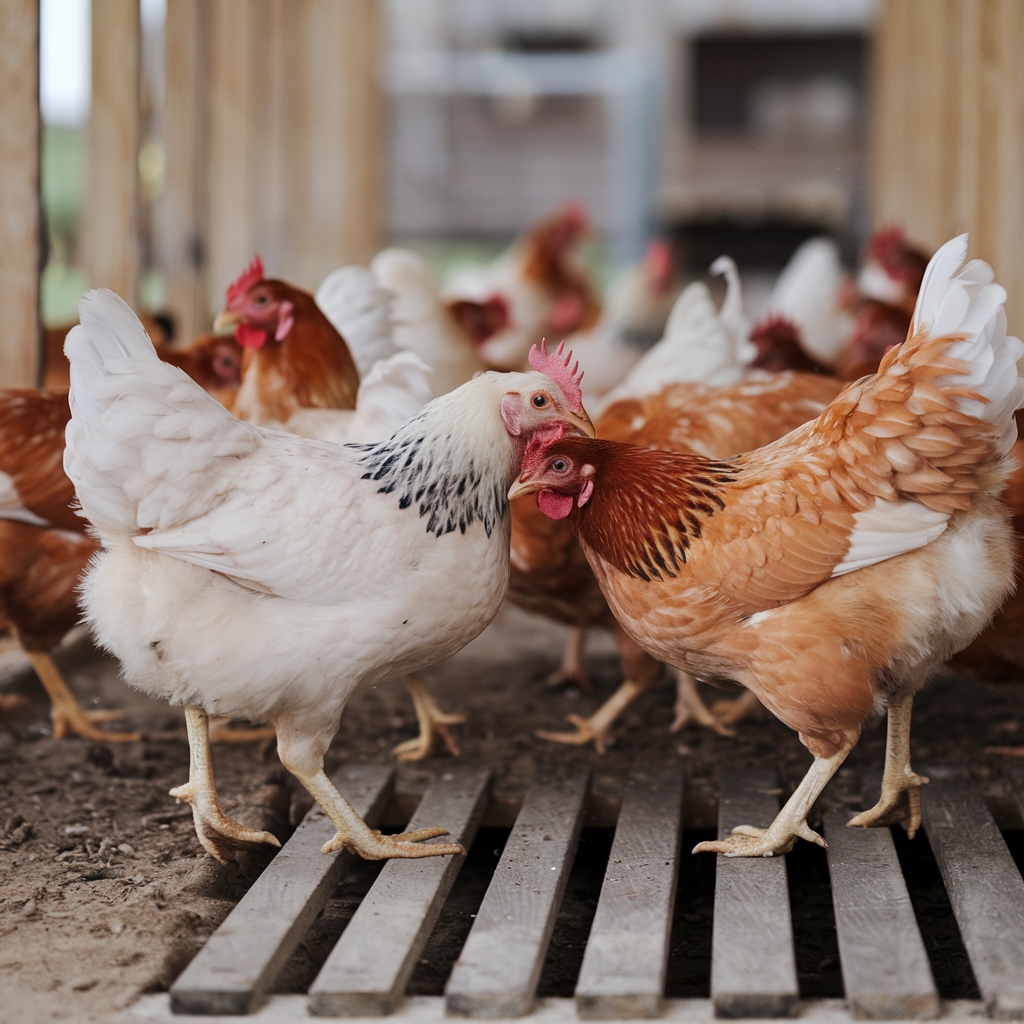
If chasing and pecking start becoming constant instead of occasional flock communication, that’s different. Our guide to stopping chickens from pecking each other covers what I look for when normal pecking-order behavior crosses into a real problem.
The Puffing That Makes Me Stop and Watch
There’s one particular appearance I’ve learned not to ignore.
A chicken standing still.
Feathers ruffled.
Neck pulled inward.
Head low.
Eyes closed or partly closed.
Wings hanging differently than normal.
Not interested in what the rest of the flock is doing.
That’s not the same relaxed fluffing I see when a hen is sunning herself.
A hunched chicken with ruffled feathers can be showing sickness behavior. University of Maryland Extension describes hunching as a bird standing with ruffled feathers, its neck pressed into its chest, head down, and potentially drooped wings and closed eyes.
That’s when I stop looking only at the feathers and start checking the chicken.


I Check Whether She’s Eating
Food is one of my quickest reality checks.
A healthy chicken usually has opinions about food.
If I walk toward the flock with something they normally love and one hen doesn’t care, I notice.
Reduced feed consumption can accompany illness, and poultry health guidance also lists inactivity and ruffled feathers among signs worth investigating.
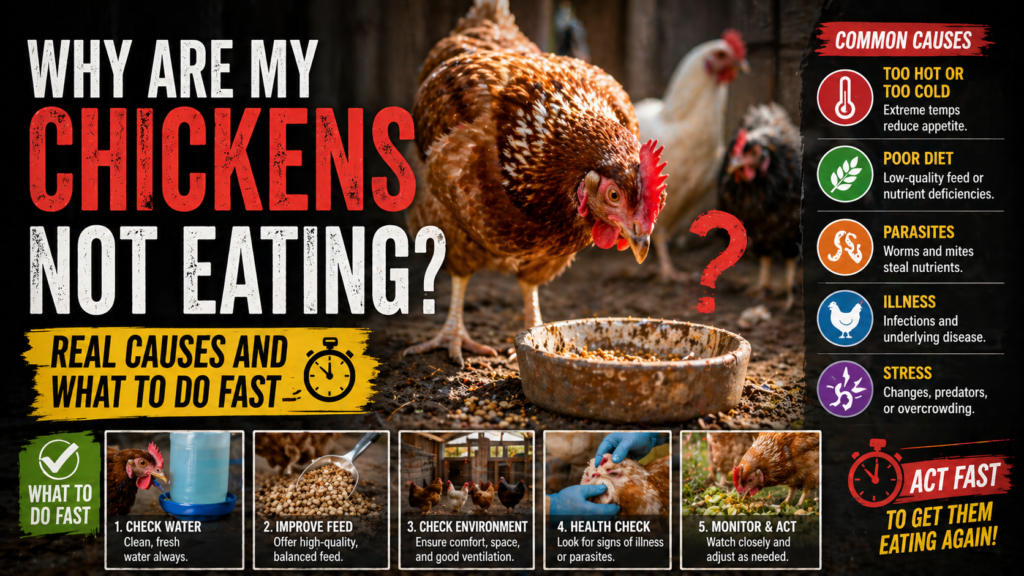
We already have a much deeper guide on why chickens stop eating and what I check first because appetite changes can come from many different problems.
Puffed feathers plus normal eating?
I keep watching.
Puffed feathers plus refusing food?
I’m looking much closer.
Then I Look at the Comb
I’ve learned to look at the entire bird rather than chasing individual symptoms.
The comb can give you another clue.
If a hen is fluffed up but her comb looks normal, she’s active, and she’s eating, that’s reassuring.
If she’s fluffed up, lethargic, and her normally healthy-looking comb suddenly looks pale or unusual, that’s another reason to investigate.
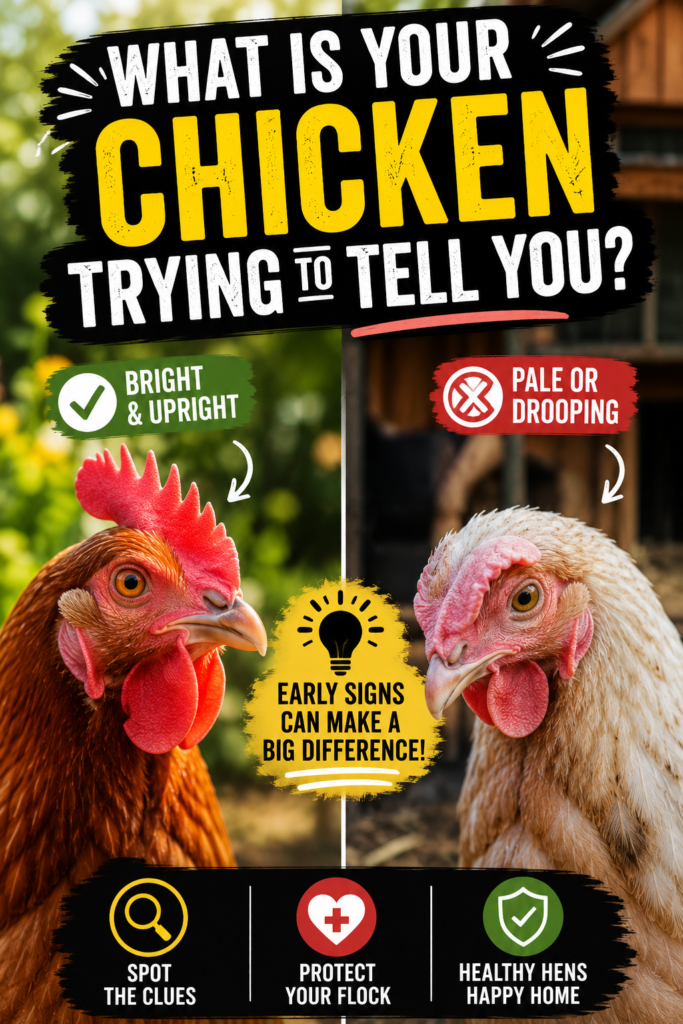
We have a separate guide explaining what a pale or drooping chicken comb can mean because comb changes deserve more attention than I can give them in one section here.
Again, I’m looking for combinations.
One small change may mean very little.
Several changes appearing together tell me much more.

Watch How She Breathes
This is another important distinction.
A relaxed fluffy chicken should still breathe normally.
If I see open-mouth breathing, gasping, sneezing, nasal discharge, abnormal respiratory sounds, or swelling around the face, I’m no longer treating this as a simple feather behavior.
Those can accompany respiratory illness and warrant closer attention.
I also pay attention to whether several birds suddenly develop symptoms at once.
One comfortable fluffy hen is one thing.
Multiple birds showing major changes in energy, breathing, appetite, movement, or appearance is another. USDA advises acting quickly when significant sickness signs appear in a flock.
Is She Puffing Up and Staying Away From Everyone?
This one deserves attention because chickens are flock animals.
Sometimes a hen wants a little space.
That alone doesn’t scare me.
But when a bird that normally stays with the others suddenly spends most of her time alone, I want to know why.
That becomes even more important when she’s also puffed up, inactive, or uninterested in food.
This is where people sometimes assume their chicken is simply sad. Behavioral changes can overlap with sickness, stress, injury, and environmental problems, so I don’t like making that assumption from appearance alone.
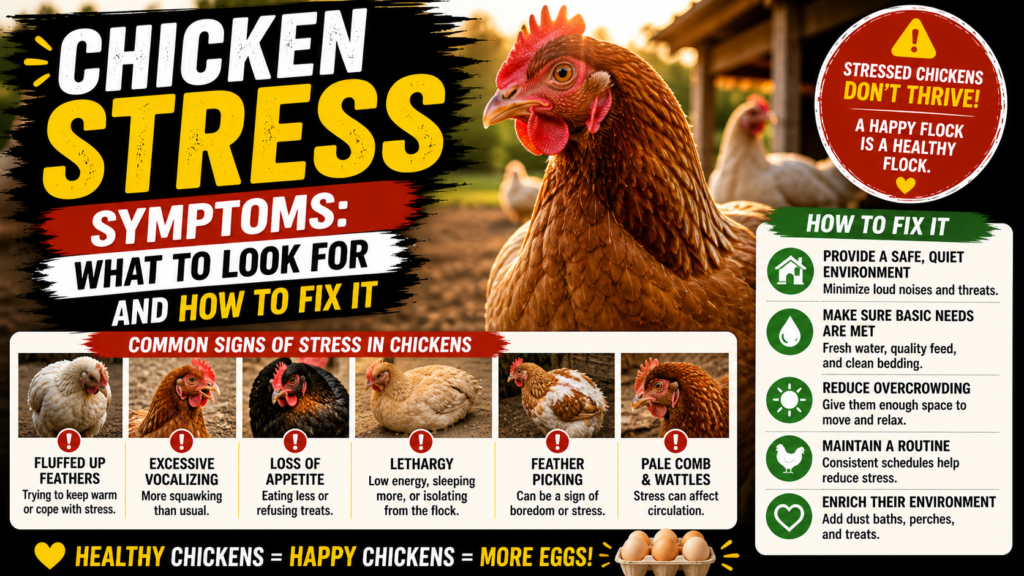
Our article about chicken stress symptoms and what I look for is a useful next step if the whole bird seems different rather than just fluffy.
Puffing Up Doesn’t Automatically Mean Depression
This distinction is important because Google actually started showing one of our depression articles for people searching about puffed-up chickens.
I understand why.
A chicken that feels poorly may become withdrawn and look fluffed up.
But puffing by itself isn’t enough for me to label a chicken depressed.
That’s why I wanted this separate guide.
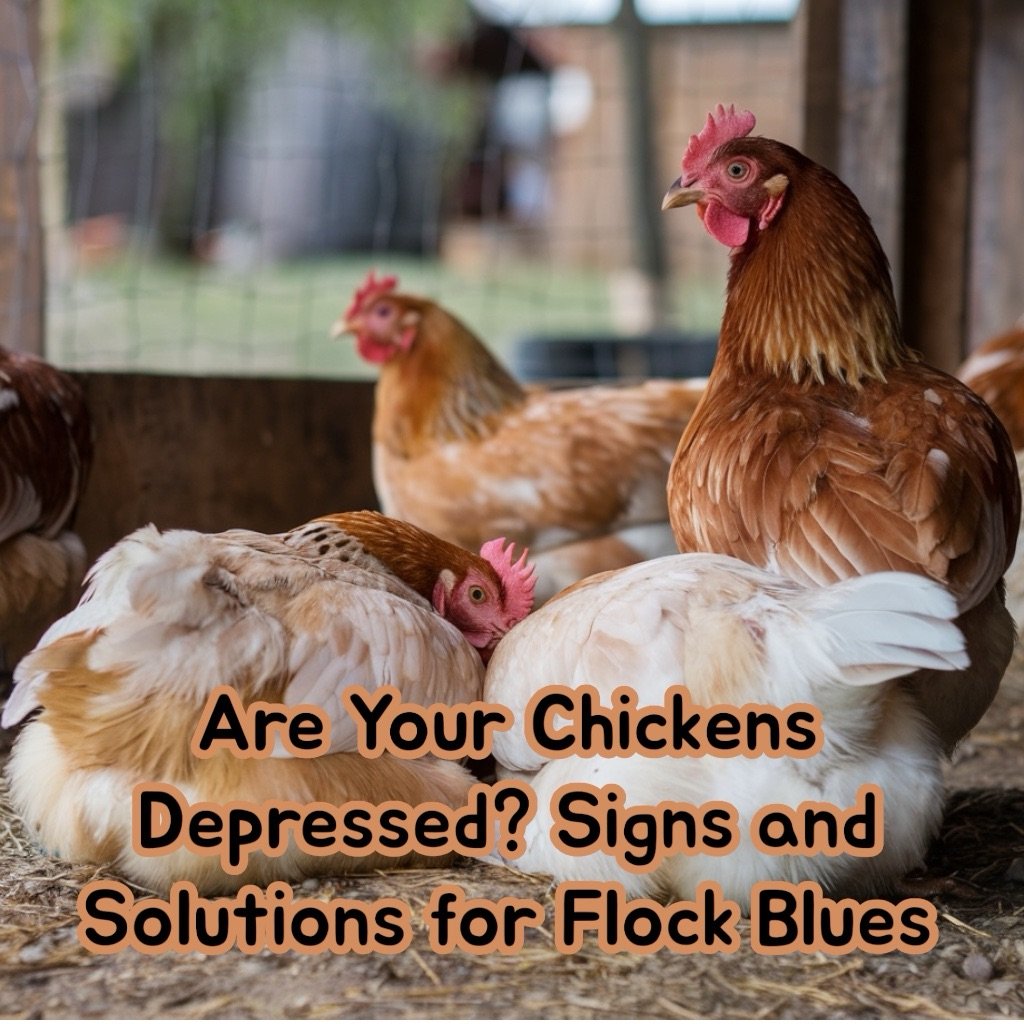
If the bird is withdrawn, unusually quiet, separated from the flock, or behaving differently for an extended period, then our guide to recognizing depression-like behavior in chickens digs into that specific question.
Here, I want the takeaway to be simpler.
Puffed feathers are a clue. They aren’t a diagnosis.
What I Check When One Chicken Suddenly Looks Puffed Up
I’ve learned not to panic and also not to ignore it.
I watch her for a few minutes.
I see whether she moves when the flock moves.
I offer food.
I make sure she’s drinking.
I look at her eyes.
I look at her comb.
I watch her breathing.
I look at her droppings if I can.
I check whether she’s walking normally.
I think about the temperature.
I consider whether she’s dust bathing, resting, broody, or involved in some flock drama.
Most importantly, I compare what I’m seeing to that particular chicken’s normal behavior.
That’s often what tells me whether I’m watching an ordinary chicken moment or something that deserves attention.
When I’d Be More Concerned
Puffed feathers get my attention when they’re accompanied by other changes.
I’d be much more concerned about a chicken that’s puffed up and lethargic, not eating, having abnormal droppings, breathing strangely, limping, keeping her eyes closed, losing weight, or separating herself from the flock.
Ruffled feathers and inactivity are recognized signs that can accompany poultry illness, but many diseases share similar symptoms. Appearance alone usually can’t tell you exactly what’s wrong.
If several birds suddenly become sick, birds are dying unexpectedly, or you see significant respiratory, neurological, or other serious signs, that’s the point to involve a veterinarian or appropriate animal-health authority rather than trying to diagnose everything from a blog post.
What Years Around Chickens Have Taught Me to Watch
The biggest thing I’ve learned is not to obsess over one behavior.
Chickens do strange-looking things.
They lie sideways in the dirt.
They stretch one wing.
They stand on one leg.
They fluff into giant balls.
They chase each other.
They freeze and stare at something nobody else can see.
A lot of it is perfectly normal.
The skill comes from knowing what your flock normally looks like.
That’s why I spend time simply watching chickens when nothing is wrong.
It gives me a baseline.
When one of them eventually does act differently, I notice much faster.
And with puffed feathers, that’s really the answer I’ve settled on.
If the chicken puffs up and then goes right back to being a chicken, I don’t lose sleep over it.
If the puffing comes with several other changes, I start investigating.
Frequently Asked Questions
Why does my chicken puff up when I pet her?
Sometimes chickens loosen or fluff their feathers when they’re comfortable, while certain body postures can also be connected with reproductive or submissive behavior. I pay attention to what the rest of the body is doing rather than interpreting the feathers alone.
Why is my chicken puffed up and not moving?
That combination concerns me more than puffing alone. A chicken that remains hunched, inactive, uninterested in food, or isolated may be showing sickness behavior and deserves closer observation.
Do chickens puff their feathers when they’re cold?
Yes. Puffing the feathers helps trap insulating air near the body, and Extension guidance lists puffed feathers among signs chickens may be cold.
Why does my chicken puff up her neck feathers?
Raised neck or hackle feathers can be part of flock confrontation or pecking-order behavior. Chickens may make themselves appear larger when challenging another bird.
Do sick chickens puff up?
They can. Ruffled feathers can accompany illness, particularly when combined with inactivity, reduced appetite, abnormal breathing, unusual droppings, or other changes.
Should I separate a chicken that’s puffed up?
Not simply because she fluffed her feathers for a few minutes. If she’s persistently hunched, inactive, not eating, or showing other signs of illness, separating her for observation and getting appropriate veterinary guidance may be warranted. University of Maryland Extension recommends isolating chickens showing sickness signs when appropriate for specialized care and to reduce potential disease spread.
About the Author
Megan Whitaker has spent years around backyard flocks and enjoys paying attention to the small behaviors chickens show long before most people notice them. For Backyard Chicken Pro, she focuses on chicken behavior, flock dynamics, stress, social habits, and the everyday quirks that can help owners understand what their birds are communicating. Her approach combines firsthand observation with reputable poultry guidance so readers can better separate normal chicken behavior from changes worth investigating.