
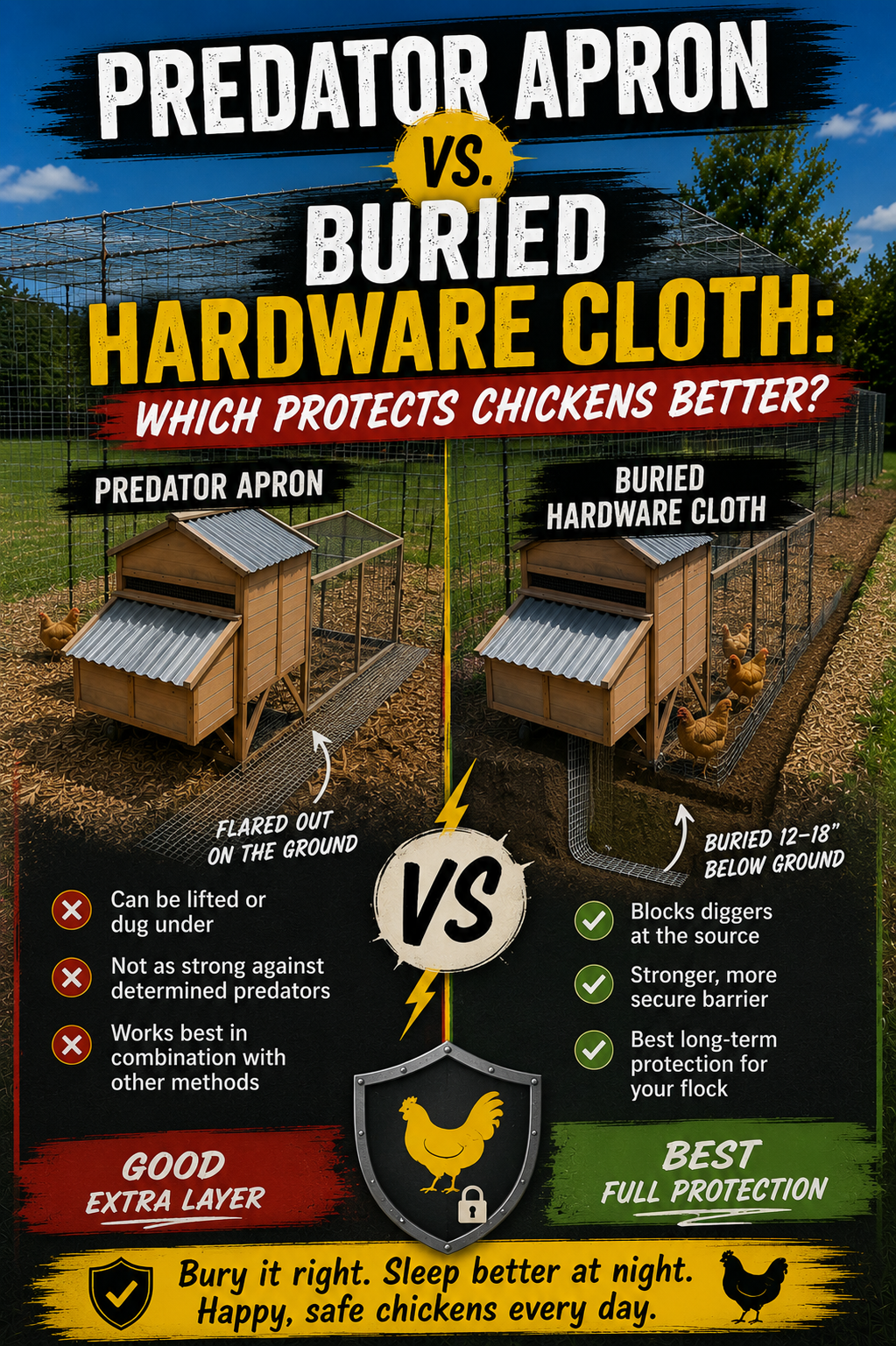
When most people decide to predator-proof a chicken coop, they eventually run into the same question I did.
Should you bury hardware cloth around the coop, or should you install a predator apron?
You’ll find passionate supporters of both methods online.
Some people insist burying hardware cloth is the only proper way to keep predators out.
Others say digging a trench is unnecessary and that a predator apron works just as well with far less effort.
After spending time walking through one of the most secure chicken runs I’ve seen at Weaver Family Farms and talking with Daxon about why underground protection matters, I started researching both methods much more closely.
The more I learned, the more I realized there isn’t one perfect answer.
Both approaches can work extremely well.
The trick is understanding why they work and choosing the one that fits your property, your budget, and the predators you’re dealing with.
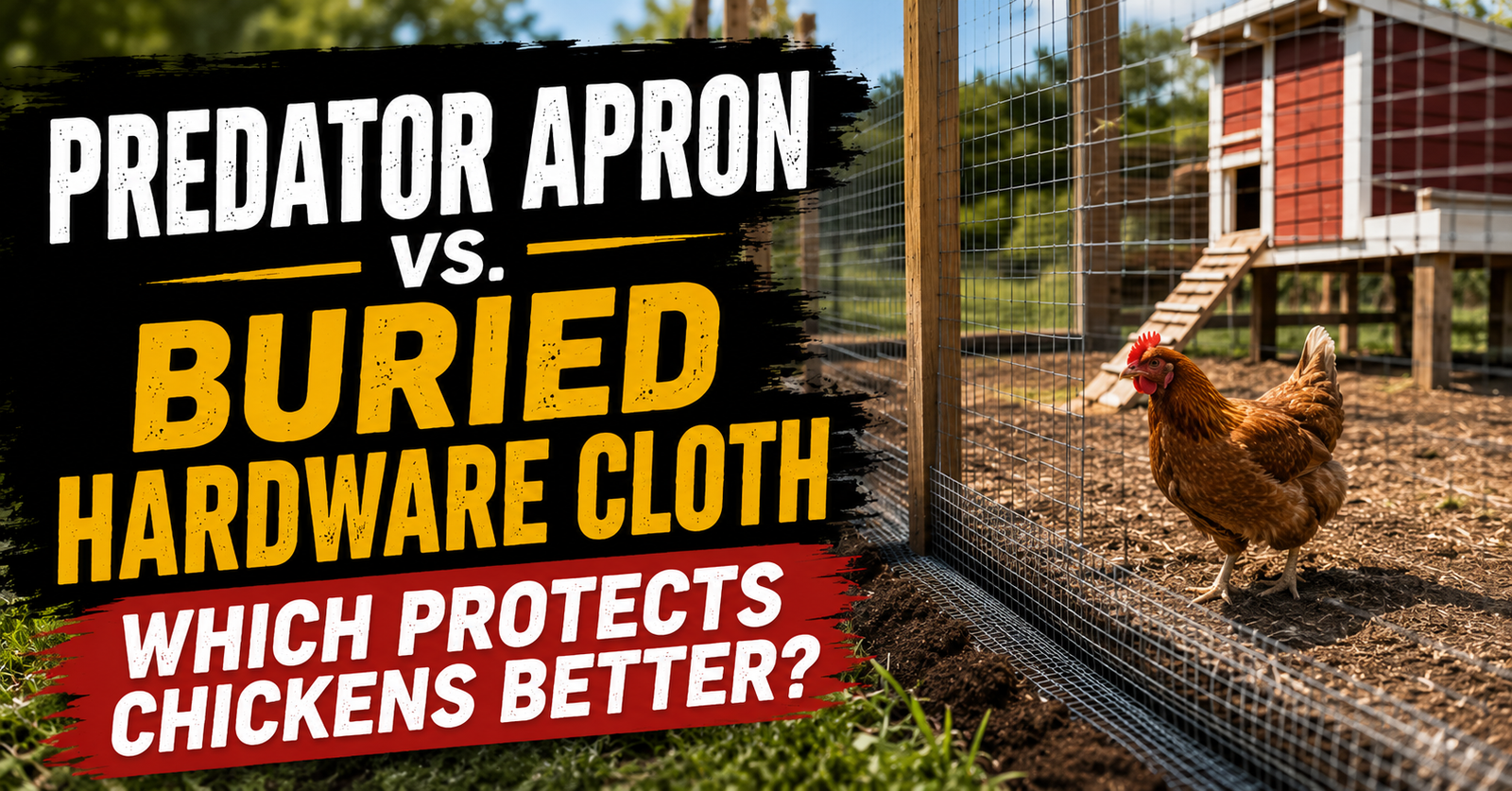
What Is a Predator Apron?
A predator apron is exactly what it sounds like.
Instead of burying fencing straight down beside your coop or run, hardware cloth extends outward along the ground from the base of the fence.
Most predator aprons extend somewhere between 12 and 24 inches away from the coop.
Once installed, they’re usually covered with dirt, mulch, gravel, or grass until they’re almost invisible.
When a fox or raccoon begins digging right next to the fence, it immediately hits the hardware cloth.
Rather than digging underneath your coop, the predator gives up and moves on.
It’s surprisingly simple.
What Is Buried Hardware Cloth?
Buried hardware cloth uses the same material but installs it differently.
Instead of laying it flat on the ground, it’s placed vertically into a trench around the perimeter of the coop or run before being backfilled.
The idea is straightforward.
If a predator digs beside the fence, it encounters hardware cloth underground instead of loose soil.
Many backyard chicken keepers choose this approach because it creates a very solid underground barrier.
If you’re wondering how deep that barrier should be, I recommend reading How Deep Should You Bury Hardware Cloth Around a Chicken Coop? where I go into much more detail about recommended depth and installation.
Both Methods Start With the Same Material
Whether you choose a predator apron or bury hardware cloth, the quality of the fencing matters.
Personally, I’d rather install it once than replace it later.
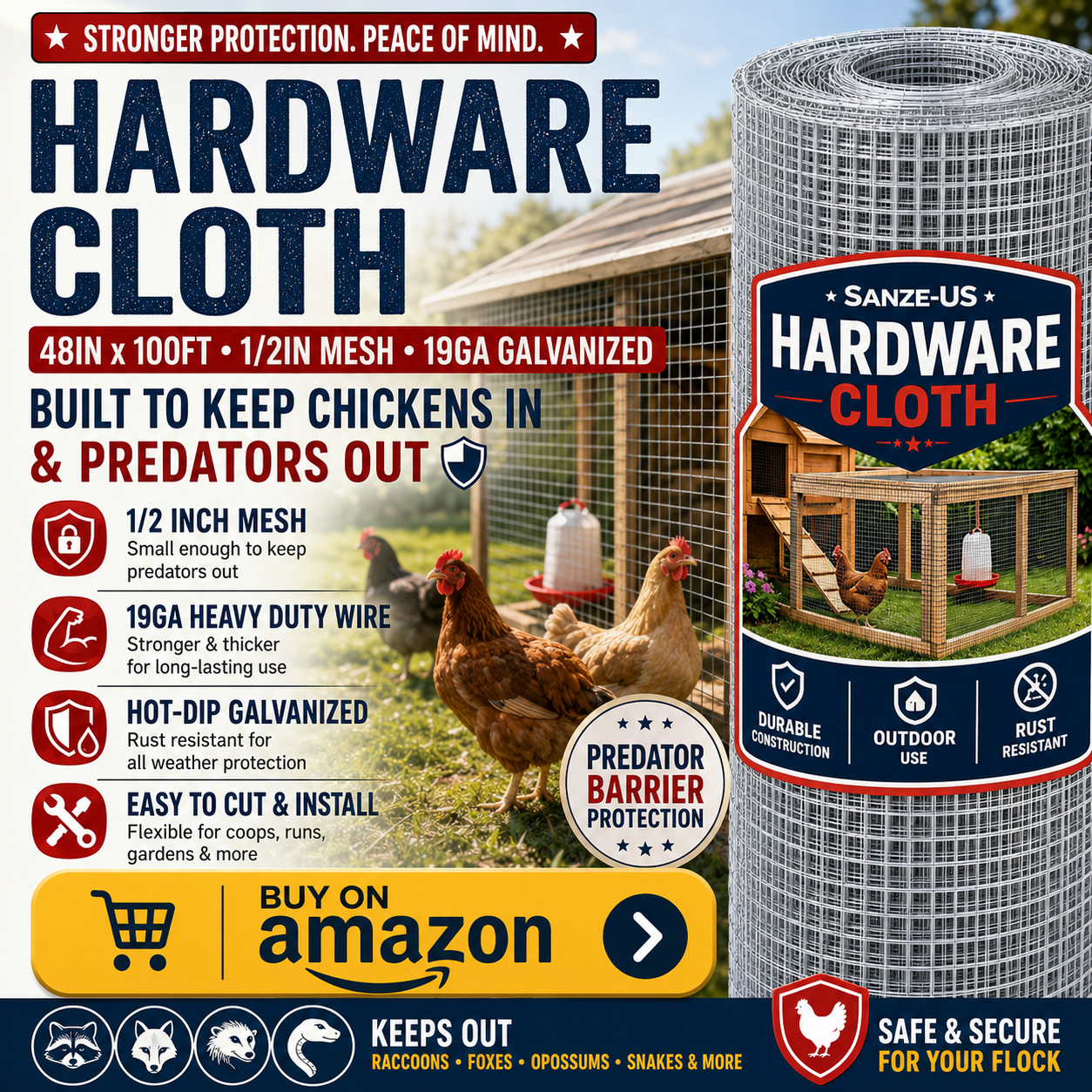
For that reason, I’d use something like this 48-inch x 100-foot galvanized ½-inch hardware cloth because the welded construction provides excellent strength against digging predators and gives you plenty of material for larger projects.
The installation method may change.
The quality of the material shouldn’t.
What I Saw at Weaver Family Farms
While touring the large predator-proof chicken run at Weaver Family Farms, one thing that impressed me was how much planning went into stopping predators before they became a problem.
Daxon explained that protection wasn’t limited to the walls.
Wire continued around the perimeter to discourage digging predators, reinforcing something I’ve heard from experienced chicken keepers for years.
The best predator-proof chicken runs don’t rely on one defensive feature.
They combine multiple layers of protection.
Strong framing.
Quality fencing.
Covered roofing.
Secure doors.
Underground barriers.
That’s one reason I enjoyed walking through the project so much.
Every decision seemed to support another.
If you haven’t already, I’d recommend taking a look at How a 10×75 Predator-Proof Chicken Run Was Built because it really helps explain the thinking behind the overall design.
Predator Aprons Are Usually Easier to Install
One advantage of predator aprons is the amount of digging you don’t have to do.
Instead of trenching around your entire coop, you simply secure the hardware cloth at the base and extend it outward.
That can save hours of work, especially if your soil is rocky or filled with tree roots.
It’s also a great option if your coop is already built and you don’t want to disturb the existing structure.
Buried Hardware Cloth Looks Cleaner
Some people simply prefer the appearance of buried hardware cloth.
Once the trench is filled, the fencing is completely hidden.
There’s nothing extending outward from the coop.
If appearance is important to you, this approach definitely has an advantage.
Just keep in mind that it usually requires much more labor during installation.
Don’t Forget the Fence Above Ground
Whether you choose a predator apron or buried hardware cloth, neither one replaces a good fence.
The underground protection only solves one problem.
Digging.
You still need strong fencing above ground.
If you’re still deciding between different fencing materials, you’ll probably find Chicken Wire vs. Hardware Cloth: Which Protects Chickens Better? helpful because it explains where each material works best and where each has limitations.
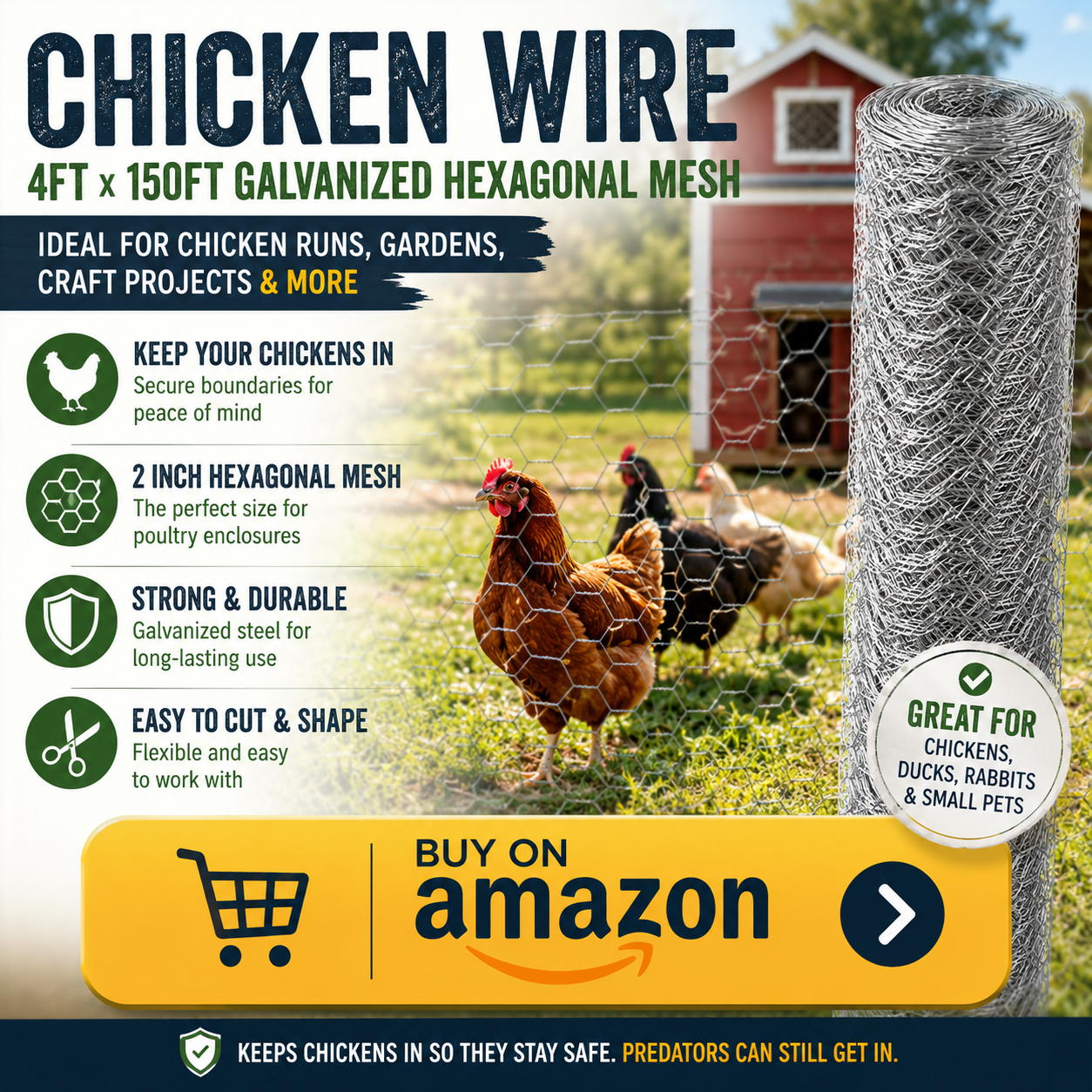
For larger walk-in runs where budget matters, I’ve also had good luck recommending this 150-foot roll of galvanized chicken wire fencing for enclosing large areas while using hardware cloth around higher-risk sections of the coop.
Which One Would I Choose?
After researching both methods, talking with experienced chicken keepers, and seeing the attention to detail that went into the predator-proof chicken run at Weaver Family Farms, I don’t think there’s a wrong choice.
I think there’s a better choice for your particular situation.
If I were building a brand-new chicken coop and didn’t mind doing some digging, I probably wouldn’t hesitate to bury hardware cloth around the perimeter.
Once it’s installed, it’s out of sight and provides a very solid underground barrier.
On the other hand, if I already had a coop in place or was working with rocky ground, I’d probably install a predator apron instead.
It requires much less digging, can usually be added to an existing coop, and has proven itself on thousands of backyard chicken setups.
The important thing isn’t necessarily which method you choose.
It’s making sure you choose one.
Common Mistakes I See People Make
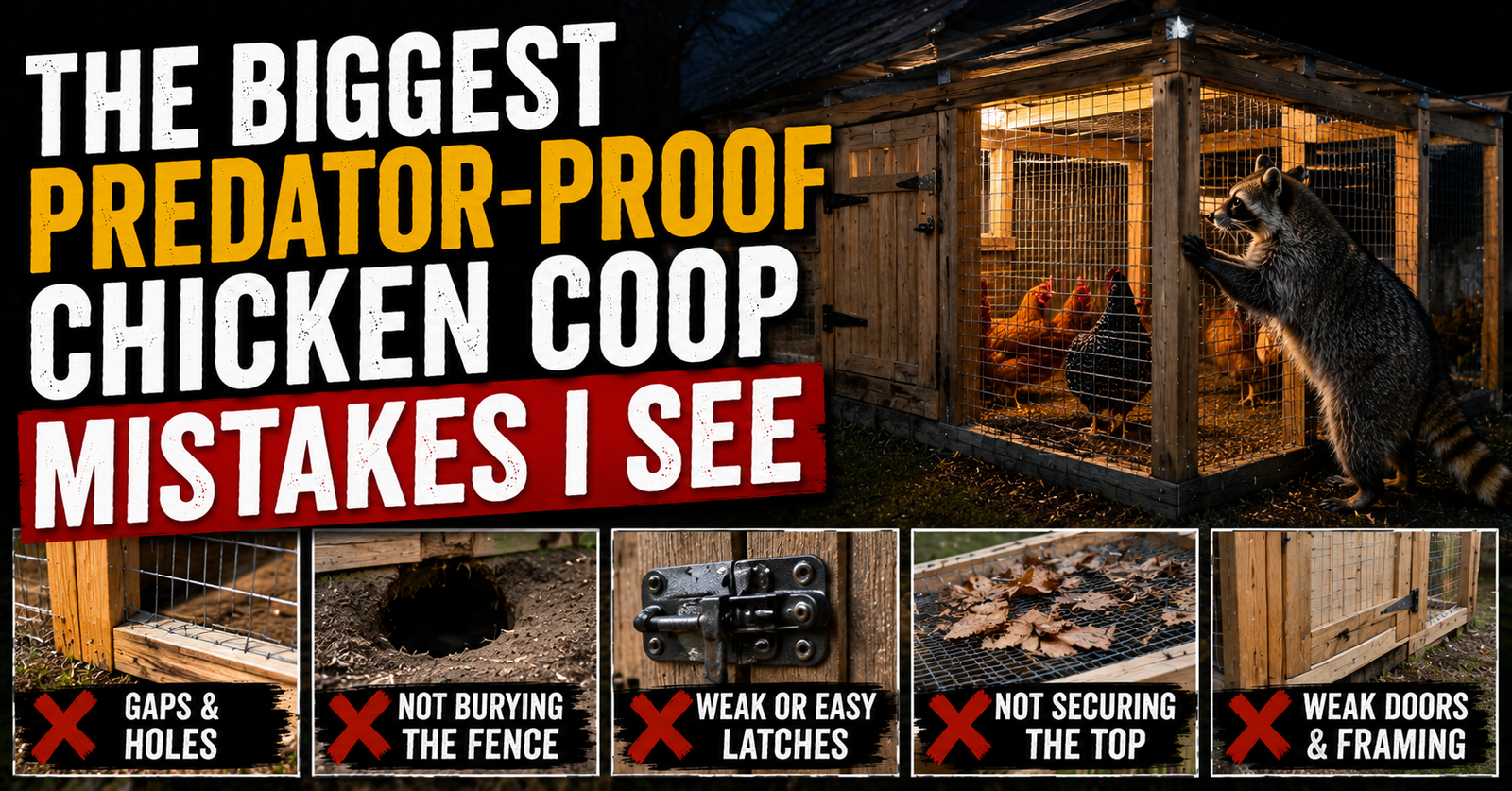
One thing I’ve noticed after visiting different backyard chicken setups is that people often spend a lot of money on fencing but overlook the little details that actually keep predators out. Those small oversights are explored in overlooked coop security details, including the mistakes that can undermine otherwise expensive fencing.
Some of the most common mistakes include:
- Leaving small gaps under gates.
- Stopping the fencing at ground level.
- Forgetting to protect the corners of the run.
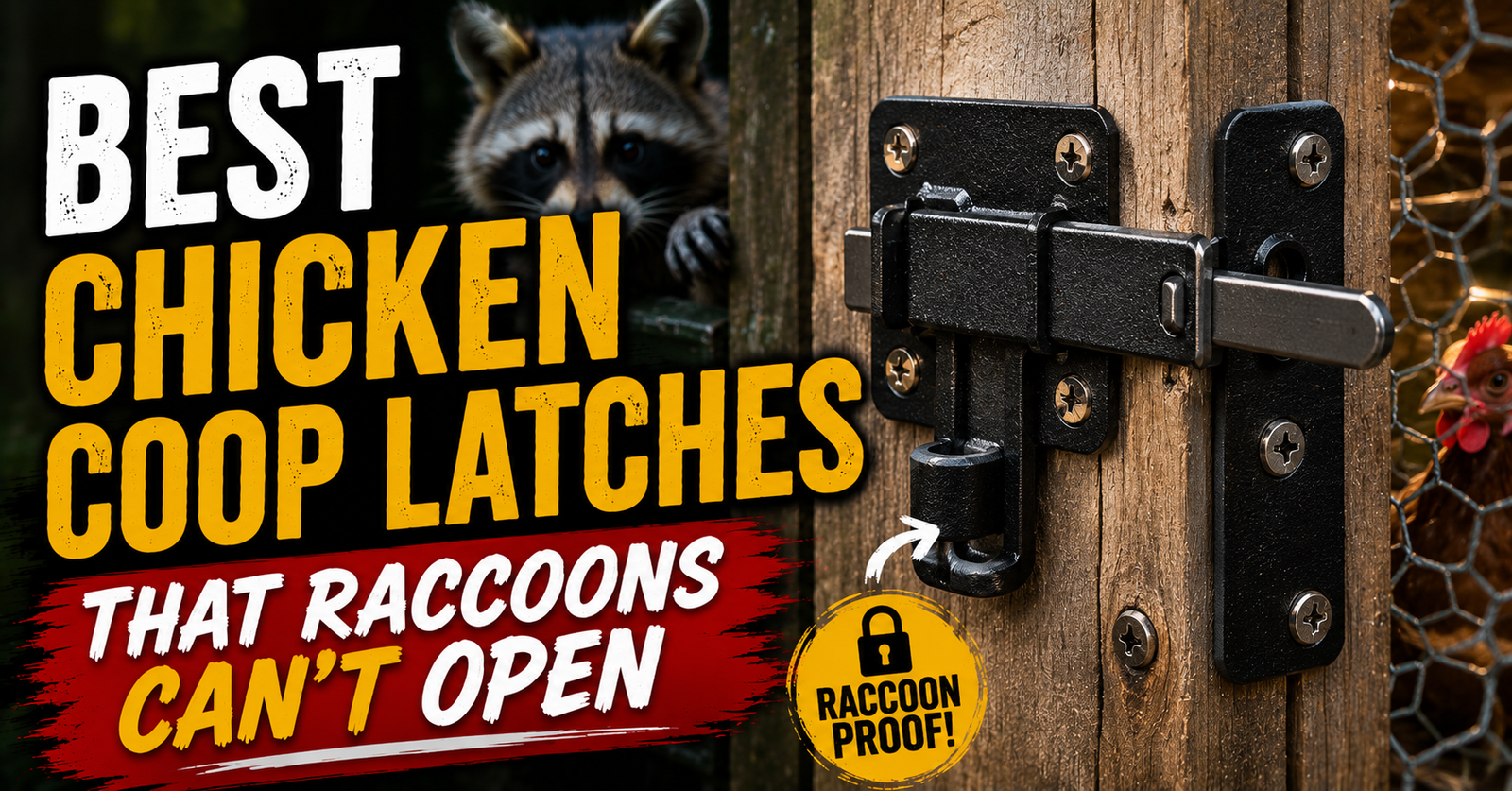
- Using weak latches that raccoons can open.
- Assuming one layer of fencing is enough everywhere.
The more I learn about predator protection, the more I realize it’s usually several small improvements working together that make the biggest difference.
Your Coop Needs More Than Underground Protection
Buried hardware cloth or a predator apron should never be your only line of defense.
A truly secure chicken setup combines several layers of protection.
A strong frame.
Quality fencing.
Secure doors.
Covered roofing.
Good locks.
Routine inspections.
That’s one reason I enjoyed touring the large chicken run at Weaver Family Farms so much.
Nothing about it depended on luck.
Every feature supported another.
The enclosed roof helped protect against hawks.
The underground protection discouraged digging predators.
The sturdy frame gave the fencing a solid foundation.
Everything worked together as one system.
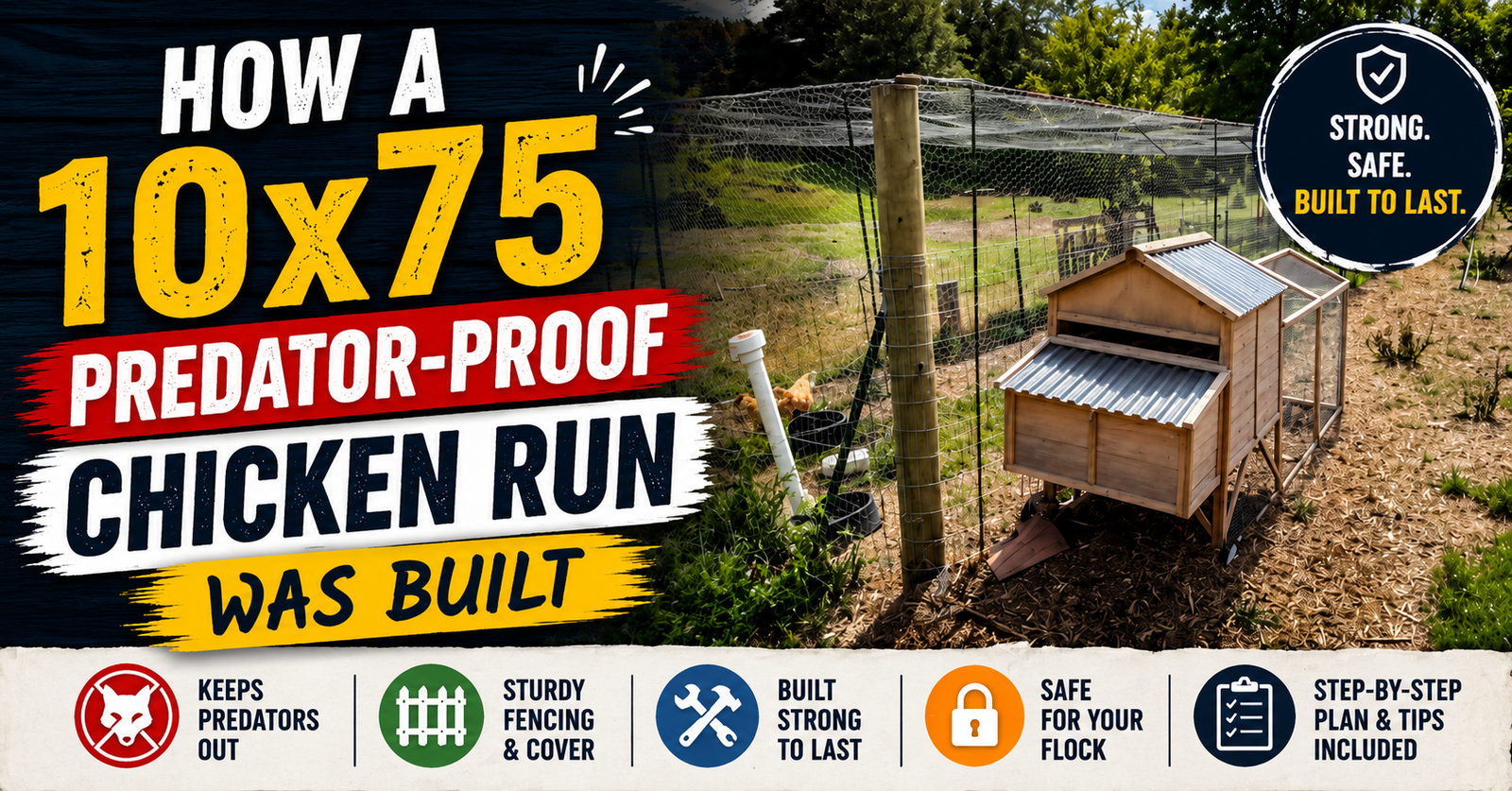
If you’re still planning your own setup, I also recommend reading How a 10×75 Predator-Proof Chicken Run Was Built because it shows how all of those ideas can come together in one practical design.
Keep Checking Your Coop Throughout the Year
Even the best predator protection deserves an occasional inspection.
Heavy rain can expose buried fencing.
Tree roots can slowly shift hardware cloth.
Predators may return to the same location over and over, testing for weaknesses.
Every few weeks, I like taking a slow walk around the outside of a coop and looking for anything unusual.
Fresh digging.
Loose fencing.
Bent wire.
Small gaps around doors.
Signs that something has been pulling or scratching overnight.
Finding those problems early is much easier than discovering them after a predator gets inside.
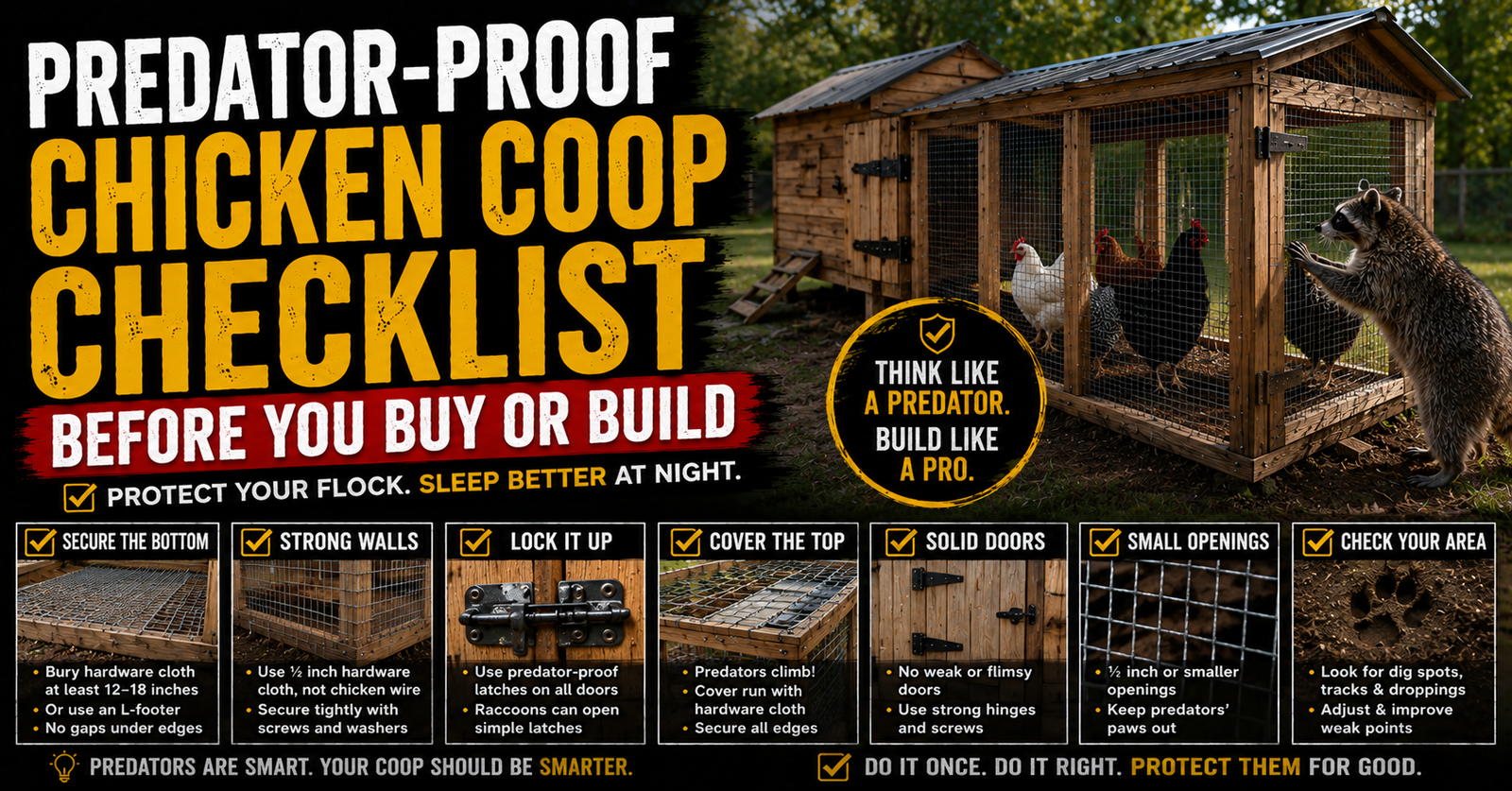
No matter which option you choose, it’s worth stepping back and looking at the entire coop instead of just the ground around it. I eventually put together a Predator-Proof Chicken Coop Checklist Before You Buy or Build that covers every major area predators commonly exploit, making it easy to spot anything you’ve overlooked.

Hardware Cloth Is Worth the Investment
If you’re spending the time to predator-proof your chicken coop, I wouldn’t cut corners on the material itself.
A good 48-inch x 100-foot roll of galvanized ½-inch hardware cloth gives you a strong welded barrier that’s well suited for predator aprons, buried protection, coop windows, vents, and other vulnerable areas.
For enclosing much larger outdoor spaces, I still think a 150-foot roll of galvanized chicken wire fencing has its place because it covers a lot of area economically. I just wouldn’t rely on it alone anywhere predators are likely to attack.
Frequently Asked Questions
Is a predator apron better than burying hardware cloth?
Not necessarily. Both methods work very well when installed correctly. A predator apron usually requires less digging, while buried hardware cloth creates a hidden underground barrier.
How wide should a predator apron be?
Most backyard chicken keepers recommend extending it about 12 to 24 inches away from the outside of the coop or run.
Can I add a predator apron to an existing chicken coop?
Yes. In fact, it’s one of the easiest upgrades you can make to improve predator protection without rebuilding your coop.
Should I use hardware cloth or chicken wire for a predator apron?
I’d choose hardware cloth. Its welded construction and smaller mesh openings provide much better protection against digging and reaching predators.
Will a predator apron stop foxes and coyotes?
It can be extremely effective because most digging predators start right next to the fence. When they immediately encounter hardware cloth, many lose interest and move on.


About the Author
Nathan Holloway
Nathan Holloway specializes in predator prevention, chicken coop construction, and practical backyard flock security. He regularly visits farms, studies real-world chicken housing designs, and learns directly from experienced poultry keepers to discover what actually works. At Backyard Chicken Pro, Nathan focuses on practical, experience-driven advice that helps chicken owners build safer coops, stronger runs, and better long-term protection for their flocks.