A chicken’s crop can feel surprisingly strange even when everything is working exactly the way it should.
Late in the day, I expect to feel some food in there.
After a chicken spends hours eating, scratching, and filling up before roosting, the crop can look noticeably rounded.
That’s normal.
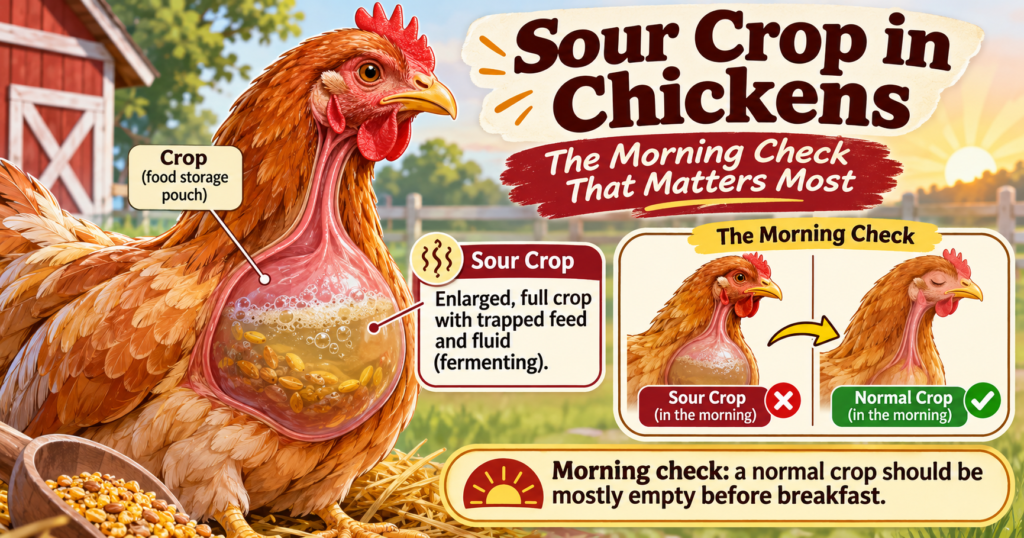
What matters much more to me is what that same crop feels like first thing the next morning before the chicken has eaten.
A healthy crop should have emptied substantially overnight.
If I pick up a chicken before breakfast and find a crop that’s still large, squishy, fluid-filled, or obviously holding yesterday’s food, that’s when I start asking questions.
And if that same bird has a sour or fermented smell coming from her mouth, sour crop moves much higher on my list.
Sour crop is one of those chicken problems that’s easy to misunderstand because the crop itself isn’t the disease. The real issue is that normal crop emptying has been disrupted and yeast, commonly Candida, has been able to overgrow.
That’s also why I don’t like the common internet approach of immediately treating every full crop as “sour crop.”
Sometimes it’s an impacted crop.
Sometimes it’s a stretched or pendulous crop.
Sometimes the chicken simply ate a huge meal shortly before you checked her.
And sometimes a chicken really does have candidiasis affecting the crop.
The first step is knowing what a normal crop should do.
What the Crop Actually Does
The crop is basically a temporary food-storage pouch connected to the esophagus.
A chicken doesn’t chew food the way we do.
She grabs food with her beak, swallows it, and some of that food collects in the crop before moving farther through the digestive system.
That’s why the crop changes size throughout the day.
Morning crop?
Usually pretty flat.
Chicken spends the day eating?
Crop gradually fills.
Evening?
It may feel surprisingly full.
Overnight, while the chicken is resting and not eating, the contents should continue moving through the digestive tract.
That daily emptying pattern is one of the simplest things backyard chicken keepers can learn to recognize.
You don’t need laboratory equipment.
You need to know where the crop is and what your normal chickens feel like.
Where Is a Chicken’s Crop?
The crop sits toward the lower front of the neck and upper chest, slightly to the chicken’s right side.
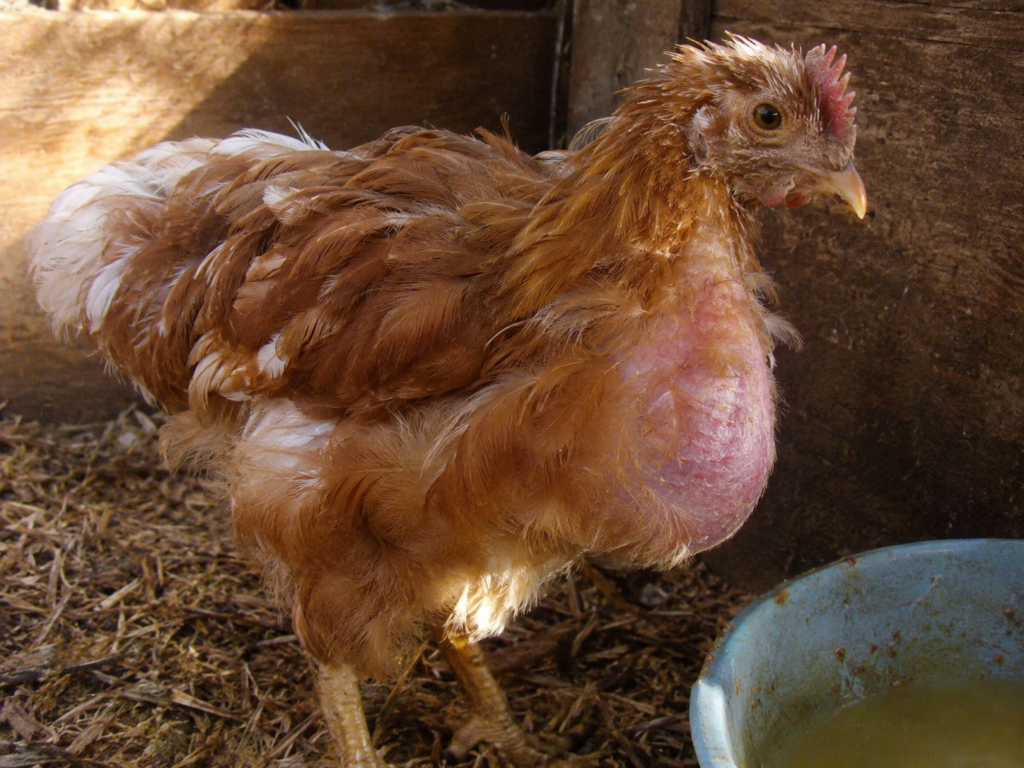
When it’s full, you may see a bulge.
That’s especially noticeable on birds with less feather coverage over the chest or after a big meal.
The first time someone feels a full crop, I can understand why they might think they’ve discovered a tumor.
It can feel like a whole pouch of food under the skin.
That’s because it basically is.
The mistake is assuming that “full crop” automatically equals “crop problem.”
Timing matters.
The Morning Crop Check Is the Most Useful Thing I’ve Learned
If I’m suspicious of a crop problem, I don’t make my decision at 6 PM after the chicken has spent the entire day eating.
I check early.
Before breakfast.
Before treats.
Before she’s been scratching around filling herself back up.
That’s when you get much more useful information.
University of Maryland Extension recommends using the early-morning crop as an important clue when evaluating crop problems. A crop that remains full before feeding suggests that normal emptying may not be happening.
I like this because it cuts through a lot of unnecessary panic.
Big crop at bedtime?
Expected.
Big crop the next morning?
Now I’m paying attention.
What Sour Crop Usually Feels Like
People often describe a sour crop as:
Soft.
Squishy.
Fluid-filled.
Almost balloon-like.
You may be able to feel liquid and partially digested material rather than one firm mass.
But texture alone is not enough for me.
I want to know whether the crop is emptying.
I want to know how the chicken is acting.
I want to know whether there is an abnormal odor.
And I want to rule out an impaction that’s causing everything behind it to sit and ferment.
That’s where the next clue becomes especially useful.

The Sour Smell Is a Big Clue
Sour crop earned its name for a reason.
A chicken can develop a noticeable sour, fermented, or yeasty odor coming from the mouth.
University of Maryland describes the sour smell as one of the easiest clues to crop mycosis, while Merck notes that gastrointestinal candidiasis can have a sour or yeasty odor.
I wouldn’t put my entire diagnosis on smell alone.
But a crop that is still full in the morning plus a distinctly sour odor is much more suspicious than either sign by itself.
Sometimes owners describe the smell as:
Fermented feed.
Sour milk.
Yeast.
Beer-like.
Rotten food.
Whatever description you use, it isn’t what I’d expect from the mouth of a healthy chicken.
Sour Crop and Impacted Crop Are Not the Same Thing
This distinction matters a lot.
An impacted crop contains material that isn’t moving through normally.
University of Maryland describes an impacted crop as remaining full in the morning and often feeling hard, almost like a golf ball.
Sour crop is different.
Sour crop usually involves yeast overgrowth and crop stasis, often leaving the crop soft or fluid-filled rather than simply packed with a firm mass.
But here’s where backyard chicken problems get messy.
An impacted crop can contribute to sour crop.
Food sits too long.
Crop emptying slows.
Fermentation and microbial imbalance become easier.
So a chicken can have more than one thing going on.
That’s why I don’t like articles that tell readers:
Hard = impacted.
Squishy = sour.
Problem solved.
Real chickens don’t always cooperate with neat internet categories.

Pendulous Crop Can Create Similar Problems
There’s another condition worth knowing because it can look like a giant crop that simply won’t empty.
A pendulous crop becomes stretched and hangs lower than normal.
The crop loses the ability to move contents efficiently, which can allow food and fluid to remain trapped.
That can then contribute to secondary problems, including sour crop.
Merck describes pendulous crop as a grossly distended crop containing foul-smelling fluid, feed, and sometimes litter. Severely affected birds may continue eating while gradually losing condition because feed utilization is impaired.
So if a chicken’s crop is hanging unusually low day after day rather than just filling and emptying normally, I wouldn’t treat that as a simple one-time case of overeating.
What Actually Causes Sour Crop?
This is another place where I think the internet oversimplifies things.
Sour crop isn’t simply:
Chicken ate something bad and now the food turned sour.
Candidiasis is an opportunistic fungal disease caused primarily by Candida albicans. Candida organisms can normally exist within the digestive tract without causing disease. Problems arise when conditions allow them to overgrow.
That means I think about why the balance changed.
Common contributing factors include:
Long courses of antibiotics.
Poor sanitation.
Dirty or slimy water systems.
Spoiled feed.
An impacted crop.
A pendulous crop.
Other illnesses that weaken the bird.
Anything that keeps crop contents sitting too long can make the environment more favorable for trouble.
This is why simply killing yeast without fixing the underlying crop problem may not solve much.


Antibiotics Can Be Part of the Story
Antibiotics are useful medications when they’re genuinely needed.
But they can also disrupt normal microbial populations.
Merck specifically notes that candidiasis is an opportunistic infection that may develop when normal gastrointestinal microflora are disrupted, including after antimicrobial use.
University of Maryland likewise identifies prolonged oral antibiotic use as one factor associated with sour crop in chickens.
That doesn’t mean:
Never give chickens antibiotics.
It means antibiotics should be used for an actual reason and with appropriate guidance rather than tossed at every chicken that looks off.
Randomly treating one problem can sometimes help create another.
Dirty Water Can Make Things Worse
Water management matters more than people think.
Slimy waterers and dirty watering systems aren’t just unpleasant.
They create an environment where microbes thrive.
University of Maryland specifically lists poor water-system hygiene and slimy or unclean water among contributing factors associated with sour crop.
That’s one reason I’m picky about keeping poultry water clean.

If you’re constantly dealing with green slime or dirty containers, our guide on how to stop algae in chicken water naturally is worth reading.

And for larger flocks, I’ve found that a large chicken waterer that doesn’t need constant refilling makes it much easier to stay on top of daily water management.
A bigger container still needs cleaning.
Capacity doesn’t replace hygiene.
Spoiled Feed Is Another Thing I Check
Chicken feed needs to stay dry.
Feed that’s gotten wet, moldy, or spoiled isn’t something I want my flock eating.
If I find questionable feed, I don’t try to save a few dollars by feeding it anyway.
I throw it away.
The cost of replacing some feed is nothing compared with trying to figure out why multiple chickens suddenly have digestive problems.
I also pay attention to treats and kitchen scraps.
Anything wet left sitting around in warm weather can go bad surprisingly fast.
Chickens are good at eating things they probably shouldn’t.
Sometimes our job is simply not giving them the opportunity.
Long Grass and Fibrous Material Can Start a Different Crop Problem
This gets confused with sour crop constantly.
A chicken free-ranging through long grass may swallow strands that become difficult to move through the crop.
The result can be an impaction.
Once crop movement slows, souring can potentially follow.
So if a bird has access to long fibrous grass and the crop feels unusually firm or packed, I don’t immediately jump straight to yeast.
I’m thinking about obstruction too.
That’s another reason I want to feel the crop rather than diagnose from one symptom.
What Sour Crop Can Look Like From Across the Yard
Before you ever pick up the bird, you may notice behavior changes.
The chicken may seem less active.
She may stop rushing toward food.
She may separate from the flock.
She can look puffed up.
Weight loss may develop if the problem continues.
Regurgitation can occur.
The crop may look unusually enlarged.
Merck notes that candidiasis in birds can cause delayed crop emptying, poor appetite, regurgitation, weight loss, and a visibly swollen crop containing mucus or undigested food.
None of those signs belongs exclusively to sour crop.
That’s why the morning crop check adds so much useful information.
Appetite Changes Get My Attention Fast
I’ve said this in several Backyard Chicken Pro articles because chickens are usually extremely interested in food.
A bird that normally charges toward breakfast and suddenly doesn’t care gets my attention.
If poor appetite appears alongside an abnormal crop, I take it more seriously.
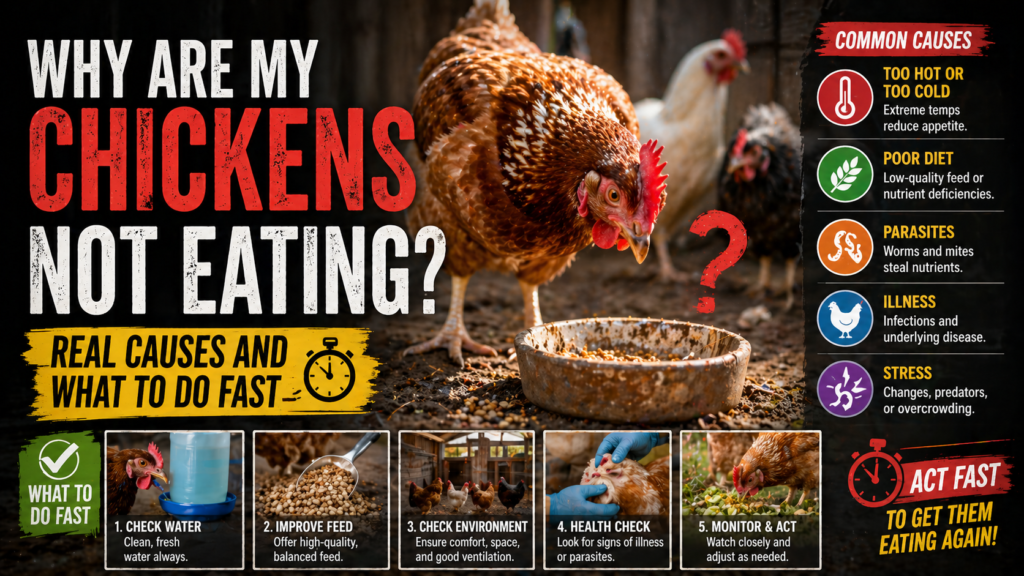
Our guide on why chickens stop eating and what I check first covers the wider list of possibilities because loss of appetite by itself doesn’t identify sour crop.
But when appetite loss and an abnormal crop show up together, the crop moves much higher on my inspection list.
Check Inside the Mouth Too
Candidiasis doesn’t have to stay confined to the crop.
Merck describes whitish raised pseudomembranes associated with candidiasis in the crop and notes that similar lesions can appear in the mouth and esophagus.
So if I’m already examining a bird, I look inside the mouth if I can do it safely.
I’m watching for:
Unusual white plaques.
Abnormal coating.
Mucus.
Odor.
Anything that looks noticeably different from a healthy bird.
I wouldn’t scrape suspicious material off and assume I’ve fixed something.
I want to know what I’m dealing with.
Is Sour Crop Contagious?
This is a great question because “yeast infection” sounds like something that might sweep through the flock.
University of Maryland says sour crop itself is not transmitted directly from one chicken to another. However, multiple birds can develop it when they share the same predisposing conditions, such as poor sanitation or prolonged antibiotic exposure.
That’s an important distinction.
If three chickens develop crop problems, I don’t necessarily assume Chicken A infected Chickens B and C.
I start looking for the common denominator.
Feed.
Water.
Medication.
Environment.
Underlying management problem.
Why I Would Separate a Chicken With a Suspected Crop Problem
Temporary separation can make observation much easier.
You can see:
Exactly what she’s eating.
Exactly how much she’s drinking.
What her droppings look like.
Whether she’s regurgitating.
Whether the crop empties.
Whether she’s losing condition.
It also prevents flockmates from interfering while you examine her.
I like a quiet, safe observation space where the bird isn’t being chased or stressed more than necessary.
But isolation itself isn’t treatment.
It’s a way to gather better information and keep the bird manageable.
Be Careful With Crop Massage
This is an area where backyard-chicken advice can become dangerous.
You’ll find videos telling people to grab the crop and aggressively knead it.
I would not do that casually, especially if the crop contains a lot of fluid.
University of Maryland specifically warns that aggressive massage of an enlarged fluid-filled crop can cause aspiration pneumonia if contents move back up and enter the respiratory tract.
That’s a complication I definitely don’t want to create while trying to help.
Gentle handling and proper diagnosis are very different from squeezing a chicken like a water balloon.
I Would Not Turn the Chicken Upside Down to “Drain” the Crop
This is another internet remedy I don’t like.
People tip the bird downward and encourage her to vomit crop contents.
The problem is simple.
Chickens can aspirate that material.
Once fluid or food enters the respiratory tract, you’ve potentially added a life-threatening problem to the crop problem you already had.
A veterinarian may empty or flush a crop under appropriate circumstances.
That’s not the same thing as holding a struggling chicken upside down over the yard because a video said it works.
I would rather be cautious than turn sour crop into aspiration pneumonia.
Olive Oil Is Not a Cure for Sour Crop
Oil advice gets passed around constantly for crop problems.
But remember what sour crop actually is.
We’re talking about crop stasis and commonly a Candida overgrowth.
Pouring oil into the bird doesn’t somehow eliminate yeast.
An impacted crop and sour crop aren’t interchangeable either.
If there’s an obstruction, adding random liquids doesn’t tell you what caused it or whether it can pass.
This is why understanding the underlying problem matters more than collecting home remedies.
What About Apple Cider Vinegar?
Apple cider vinegar gets recommended for practically every chicken problem on social media.
I would not rely on it as treatment for an established case of candidiasis.
A bird with a crop that won’t empty, foul odor, poor appetite, or other illness signs needs more than an internet pantry remedy.
Good water hygiene matters.
Nutrition matters.
Correcting predisposing conditions matters.
But those aren’t substitutes for diagnosing and treating an active fungal infection.
What About Copper Sulfate?
This one deserves special caution because legitimate poultry references do mention it.
University of Maryland discusses copper sulfate among treatments historically used for fungal infections in poultry, but it also specifically warns that overdosing can be toxic and recommends following a veterinarian’s dose.
That is very different from:
Add a random spoonful of copper sulfate to the water.
I would not give readers a casual kitchen measurement and tell them to experiment.
Copper has a narrow line between useful and harmful when incorrectly dosed.
This is one situation where getting the concentration right matters.
Antifungal Medication Is Different From a Home Remedy
Merck identifies candidiasis as an opportunistic fungal disease and notes that antifungal treatment may be effective. It specifically discusses nystatin use in poultry, while also pointing out that there are no approved products for treating candidiasis in U.S. poultry and that such use may be extralabel.
That’s another reason I want veterinary guidance involved.
A veterinarian can help answer:
Is this actually candidiasis?
Is there an impaction underneath it?
Is the bird dehydrated?
Does the crop need professional emptying?
Which medication is appropriate?
What does that mean for eggs from a laying hen?
Those questions matter.
When I’d Stop Trying to Manage It at Home
If the crop repeatedly fails to empty, the bird is losing weight, regurgitating, becoming weak, refusing food, or showing breathing problems, I would not keep experimenting for days.
I’d want veterinary help.
An impaction may eventually require more advanced intervention.
University of Maryland notes that persistent crop impactions can become harder over time and may require surgical intervention.
And candidiasis itself can involve more than the crop.
Waiting until the chicken is severely debilitated makes every problem harder.
Don’t Forget the Underlying Cause
This may be the most important part of the whole article.
Let’s say the yeast problem improves.
Great.
Why did the crop stop working properly in the first place?
Was there an impaction?
Pendulous crop?
Spoiled feed?
Dirty water?
Recent antibiotics?
Underlying illness?
Long fibrous grass?
Poor sanitation?
If you never address the contributing factor, you’re treating the consequence rather than the reason it happened.
That’s why I would inspect the whole management setup instead of focusing only on whatever medication is being used.
What I Want a Normal Crop to Feel Like
One of the best things you can do is learn healthy crops before you have a problem.
Pick up a healthy chicken in the evening.
Feel the crop gently.
Now check that same bird before breakfast.
You’ll immediately understand the difference.
That gives you a real baseline.
Not:
Somebody online said crops should feel like this.
But:
I know what this particular chicken normally feels like.
That kind of firsthand familiarity is extremely valuable.
Checking Crops Can Become Part of Normal Flock Observation
I’m not suggesting catching every chicken every morning.
That would get old fast.
But if one bird starts acting off, the crop becomes one of the first things I consider.
Especially when she’s:
Not eating.
Standing puffed up.
Losing weight.
Regurgitating.
Acting withdrawn.
Making repeated swallowing motions.
Or showing an obviously enlarged crop.
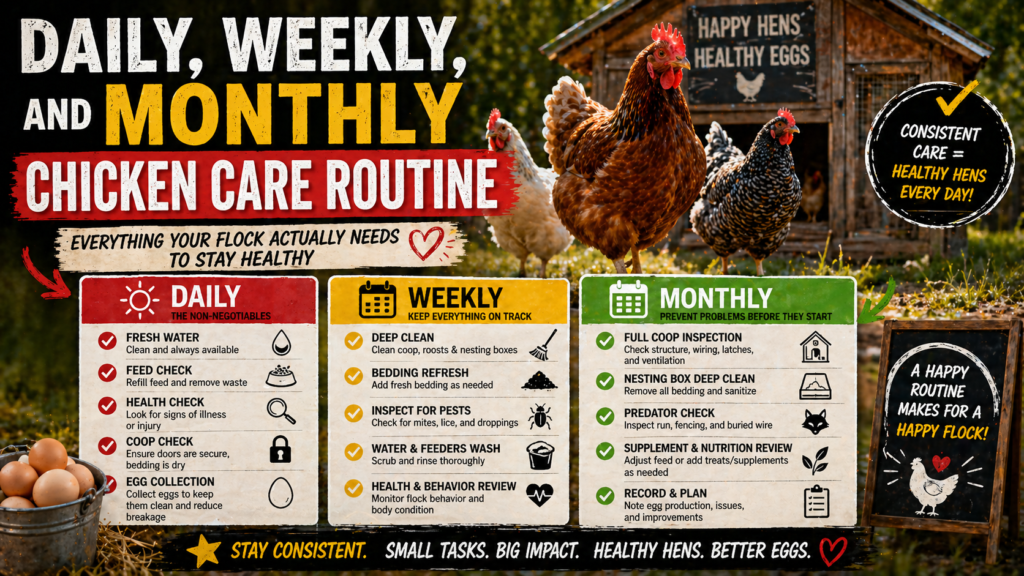
Our daily, weekly, and monthly chicken care routine is built around this same philosophy.
Knowing normal makes abnormal much easier to catch.
Sour Crop Can Make a Chicken Look “Sad”
This is one reason symptom-based chicken searches can be tricky.
A sick chicken may simply look unhappy.
Quiet.
Puffed.
Standing alone.
Not eating.
Eyes partly closed.
Somebody might search:
Why is my chicken depressed?
when the real issue is digestive.
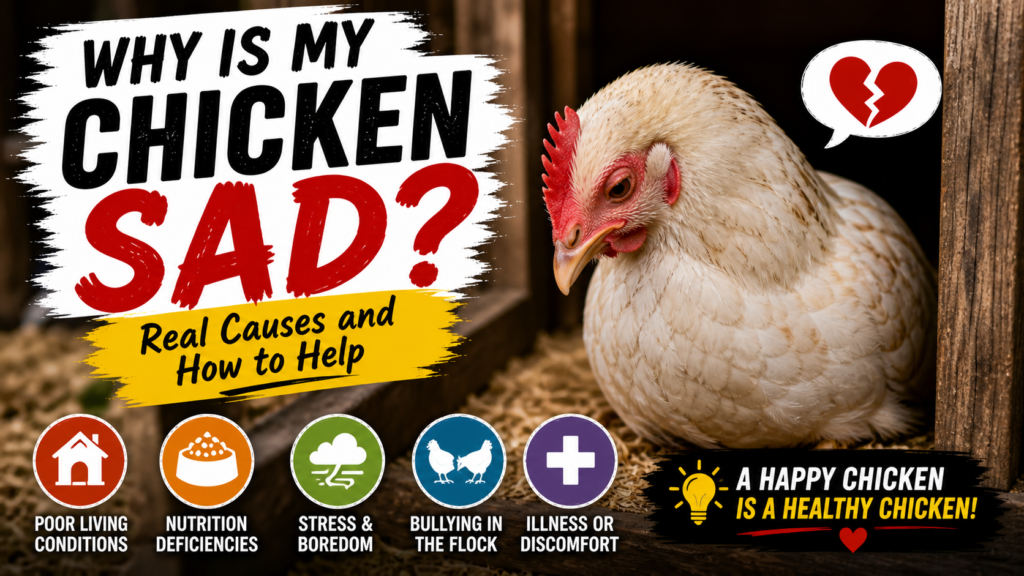
We’ve already covered why a chicken may look sad and what I check before assuming it’s behavioral.
The crop is one more example of why behavior changes should make us inspect the bird rather than immediately assigning an emotion.
What About Droppings?
A chicken with poor feed intake or digestive problems may also have changes in droppings.
But stool changes alone won’t diagnose sour crop.
That’s another reason I’m excited about eventually building out our chicken-droppings health cluster.
Color, water content, cecal droppings, diet, heat, disease, and digestive problems can all change what chicken poop looks like.
For sour crop, the crop itself remains the more useful clue.
Can Sour Crop Kill a Chicken?
A serious crop problem shouldn’t be treated casually.
If the chicken can’t move food through normally, isn’t eating properly, is losing weight, or has an infection that’s progressing, her condition can deteriorate.
Merck notes that candidiasis can produce listlessness and poor appetite in poultry, and in birds more broadly it can lead to crop stasis, regurgitation, and weight loss.
I don’t say that to scare people.
I say it because:
“I’ll see how she looks next week”
is not the approach I’d take with a crop that stays abnormal every morning.
Can Sour Crop Go Away on Its Own?
I wouldn’t count on that.
A crop that simply feels full because the chicken ate late may empty normally overnight.
That’s not sour crop.
An actual ongoing crop disorder needs the underlying cause addressed.
If Candida has overgrown enough to produce disease, legitimate poultry references discuss antifungal treatment rather than simply waiting indefinitely.
So the first question isn’t really:
Will sour crop fix itself?
It’s:
Does this chicken actually have sour crop, and why isn’t the crop emptying normally?
That’s a much better question.
Prevention Is Mostly Boring Chicken Keeping
The frustrating thing about good animal care is that the most useful prevention usually isn’t exciting.
Clean water.
Dry feed.
Sanitary feeders.
Reasonable antibiotic use.
Good nutrition.
Watching birds daily.
Keeping long fibrous material from becoming a problem.
Catching impactions early.
Maintaining a clean environment.
Merck emphasizes removing contributing factors such as poor sanitation and inappropriate antimicrobial use when preventing candidiasis.
That’s not a miracle supplement.
It’s good husbandry.
And honestly, good husbandry prevents a surprising number of chicken problems.
The Crop Check I’d Remember Above Everything Else
If there’s one thing I want somebody to remember from this article, it’s not a medication name.
It’s not a home remedy.
It’s not even the smell.
It’s this:
Check the crop before breakfast.
A chicken can have a giant crop after a day of eating and be completely healthy.
The important question is whether that crop empties overnight.
If it doesn’t, then you start working through:
Hard or soft?
Food or fluid?
Sour smell?
Normal appetite?
Weight loss?
Regurgitation?
Abnormal mouth lesions?
Repeated problem?
That’s how you turn a vague symptom into useful information.
And that’s a much better starting point than immediately tipping the chicken upside down because somebody on social media called every full crop “sour crop.”
Frequently Asked Questions
What does sour crop feel like in a chicken?
It is often described as soft, squishy, or fluid-filled rather than normally empty first thing in the morning. Texture alone isn’t enough, though. Delayed emptying and a sour or yeasty odor make sour crop more suspicious.
What does sour crop smell like?
Owners often describe a fermented, sour, or yeasty smell coming from the chicken’s mouth. University of Maryland identifies the characteristic sour odor as a useful sign of crop mycosis.
What should a chicken’s crop feel like in the morning?
Before the chicken has eaten, the crop should normally be substantially emptied. A crop that remains obviously full first thing in the morning deserves investigation.
What is the difference between sour crop and impacted crop?
An impacted crop usually contains material that isn’t passing and may feel firm or hard. Sour crop commonly involves crop stasis with Candida overgrowth and may feel soft or fluid-filled. An impaction can contribute to sour crop, so the two problems can occur together.
Is sour crop contagious between chickens?
University of Maryland states that sour crop is not directly transmitted from one bird to another. However, several chickens may develop it when they share the same underlying risk factors or environment.
Can antibiotics cause sour crop?
Antibiotics can disrupt normal gastrointestinal microflora and create conditions that allow Candida to overgrow. Both Merck and University of Maryland identify antimicrobial use as a predisposing factor for candidiasis.
Should I massage a chicken’s sour crop?
I would be cautious. University of Maryland warns that aggressive massage of an enlarged crop containing excessive fluid may cause aspiration pneumonia.
Should I turn my chicken upside down to empty the crop?
I wouldn’t recommend doing that at home. Regurgitated crop contents can be aspirated into the respiratory tract, creating another serious problem.
Does apple cider vinegar cure sour crop?
I wouldn’t rely on it as treatment for candidiasis. Legitimate poultry references discuss addressing underlying causes and using appropriate antifungal therapy when indicated rather than depending on vinegar as a cure.
Can I use copper sulfate for sour crop?
Copper sulfate has been used in poultry for fungal problems, but incorrect dosing can be toxic. University of Maryland specifically recommends following veterinarian-directed dosing.
When should I call a veterinarian?
I’d seek help when the crop repeatedly fails to empty, the chicken is losing weight, refusing food, regurgitating, becoming weak, having trouble breathing, or when you’re unsure whether you’re dealing with sour crop, impaction, or another disease.