
One of the interesting things about raising chickens is how quickly those little fluffy chicks turn into something that barely resembles the birds you brought home from the feed store.
Within a few weeks, feathers start replacing the fluff, personalities become more noticeable, and some of those tiny chicks begin looking suspiciously like roosters.
Before long, you’re wondering when they can move outside, when they need different feed, and how much longer you’ll have to wait before collecting your first eggs.
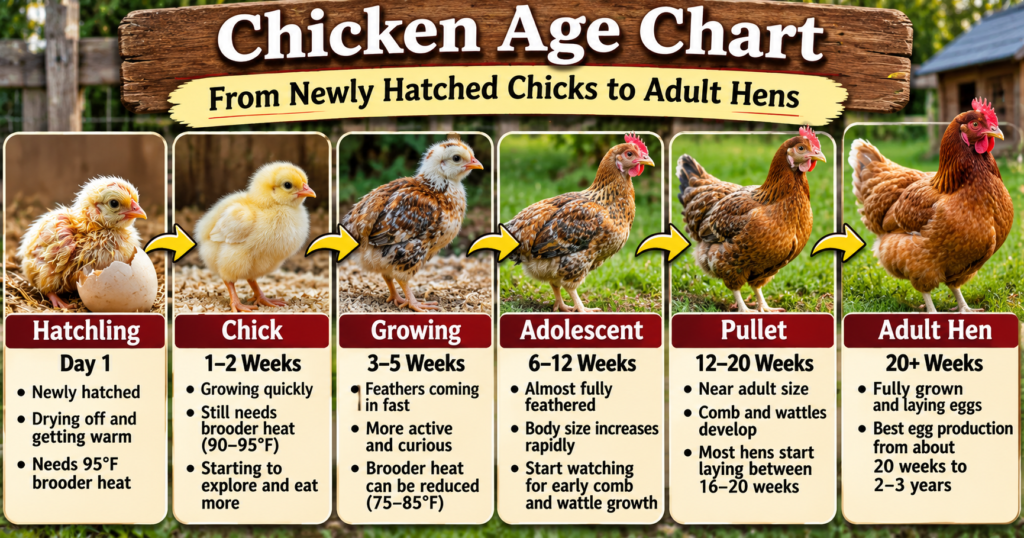
I find it much easier to prepare for raising chickens when you understand the stages they’re going through rather than treating every young bird exactly the same.
This chicken age chart breaks down those stages, what you can expect to see, and the practical changes worth making as your chickens grow.
It also explains something that often gets overlooked: how difficult it becomes to determine a chicken’s exact age once she’s fully grown.
Chicken Age Chart at a Glance
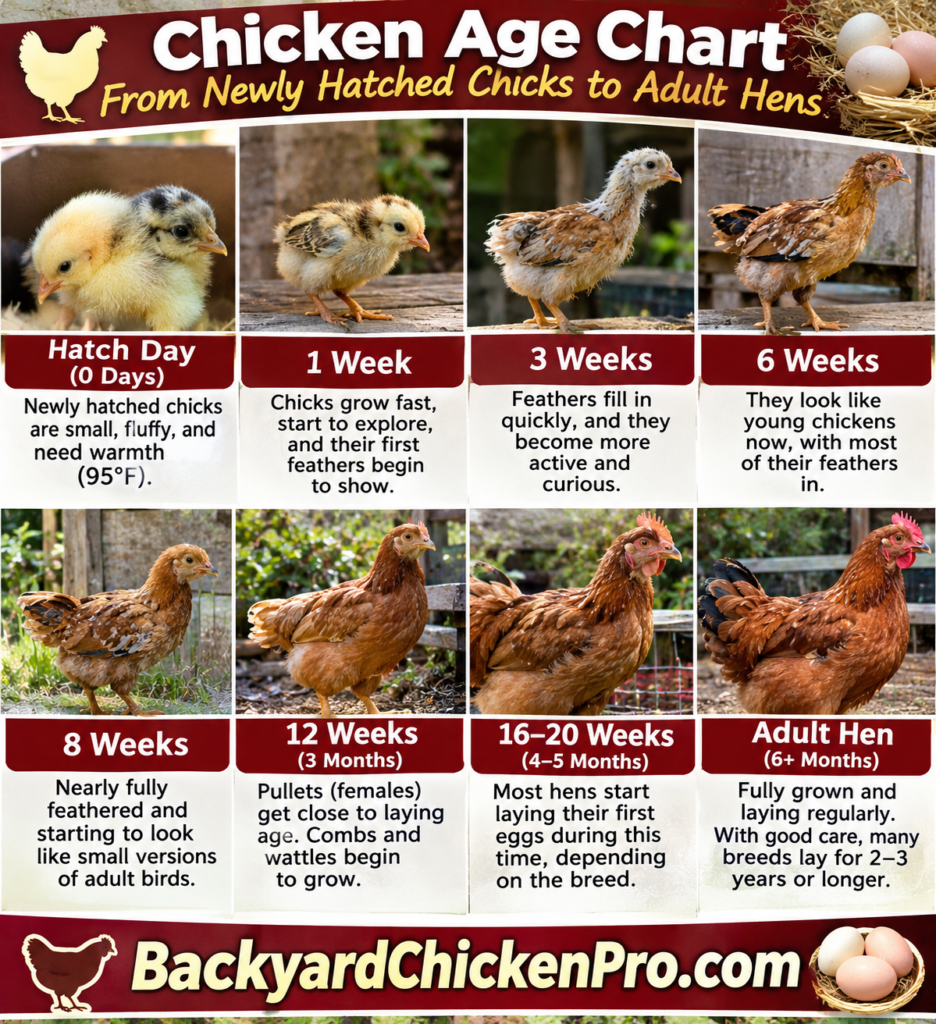
Every breed develops at a slightly different speed, but this is a useful general timeline for backyard laying chickens.
Hatch day: Newly hatched chick covered in soft down.
1 week: Small wing feathers begin appearing. Supplemental warmth remains important.
2 weeks: More wing and tail feathers develop.
3 weeks: Increasing feather coverage, activity, and curiosity.
4 weeks: Juvenile appearance becomes more noticeable. Some males begin showing larger combs.
5 to 6 weeks: Substantial feather development and increasing independence.
7 to 8 weeks: Young chickens become much more active and may be ready for outdoor housing under appropriate conditions.
9 to 12 weeks: Teenage stage with developing personalities and increasingly noticeable differences between males and females.
13 to 16 weeks: Pullets approach reproductive maturity, depending on breed.
17 to 24 weeks: Many egg-laying breeds begin producing their first eggs.
6 to 12 months: Young adult chickens continue developing mature characteristics.
1 to 2 years: Often a particularly productive period for laying hens.
3 to 5 years: Mature chickens may experience noticeably reduced egg production.
6 years and older: Senior backyard chickens may continue laying occasionally but generally require greater attention to mobility, nutrition, and body condition.
These are approximate developmental stages rather than strict deadlines.
A commercial laying hybrid and a large Brahma can be the same age while looking considerably different.


Hatch Day: What a Newly Hatched Chicken Looks Like
A newly hatched chick is covered primarily in soft down rather than mature feathers.
When chicks first emerge from their shells, they may look wet, exhausted, and considerably less adorable than the fluffy little birds you see at the feed store.
Once they’ve dried and recovered, their familiar appearance becomes more noticeable.
You may also see a tiny projection near the tip of the beak called an egg tooth.
This temporary structure helps the chick break through the eggshell during hatching and normally disappears shortly afterward.
The University of Nebraska’s chicken growth and development guide provides a useful photographic reference for how chicks change during their earliest weeks.
At this stage, the priorities are pretty simple: appropriate warmth, access to clean water, suitable chick starter feed, and protection from injury.

Chicken Age at 1 Week
One-week-old chicks still look predominantly fluffy, but if you examine their wings, you’ll often notice small feathers beginning to emerge.
They’re becoming increasingly mobile and curious.
They may already be scratching at bedding, investigating their surroundings, and rushing toward anything another chick appears interested in.
This is also the stage where I would pay particular attention to brooder equipment.
Something as ordinary as a poorly designed water container can become a problem when you’re dealing with tiny chicks.

A suitable baby chick feeder and waterer setup makes it easier for young birds to access what they need while limiting unnecessary mess.
How Warm Should One-Week-Old Chicks Be?
Traditional brooding recommendations commonly begin around 90 to 95°F in the heated area during the first week, gradually reducing supplemental heat as the chicks grow.
However, temperature alone isn’t the entire story.
Watch the chicks.
If they’re constantly crowding underneath the heat source and calling loudly, they may be cold.
If they’re avoiding the heated area entirely and panting, they may be too warm.
A brooder should provide a temperature gradient so chicks can move between warmer and cooler areas.
That gives them some control over their comfort rather than forcing every bird to experience the same temperature.
Chicken Age at 2 Weeks
By two weeks, feather development is usually much easier to see.
The wings may look noticeably more mature than the rest of the body, and tail feathers may begin appearing.
This creates a somewhat awkward combination of fluffy down and emerging feathers.
The chicks are also becoming stronger and more adventurous.
Don’t be surprised if they’re already trying to climb onto feeders or explore objects placed inside the brooder.
They’re learning how to move, balance, scratch, and interact with one another.
Do Two-Week-Old Chicks Need Grit?
Chicks consuming only a commercially formulated chick starter generally don’t require supplemental grit to digest that feed.
However, if you’re introducing other suitable foods or allowing chicks to forage, appropriately sized insoluble grit may become necessary.
Adult chicken grit can be too large for little chicks.

Our guide to choosing the right grit for young chickens explains why size matters.
I wouldn’t rush into introducing lots of treats during this stage. A balanced starter ration is far more important while their bodies are developing rapidly.
Chicken Age at 3 Weeks
Three-week-old chicks often look considerably different from the birds you brought home.
Feathers are becoming increasingly noticeable across their bodies, and their movements are more coordinated.
They’re exploring more confidently and testing the limits of their surroundings.
This is usually when the original brooder begins looking smaller than it did a couple of weeks earlier.
The chicks haven’t suddenly become enormous. They’ve simply become much more active.
They need room to move, access food, and get away from one another.
Crowding can contribute to unnecessary stress and competition.
If several chicks are consistently being pushed away from the feeder, I would address that before assuming the problem is simply normal pecking-order behavior.
Chicken Age at 4 Weeks
At one month old, chickens are starting to look much more like miniature versions of their adult selves.
Some breeds develop feathers quickly, while others remain patchy and awkward-looking considerably longer.
This is also when people frequently begin asking whether their supposed hens are actually roosters.
Can You Identify Roosters at 4 Weeks?
Sometimes you can make an educated guess.
A developing male may have a larger comb, thicker legs, or more noticeable wattles than females of the same breed and age.
However, I wouldn’t make permanent decisions based entirely on those signs at four weeks.
Some pullets develop large combs early.
Some cockerels take longer to reveal themselves.
Breed differences make comparisons even more difficult.
Comparing several chicks of the same breed and known age is much more useful than comparing a four-week-old Leghorn with a four-week-old Brahma.

Chicken Age at 5 to 6 Weeks
This is when many young chickens begin looking noticeably more independent.
Feather coverage has increased, and they may be approaching the point where supplemental heat can be reduced substantially or removed under suitable conditions.
But I wouldn’t use the calendar alone to decide when chicks no longer need heat.
A six-week-old chick in Missouri during a warm June evening faces completely different conditions from a six-week-old chick during an unusually cold April night.
Feather development, outdoor temperature, wind exposure, housing, and the bird’s ability to stay comfortable all matter.
Are Six-Week-Old Chickens Fully Feathered?
Many are substantially feathered by this stage.
Others aren’t.
Slow-feathering breeds or individual birds may require more time.
I would inspect the actual chickens instead of trusting an age printed on a chart.
Look at the back, neck, chest, wings, and underside.
A chick with considerable exposed down may still need more protection from cold than a similarly aged bird with more complete feather coverage.
When Can Chicks Move Outside?
Around six to eight weeks is a common transition period, provided the birds are adequately feathered and environmental conditions are appropriate.
That doesn’t mean every chicken must move outside on its sixth-week birthday.
The outdoor enclosure must also be ready.
Young chickens are vulnerable to predators, sudden weather changes, and larger flock members.
A properly constructed shelter and predator-resistant enclosure are important before the transition.
On our family farm, we built a chicken run measuring approximately 10 feet wide by 75 feet long. That gave the flock about 750 square feet of protected outdoor space.
The construction process is covered in how our large predator-resistant chicken run was built.
Preparing housing before chickens need it is considerably easier than scrambling to build something after they’ve outgrown the brooder.
Chicken Age at 7 to 8 Weeks
By two months old, young chickens are generally much more confident.
They may be running around, exploring outdoor areas, attempting to roost, and developing stronger social relationships.
Their appearance is becoming increasingly individual.
You may notice that one bird is always first to investigate something unfamiliar while another hangs back until everybody else decides it’s safe.
Some young males may even begin attempting to crow.
Their first efforts can sound considerably different from the confident crow of a mature rooster.
Sometimes it sounds like a squeaky toy that isn’t working correctly.
Do Eight-Week-Old Chickens Need Adult Feed?
No.
Growing chickens still require nutrition appropriate for development.
Even though they may look like miniature adult chickens, their bones, muscles, and reproductive systems are still developing.
Don’t switch young birds to high-calcium layer feed simply because they’re living outdoors.
The University of Minnesota’s guidance on raising layer chicks and pullets explains why proper growth before reproductive maturity is important for future laying performance.
Chicken Age at 9 to 12 Weeks
I think of this stage as the teenage chicken period.
The birds are much larger than chicks, but they still haven’t developed all the characteristics of mature adults.
Combs may become more noticeable.
Young males may begin practicing rooster behaviors.
Some birds become more confident around people.
Others become increasingly independent.
This is also a stage when owners may discover that the chickens they purchased as sexed pullets aren’t necessarily all females.
Hatchery sexing is useful, but mistakes can happen.
What Is a Pullet Chicken?
A pullet is a young female chicken that hasn’t yet reached full adulthood.
Many agricultural sources use the term for females under one year old, although other educational materials use slightly different age boundaries.
In everyday backyard chicken keeping, you’ll commonly hear the term used for young females approaching their first laying season.
A female chick can technically be called a pullet before she reaches that teenage stage.
The important thing is that the word refers to a young female, not a particular breed.
What Is a Cockerel?
A cockerel is a young male chicken.
As he matures, he becomes what most American backyard chicken keepers call a rooster.
The distinction is useful when purchasing birds.
Someone advertising started pullets is offering young females.
Someone advertising cockerels is offering young males.
Someone selling straight-run chicks generally hasn’t separated them by sex.
Understanding those terms before purchasing chickens can prevent unpleasant surprises later.
Chicken Age at 13 to 16 Weeks
Young laying hens may begin showing increasingly obvious signs of approaching reproductive maturity.
Their combs and wattles may grow.
Color may become noticeably redder.
They may begin investigating nesting boxes.
Some start displaying the familiar crouching or squatting behavior associated with sexual maturity.
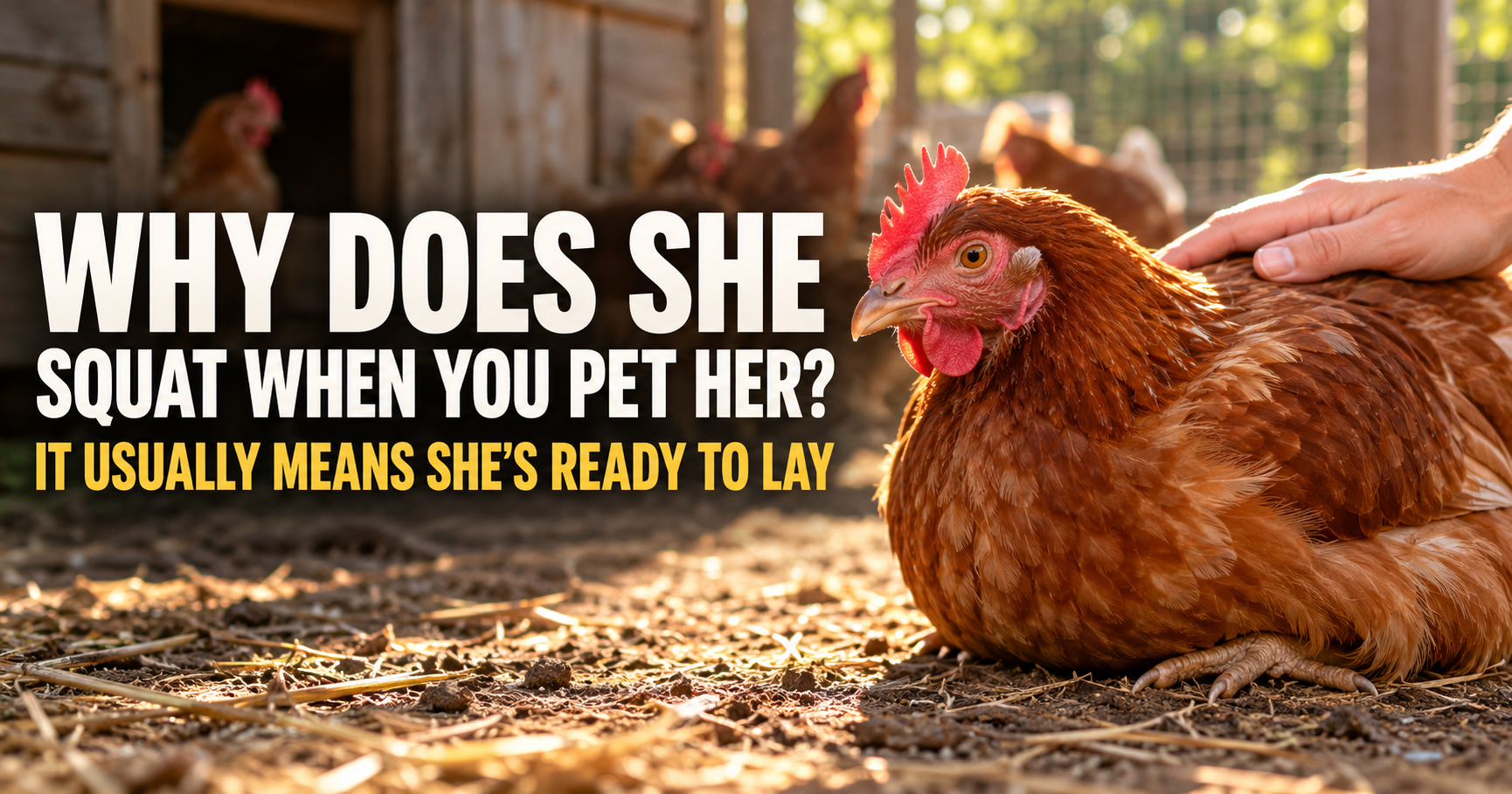
If you’ve noticed a young hen suddenly flatten herself against the ground when you approach, our explanation of why chickens squat when you pet them explains what’s happening.
That behavior can be an encouraging sign that egg production is getting closer.
However, it doesn’t tell you the exact date she’ll lay her first egg.
When Should Nesting Boxes Be Ready?
I would have suitable nesting boxes available before the flock begins laying.
You don’t want the first egg arriving before the hens have a comfortable place to put it.
Otherwise, they may choose a corner of the coop, a spot beneath equipment, or an inconvenient hiding place.

A good chicken nesting box setup encourages young hens to establish useful laying habits early.
Ceramic training eggs can also help make appropriate nesting locations more recognizable.
Chicken Age at 17 to 24 Weeks
This is the stage many backyard chicken keepers have been waiting for.
The first egg.
Productive laying hybrids often begin laying during this general age range, although some birds start earlier and others considerably later.
Heavier heritage and dual-purpose breeds may require additional development time.
Daylight also influences reproductive maturity.
A young hen reaching laying age during the lengthening days of spring may begin differently from a similarly aged hen approaching winter.
Why Is My Five-Month-Old Chicken Not Laying Yet?
Five months isn’t an expiration date.
A healthy young chicken may still be developing normally.
Breed, nutrition, season, stress, and individual maturity all influence when the first egg arrives.
Utah State University’s backyard chicken management guidance describes substantial variation in the age at which pullets reach reproductive maturity.
If your chickens are approaching this stage, our detailed guide to when backyard chickens normally start laying eggscan help set more realistic expectations.
I would rather have a healthy, properly developed pullet start laying a little later than try to force her into production prematurely.
Chicken Age at 6 Months
Many chickens are approaching adult size by six months.
However, being sexually mature and being completely finished growing aren’t necessarily the same thing.
A pullet may begin producing eggs while her body is still developing.
A young rooster may begin crowing while his mature feathers, spurs, and overall physical appearance continue changing.
This is one reason I don’t think there’s a universally accurate answer to the question of when chickens become adults.
It depends partly on which characteristic you’re using.
Egg production?
Body size?
Feather development?
Reproductive maturity?
Social behavior?
Those milestones don’t always happen simultaneously.
Chicken Age at 1 Year
By one year, most backyard chickens are well into adulthood.
Hens may be established layers, and roosters generally display mature male characteristics.
This is often an enjoyable stage because many of the uncertainties associated with raising chicks have passed.
You know which birds are hens.
You know their personalities.
You know who is always first to the feeder.
You may even know which hen produced a particular egg based on its size, shape, or shell color.
For keepers primarily interested in egg production, the first full laying year is often particularly productive.
Chicken Age at 2 Years
A two-year-old hen is still a relatively young adult chicken.
However, depending on her genetics and production history, you may start noticing differences compared with her first laying season.
She might take longer breaks.
Seasonal changes may have a greater effect.
Molting can interrupt production.
Egg size may also differ from what you collected during her earliest laying months.
A reduction in egg production isn’t necessarily evidence of poor management.
The chicken’s age is part of the equation.
Chicken Age at 3 to 5 Years
This is when the difference between keeping chickens for commercial production and keeping them as backyard animals becomes especially noticeable.
An older hen may no longer produce enough eggs to justify her feed costs from a strictly commercial standpoint.
But for a family flock, she may still be valuable.
She may be a familiar companion, an enthusiastic forager, an established member of the flock, or simply one of the chickens the family enjoys having around.
Older hens can continue laying, although production generally becomes less consistent.
I would also pay closer attention to body condition, foot health, mobility, and changes in appetite as the birds mature.
Don’t dismiss every unusual symptom by saying a chicken is getting old.
Age can influence health, but older chickens can still develop treatable problems.
Chicken Age at 6 Years and Older
A chicken reaching six years of age may be considered a senior backyard bird.
Some chickens live considerably longer, while others develop health problems much earlier.
There isn’t a universal age at which chickens stop laying entirely.
An older hen may occasionally surprise you with an egg even after her regular production has declined.
The focus gradually changes from maximizing production to maintaining comfort and quality of life.
A high roost that was easy to reach at two years old might become more difficult for an older chicken.
A lower, accessible roost may make her nighttime routine easier.
Similarly, changes in mobility can become noticeable before an owner realizes how much effort ordinary activities require.
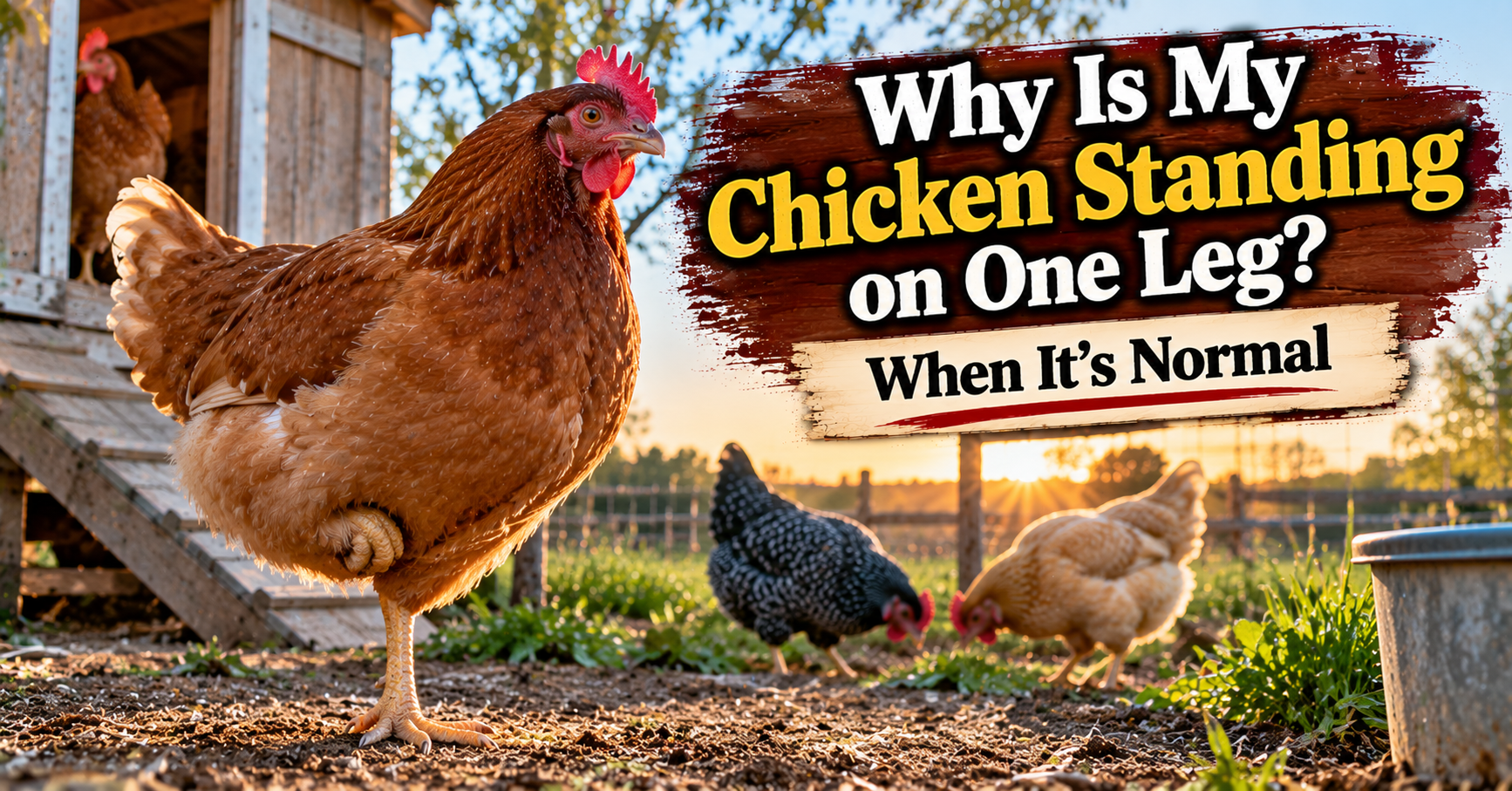
If a hen begins consistently favoring one leg, our guide to why chickens stand on one leg and when it becomes concerning can help distinguish resting behavior from a potential injury.
Chicken Feeding Chart by Age
One of the easiest mistakes to make is purchasing feed based on what a chicken looks like instead of its developmental stage.
Hatch to Approximately 6 Weeks
Use an appropriate complete chick starter ration according to the manufacturer’s directions.
Some feeds are designed specifically for this early period, while combined starter-grower formulations may be suitable for longer.
Approximately 6 to 16 Weeks
Use a suitable grower or starter-grower ration according to the feeding program you’re following.
The birds need adequate nutrients to continue developing their bodies.
Approximately 16 to 20 Weeks and Approaching Lay
Follow the feed manufacturer’s recommendations for transitioning toward laying nutrition.
Not every feeding program uses the same transition ages.
Actively Laying Adult Hens
A suitable complete layer ration generally provides the nutrients needed for egg production, including increased calcium.
If your flock contains roosters, young chickens, and laying hens together, an appropriate all-flock feed with separately available calcium for the laying hens may be more practical.
The Alabama Cooperative Extension poultry nutrition guide explains how nutritional requirements change during development.
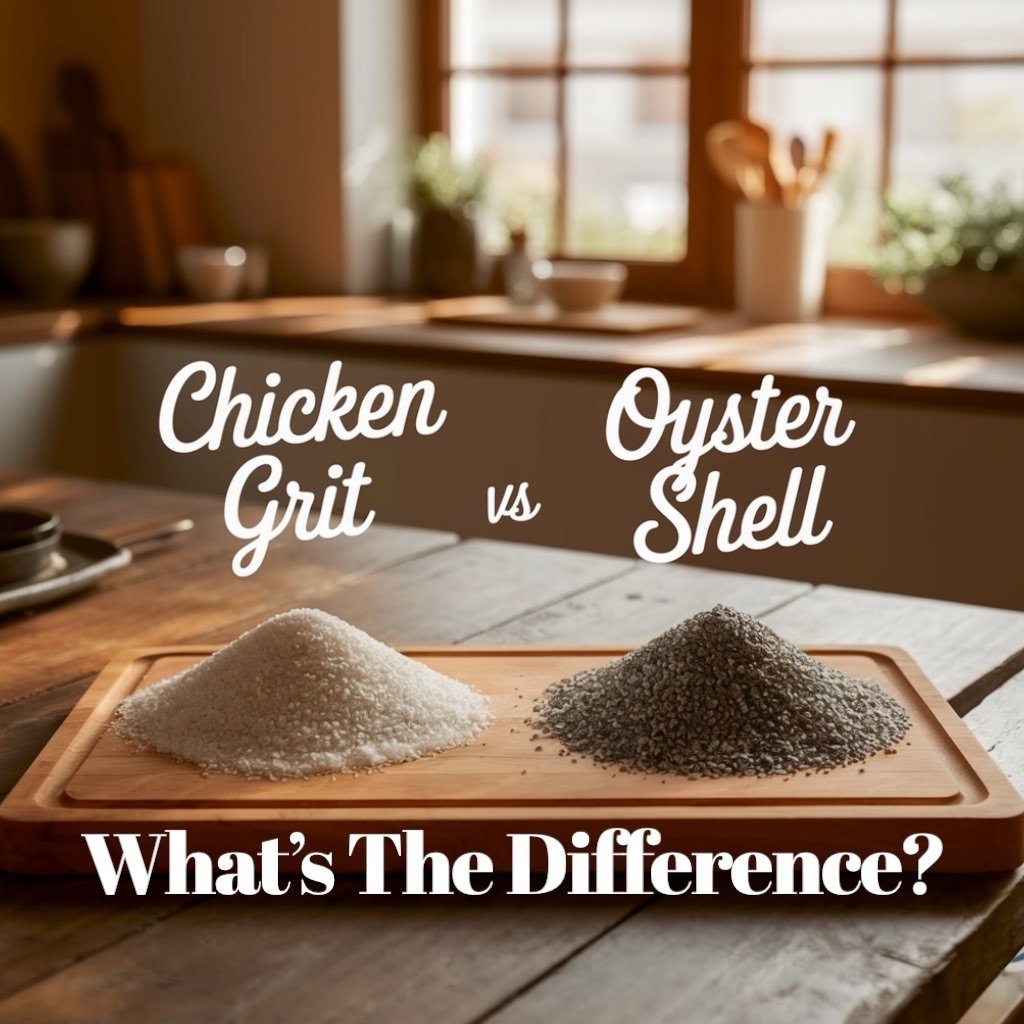
Understanding the difference between chicken grit and supplemental oyster shell also becomes important once egg production begins.
How to Tell How Old a Chicken Is Without Knowing Its Hatch Date
This is where a chicken age chart becomes less precise.
Estimating the age of a developing chick is considerably easier than determining the age of a fully grown hen.
Feather development, body size, comb growth, and other characteristics may provide useful clues during the first several months.
After adulthood, those clues become much less reliable.
A healthy three-year-old hen can sometimes look remarkably similar to a healthy one-year-old hen.
Look at Feather Development
For young birds, emerging wing and tail feathers provide useful age-related information.
The proportion of down to developed feathers may help establish a broad developmental stage.
However, feather growth differs between breeds and individual chickens.
Once birds have mature plumage, feather appearance becomes a much less reliable way to estimate chronological age.
Adult chickens periodically molt and replace their feathers.
An older hen that recently completed a molt may have beautiful new plumage.
Look at the Comb and Wattles
Comb size and coloration can provide clues about reproductive maturity.
A young pullet approaching lay often develops more noticeable red comb tissue.
But a mature hen’s comb appearance also changes with laying status, health, breed, and seasonal conditions.
A large red comb doesn’t prove a hen is one year old.
A smaller or paler comb doesn’t automatically prove she’s elderly.
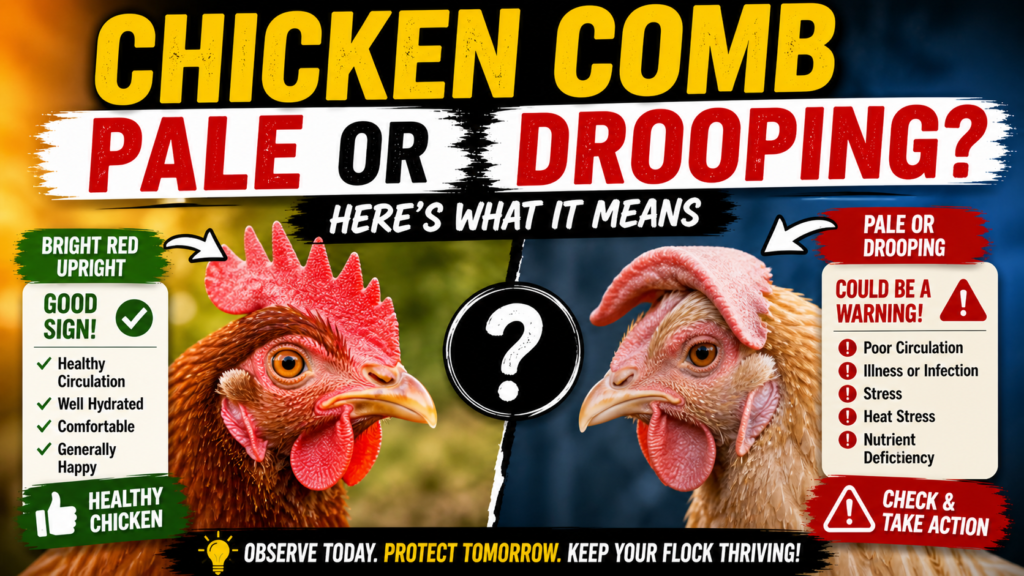
If you’re concerned about abnormal comb changes, our guide to what a pale or drooping chicken comb can indicateexplains why health and reproductive status should also be considered.
Look at the Legs and Feet
Young chickens generally have relatively smooth leg scales.
Older birds may develop more noticeable texture, thickness, or wear.
But I would never assign a precise age based on leg appearance.
Genetics, housing conditions, injuries, and parasites can all influence what a chicken’s legs look like.
Raised, crusty scales may indicate scaly leg mites rather than old age.
Look at Rooster Spurs
Spur development can help establish whether a rooster has reached a more mature stage.
Young males may have small developing spur buds, while adult roosters can develop considerably larger spurs.
However, spur length is not a reliable birthday calculator.
Genetics, damage, trimming, and individual development affect their appearance.
Some hens even develop spurs.
Use them as one clue rather than the entire answer.
Can You Tell a Chicken’s Age From Its Eggs?
Only approximately, and even then I would be cautious.
Young pullets often produce smaller eggs when they first begin laying.
Egg size commonly increases as the hen matures.
However, genetics, nutrition, laying history, and health all influence egg characteristics.
A naturally small-egg-laying breed isn’t necessarily young.
A chicken producing large eggs isn’t necessarily old.
If someone sells you an adult hen and claims she’s exactly 18 months old because her eggs are a certain size, I would want more reliable information.
Why Chickens of the Same Age Can Look So Different
Consider two chicks purchased on the same day.
One is a productive laying hybrid. The other is a heavy, slow-maturing heritage chicken.
Several months later, the first bird may be displaying signs that she’s nearly ready to lay.
The second may still look distinctly immature.
That doesn’t automatically mean something is wrong.
They’re following different developmental patterns.
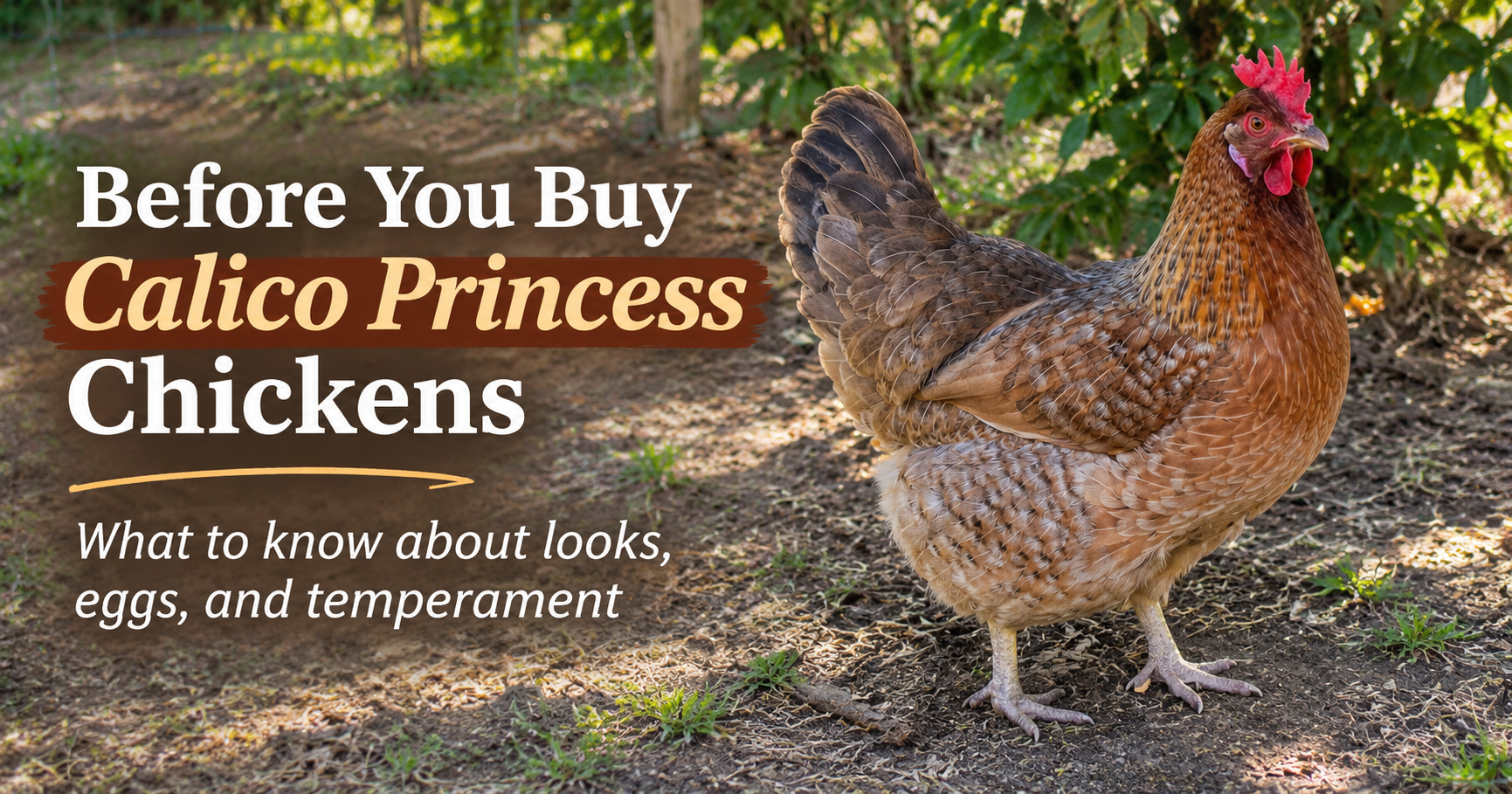
Our guide to Calico Princess chickens is a good example of why knowing the type of chicken you’re raising matters when estimating laying age and mature characteristics.
Commercial hybrids are often selected specifically for efficient egg production. Other chickens may prioritize different physical or behavioral characteristics.
Why Knowing a Chicken’s Age Matters When Adding to a Flock
Age affects more than egg production.
It also influences whether chickens can safely live together.
Putting small, inexperienced chicks directly into an established adult flock can expose them to serious competition and injury.
Larger birds may prevent them from reaching food.
They may chase them away from resting areas.
A young chicken can become trapped in a corner if the enclosure isn’t designed carefully.
I prefer gradual introductions that allow unfamiliar birds to become accustomed to one another before sharing unrestricted space.
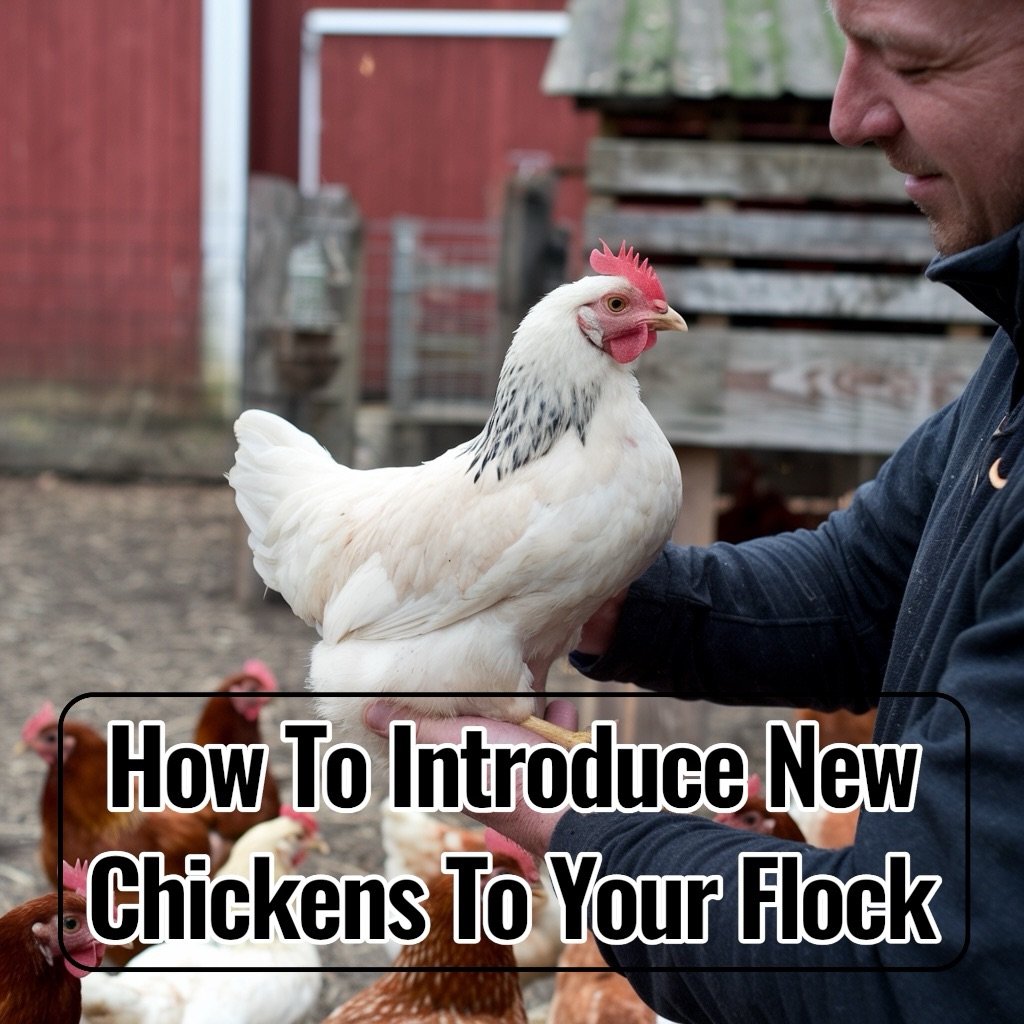
Our guide to introducing new chickens to an established backyard flock covers that process in greater detail.
Age, size, and confidence all influence how smoothly an introduction goes.
Buying Started Pullets Instead of Baby Chicks
There’s a good reason some people prefer purchasing started pullets.
Raising day-old chicks requires supplemental heat, brooder equipment, frequent observation, and several months of care before the birds produce eggs.
Started pullets allow you to skip some of that early development.
However, you’ll generally pay more per bird.
If someone offered me inexpensive adult chickens without reliable age information and slightly more expensive started pullets with documented hatch dates, I would take that difference seriously.
Especially if my main goal was egg production.
A mature-looking chicken isn’t necessarily a young laying hen.
Questions Worth Asking a Chicken Seller
- What was the actual hatch date?
- Which hatchery or breeder supplied the chicken?
- Has she started laying?
- What feed has she been receiving?
- Has she completed a molt?
- Has she received any vaccinations?
- Does the seller have photographs showing her younger development?
Not every seller will have all those answers.
But a documented hatch date is considerably more reliable than somebody estimating age from the size of a chicken’s comb.
Keep Your Own Chicken Age Records
If you’re raising multiple groups of chickens over several years, it’s surprisingly easy to forget exactly when each group arrived.
You may remember purchasing some birds in spring, but was that last spring or the spring before?
I would keep a simple flock record with the purchase date, estimated hatch date, breed, source, and first egg date when known.
Additional notes might include molting periods, health issues, and significant changes in production.
Photographs taken at different stages can also provide a useful personal reference.
Over time, you’ll have your own chicken growth timeline based on the birds you actually raised rather than relying exclusively on generic charts.
Frequently Asked Questions About Chicken Ages
At what age is a chicken fully grown?
Many backyard chickens approach adult size around five to eight months. Larger or slower-maturing breeds may continue developing beyond that point.
What is a two-month-old chicken called?
A young female is called a pullet, while a young male is called a cockerel. Both may still commonly be referred to as chicks or juvenile chickens.
At what age does a pullet become a hen?
Many poultry references use one year of age as the distinction, although terminology varies. Backyard keepers also commonly begin calling pullets hens once they start laying.
At what age does a cockerel become a rooster?
The term cockerel generally describes a male chicken under one year old. Once mature, he’s commonly called a rooster.
When do chickens lose their baby fluff?
Feathers begin emerging during the first week, gradually replacing down over the following weeks. Many chickens have substantial feather coverage by six weeks, although breed differences are important.
Can four-week-old chickens live outside?
Only under appropriate conditions. Many four-week-old chicks still require supplemental warmth and protection. Feather development, weather, and housing matter more than age alone.
When can chickens start eating layer feed?
The transition generally occurs around laying maturity, following the feed manufacturer’s directions. Growing chicks should not routinely consume high-calcium layer feed intended for adult laying hens.
At what age do roosters start crowing?
Some young roosters begin attempting to crow around two months old, while others start considerably later.
How old are chickens when they lay their first egg?
Many productive backyard laying chickens begin between approximately 17 and 24 weeks. Some breeds may take considerably longer.
Can you tell the exact age of an adult chicken?
Generally, no. Physical characteristics may help establish a broad age category, but reliable hatch records are necessary to determine an exact age.
Is a three-year-old chicken old?
A three-year-old chicken is a mature adult, not necessarily a senior. Egg production may be lower than during earlier laying seasons, but many hens remain active and healthy.
Can a five-year-old chicken still lay eggs?
Yes. Older hens can continue producing eggs, although the frequency generally declines as they age.
Do chickens age differently depending on breed?
Yes. Growth speed, feather development, reproductive maturity, adult size, laying performance, and lifespan can vary considerably between breeds and commercial hybrids.