
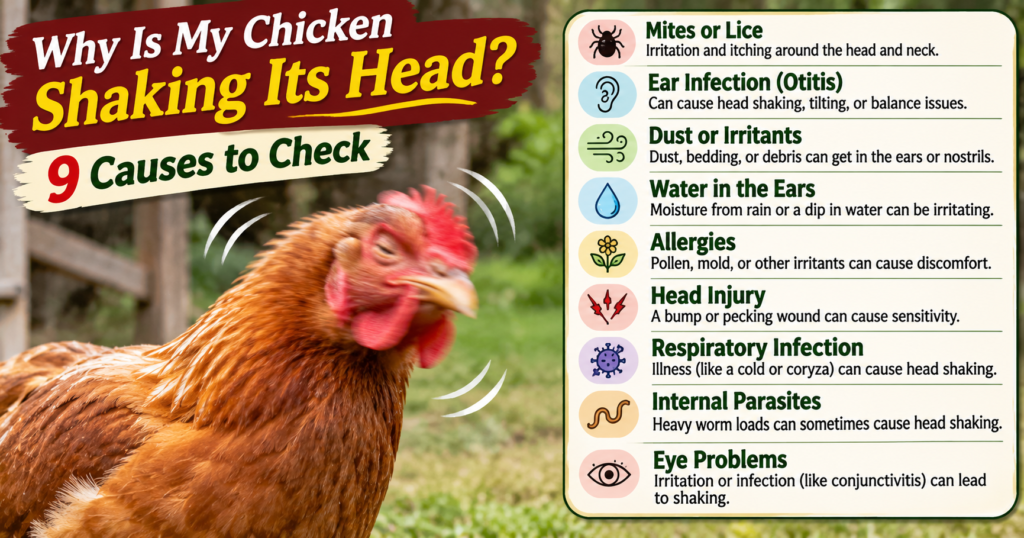
A chicken shaking her head once or twice after eating isn’t something that would normally send me searching for medication. Chickens get dust around their faces, encounter flying insects, drink water, and spend much of their day with their beaks in places that aren’t particularly clean.
But when a chicken keeps twitching her head every few seconds, even while standing quietly, it’s worth figuring out what’s happening.
The frustrating thing about head shaking in chickens is that it can be associated with something as harmless as temporary irritation or something as serious as a respiratory infection or neurological problem.
Before treating anything, I would narrow down three things:
- What triggers the head shaking?
- Does the chicken stop doing it when the situation changes?
- Are there any other symptoms?
Those three questions can help separate ordinary chicken behavior from a problem that deserves veterinary attention.
Is Your Chicken Shaking, Twitching, Bobbing, or Tilting Its Head?
These movements can look similar, especially when you’re watching a chicken from across the yard. However, they aren’t necessarily the same thing.
Head shaking usually involves a quick side-to-side movement, almost like the chicken is trying to shake something off her face.
Head twitching may appear as a smaller, sudden, repetitive jerk of the head.
Head bobbing is the familiar forward-and-backward movement chickens make while walking. This is a normal part of how they stabilize their visual surroundings as they move.
Head tilting happens when a chicken angles her head to look at something. An occasional curious tilt is normal, but a persistent, involuntary tilt is more concerning.
Neck twisting involves an abnormal position or loss of normal neck control and may indicate a more serious condition.
If you’re trying to explain what’s happening to a veterinarian, recording a short video is considerably more useful than simply saying your chicken is twitching.
Try to capture the movement while the bird is standing still, walking, eating, and resting.


1. Dust, Dirt, and Temporary Irritation
Imagine spending your entire day scratching through dirt, sticking your face into bedding, and pecking at the ground. You’re probably going to end up with something irritating your face occasionally.
Chickens are no different.
A quick head shake after digging through dry bedding or finishing a dust bath may simply help remove loose particles from around the eyes, beak, nostrils, and feathers.
The important part is whether the irritation passes.
A chicken that shakes her head a few times and immediately returns to normal activity isn’t necessarily showing signs of disease.
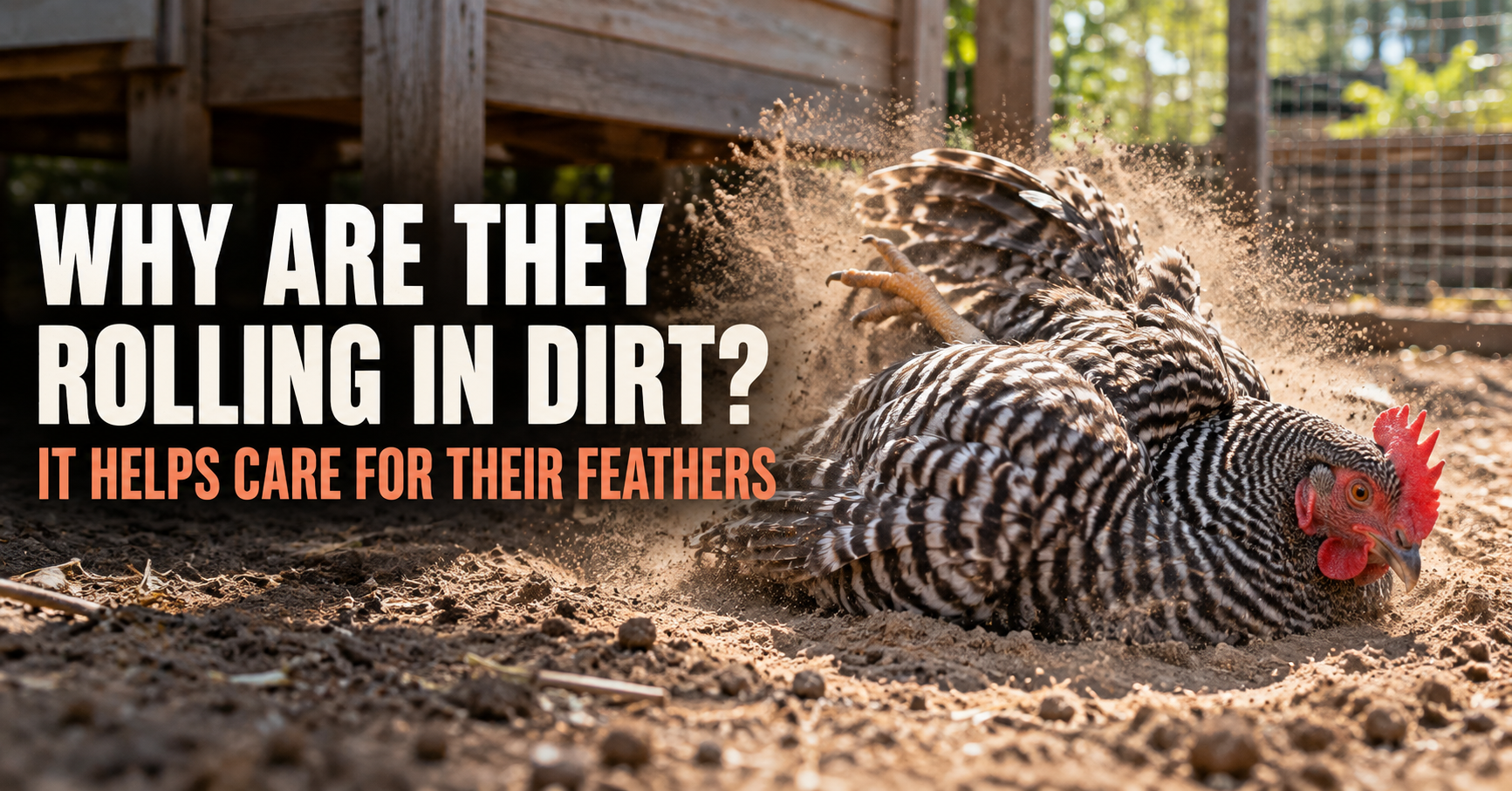
If you’ve ever watched how much dirt chickens throw around during a bath, it makes sense that they need to clean themselves afterward. Our guide to why chickens dust bathe and what they’re actually doing explains how involved that grooming process can be.
Persistent head shaking long after the dust bath has finished is another matter.
Check the Bedding Before Blaming the Chicken
Some bedding creates considerably more dust than others.
Very fine sawdust, powdery litter, accumulated feed dust, and dusty additives can all contribute to poor air quality.
If head shaking becomes particularly noticeable when chickens enter the coop, investigate the coop itself.
A dusty environment may be irritating their eyes and respiratory passages.
I would also pay attention to whether several birds exhibit the behavior in the same location. That makes an environmental explanation worth considering.
2. Ear Irritation or an Ear Infection
Chicken ears are easy to overlook because they don’t have external ears shaped like ours.
The actual ear openings are located behind and slightly below the eyes, underneath small patches of protective feathers.
The earlobe is not the ear opening itself.
An irritated or infected ear can cause a chicken to shake her head, scratch repeatedly at one side of her face, or rub her head against nearby objects.
According to the PoultryDVM guide to ear infections in chickens, ear problems may also produce discharge, inflammation, abnormal head positioning, and balance difficulties.
What an Abnormal Chicken Ear Might Look Like
Gently compare both sides of the chicken’s head.
Look for redness, swelling, crusty material, unusually matted feathers, or discharge around the ear opening.
Comparing the two sides is helpful because it gives you a reference for what’s normal on that particular bird.
One ear that looks noticeably different from the other deserves attention.
Don’t insert a cotton swab, tweezers, or other objects deep into the ear canal. You can damage delicate tissue or push material farther inside.
I would also avoid pouring peroxide, oil, or human ear medications into a chicken’s ear without veterinary guidance.
Head Shaking Combined With Loss of Balance
This combination concerns me considerably more than occasional scratching.
If a chicken repeatedly shakes her head, walks in circles, falls over, or holds her head at an unusual angle, an ear infection affecting deeper structures is one possibility.
However, neurological disease can produce similar symptoms.
That’s not something I would attempt to diagnose from an internet picture.
3. Mites, Lice, and Other External Parasites
External parasites can make chickens uncomfortable enough to interrupt their normal activities.
An affected bird may scratch, shake, preen excessively, or repeatedly turn her head toward an irritated area.
But there’s an important difference between suspecting parasites and actually finding evidence of them.
Don’t assume head twitching automatically means mites.
Where to Look for Chicken Parasites
Part the feathers around the head and neck and examine the skin closely.
Then check beneath the wings, around the vent, and along the feather shafts.
Depending on the parasite, you might discover tiny moving insects, clusters of eggs attached to feathers, irritated skin, or dark debris.
Some poultry mites spend much of their time off the chicken and hide in cracks around the coop during daylight hours. An inspection after dark may reveal problems that weren’t obvious earlier.
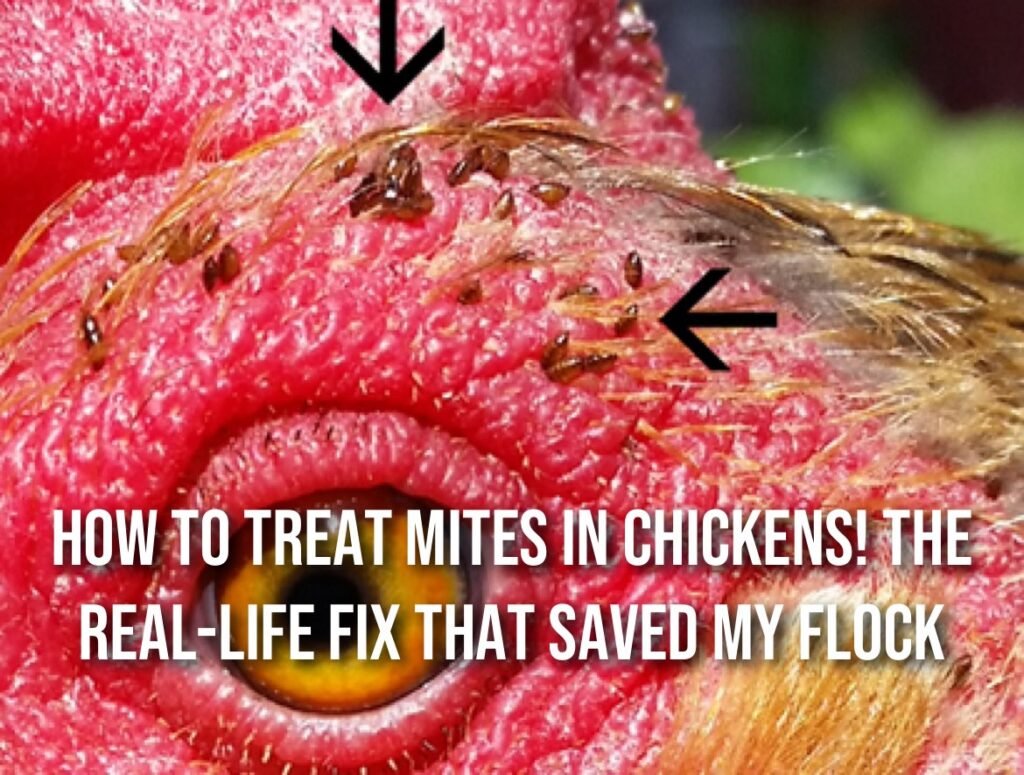
Our detailed guide to recognizing and treating mites in backyard chickens explains why treating the bird alone isn’t always enough.
Different parasites behave differently, and successful treatment depends partly on identifying which one you’re dealing with.
Why I Wouldn’t Spray a Chicken’s Face Randomly
Even products intended for poultry may have specific restrictions regarding application near the eyes, nostrils, mouth, and ears.
Follow the product label carefully.
A chicken that was originally shaking her head because of irritation could become even more uncomfortable if an inappropriate chemical is applied around her face.
Treat identified parasites rather than treating the movement itself.
4. Respiratory Infections
Persistent head shaking is an established potential sign of respiratory illness in poultry.
This is particularly important when a chicken is also sneezing, coughing, or experiencing breathing difficulties.
The University of Kentucky’s poultry health and illness guidance identifies head shaking among signs that can accompany respiratory infections.
A chicken may shake her head in response to irritation or accumulated secretions around the upper respiratory tract.
Unfortunately, several different diseases can produce similar outward symptoms.
Watch the Chicken’s Breathing While She’s Resting
A chicken that has just been running across the yard or is trying to cool down on a hot day may breathe differently from a resting bird.
Observe her somewhere comfortable without chasing or restraining her first.
Breathing should generally be quiet and unlabored.
Repeated clicking, rattling, wheezing, visible breathing effort, or unexplained open-mouth breathing deserves attention.
Other Symptoms That Make Head Shaking More Concerning
I would look particularly closely at a chicken showing head shaking alongside watery eyes, nasal discharge, facial swelling, coughing, reduced appetite, unusual respiratory sounds, or declining activity.
These combinations suggest something more than ordinary head movements.
The University of Guelph’s veterinary laboratory guidance on backyard poultry respiratory disease emphasizes the importance of diagnostic testing before treatment because multiple infectious organisms can cause overlapping symptoms.
That is why randomly selecting an antibiotic from an online discussion isn’t a reliable approach.
Some respiratory illnesses are bacterial. Others are viral, fungal, parasitic, or associated with environmental conditions.
Treatment depends on the actual cause.
5. Ammonia and Poor Coop Air Quality
Sometimes the first thing worth inspecting isn’t the chicken at all.
It’s the coop.
Ammonia develops as manure accumulates and breaks down, particularly when litter becomes damp.
Poor ventilation allows irritating gases and dust to build up.
Chickens spend hours inside their coops overnight, so air quality matters even if they have a large outdoor area available during the day.
Get Down to Chicken Level
This is a simple way to evaluate your coop environment.
Most of us stand upright when inspecting a chicken house. The chickens, however, spend much of their time close to the floor or sitting on roosts.
Conditions can be different down where the birds actually breathe.
Check for damp bedding, accumulated manure, strong odors, poor airflow, condensation, and excessive dust.
If you notice an irritating ammonia smell, the coop needs attention.
Absence of a strong smell doesn’t necessarily guarantee ideal air quality, either.
Winter Ventilation Is Especially Important
During cold weather, it’s tempting to seal every opening in the coop.
But chickens release moisture through respiration and manure, and that moisture needs somewhere to go.
A dry, appropriately ventilated coop that protects birds from direct drafts is generally preferable to a sealed, damp enclosure.
We discuss that balance in our guide to keeping chickens warm in winter without electricity.
If several chickens regularly shake their heads after spending the night indoors, poor air quality is worth investigating alongside possible infectious illness.


6. Something Irritating the Beak, Mouth, or Throat
A chicken uses her beak to investigate nearly everything around her.
Pieces of feed, plant material, bedding, and other debris can occasionally become irritating.
You may notice a chicken shake her head immediately after swallowing something, followed by a few beak wipes.
That behavior can be brief and harmless.
However, repeated swallowing movements, difficulty eating, or ongoing head shaking may indicate that something isn’t right.
Head Shaking After Eating
Pay attention to the exact sequence.
Does the chicken take a bite, shake her head once, swallow, and continue eating normally?
Or does she repeatedly open her mouth, extend her neck, drop food, and appear unable to swallow comfortably?
Those are different situations.
The first may be a temporary irritation.
The second deserves a closer examination.
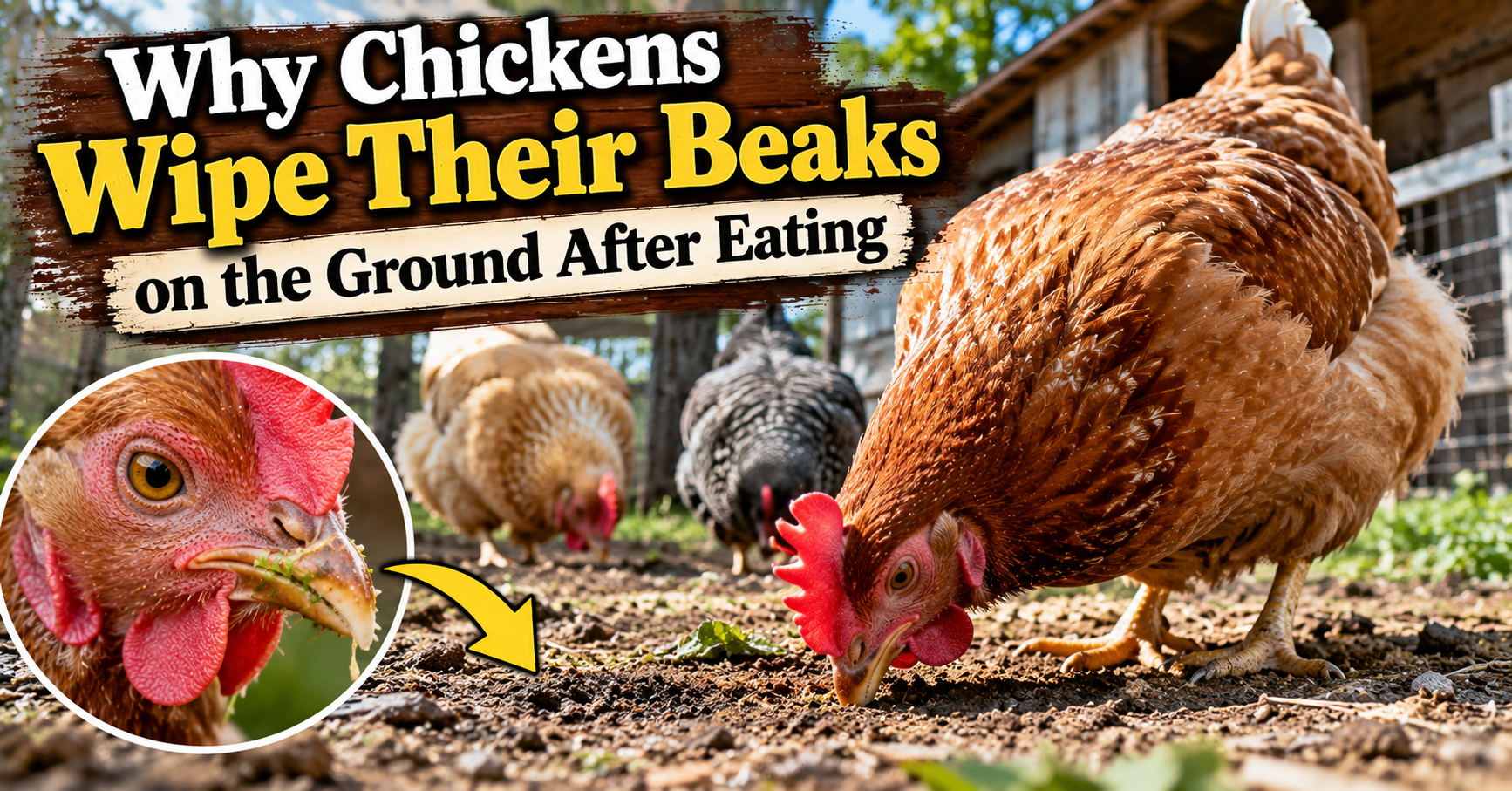
Chickens also regularly clean their beaks after meals, as explained in our article about why chickens wipe their beaks on the ground after eating.
Beak wiping and occasional head shaking can happen together without indicating a medical problem.
Be Careful When Examining the Mouth
If the chicken is calm and breathing normally, you may be able to look for obvious material around the front of the mouth.
However, don’t reach deep into the throat, blindly sweep your fingers inside, or attempt to pull out something that appears firmly attached.
A distressed chicken can struggle, making an obstruction or breathing problem worse.
Suspected airway obstruction requires urgent veterinary attention.
7. Crop Problems and Repeated Swallowing Movements
A digestive problem isn’t the first explanation I would choose for every head shake, but it becomes worth considering when the movement occurs alongside abnormal swallowing, regurgitation, neck stretching, or poor appetite.
The crop temporarily stores food before it passes farther into the digestive system.
When normal crop emptying is disrupted, the chicken may develop additional symptoms that become noticeable around the head, mouth, and neck.
Check the Crop Before Breakfast
A crop that’s full late in the afternoon is often perfectly normal.
A crop that remains unusually enlarged before breakfast is more concerning.
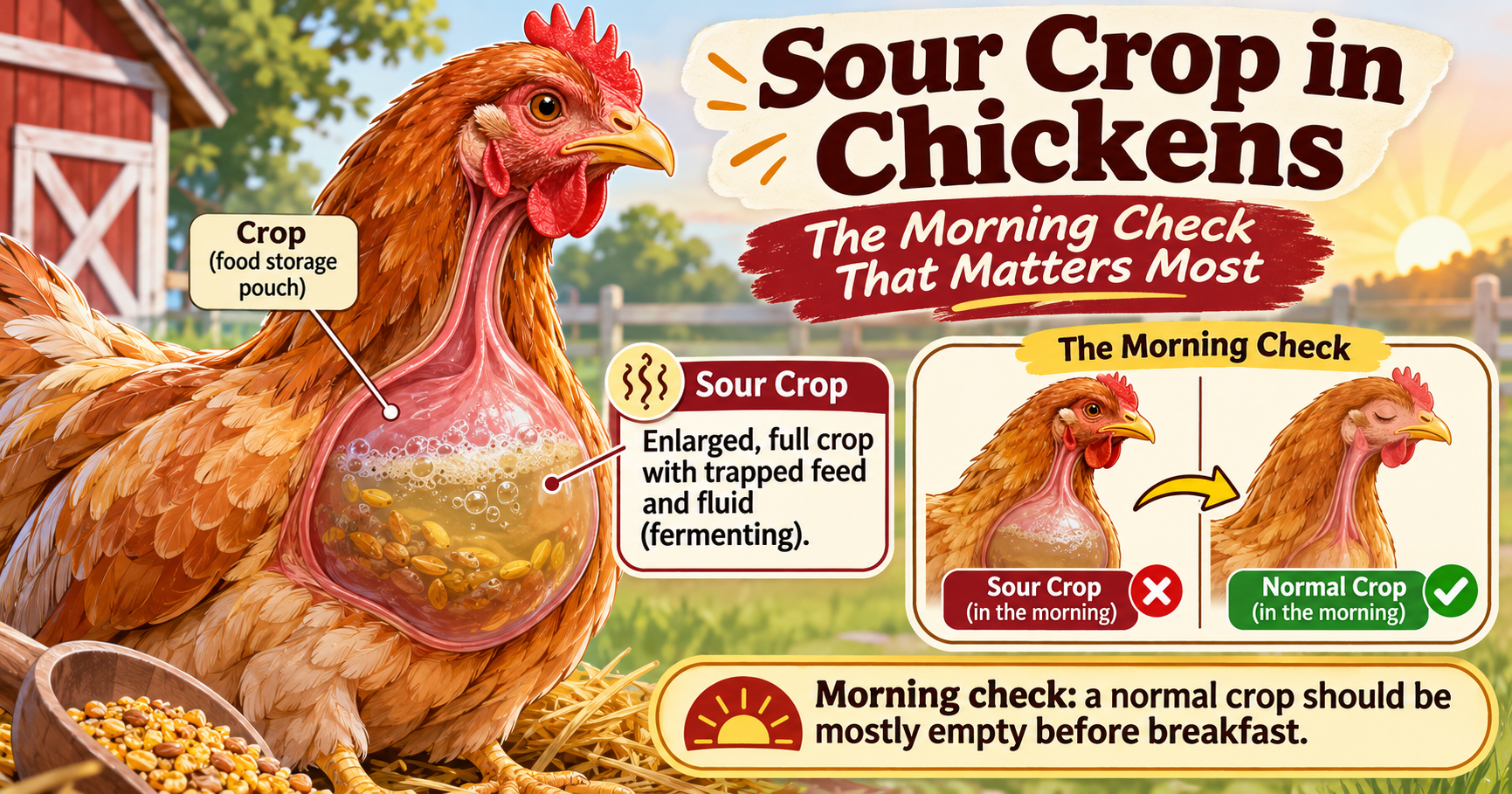
If head movements occur alongside fermented-smelling breath, regurgitation, or a persistently enlarged crop, compare what you’re seeing with our detailed guide to sour crop in chickens and the morning crop check.
Remember that an impacted crop, sour crop, and pendulous crop are different problems, although they can sometimes overlap.
Don’t aggressively massage a fluid-filled crop or turn the chicken upside down in an attempt to empty it. The bird could inhale the contents.
8. Gapeworm and Other Airway Problems
Gapeworm is one of those possibilities that gets suggested frequently whenever a chicken opens her mouth or shakes her head.
Gapeworms are parasitic worms that can inhabit a bird’s trachea and interfere with breathing.
An affected chicken may repeatedly stretch her neck, gasp, or make unusual respiratory movements.
However, those symptoms are not exclusive to gapeworm.
Respiratory infections, airway irritation, and obstructions can also cause similar behavior.
Does Head Shaking Mean My Chicken Has Gapeworm?
Not by itself.
A chicken that flicks her head occasionally while otherwise eating, breathing, and behaving normally does not automatically need gapeworm treatment.
I would be much more concerned if there were repeated gaping movements, breathing difficulty, weakness, and an inability to settle comfortably.
Veterinary examination and appropriate testing can help distinguish respiratory parasites from other conditions.
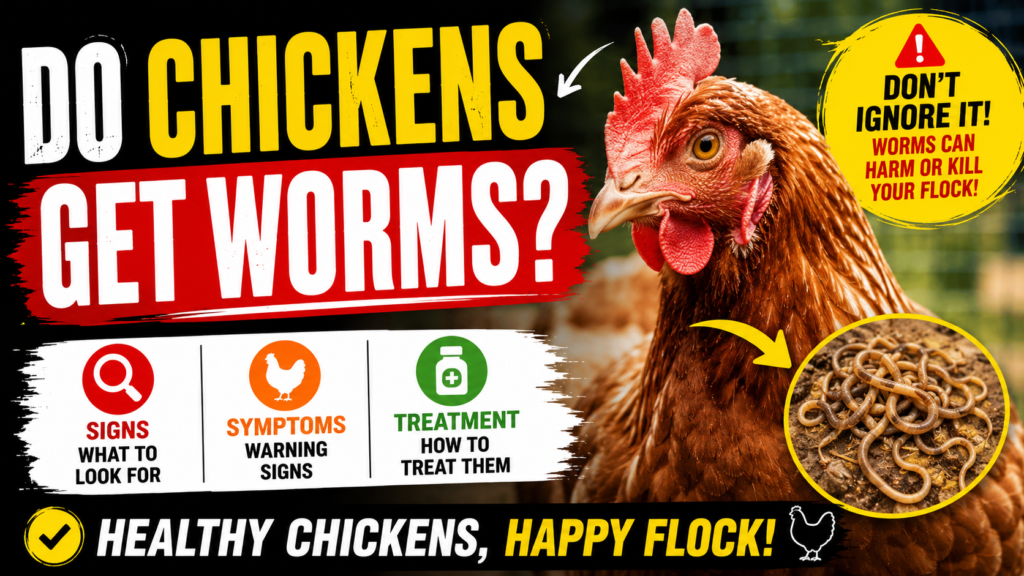
We cover broader parasite concerns in how to recognize worms in backyard chickens, but the presence of one unusual behavior isn’t enough to identify a specific parasite.
Unnecessary deworming may expose birds to medication without addressing the actual problem.
9. Neurological Problems and Abnormal Muscle Movements
Sometimes what an owner describes as head shaking is actually an involuntary movement.
The chicken may repeatedly jerk her head without an obvious external trigger.
She might lose coordination, struggle to walk straight, develop tremors, or hold her neck in an abnormal position.
Possible explanations include injury, nutritional deficiencies, toxins, infections, and other neurological conditions.
Some of these problems are serious.
Head Twitching Is Not the Same as Wry Neck
Wry neck, also called torticollis, describes an abnormal twisting or positioning of the neck.
It is a clinical sign rather than one specific disease.
An affected chicken may hold her head sideways, twist it backward, or have difficulty maintaining normal posture.
Occasional head shaking doesn’t automatically qualify as wry neck.
If your chicken cannot control her head position normally or develops balance problems, veterinary assessment is especially important.
I would not assume that every neurological symptom is a vitamin deficiency. Although nutritional problems can contribute to certain conditions, indiscriminately giving large doses of supplements can delay proper diagnosis and create additional risks.

Why Does My Chicken Shake Its Head When I Talk?
This is a surprisingly specific situation that chicken owners sometimes notice.
You lean toward a hen and speak.
She gives her head a little shake.
You say something else.
She does it again.
Some birds may respond to nearby sounds, sudden movements, or other sensory stimulation with brief head movements.
However, there isn’t enough evidence to say that a chicken shaking her head when you speak is always reacting to your voice in one particular way.
Try observing her from farther away.
Does she do it when you’re quiet? Does she do it when other chickens vocalize? Does it happen when no one is nearby?
The answers may help you establish whether the behavior is tied to stimulation or happens continuously regardless of what’s going on.
Why Is My Chicken Twitching Its Head While Resting?
Resting makes repetitive movements easier to notice.
A chicken that’s walking, eating, and scratching all day is moving her head constantly. You might not notice an occasional twitch until she settles somewhere quiet.
Watch without disturbing her.
If she briefly flicks her head and continues resting comfortably, that is less concerning than a bird that jerks her head repeatedly, scratches obsessively, or seems unable to settle.
Pay particular attention to her breathing and whether the movement appears voluntary.
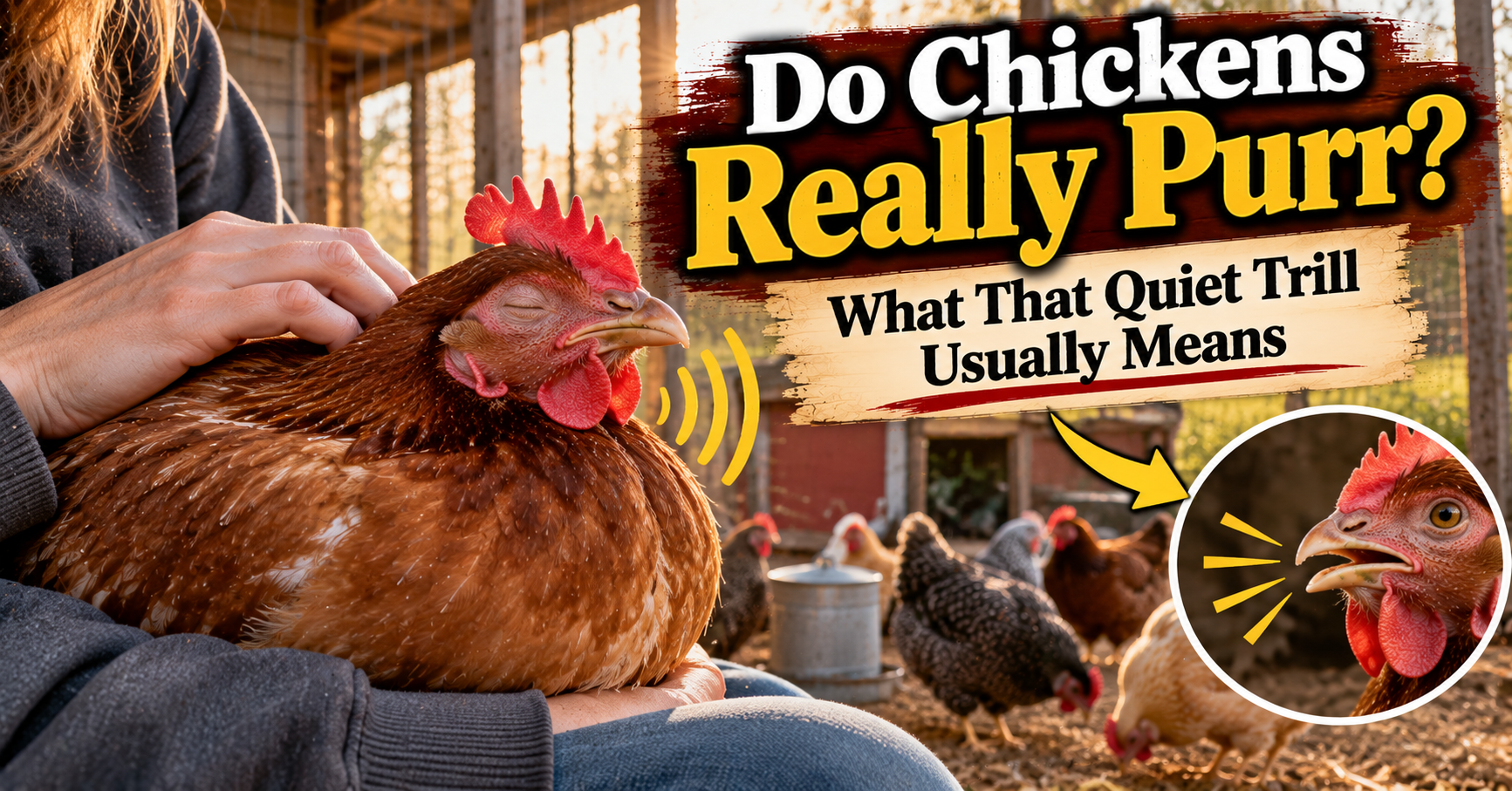
If she also makes unusual rumbling sounds, our guide to chicken purring, trilling, and warning noises explains why interpreting a sound alongside body language is so important.
Why Does My Chicken Keep Shaking Its Head and Opening Its Mouth?
This combination needs more careful observation than head shaking alone.
A chicken may occasionally open her mouth while stretching or adjusting something she swallowed.
But repeated mouth opening, neck extension, gasping, or labored breathing can indicate a significant problem.
I would consider whether the chicken is overheated, experiencing respiratory illness, having difficulty swallowing, or dealing with another airway problem.
If the mouth opening is synchronized with obvious breathing effort, don’t spend hours experimenting with home remedies.
Difficulty breathing at rest is a reason to seek urgent veterinary care.
My Chicken Keeps Shaking Its Head but Acts Completely Normal
This is probably the most confusing situation.
The hen is eating.
She’s laying eggs.
She’s following the flock.
She’s scratching through the run.
Yet every so often, she gives her head a little shake.
Normal activity and appetite are reassuring, although they don’t completely rule out an early health problem.
I would investigate the easy things first: bedding dust, insects, external parasites, visible ear irritation, and environmental changes.
Then I would record the behavior and watch for progression.
Is it happening more frequently than yesterday?
Has it started affecting eating?
Are there now other symptoms?
Stable, occasional movements are different from a pattern that steadily becomes worse.
What If Several Chickens Are Shaking Their Heads?
When multiple birds develop the same unusual behavior, the situation changes.
Instead of focusing exclusively on an individual chicken, consider everything the flock shares.
Shared Environmental Exposure
New bedding, unusually dusty feed, chemical sprays, smoke, damp litter, or poor ventilation could affect multiple birds.
Think about what changed shortly before the symptoms began.
For example, if several birds start shaking their heads after fresh, dusty bedding is installed, that timing is useful information.
It doesn’t prove the bedding is responsible, but it gives you something concrete to investigate.
Shared Parasites or Infectious Disease
External parasites can affect multiple chickens, as can infectious respiratory diseases.
If new birds were recently introduced, that history is important too.
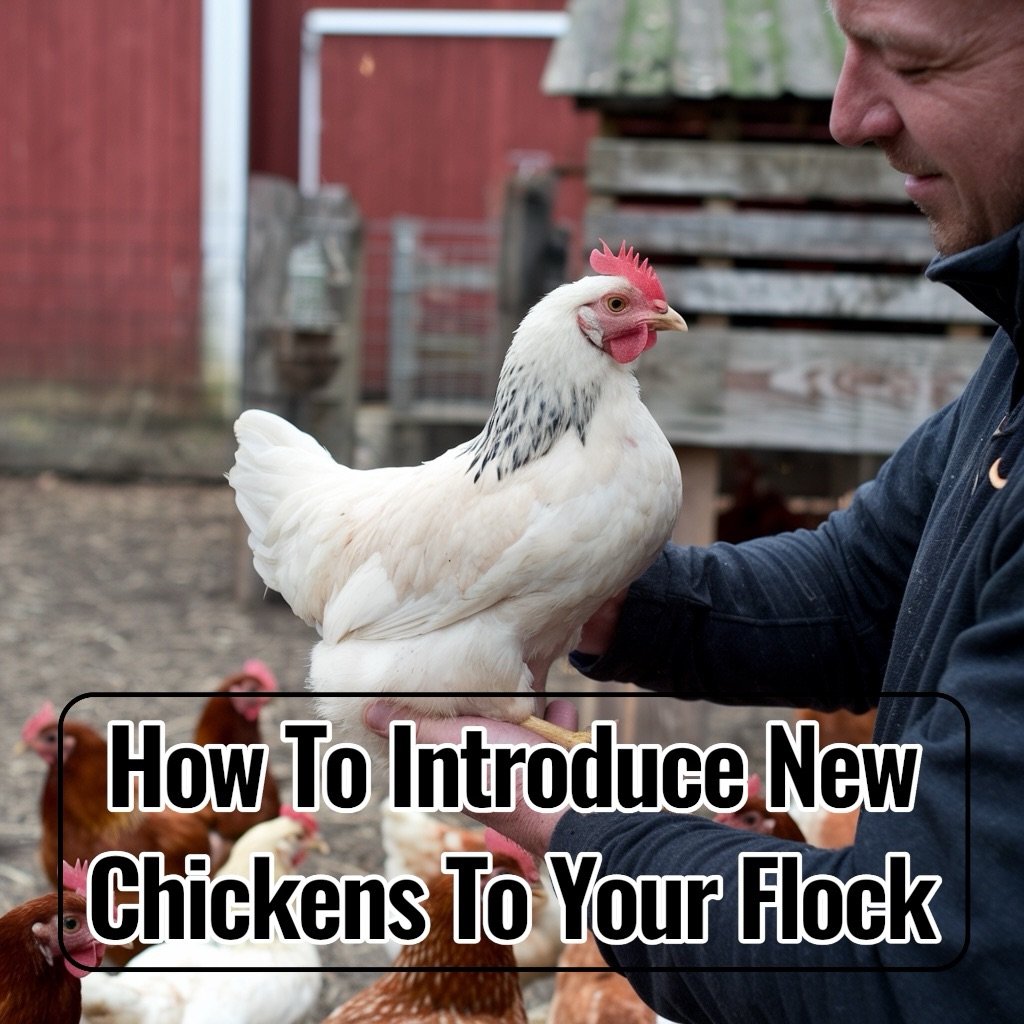
Our guide to introducing new chickens to an established flock covers some of the practical challenges of adding birds, including why careful introductions matter.
When multiple chickens become ill, especially within a short period, don’t assume it’s simply an unusual habit the flock picked up.
A Simple Five-Minute Head-Shaking Inspection
For a chicken that is otherwise stable and breathing comfortably, this is the order I would use.
Step 1: Observe Without Touching Her
Watch the chicken standing naturally.
Notice how often she shakes her head and whether she seems aware of her surroundings.
Look for unusual posture, breathing effort, and balance problems.
Step 2: Watch Her Eat and Drink
Check whether she can swallow normally.
Notice if the movements occur specifically after eating or drinking.
Repeated difficulty swallowing deserves attention.
Step 3: Examine Both Sides of Her Head
Look around the eyes, nostrils, ears, and facial feathers.
Compare one side with the other.
Watch for swelling, discharge, crusty material, visible parasites, and injuries.
Step 4: Inspect the Rest of the Bird
Look beneath the feathers for parasites.
Consider body condition, appetite, droppings, and crop emptying.
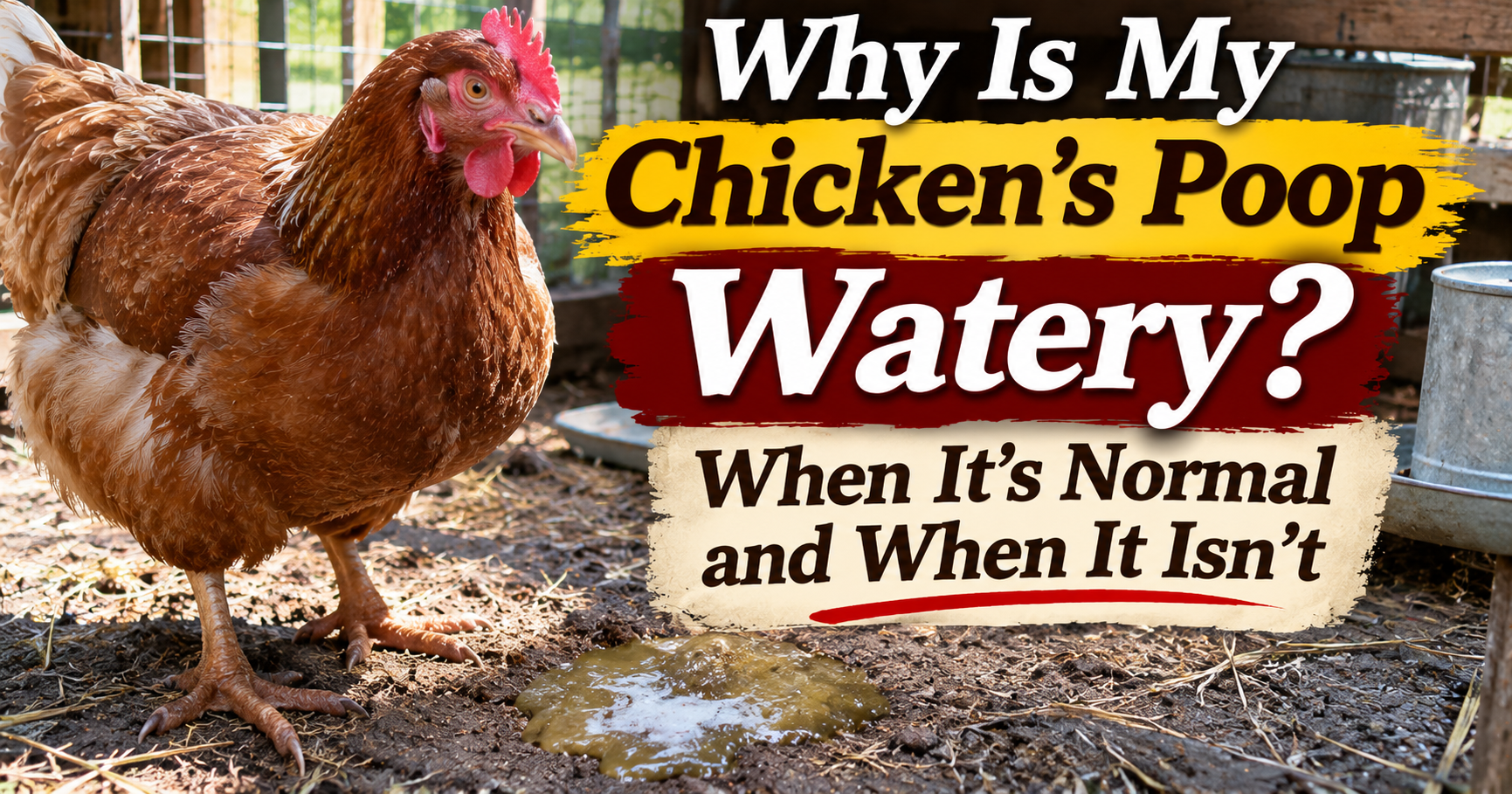
Our guide to watery chicken poop and when it becomes concerning can help if abnormal droppings are another symptom you’re noticing.
Step 5: Examine the Coop and Flock
Look at air quality, bedding, water cleanliness, recent changes, and whether other chickens are displaying similar signs.
Write down what you find.
That information will be valuable if the problem persists and a veterinarian needs to evaluate the bird.
Don’t Overlook the Chicken’s Weight
Feathers can hide considerable weight loss.
A chicken may still look reasonably round while losing muscle and body condition underneath.
If head shaking has been happening for several days, weighing the bird on a suitable scale can provide an objective measurement rather than relying on appearance alone.
Record the weight and compare later measurements when appropriate.
A bird that maintains normal body condition, appetite, and activity presents a different situation from one that is gradually getting thinner.
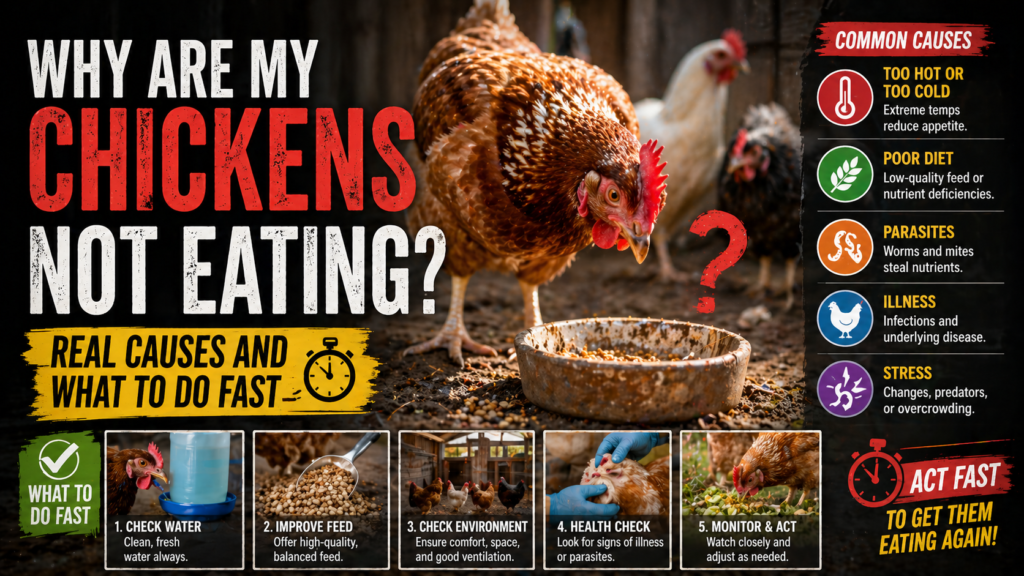
If appetite is declining, our guide to why chickens suddenly stop eating covers other clues worth investigating.
Record a Video Before the Behavior Stops
One of the most useful things you can do is capture the movement on your phone.
Intermittent twitching can be difficult to describe.
And animals have an inconvenient habit of stopping whatever strange thing they were doing the moment someone else comes to investigate.
Record a clear view of the head and neck, ideally with the whole chicken visible for at least part of the video.
Include sound if breathing or unusual vocalizations are involved.
Also note the bird’s age, when the behavior started, recent changes in feed or bedding, medications, contact with new chickens, and whether other birds are affected.
This gives a veterinarian a much more useful history than simply reporting that the chicken’s head looks funny.
Should You Separate a Chicken That Keeps Shaking Its Head?
If the bird appears sick or you suspect an infectious condition, temporary isolation away from the flock is sensible while you seek guidance.
A separate observation area makes monitoring food consumption, drinking, and droppings easier.
It can also reduce contact with healthy birds.
Use separate equipment and practice good hand and footwear hygiene when caring for a potentially sick chicken.
If a chicken only shakes her head occasionally and has no other signs of illness, immediate isolation may not be necessary.
The decision depends on the whole situation.
When Head Shaking Could Indicate a Serious Flock Disease
This is an important distinction for backyard chicken owners in the United States.
Respiratory and neurological symptoms can sometimes occur with serious poultry diseases, including highly pathogenic avian influenza and virulent Newcastle disease.
That does not mean a chicken that occasionally shakes her head has either disease.
However, sudden flock illness, unexplained deaths, abnormal neurological movements, significant breathing difficulty, facial swelling, or major changes in egg production deserve immediate attention.
The USDA provides guidance on recognizing and reporting signs of serious poultry illness.
If you suspect a reportable disease, contact your state veterinarian or USDA at 1-866-536-7593. Avoid transporting potentially infected birds or moving equipment between flocks until you receive appropriate instructions.
Early reporting can help protect your own flock and other poultry owners nearby.
What I Would Not Do for a Chicken With Head Twitching
The biggest mistake is treating the symptom before identifying a likely cause.
I wouldn’t automatically give antibiotics, deworm the entire flock, apply chemicals around the ears, or start multiple supplements simultaneously.
If you do five different things at once, you may never know which one helped, which one was unnecessary, or whether the chicken simply improved on her own.
Worse, you could make a different underlying condition more difficult to recognize.
Start with observation and a careful inspection. Seek veterinary guidance when symptoms are persistent, progressing, or accompanied by illness.
When to Get Veterinary Help
Occasional head shaking in a healthy chicken is different from a chicken that is clearly struggling.
I would seek prompt veterinary advice if a bird develops persistent head twitching, repeated scratching with visible ear abnormalities, poor appetite, weight loss, nasal discharge, or worsening symptoms.
Seek urgent help for:
- Labored breathing or gasping while resting.
- Inability to stand or walk normally.
- Persistent, abnormal neck twisting.
- Suspected airway obstruction.
- Seizure-like movements.
- Severe weakness or collapse.
- Sudden illness or unexplained deaths affecting multiple birds.
Chickens can deteriorate quickly once they become seriously ill. An early examination is preferable to waiting until they can no longer eat, drink, or maintain normal posture.
Frequently Asked Questions
Why does my chicken keep shaking its head every few seconds?
Frequent head shaking may indicate irritation, external parasites, ear problems, respiratory illness, or another health condition. Observe whether the movement is associated with eating, breathing, scratching, or abnormal posture.
Is occasional head twitching normal in chickens?
Brief, occasional head movements can be normal, especially after eating, drinking, dust bathing, or encountering an irritating particle. Persistent or worsening twitching deserves a closer examination.
Can mites cause chickens to shake their heads?
External parasites can cause skin irritation, scratching, and head movements. However, head shaking alone doesn’t prove mites are present. Inspect the feathers, skin, and coop for evidence.
Why is my chicken shaking its head and scratching its ear?
Ear irritation, an infection, or external parasites are possibilities. Check for visible inflammation, discharge, crusty feathers, and balance problems without inserting anything into the ear canal.
Can a respiratory infection cause head shaking in chickens?
Yes. Head shaking can accompany respiratory illness, particularly when it occurs with sneezing, coughing, nasal discharge, swollen facial tissues, or abnormal breathing sounds.
Why does my chicken shake its head after drinking water?
An occasional head shake after drinking may simply be related to moisture or temporary irritation around the beak and nostrils. Repeated shaking combined with breathing or swallowing difficulties deserves further investigation.
Does head shaking mean my chicken has gapeworm?
No. Gapeworm is one possible explanation when abnormal head movements accompany respiratory difficulties, but several other conditions cause similar symptoms. Appropriate examination and testing are important before treatment.
Can sour crop cause unusual head movements?
Crop disorders can sometimes accompany repeated swallowing, neck stretching, regurgitation, and other unusual movements. A crop that remains enlarged before breakfast is an important additional clue.
Why does my chicken shake its head but still eat normally?
Temporary irritation, environmental dust, sensory stimulation, or an early health problem may explain the behavior. Normal appetite is reassuring, but persistent head shaking should still be monitored.
Can chickens get ear infections?
Yes. Chickens can develop infections involving different parts of their ears. Possible signs include frequent scratching, head shaking, discharge, abnormal head positioning, and balance difficulties.
How do I stop my chicken from shaking its head?
Address the underlying cause rather than trying to suppress the movement. Depending on the situation, that may involve improving coop air quality, treating confirmed parasites appropriately, or obtaining veterinary diagnosis and treatment.
Is chicken head shaking contagious?
Head shaking itself isn’t contagious. However, some infectious diseases that cause head shaking can spread between birds. If several chickens develop symptoms, investigate shared exposures and possible infectious disease.