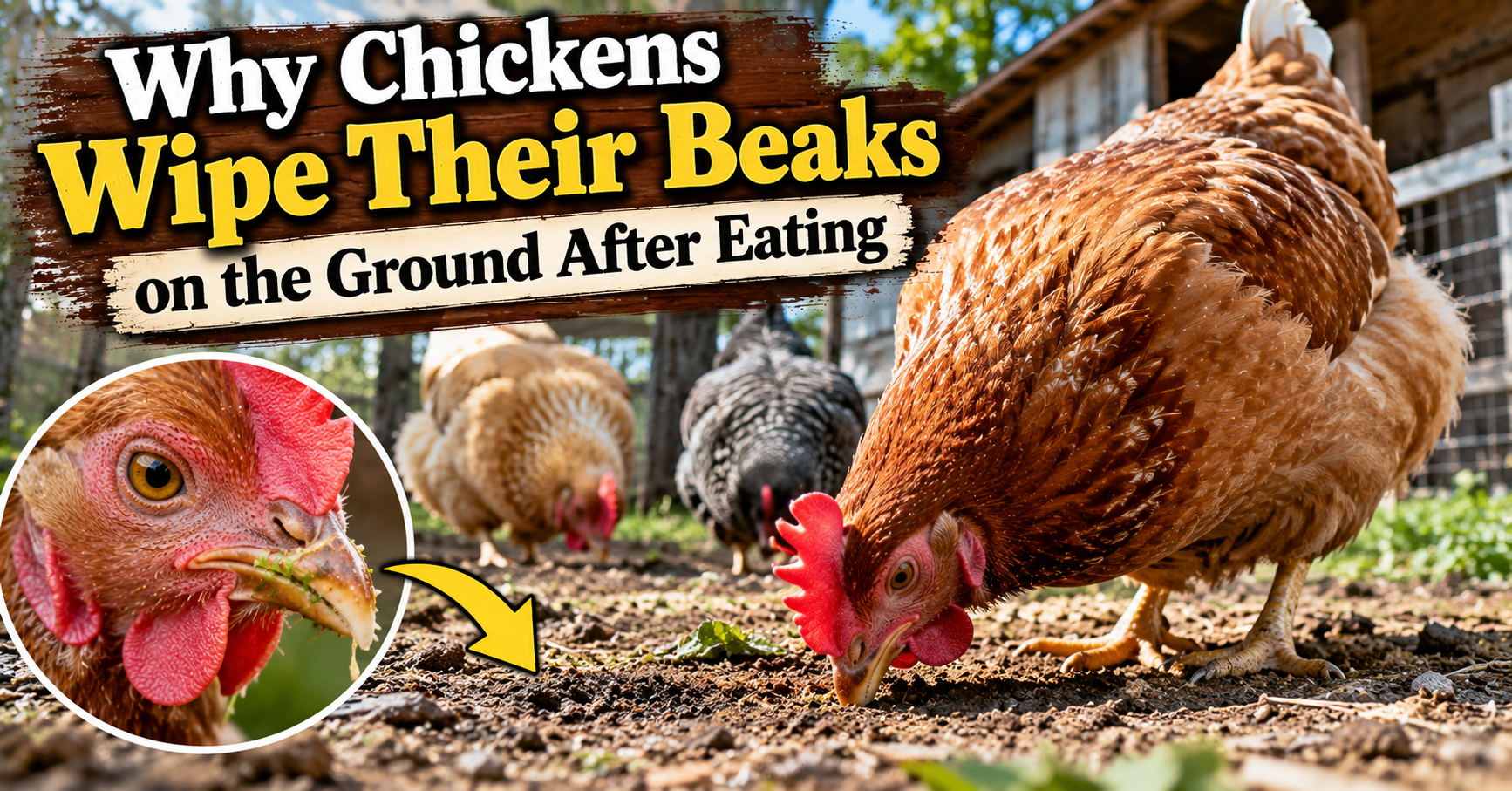
I’ve watched chickens finish eating and immediately drag one side of their beak across the dirt.
Then the other side.
Sometimes they do it on a board.
Sometimes a rock.
Sometimes the edge of the coop.
And if you’re standing in exactly the wrong place, apparently your jeans work just fine too.
The first few times you see a chicken rubbing her beak back and forth against the ground, it’s easy to wonder if something is bothering her mouth.
Most of the time, it isn’t.
Beak wiping is a normal bird behavior, and after watching chickens do it around feed, treats, dirt, and everyday foraging, I’ve come to think of it as a combination of wiping your mouth and maintaining your fingernails.
Chickens use their beaks constantly.
They eat with them.
Drink with them.
Explore with them.
Pick up bugs.
Move bedding.
Preen feathers.
Defend themselves.
And peck at practically anything that looks even slightly interesting.
It makes sense that the beak needs a little maintenance.
Chickens Often Wipe Their Beaks Simply Because They’re Dirty
This is the explanation I notice most often.
Give chickens something messy and then watch what happens afterward.
Wet feed.
Soft fruit.
Egg.
A sticky treat.
Something mashed.
Food gets around the edges of the beak, and the chicken has no napkin.
So she makes one.
The ground works.
A piece of wood works.
A rock works.
Anything firm enough to wipe the sides of the beak against can get the job done.
Cackle Hatchery describes cleaning as one of the main recognized purposes of beak wiping, especially after chickens eat sticky foods.
That lines up almost perfectly with what I’ve seen.
When the behavior happens immediately after eating, cleaning is usually the first thing I suspect.

Watch Them After a Messy Treat
This is probably the easiest way to see the behavior clearly.
Give your flock a treat that leaves residue around the beak and step back.
Some hens will take a few bites.
Raise their heads.
Then swipe the beak across the ground several times before returning for more.
It looks intentional because it is.
They aren’t randomly dragging their face around.
They’re removing something that doesn’t belong there.
That’s also why I don’t get concerned when a healthy chicken wipes her beak a few times after eating and then goes right back to normal.
The timing explains the behavior.
Their Beaks Keep Growing
This is the part people often don’t realize.
A chicken’s beak is covered in keratin, the same general material found in our fingernails.
And it grows.
Normal pecking, scratching, eating, foraging, and rubbing help wear that growth down.
Cackle Hatchery notes that beak wiping can contribute to shaping and maintaining the beak, particularly when birds have abrasive surfaces available.
That gives the behavior another purpose beyond simply wiping food away.
A chicken rubbing her beak on something firm may be helping maintain its shape.
Free-Range Chickens Get Plenty of Natural Beak Wear
One thing I’ve noticed with chickens that spend a lot of time outside is how constantly they’re using their beaks.
They’re pecking soil.
Grabbing grass.
Picking up insects.
Investigating rocks.
Pulling at plants.
Digging through loose material.
All of that creates natural wear.
A chicken living on soft bedding with fewer opportunities to forage may not get quite the same amount of abrasion.
That doesn’t mean every confined chicken will suddenly have an overgrown beak.
It just means the environment affects how naturally certain maintenance behaviors happen.
This is another reason I like giving chickens opportunities to scratch and forage whenever it’s practical.

I’ve talked before about the real-life advantages I’ve seen with free-range chickens, and giving birds more opportunities to perform these normal little behaviors is one benefit that doesn’t always get mentioned.
Chickens Don’t Sharpen Their Beaks Like Knives
You’ll often hear people say chickens rub their beaks because they’re “sharpening” them.
That’s not completely wrong, but I think it gives people the wrong picture.
They’re not sitting there trying to create a razor edge.
The better way I think about it is maintenance and shaping.
The outer keratin grows and wears.
Pecking and rubbing help keep the beak functional.
Similar beak-wiping behavior has been studied across many bird species, with cleaning and maintenance among the proposed functions.
So when I see a chicken swipe each side of the beak across a hard surface a few times, I think maintenance, not weapon sharpening.
Why Does My Chicken Rub Her Beak on Wood?
Because wood makes a pretty good surface for it.
I’ve seen chickens use:
Coop boards.
Fence rails.
Roosts.
Feeders.
The edge of nesting boxes.
Logs.
Any reasonably firm surface can work.
A little texture provides resistance without the bird needing to do anything complicated.
If the chicken rubs each side briefly and then carries on with her day, that’s pretty ordinary.


Why Does My Chicken Rub Her Beak on My Pants?
This one feels personal.
It usually isn’t.
Your pant leg happens to be there.
And apparently you’re an acceptable chicken napkin.
If a tame chicken has been eating something messy and comes over to you, she may wipe the side of her beak against your jeans or boot.
I’ve seen enough weird chicken behavior that I wouldn’t interpret that as a secret affection ritual.
She may be comfortable approaching you, which is meaningful in its own way.
But she may also simply have food stuck to her face.
Sometimes the least romantic explanation is the correct one.
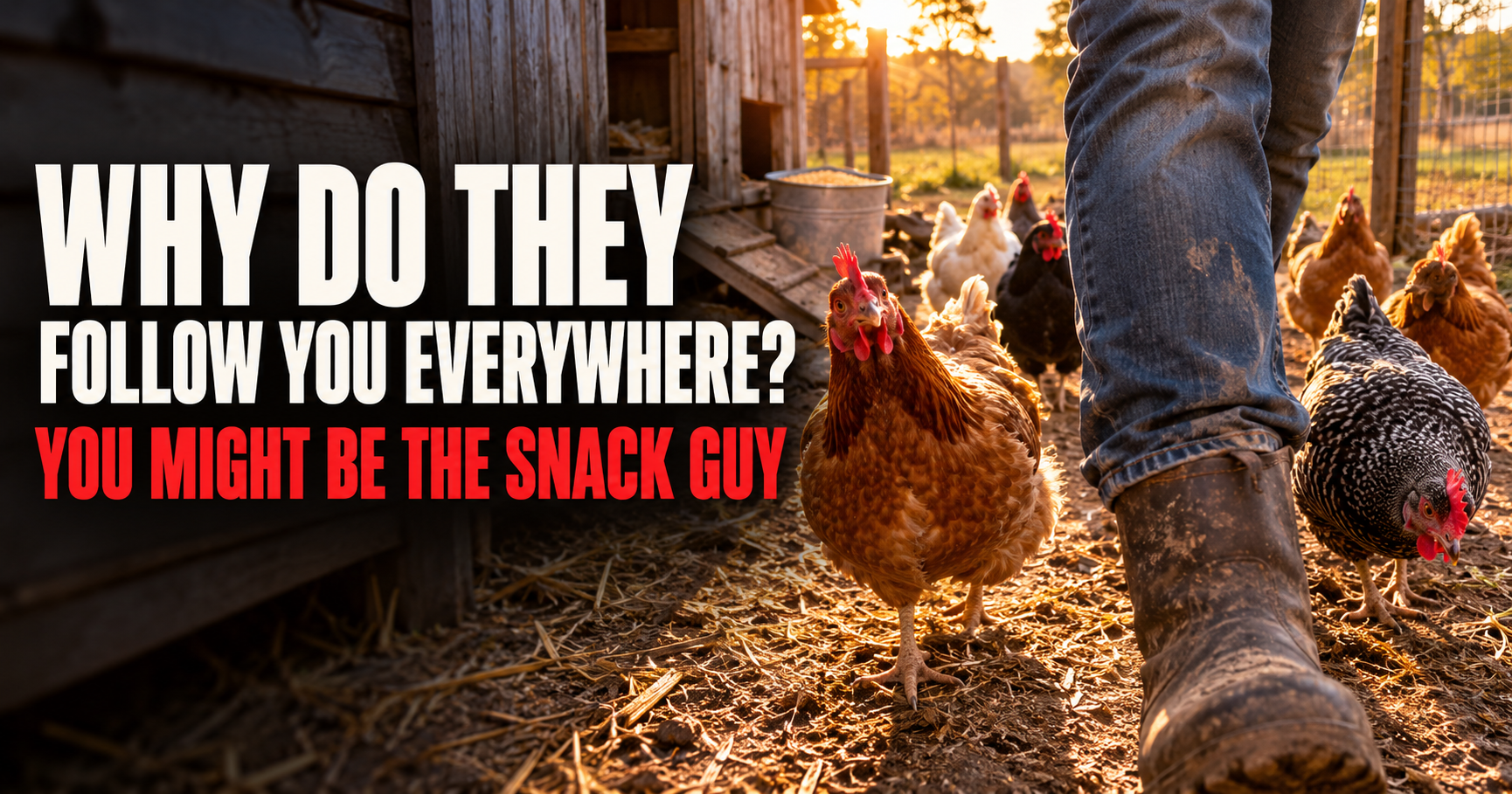
If you’re more interested in why a chicken keeps approaching or following you in the first place, why chickens follow you everywhere is a better look at familiarity, routines, food associations, and social behavior.
Beak Wiping Often Happens After Foraging
Another time I see it is while chickens are actively scratching around.
Think about what they’re putting their faces into.
Soil.
Old leaves.
Grass.
Tiny rocks.
Bugs.
Plant material.
Whatever interesting mystery they just uncovered with their feet.
Their beak gets dirty.
So every once in a while the bird stops and wipes it.
Then she goes right back to digging.
It’s exactly the kind of little behavior you start noticing once you spend time simply watching chickens instead of only visiting the coop for chores.

Dust Bathing Can Leave the Beak Dirty Too
A proper chicken dust bath is not a tidy event.
Dirt gets everywhere.
Under wings.
Through feathers.
Around the face.
Across the beak.
I’ve watched chickens emerge from a dust bath looking like they rolled through powdered chocolate.
Afterward, you’ll often see shaking, preening, and general feather maintenance.
Beak wiping fits naturally into that cleanup.
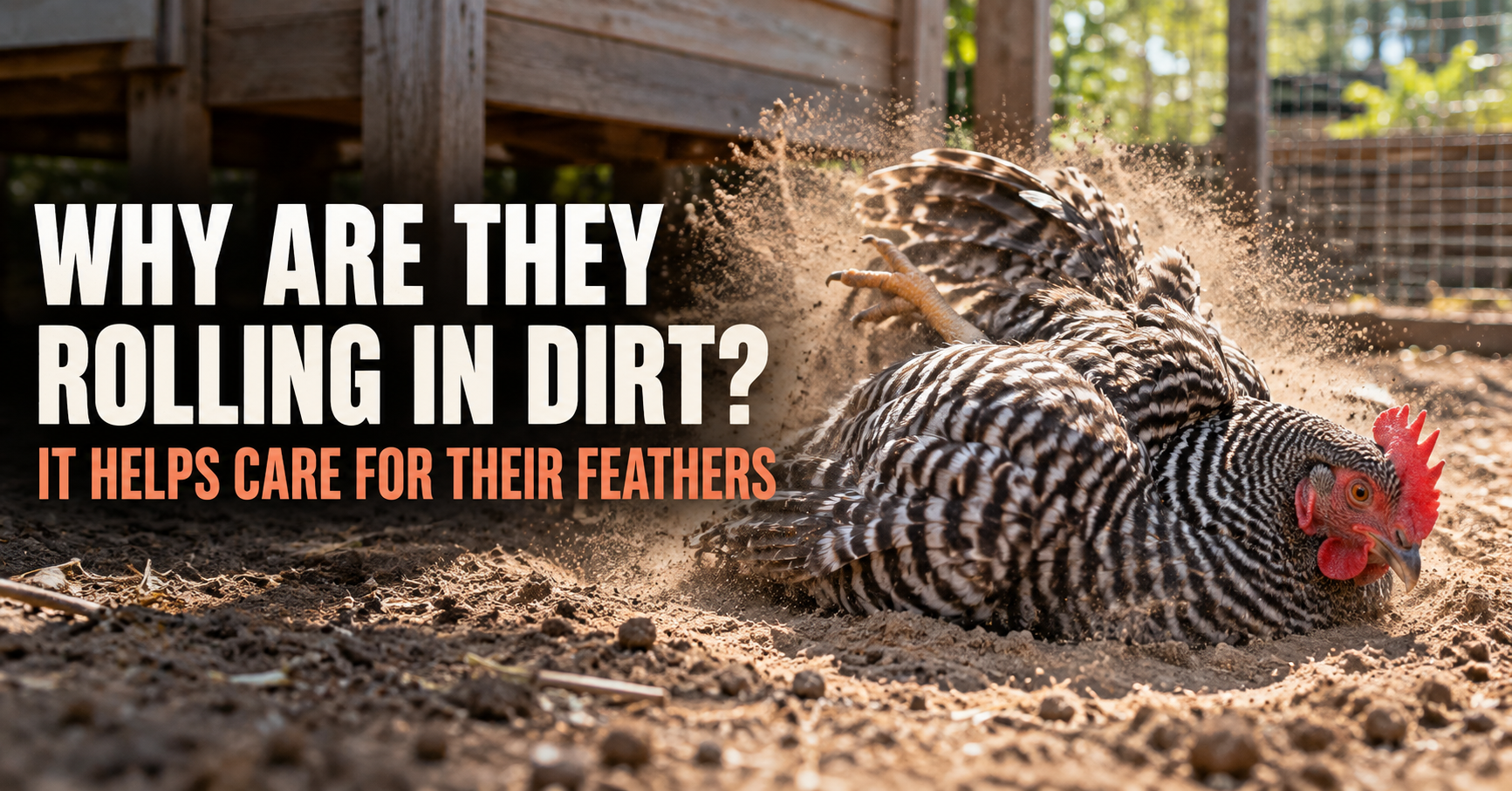
If you’ve seen the rolling, sideways flopping, and dirt throwing but weren’t sure what was happening, why chickens dust bathe explains why that messy behavior is completely normal too.
Why Does My Chicken Wipe Her Beak After Drinking?
Occasional wiping after drinking doesn’t immediately worry me either.
Water may leave feed residue soft around the edges of the beak.
The chicken drinks.
Something feels messy.
She wipes.
Normal.
What would make me pay more attention is repeated beak rubbing combined with unusual swallowing, discharge, coughing, sneezing, open-mouth breathing, or clear discomfort.
That’s no longer just:
“My chicken wiped her beak.”
Now we’ve got several changes happening together.

Beak Wiping Should Usually Be Brief
This is one of the easiest ways I separate ordinary maintenance from behavior I want to investigate.
Normal beak wiping tends to be short.
Swipe.
Swipe.
Maybe another swipe.
Done.
The chicken goes back to eating, walking, scratching, or whatever else she was doing.
If one bird seems obsessed with rubbing her beak constantly, that’s different.
I don’t diagnose the problem from rubbing alone, but I start checking.
When Repeated Beak Rubbing Makes Me Look Closer
I’d inspect the bird if she keeps rubbing for long periods or seems unable to get comfortable.
I’d look for:
Food stuck around the mouth.
A cracked or damaged beak.
Swelling.
Discharge around the nostrils.
Crust around the face.
An object stuck inside the mouth.
Abnormal beak alignment.
Bleeding.
Changes in eating.
Changes in breathing.
Behavior matters most when it changes from that bird’s normal pattern.
A hen that wipes after every messy breakfast has a routine.
A hen that has never done much rubbing and suddenly spends half the morning scraping her face against everything deserves a closer look.
Look at the Nostrils Too
Chicken nostrils are located on the upper part of the beak.
That means repeated face or beak rubbing can sometimes involve irritation around the nostrils rather than the beak itself.
If I’m concerned, I check for:
Wetness.
Bubbles.
Crust.
Swelling.
Unusual discharge.
Then I watch how the chicken is breathing.
Normal cleaning behavior shouldn’t come with obvious respiratory distress.
That’s a different problem.
Check Whether She Is Eating Normally
A functional beak is obviously important for eating.
So appetite gives me another useful clue.
If a chicken wipes her beak but eats normally, drinks normally, and behaves normally, I’m much less concerned.
If she repeatedly tries to eat and drops food, avoids harder feed, stops eating, or seems uncomfortable whenever she pecks, I want to inspect the mouth and beak more carefully.
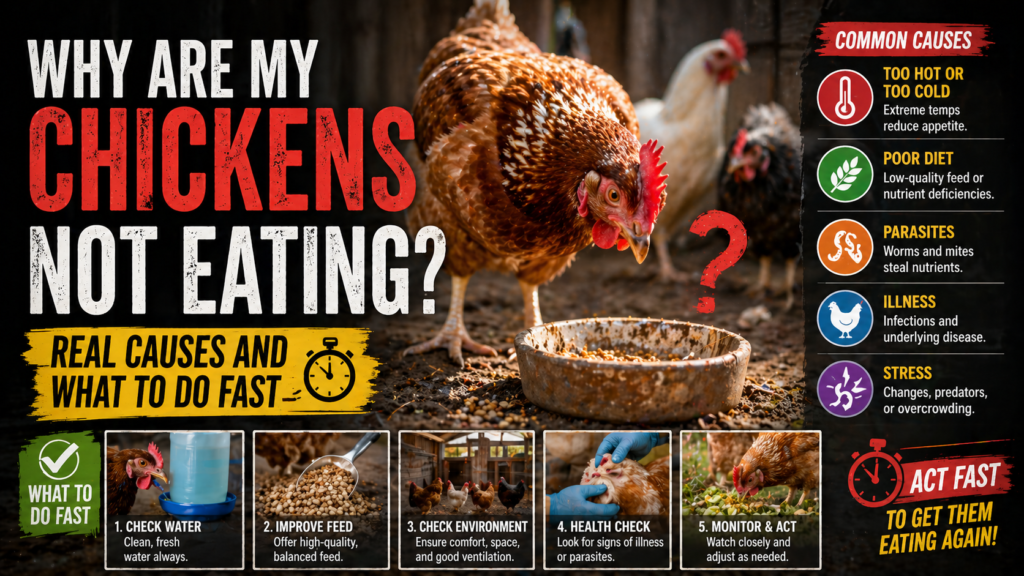
We already have a much broader guide on why chickens stop eating and what I check first if appetite itself is changing.
Beak wiping alone is usually minor.
Beak wiping plus trouble eating is more interesting.
An Overgrown Beak Looks Different From Normal Wiping
A healthy chicken beak should line up well enough for the bird to eat and perform normal behaviors.
Sometimes abnormal growth, injury, deformity, or limited natural wear can cause the beak to become too long or misshapen.
That is not something I would diagnose simply because a bird wipes her beak.
You can usually see an actual shape problem.
If the upper beak has become unusually long, hooks excessively, crosses, or no longer meets the lower portion properly, that’s different from ordinary grooming.
And I would be careful about trimming without understanding the anatomy.
A chicken’s beak contains living tissue and blood supply farther back.
This isn’t something I’d attack casually with nail clippers because I saw a bird rub her face twice.
Chicks Can Wipe Their Beaks Too
This behavior isn’t limited to old laying hens.
Young chickens investigate everything with their beaks.
They’re learning to eat.
Pecking bedding.
Trying different feed.
Getting debris around their face.
So occasional wiping in young birds isn’t surprising.
Again, I pay attention to how the chick behaves afterward.
Active.
Eating.
Drinking.
Growing.
Normal breathing.
Those things reassure me more than the beak swipe concerns me.
Chickens Use Their Beaks for Almost Everything
The more you watch chickens, the more you appreciate how important the beak is.
It isn’t just a mouth.
It’s practically a hand too.
They use it to investigate objects.
Pick things up.
Move material.
Preen feathers.
Interact with other birds.
Defend themselves.
Search for food.
That’s why maintaining the beak naturally makes sense.
Imagine using one tool for nearly everything you do all day.
You’d probably wipe it off occasionally too.
Why Does My Chicken Rub Her Beak After Eating Mealworms?
Because mealworms can leave little pieces or residue around the mouth, especially when the chickens are enthusiastically grabbing treats from the ground.
The behavior isn’t specific to mealworms.
You can see it after all kinds of foods.
But chickens get so excited over mealworms that you may notice the whole sequence more clearly.
Grab food.
Swallow.
Swipe beak.
Go back for another.

Treats are fine in moderation, and we’ve already covered feeding mealworms to chickens along with the benefits and cautions if you’re using them regularly.
Why Does My Chicken Rub Her Beak on the Roost Before Sleeping?
Occasional wiping around roosting time can still be ordinary grooming.
Chickens often do a lot of little maintenance activities before they completely settle.
Preening.
Shaking feathers.
Adjusting position.
Wiping the beak.
Then sleep.
What matters is whether she’s acting comfortable and normal.
A bird repeatedly rubbing, shaking her head, breathing strangely, or appearing distressed while the rest of the flock settles deserves more attention.
Could Beak Rubbing Be Social?
Possibly, depending on the exact behavior and species.
Research into birds has proposed functions beyond simple cleaning and wear, including scent-related or social functions. Cackle Hatchery summarizes research suggesting beak wiping may transfer preen-oil odors to surfaces in some birds.
I find that interesting.
But for an ordinary backyard hen wiping her beak after eating breakfast, I don’t jump immediately to:
“She’s sending a sophisticated social scent message.”
Cleaning is usually the simpler explanation.
I like knowing the broader science without turning every chicken movement into something exotic.
Why Does My Chicken Shake Her Head and Rub Her Beak?
This combination makes me pay more attention than wiping by itself.
A quick head shake after eating can be nothing.
Chickens shake and reposition themselves all the time.
But frequent head shaking plus repeated beak rubbing could mean something is irritating the bird.
I’d look at the mouth.
Nostrils.
Eyes.
Ears.
Breathing.
Then watch for sneezing, discharge, swelling, appetite changes, or parasites.
This is where one normal behavior becomes useful because it’s occurring alongside something else.
We’re eventually going to cover head shaking separately because that’s a health-oriented search intent and deserves more detail than I want to cram into this behavior article.
Normal Chicken Behavior Usually Has a Clear End
I’ve found this rule useful with almost everything in our behavior cluster.
The chicken does something odd.
Then stops.
And goes back to being completely normal.
She dust bathes.
Gets up.
Normal.
She sunbathes.
Gets up.
Normal.
She flaps her wings.
Stops.
Normal.
She wipes her beak.
Stops.
Normal.
Persistent behavior paired with other abnormalities is different.
That’s the pattern I care about.
Chickens Wiping Their Beaks Is Usually a Good Example of Not Overthinking Things
One of the biggest lessons chickens have taught me is that they do plenty of strange-looking things that aren’t problems.
The internet can turn every behavior into a symptom if you search long enough.
Chicken rubbed her beak?
Respiratory disease.
Chicken lay on her side?
Dying.
Chicken puffed up?
Definitely sick.
Chicken made a noise?
Something terrible.
Reality is more nuanced.
Healthy chickens wipe their beaks.
Healthy chickens dust bathe.
Healthy chickens lie sideways in the sun.
Healthy chickens stretch and flap.
The skill isn’t eliminating every odd behavior.
It’s learning what normal looks like and recognizing when several things change together.
How I Decide Whether to Ignore It or Investigate
When I see beak wiping, I ask a few simple questions.
Did she just eat something messy?
Was she foraging?
Did she just finish a dust bath?
Is she eating normally?
Does the beak look normal?
Are the nostrils clear?
Is she breathing normally?
Did the behavior stop after a few swipes?
If yes, I usually move on.
If the rubbing continues and something else also looks wrong, I investigate.
That’s about as complicated as it needs to be most of the time.
Frequently Asked Questions
Why do chickens wipe their beaks on the ground?
Most often they’re cleaning food, dirt, or other debris from the beak. Beak wiping can also contribute to normal beak maintenance and shaping.
Why does my chicken rub both sides of her beak?
Alternating sides helps clean and maintain the whole beak. Chickens often swipe one side and then the other against dirt, wood, rocks, or another firm surface.
Why does my chicken wipe her beak after eating?
Food residue can stick along the sides of the beak. Wiping against a surface works like a quick chicken napkin.
Why does my chicken rub her beak on me?
Your clothes or boots may simply be a convenient wiping surface. A tame bird being comfortable enough to approach you is meaningful, but I wouldn’t assume every wipe is affection.
Does beak rubbing mean my chicken’s beak is too long?
Usually not. Normal chickens wipe their beaks routinely. An actually overgrown or misshapen beak should be visible and may interfere with eating or normal alignment.
Should I worry if my chicken constantly rubs her beak?
Repeated or obsessive rubbing deserves a closer inspection, especially if you also notice discharge, swelling, bleeding, appetite changes, head shaking, trouble breathing, or obvious discomfort.
Do chickens sharpen their beaks?
Beak wiping helps maintain and shape the keratin-covered beak as it grows and wears. Calling it “sharpening” is common, although maintenance is probably a better way to think about it.
Why does my chicken rub her beak after a dust bath?
Dust and debris can end up around the face and beak during bathing. Wiping afterward fits naturally with the rest of the chicken’s grooming routine.
About the Author
Megan Whitaker writes about chicken behavior and flock dynamics for Backyard Chicken Pro, focusing on the little everyday habits that can look strange until you’ve spent enough time watching real birds. Her work combines firsthand flock observations with established poultry and avian behavior research, helping chicken keepers recognize ordinary behaviors while knowing when a change deserves a closer inspection.