I Wish the Answer Was No
One of the most common questions I hear from new chicken owners is whether chicken wire is enough to keep raccoons away.
I wish I could simply answer “yes” and move on.
Unfortunately, raccoons are one of the smartest and most determined predators you’ll ever deal with around a chicken coop. They’re incredibly curious, surprisingly strong, and far more patient than most people realize.
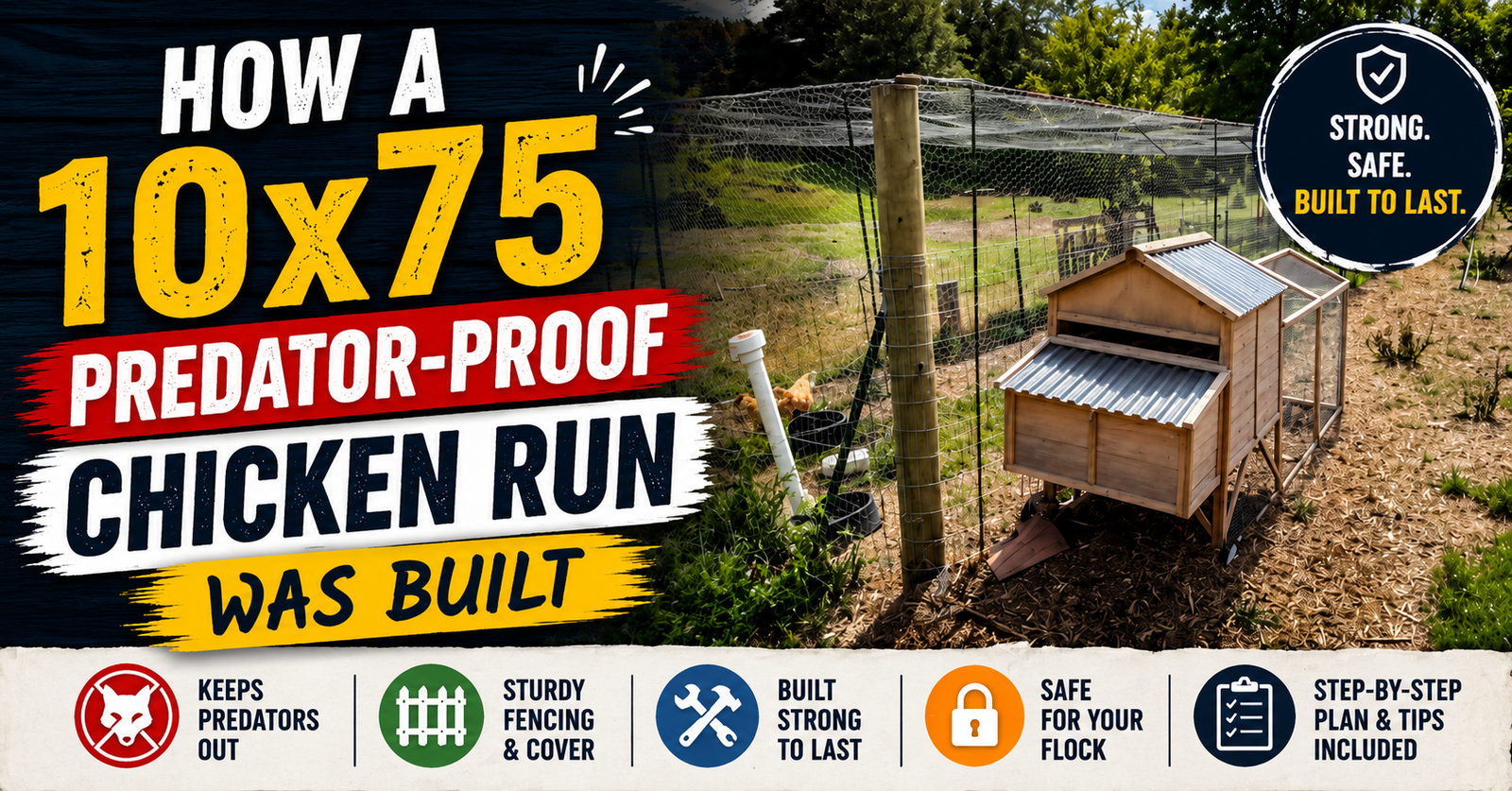
After spending time at Weaver Family Farms and touring the impressive predator-proof chicken run Daxon built, one thing really stuck with me. That real-world build shows what layered predator protection can look like in practice: How a 10×75 Predator-Proof Chicken Run Was Built.
The entire setup was built with the assumption that predators would eventually show up.
That mindset changed how I think about protecting chickens.
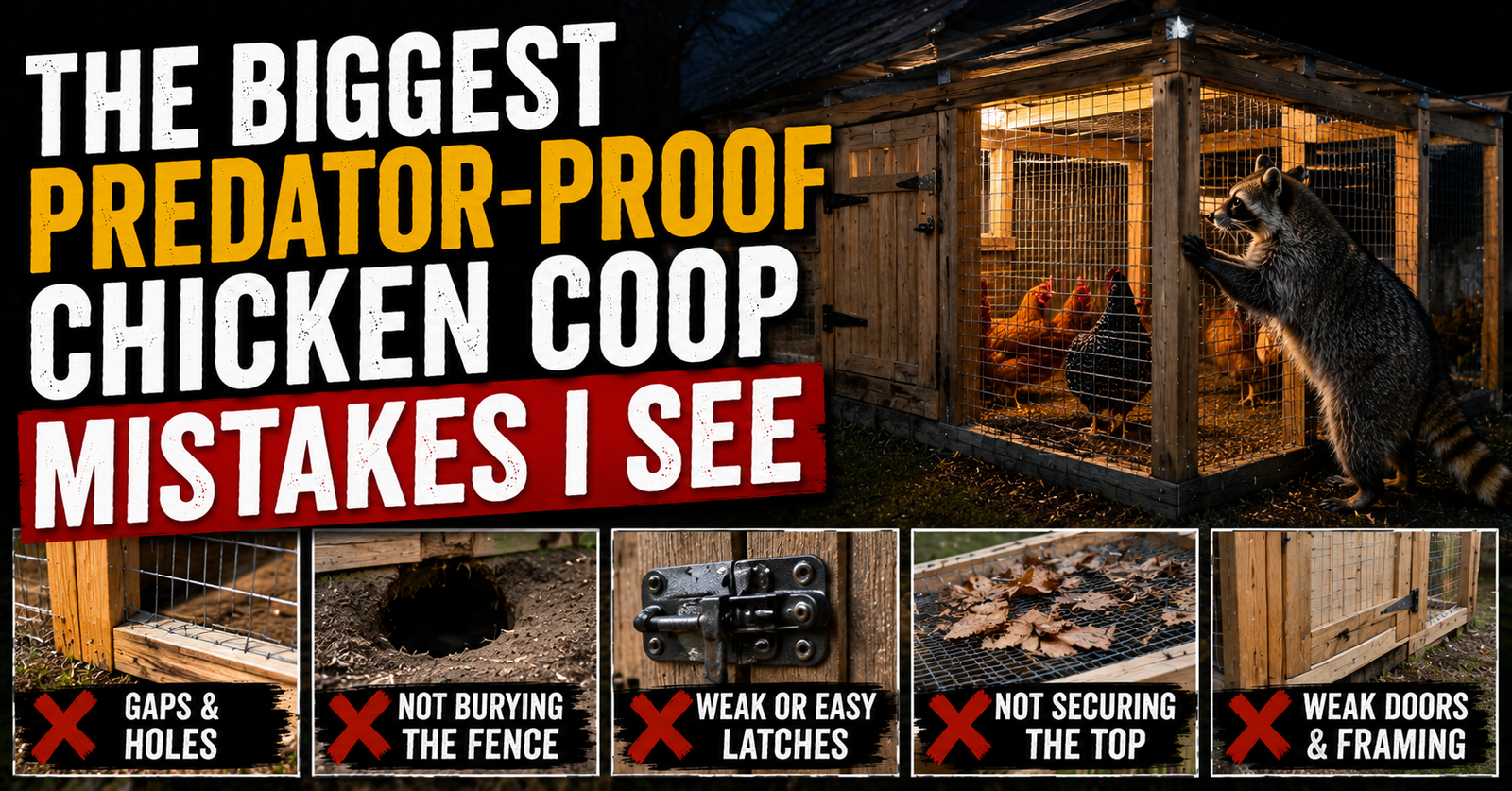
Instead of asking whether one product is enough, I now think about creating multiple layers of protection that work together. Those layers help prevent the predator-proof coop mistakes discussed in The Biggest Predator-Proof Chicken Coop Mistakes I See.
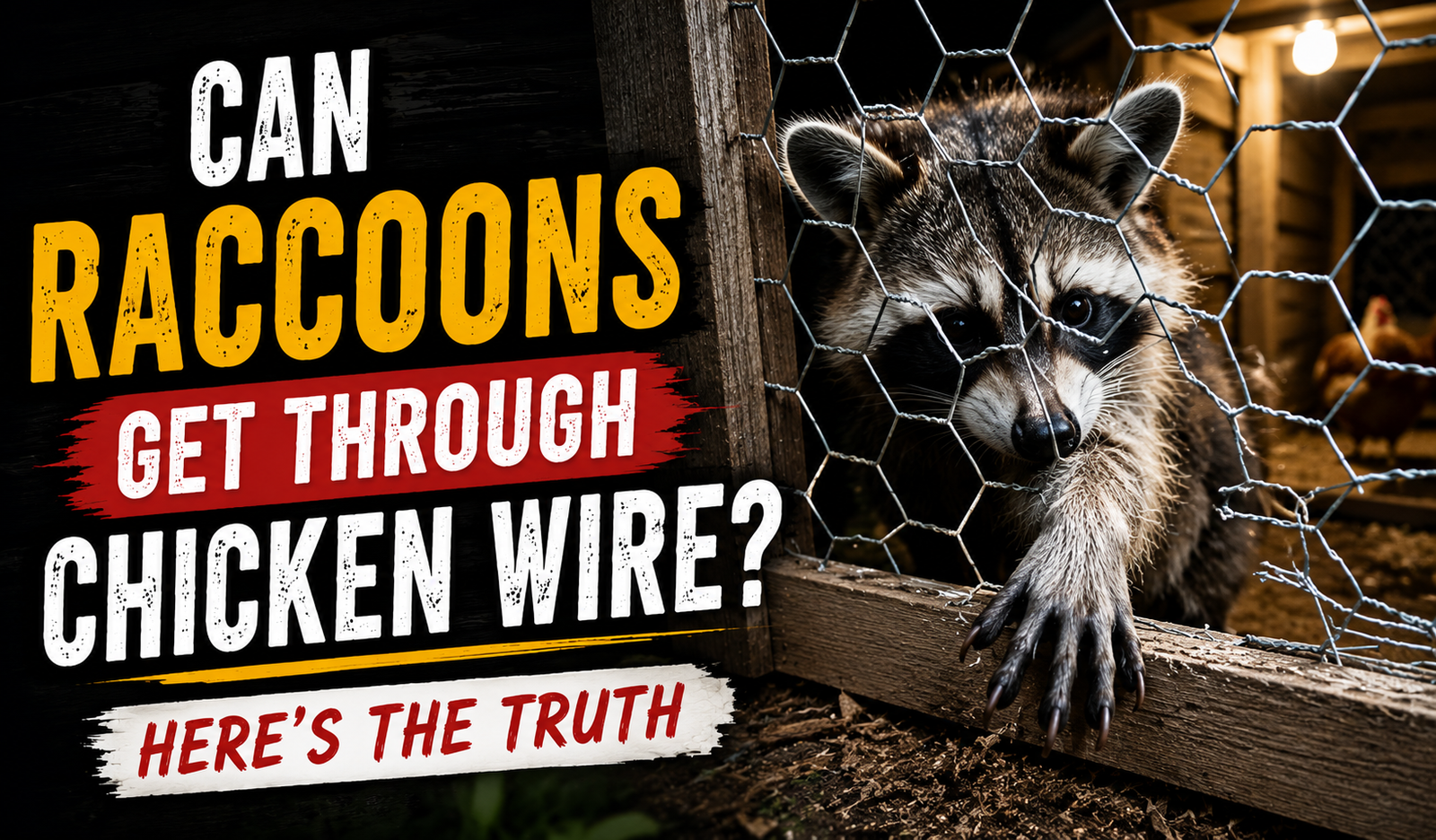
Why Raccoons Are Such a Big Problem
People often underestimate raccoons because they look harmless.
They’re anything but harmless if you keep chickens.
Raccoons have strong front paws that work almost like hands.
They can grab.
Pull.
Climb.
Twist simple latches.
Reach through surprisingly small openings.
Unlike many predators that make one quick attempt before giving up, raccoons often come back several nights in a row testing different parts of your coop.
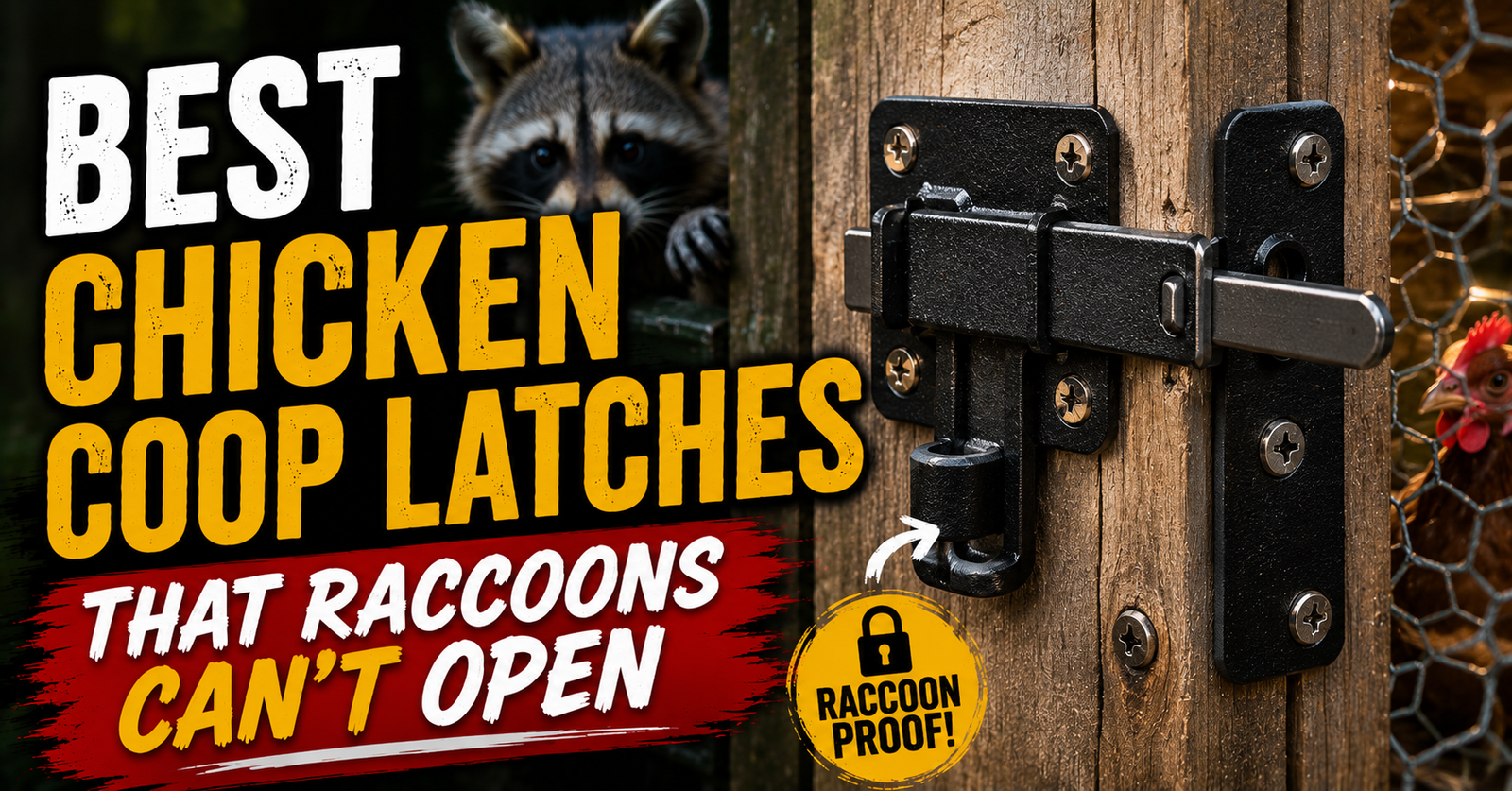
Eventually they find whatever weak spot you overlooked. A secure latch is one of the weak points worth checking, and Best Chicken Coop Latches That Raccoons Can’t Open explains what makes one harder for raccoons to manipulate.
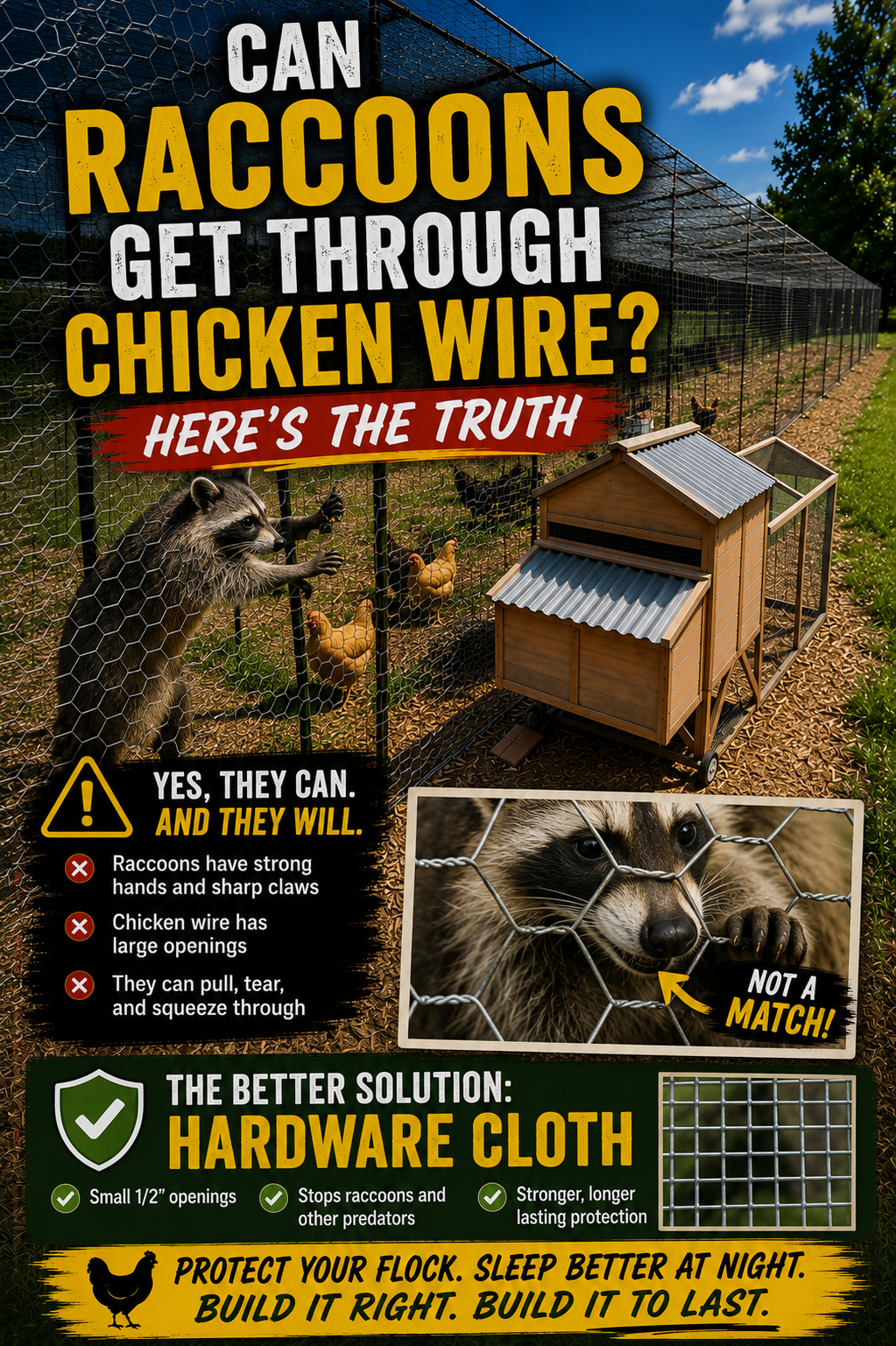
Can They Actually Get Through Chicken Wire?
The honest answer is…
Yes.
Not every time.
Not every piece of chicken wire.
But it absolutely happens.
Many people think chicken wire was designed to stop predators.
It really wasn’t.
Its primary purpose is keeping chickens contained.
That’s a huge difference.
A determined raccoon may pull on the wire until staples loosen.
It might bend sections over time.
If the openings are large enough, it may even reach through and grab a chicken standing too close to the fence.
That’s why I never recommend relying on chicken wire alone anywhere predators regularly visit.
Hardware Cloth Gives You Much Better Protection
One thing I’ve learned while talking with experienced chicken keepers is that hardware cloth and chicken wire aren’t really competitors.
They’re different tools for different jobs.
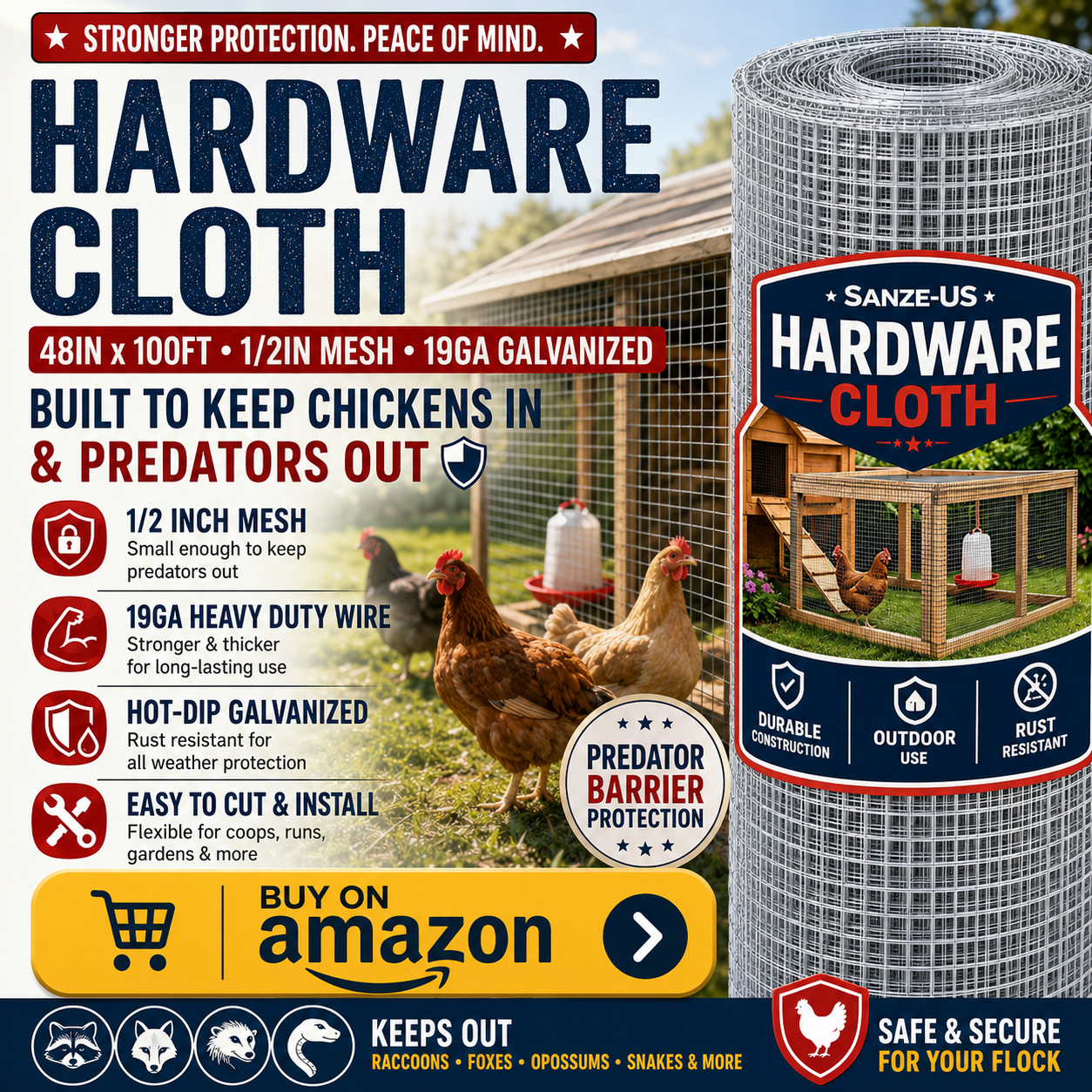
If predator protection is your biggest concern, I’d spend the extra money on a quality 48-inch x 100-foot roll of galvanized ½-inch hardware cloth around the coop itself.
The welded construction makes it much more difficult for raccoons to bend, pull apart, or reach through.
It’s one of those purchases that hurts a little more at checkout but can save a lot of heartache later.
Chicken Wire Still Has Its Place
That doesn’t mean chicken wire is useless.
Far from it.
For large walk-in chicken runs, temporary enclosures, or areas where you’re mainly trying to keep chickens contained, it can be a very practical option.
During my visit to Weaver Family Farms, I noticed the overall design focused on using materials where they made the most sense instead of assuming one type of fencing should do everything.
That really changed how I think about building a coop.
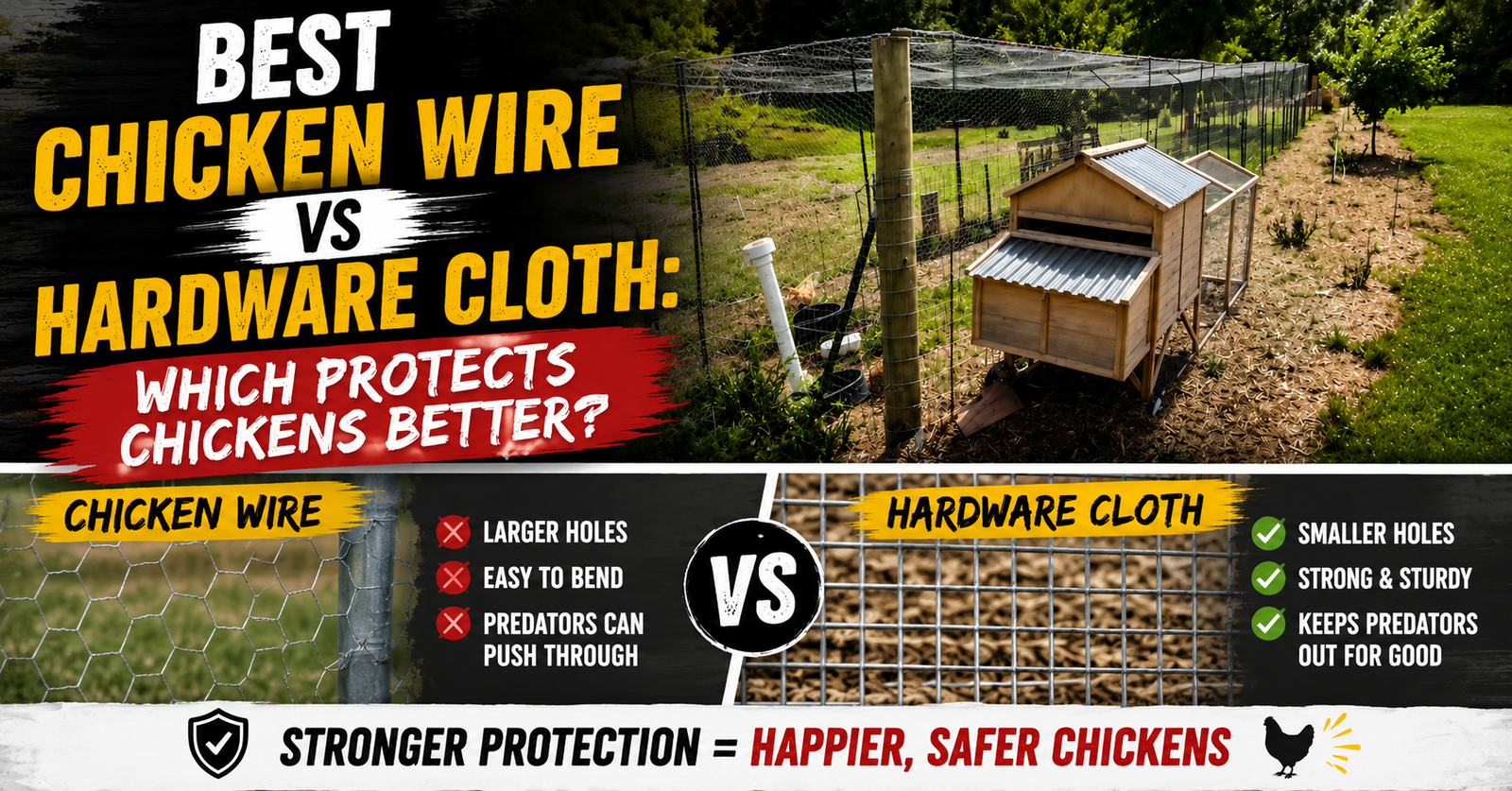
If you’re still trying to decide between the two materials, I recommend reading Chicken Wire vs. Hardware Cloth: Which Protects Chickens Better? because it explains where each one shines.
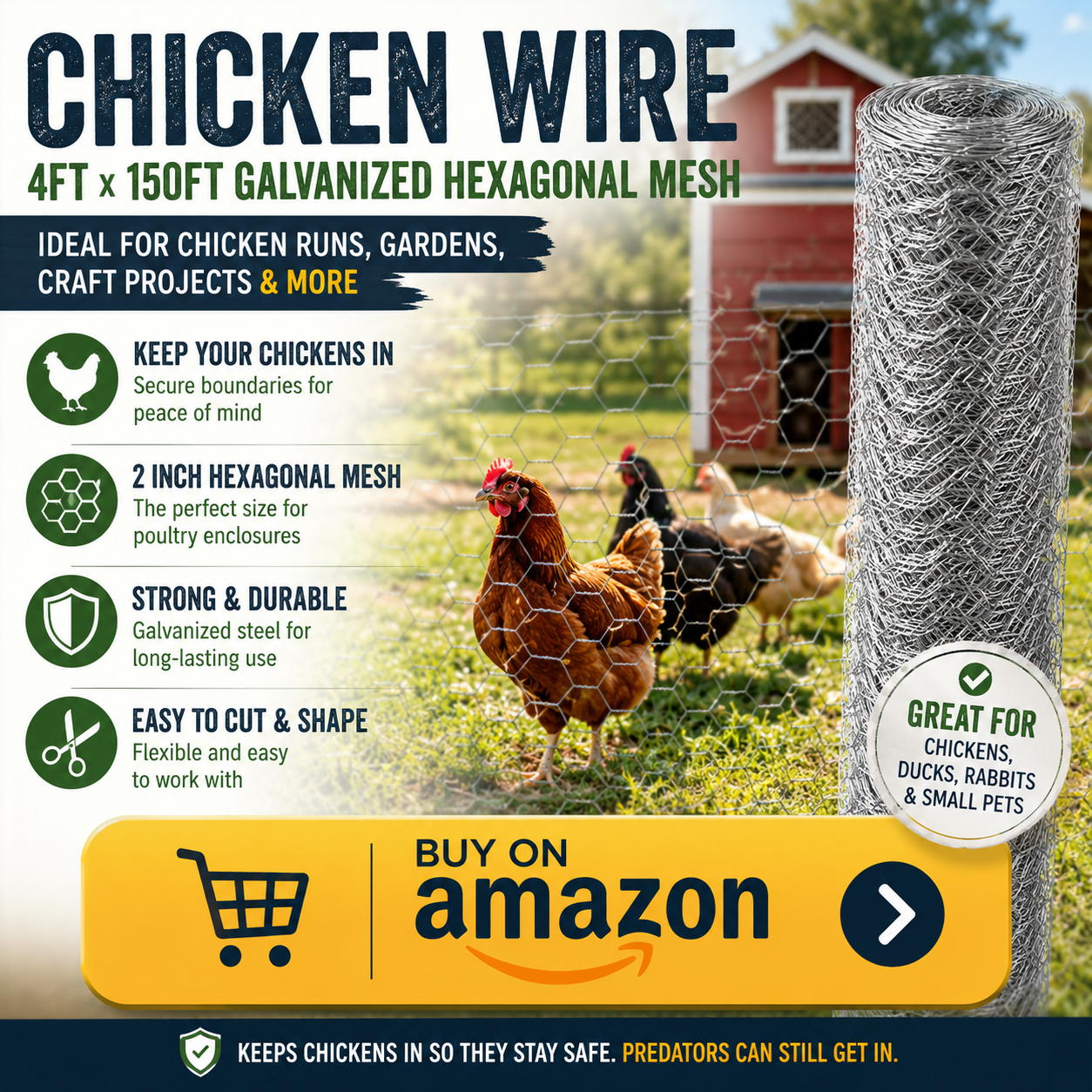
For larger runs, something like this 150-foot roll of galvanized chicken wire fencing still offers a cost-effective way to enclose a lot of space while saving hardware cloth for the highest-risk areas.
Raccoons Don’t Always Need to Get Inside
Here’s something that surprises a lot of first-time chicken owners.
Sometimes a raccoon never actually enters the coop.
Instead…
It reaches through the fencing.
Raccoons have incredibly nimble front paws.
If your chickens roost close to the fence or linger beside it at night, a raccoon may be able to grab them without ever climbing inside.
That’s another reason smaller mesh openings provide such an advantage.
Preventing predators from reaching through can be just as important as keeping them out altogether.
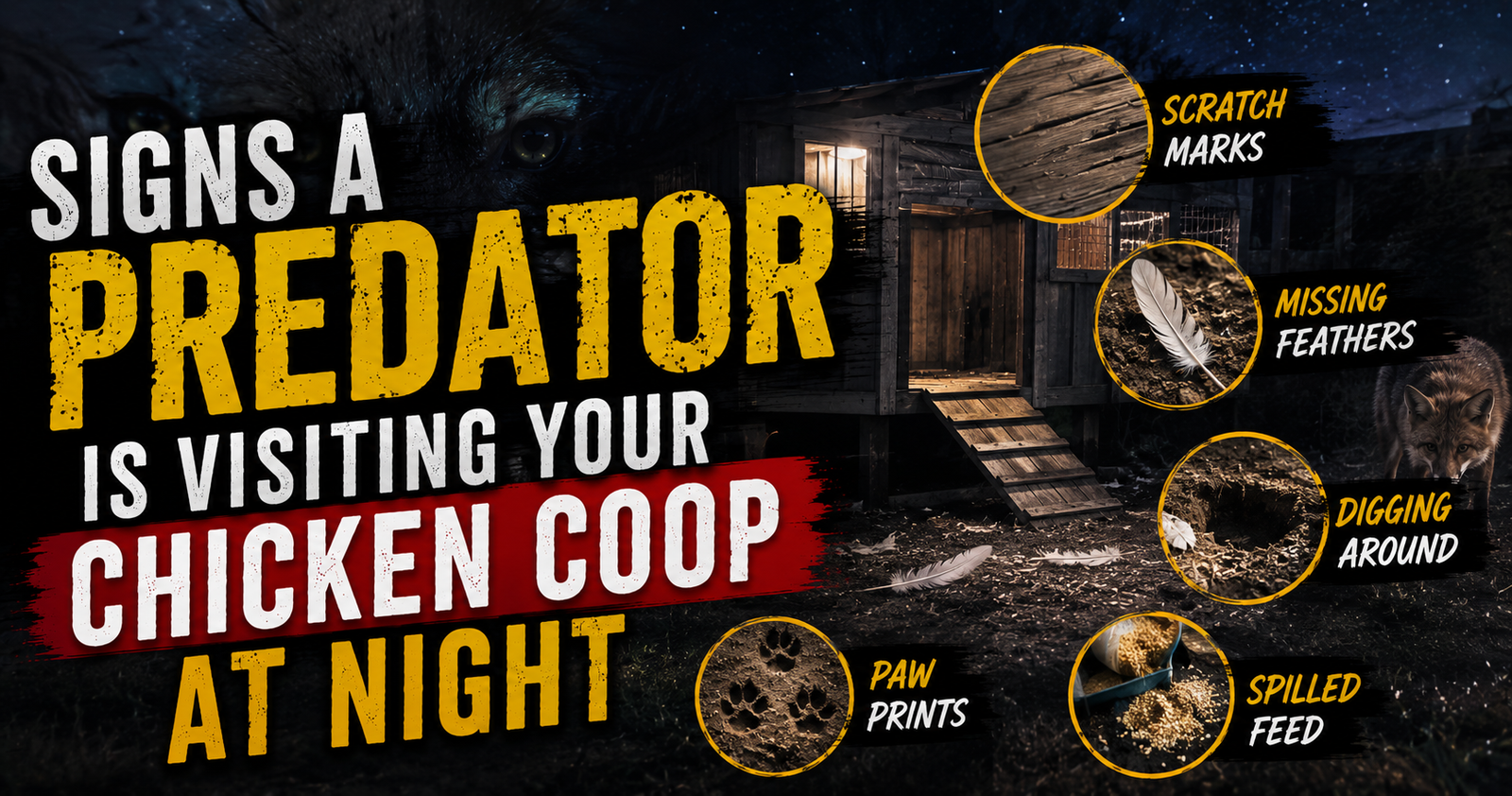
One thing I’ve learned is that raccoons rarely attack without leaving clues first. Fresh paw prints, bent wire, scratched doors, and disturbed soil often appear several nights before they ever find a way inside. If you’re trying to figure out whether raccoons or another predator have started visiting your coop, Signs a Predator Is Visiting Your Chicken Coop at Night explains exactly what I watch for.
They Usually Start Looking for Weak Spots
As we walked around the predator-proof chicken run at Weaver Family Farms, Daxon pointed out something I hadn’t really considered before.
Predators don’t usually attack the strongest section.
They look for the weakest one.
Loose wire.
A gap under the gate.
An exposed corner.
A damaged section after a storm.
That’s why routine inspections matter so much.
The strongest fencing in the world won’t help if there’s one opening you forgot about.
Underground Protection Makes a Difference
One feature I appreciated while touring the run was the underground protection around the perimeter.
Instead of waiting for something to start digging, that possibility had already been planned for.
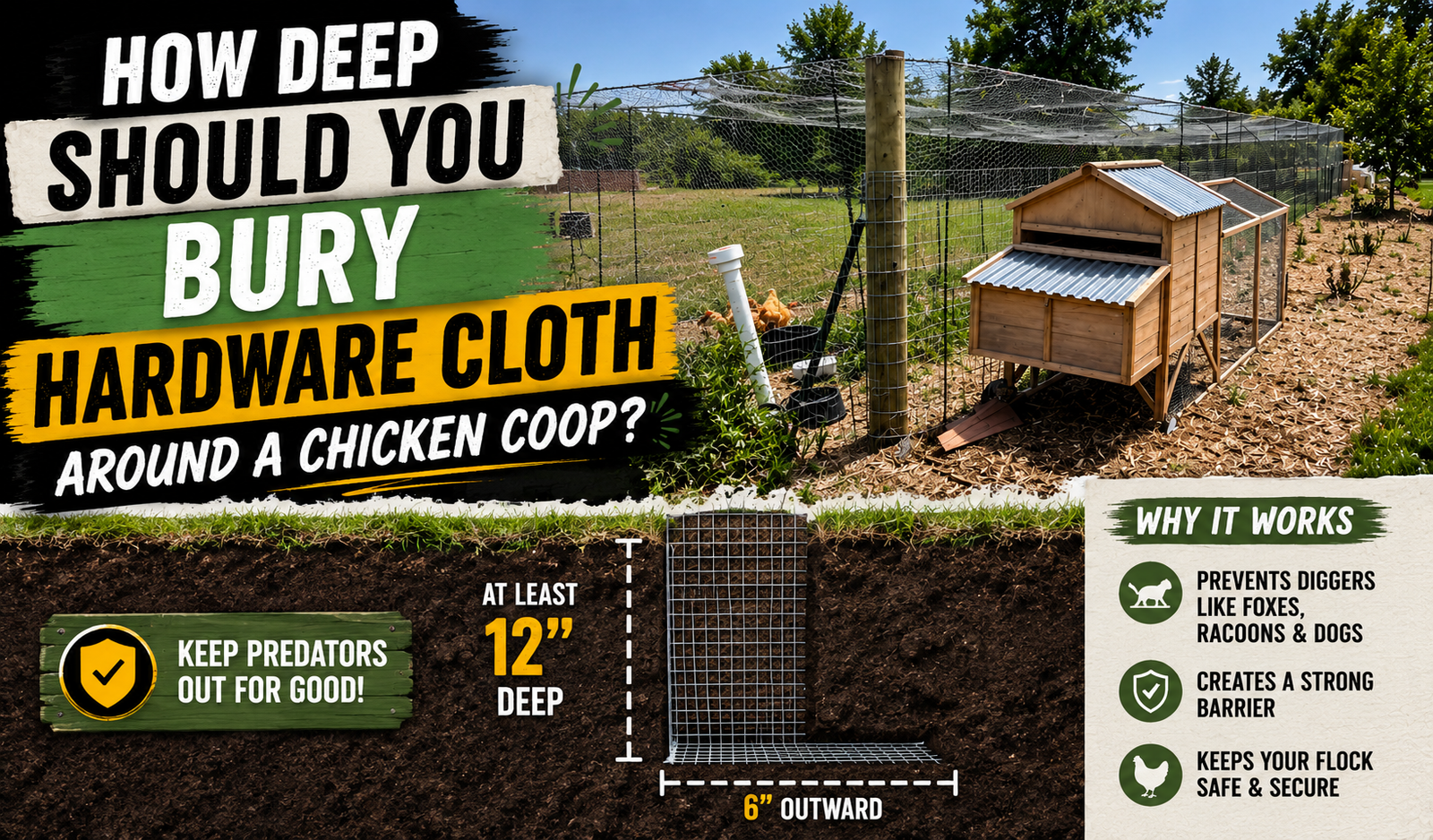
If you’re thinking about adding underground protection to your own coop, you’ll probably find How Deep Should You Bury Hardware Cloth Around a Chicken Coop? helpful. It covers recommended depths, installation tips, and why so many experienced chicken keepers don’t stop their fencing at ground level.
Don’t Forget the Doors
Believe it or not, some raccoons never bother with the fencing.
They simply figure out the door.
Basic hook-and-eye latches can sometimes be manipulated by persistent raccoons.
That’s why I always recommend using secure locking hardware that requires more than a simple pull or twist to open.
It costs very little compared to the value of your flock.
How to Tell If Raccoons Are Visiting Your Coop
The frustrating thing about raccoons is that they’re almost always working while you’re asleep.
You may never actually see one.
Instead, you’ll notice little clues that something has been snooping around.
Here are some of the most common signs I’ve heard experienced chicken keepers talk about:
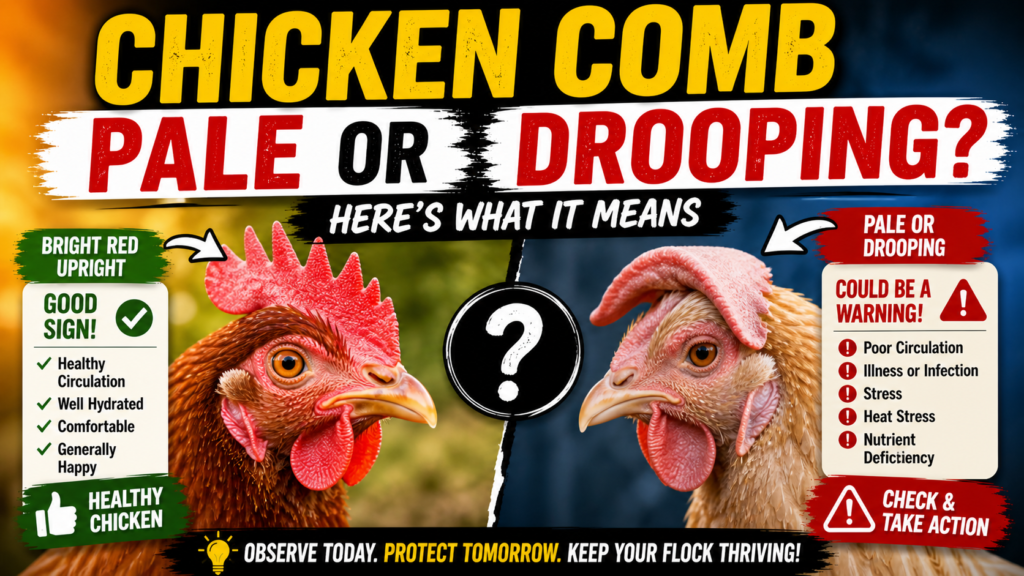
- Fresh paw prints around the coop.
- Dirt that’s been scratched or dug up along the fence.
- Bent sections of wire.
- Feed containers that have been disturbed overnight.
- Feathers scattered outside the coop.
- Scratches around doors or windows.
If you notice one of those signs, don’t assume it was a one-time visit.
Raccoons usually come back.
Once they know chickens are nearby, they’ll often return night after night looking for an easier way inside.

A Camera Can Save You a Lot of Guesswork
One thing I’ve started recommending more often is installing a camera near the coop.
Instead of wondering what’s making noises at night or what keeps digging around the run, you can actually see what’s happening.
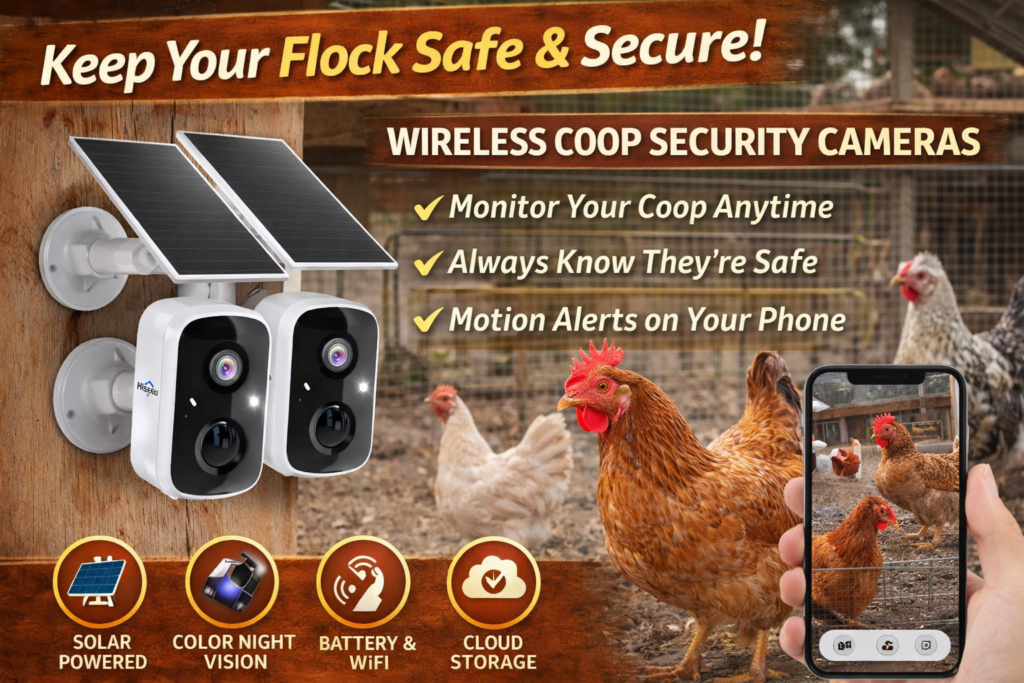
If you’re looking for an easy setup, I like this Hiseeu solar-powered wireless security camera system. Solar charging means you don’t have to worry about running electrical wires out to the coop, and it’s a simple way to keep an eye on nighttime visitors.
Sometimes what you think is a raccoon turns out to be a neighborhood cat.
Other times it’s exactly what you feared.
Knowing the difference helps you solve the right problem.
Automatic Coop Doors Add Another Layer of Protection
Another thing Daxon and I talked about while looking over the chicken run was keeping the flock locked up before predators become active.
Most raccoon attacks happen after dark.
If chickens are still outside because you forgot to close the coop, you’ve already given predators an advantage.
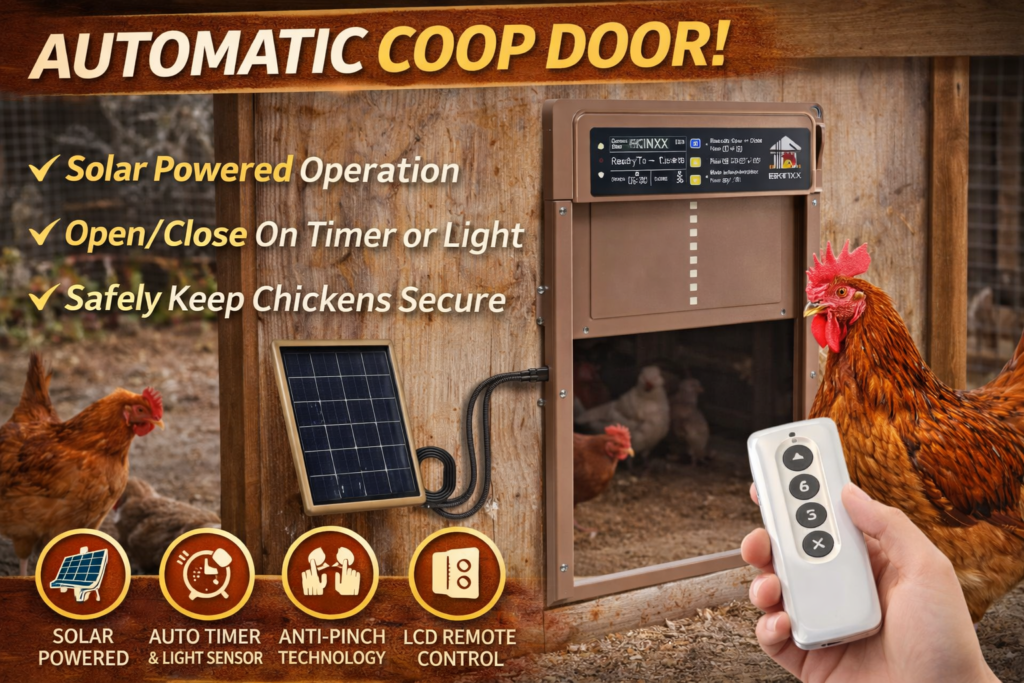
An automatic coop door takes that worry away.
I’ve been impressed with this solar-powered automatic chicken coop door because it opens and closes on a schedule or with changing daylight, helping ensure your flock is safely tucked away each evening.
Technology can’t replace good fencing, but it certainly helps.

Don’t Give Raccoons a Reason to Stay
Good predator protection isn’t only about the coop itself.
It’s also about removing things that attract unwanted visitors.
Pet food left outside overnight.
Feed spilled around feeders.
Open trash cans.
Bird seed scattered across the yard.
Those all encourage raccoons to keep coming back.
Once they’re visiting your property regularly, your chickens become much easier for them to discover.
Keeping the area clean won’t eliminate predators, but it certainly makes your coop less interesting.
The Best Chicken Coops Think Like a Predator
The biggest lesson I took away after touring the predator-proof chicken run at Weaver Family Farms wasn’t about one specific product.
It was about the overall mindset.
Instead of asking, “Will this probably be enough?”
The better question is:
“If I were a hungry raccoon, where would I try first?”
That’s exactly how the run was designed.
The roof was enclosed.
The perimeter was protected.
The frame was solid.
The weak points were minimized.
Every layer made life a little harder for predators.
I think that’s why it impressed me so much.
It wasn’t built hoping nothing bad would happen.
It was built expecting predators to eventually show up.
Build Security Into the Coop From the Beginning
If you’re still in the planning stage, now is the perfect time to think about predator protection.
It’s much easier to install stronger fencing, better latches, and underground barriers while you’re building than it is to retrofit everything later.
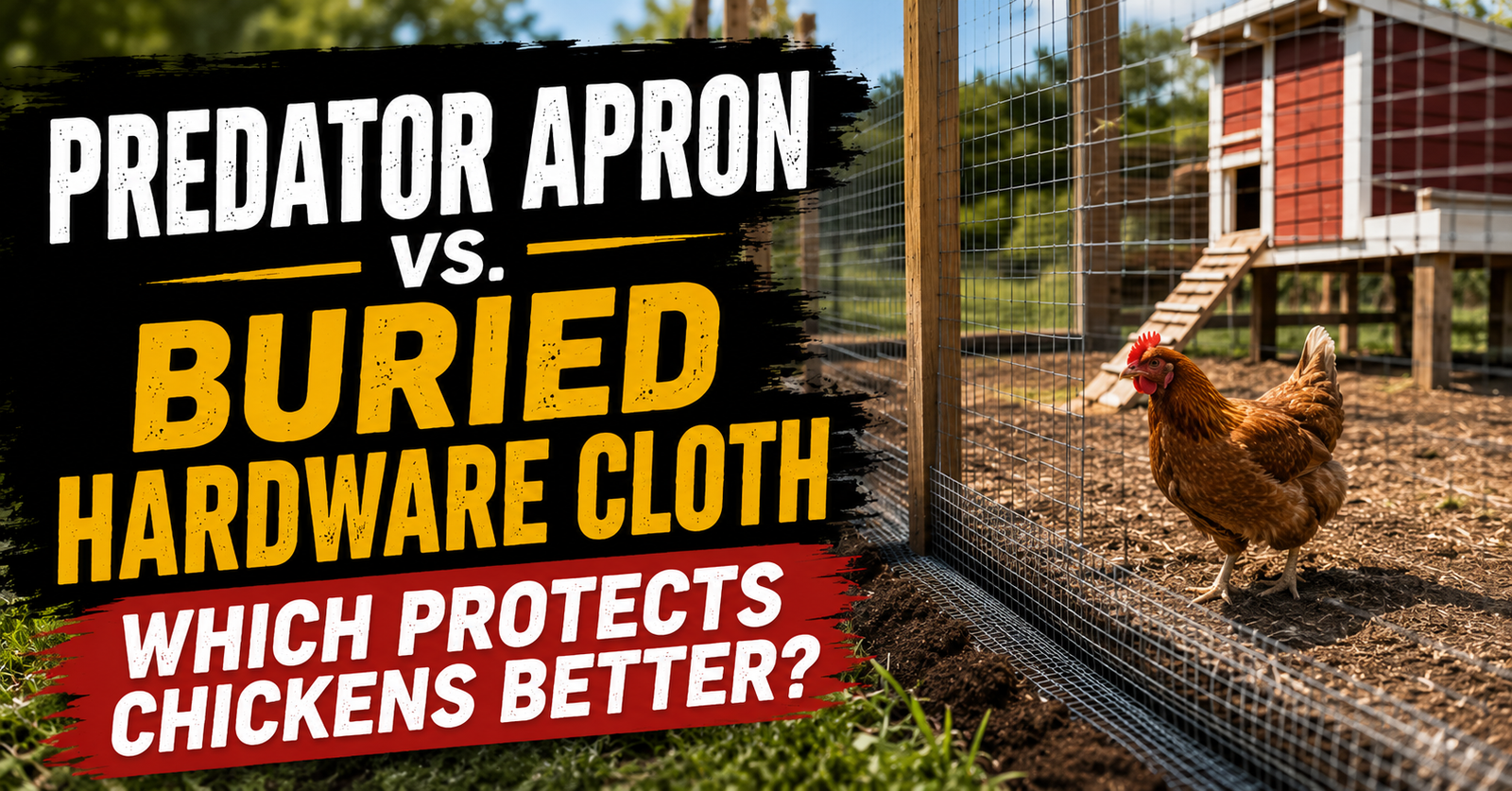
One article that really complements this topic is Should You Use a Predator Apron or Bury Hardware Cloth? because it walks through two of the most effective ways to discourage digging predators before they ever reach your chickens.
Planning ahead usually saves both time and money.
My Take After Learning From Experienced Chicken Keepers
If someone asked me whether raccoons can get through chicken wire, I’d answer yes.
But that’s only part of the story.
The better question is whether your entire chicken coop is designed to stop raccoons.
Strong hardware cloth around vulnerable areas.
Chicken wire where it makes sense.
Secure latches.
Covered runs.
Underground protection.
Regular inspections.
Those features all work together.
No single product makes a coop predator-proof.
It’s the combination of smart decisions that keeps your flock safe year after year.
Frequently Asked Questions
Can raccoons chew through chicken wire?
Raccoons usually don’t chew through chicken wire like a dog might, but they can bend it, pull it loose, or exploit weak attachment points if the fencing isn’t installed securely.
Will hardware cloth stop raccoons?
Quality hardware cloth offers much better protection than traditional chicken wire because it’s welded, has smaller openings, and is much harder for raccoons to pull apart.
What size hardware cloth is best for chicken coops?
A ½-inch mesh is one of the most popular choices because it helps prevent raccoons from reaching through while still providing excellent airflow.
Should I replace all my chicken wire with hardware cloth?
Not necessarily. Chicken wire still works well for many larger enclosures. Many experienced chicken keepers simply use hardware cloth around high-risk areas and chicken wire where predator pressure is lower.
What time do raccoons usually attack chickens?
Most raccoon activity happens after dark, especially during the late evening and overnight hours when chickens are roosting.
About the Author
Nathan Holloway
Nathan Holloway specializes in predator prevention, chicken coop construction, and practical backyard flock security. He enjoys visiting farms, learning directly from experienced poultry keepers, and studying real-world coop designs that successfully protect chickens from predators. Through Backyard Chicken Pro, Nathan shares practical observations, proven construction ideas, and straightforward advice to help backyard chicken owners build safer coops and more secure chicken runs.