
One thing I appreciate about raising backyard chickens is how much you learn simply by watching the flock. You can read all the recommended numbers, build a nice chicken run, provide plenty of food, and still discover that the chickens have their own ideas about how things should work.
Keeping roosters is a perfect example.
On paper, having a rooster with a handful of hens might sound like a good arrangement. But when hens start losing feathers across their backs, hiding underneath equipment, or running away every time the rooster approaches, that arrangement may not be working nearly as well as you thought.
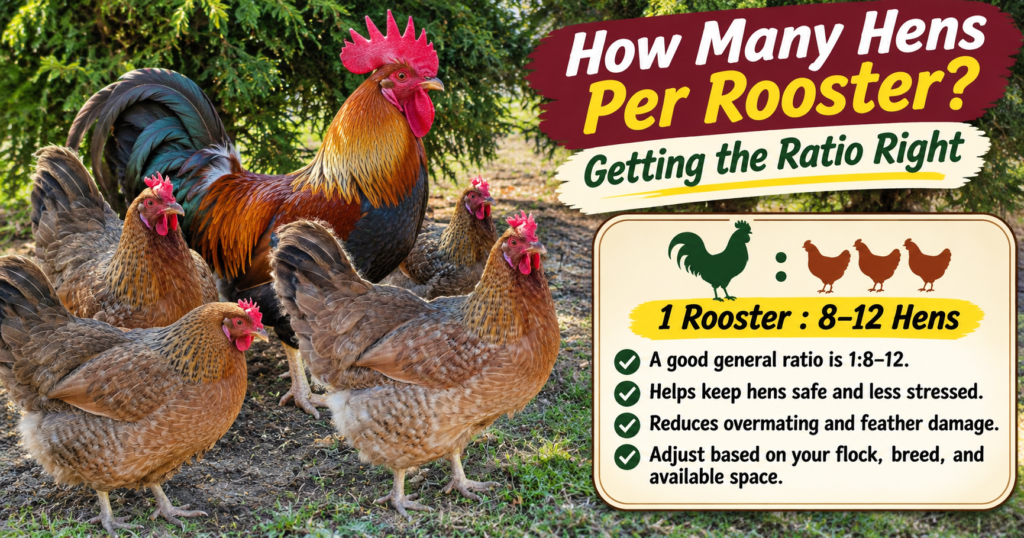
For most backyard flocks, one rooster for every 10 to 12 hens is a reasonable starting point. Some flocks do well with eight hens per rooster, while others benefit from having more.
But I wouldn’t make the mistake of relying entirely on those numbers.
The condition of your hens, the rooster’s personality, available space, and your reasons for keeping a rooster matter just as much.
What Is the Ideal Rooster-to-Hen Ratio?
If someone asked me how many hens they should have before bringing home their first rooster, I would generally recommend starting with approximately 10 hens.
That recommendation isn’t just something passed around between chicken keepers.
Mississippi State University Extension’s backyard flock guidance recommends approximately one rooster for every 10 to 12 hens when fertile egg production is the goal.
However, that recommendation is primarily a starting point for successful breeding.
For backyard chicken keepers, there’s another important consideration: whether the hens are comfortable living with the rooster.
A rooster with 12 hens can still cause problems if he constantly targets the same two birds.
Meanwhile, a particularly gentle rooster might live comfortably with fewer hens under the right circumstances.
The ratio gives us somewhere to start. The chickens themselves tell us whether it’s working.


How Many Roosters Should You Have for Your Flock Size?
Here’s how I would approach different backyard flock sizes.
Three to Five Hens
For a flock this small, I would usually recommend keeping hens without a rooster.
A single active rooster may repeatedly mate with the same few hens, increasing the risk of feather damage and injuries.
If you already have a rooster, watch the hens closely and have separate housing available if problems develop.
Six to Eight Hens
This arrangement can work with certain roosters, especially when the birds have plenty of space.
However, I would consider it a situation that requires closer observation rather than assuming everything will automatically be fine.
Nine to Twelve Hens
This is generally where I would feel more comfortable introducing one rooster into an ordinary backyard flock.
There are more hens to distribute his attention among, although individual temperament still matters.
Thirteen to Twenty Hens
One healthy rooster may be sufficient, particularly if you aren’t concerned about achieving the highest possible egg fertility.
I wouldn’t automatically add another rooster simply because the flock has grown beyond 12 hens.
Twenty to Thirty Hens
Two compatible roosters may work in a spacious, carefully managed flock.
However, I would still have a backup arrangement available in case the males become aggressive toward each other.
Thirty or More Hens
Larger flocks provide more flexibility, but housing design, territory, breeding goals, and rooster compatibility become increasingly important.
Adding roosters based on a mathematical formula alone isn’t a reliable management strategy.
Do You Actually Need a Rooster?
This is the question I would ask before worrying about the perfect rooster-to-hen ratio.
What do you want the rooster to accomplish?
If you’re keeping chickens because your family enjoys collecting fresh eggs, you don’t need one.
Hens produce eggs without a rooster.
The rooster fertilizes eggs, allowing them to develop into chicks under appropriate incubation conditions. He doesn’t switch on a hen’s ability to lay.
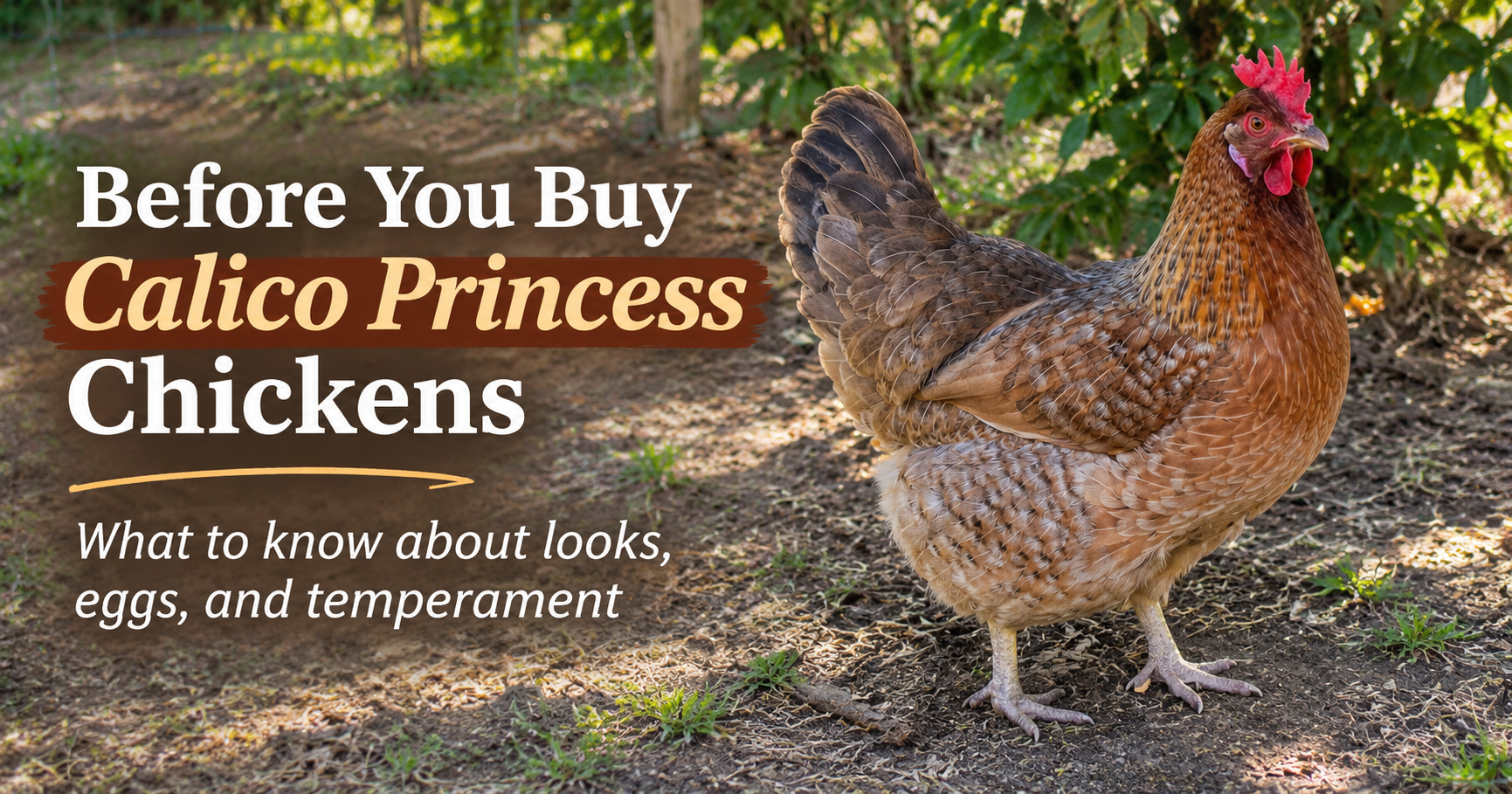
For families choosing their first chickens, attractive and productive layers such as Calico Princess chickens can provide plenty of eggs without a rooster living among them.
An all-hen flock can also simplify management, particularly for people living close to neighbors.
What Happens When You Have Too Many Roosters?
The most obvious problem is fighting between the males.
But that’s not necessarily the first problem you’ll notice.
Sometimes the hens tell the story long before the roosters have a serious fight.
Look across the flock and notice whether certain hens have lost feathers along their backs. Watch what happens when they approach the feeder. Pay attention to whether they seem comfortable scratching and dust bathing without constantly being interrupted.
A flock that spends much of its day avoiding roosters isn’t getting much benefit from having them.
Missing Feathers Across the Hen’s Back
During mating, a rooster mounts the hen and grips her feathers with his feet.
Frequent mating can gradually wear away feathers across the back and shoulders.
Initially, you might notice only a small thin patch.
Eventually, the entire back may become exposed.
Once the protective feathers are gone, the skin becomes more vulnerable to scratches, sun exposure, and additional injury.
That is when a cosmetic problem can become a genuine welfare concern.
Missing Feathers Behind the Head
Roosters may grasp feathers around the back of a hen’s head or neck during mating.
Repeated activity can contribute to feather loss in this area as well.
However, feather loss isn’t always caused by a rooster.
Molting, parasites, feather pecking, and other conditions can produce similar changes.
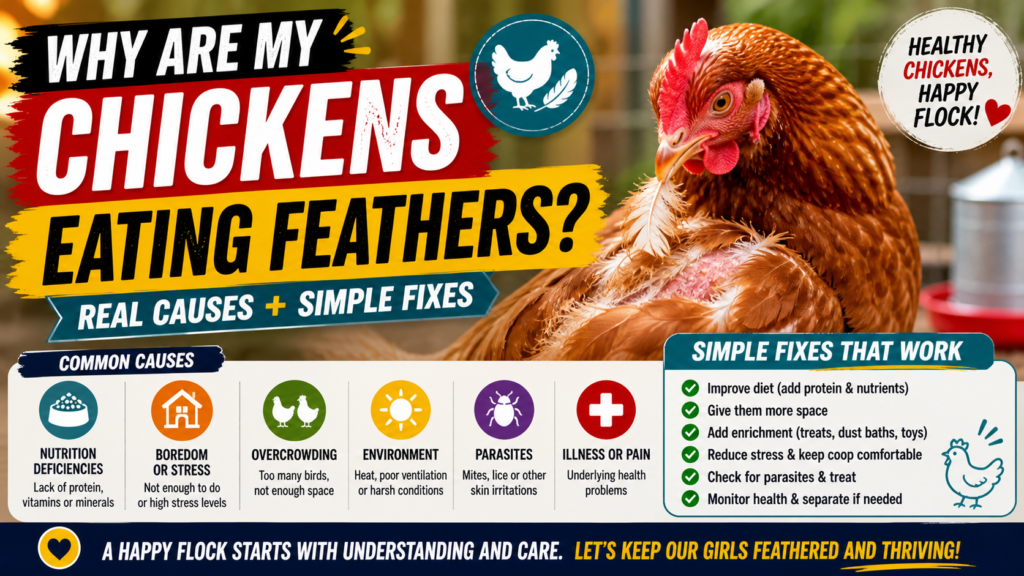
Our guide to why chickens eat each other’s feathers explains some of the other reasons damaged plumage can develop.
Before blaming the rooster, watch what’s actually happening.
Hens That Start Hiding
Imagine a flock of eight hens with one particularly active rooster.
Six hens may be comfortable moving around the run, while two spend much of their time underneath a raised coop or behind a nesting box.
The ratio looks reasonable on paper.
But the rooster may be repeatedly targeting those two hens rather than distributing his attention evenly.
That’s why I wouldn’t judge the success of a flock based only on how many birds it contains.
Watch the individual hens.
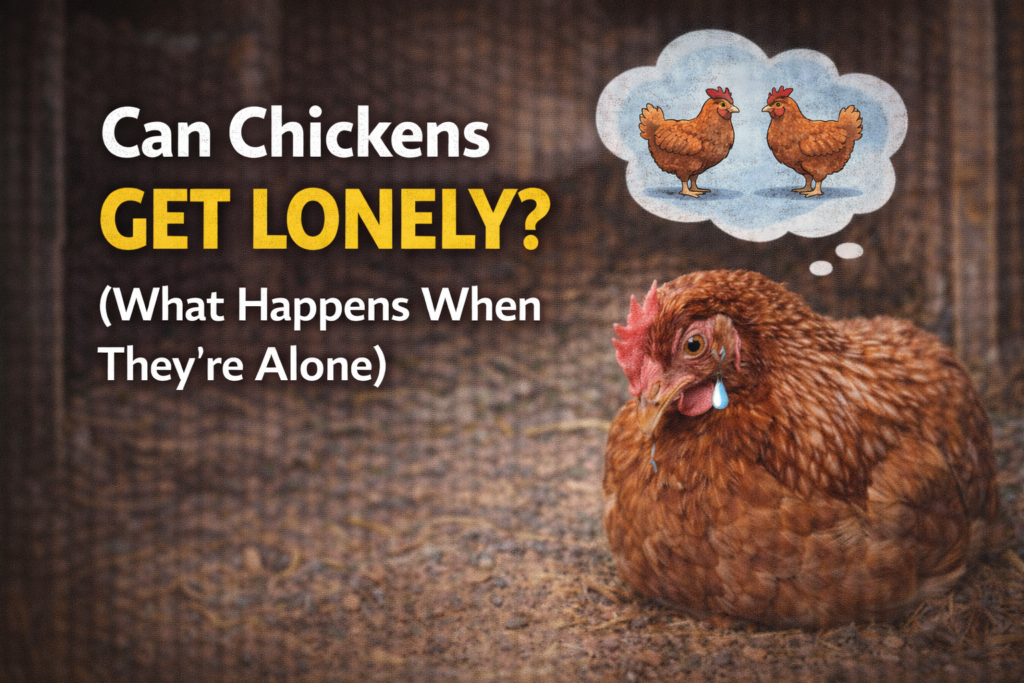
Why One Rooster Can Be Too Much for Five Hens
A rooster doesn’t necessarily adjust his breeding behavior according to the number of hens available.
An active rooster living with five hens may continue attempting to mate frequently throughout the day.
With fewer hens available, the same birds may receive repeated attention.
Even if the rooster isn’t deliberately aggressive, those repeated interactions can wear down the hens’ feathers and make it difficult for them to rest comfortably.
Adding hens sometimes helps distribute that attention, but I wouldn’t recommend buying additional chickens solely to compensate for a rooster that’s causing injuries.
Your coop needs enough room for those new birds, and the rooster may still favor particular hens.
Sometimes removing or separately housing the rooster is the better solution.
Can One Rooster Live With Just Two or Three Hens?
It’s possible, but it isn’t an arrangement I would recommend as a general starting point.
Small breeding groups are sometimes maintained intentionally by experienced breeders who closely monitor their birds.
An ordinary backyard flock is a different situation.
If you leave one active rooster with only two hens all day, those two hens have very little opportunity to escape his attention.
The problem becomes even greater in a small enclosure with few places to retreat.
If you’re keeping a trio temporarily for breeding purposes, close monitoring and suitable separate housing become particularly important.
For permanent backyard housing, I would generally prefer a larger group of hens or no rooster at all.


Can You Have Two Roosters With Ten Hens?
This is one of those arrangements that can sound reasonable until you start watching the flock.
Ten hens and two roosters gives you five hens per rooster.
That’s considerably fewer hens per male than the usual backyard breeding recommendation.
The two roosters may compete with each other, interrupt mating attempts, chase hens, or repeatedly fight over access to particular birds.
Some pairs of roosters coexist peacefully, especially when raised together and given plenty of space.
But I wouldn’t count on it.
For ten hens, one well-behaved rooster is generally the simpler arrangement.
Raising Roosters Together Doesn’t Guarantee They’ll Stay Friendly
Young cockerels may grow up together without much conflict.
They eat together.
Rest together.
Scratch around the yard together.
Then sexual maturity arrives.
Their priorities change, and behavior that wasn’t present a few months earlier can suddenly become noticeable.
The fact that two roosters have lived together peacefully since they were chicks doesn’t guarantee they’ll remain compatible as adults.
I would continue watching them as they mature, particularly if hens are present.


The Size of Your Chicken Run Changes Things
This is something I think deserves much more attention than it receives in ordinary rooster-ratio articles.
Ten hens and one rooster in a small enclosed run have a completely different experience from ten hens and one rooster with hundreds of square feet of usable outdoor space.
In a large enclosure, hens can move away, explore different areas, and avoid unwanted interactions more easily.
On our family farm in Missouri, we built a chicken run measuring approximately 10 feet wide by 75 feet long. That provided around 750 square feet of enclosed outdoor space.
The additional room wasn’t simply about fitting more chickens inside. It also gave the birds considerably more space to move around while remaining protected.

You can see the actual construction details in our guide to how the large predator-resistant chicken run was built.
Space doesn’t magically correct an overly aggressive rooster, but it can make ordinary flock interactions easier to manage.
Create Areas Where Hens Can Get Away
A completely empty rectangular enclosure may technically provide enough square footage without offering much variety.
Adding appropriate visual barriers, sheltered areas, elevated platforms, and multiple feeding locations can give hens more opportunities to move away from unwanted attention.
Just make sure these additions don’t create narrow dead ends where a hen can become trapped.
The goal is to give the birds more choices, not more obstacles.
Does Free Ranging Allow You to Keep More Roosters?
Free-ranging chickens may have more opportunities to spread out than chickens confined to a small run.
Separate groups sometimes form naturally, and individual roosters may spend more time with particular hens.
However, free ranging doesn’t guarantee that incompatible males will leave each other alone.
They can still fight, chase hens, and compete over territory.
There’s also predator exposure to consider.
We’ve explored some of the benefits in the real-life advantages of free-range chickens, but I wouldn’t use unrestricted outdoor access as the only solution to rooster aggression.
The birds still need a safe arrangement at feeding time, during bad weather, and overnight.

Why Some Roosters Need More Hens Than Others
Not all roosters behave the same way.
Some spend much of their day watching the flock, finding food, and occasionally mating.
Others are extremely active and repeatedly pursue hens.
Age, individual temperament, physical condition, breed characteristics, and the flock’s social structure can all influence what happens.
That’s why I would hesitate to publish a rigid chart claiming that every rooster of a particular breed needs exactly eight, ten, or twelve hens.
Those numbers cannot account for individual behavior.
A gentle rooster with eight hens may cause fewer problems than a relentless rooster living with fifteen.
Does Rooster Size Matter?
Absolutely, especially in mixed-size flocks.
A very large rooster attempting to mate with a much smaller hen can create additional physical strain.
The hen’s size, the rooster’s weight, his feet and spurs, and the frequency of mating all matter.
I would be particularly cautious about keeping a heavy standard-size rooster with tiny bantam hens.
Even a rooster that isn’t aggressive can cause problems simply because of the size difference.
If you’re planning a mixed flock, don’t just count how many hens you have. Consider whether the birds are physically compatible.
Young Roosters Can Be Particularly Troublesome
An immature rooster approaching adulthood may become increasingly active before he’s developed consistent social behavior.
He may chase hens, make awkward mating attempts, challenge other males, and become much louder than he was previously.
That doesn’t automatically mean he’ll remain difficult forever.
However, I wouldn’t leave hens in a situation where they’re repeatedly injured while waiting to see whether the rooster eventually matures into a calmer bird.
Their welfare matters right now.
Temporary separation may be necessary while deciding how to manage him.
Can an Older Rooster Manage More Hens?
Not necessarily.
Age can affect activity, mobility, mating frequency, and fertility.
An older rooster may be less persistent than a young cockerel, which can make him easier for hens to live with.
However, if you’re keeping him specifically to produce fertile hatching eggs, his ability to successfully fertilize a larger flock may decline.
That creates an important distinction.
A rooster that works beautifully as a flock companion might not meet the expectations of someone operating a breeding flock.
Those are two different jobs.
Can You Have Too Many Hens for One Rooster?
From a backyard welfare perspective, a large group of hens living with one rooster isn’t necessarily a problem.
From a breeding perspective, however, fertility may become less consistent as the number of hens increases.
A rooster may favor certain birds or fail to mate successfully with every hen.
If you’re collecting eggs for breakfast, that doesn’t matter.
If you’re collecting eggs for incubation, it matters quite a bit.
The useful question is whether you actually need every hen’s eggs to be fertile.
A Rooster Isn’t a Guarantee of Fertile Eggs
Even with the recommended rooster-to-hen ratio, fertility can vary.
A rooster may be too young, too old, injured, overweight, or otherwise unable to mate effectively.
Other roosters can interfere with breeding attempts.
Some hens may avoid him.
If you’re planning to incubate eggs, the results matter more than the ratio printed in a guide.
Candling eggs after an appropriate period of incubation can help determine whether embryos are developing.

Our experience-based resource on the MATICOOPX incubator and its practical features is worth exploring if you’re getting started with hatching your own chickens.
Can Hens Still Lay Fertile Eggs After Removing the Rooster?
Yes.
Hens can store sperm within their reproductive tract, allowing them to continue laying fertile eggs for a period after the rooster is removed.
That period can extend for several weeks, although fertility generally declines over time.
This matters if you’re changing breeding roosters or trying to establish which male fathered a particular group of chicks.
Separating a rooster today doesn’t necessarily mean every egg collected tomorrow will be infertile.
For ordinary egg consumption, however, this distinction usually doesn’t matter. Properly handled fertile eggs can be eaten just like infertile eggs.
Will Removing a Rooster Stop the Hens From Laying?
No.
The hens don’t depend on him to produce eggs.
Removing a rooster changes the flock’s social structure and egg fertility, but it doesn’t remove the hens’ biological ability to lay.
Some chickens may temporarily react to a change in the flock, particularly if the rooster has been present for a long time.
However, a rooster that causes ongoing stress can also make normal activities more difficult for the hens.
If egg production changes significantly, consider other potential causes discussed in our guide to why chickens suddenly stop laying eggs.
Don’t automatically assume the rooster is responsible for every change.
Does Having a Rooster Protect Your Hens?
A good rooster may help alert hens to potential danger.
Roosters often watch their surroundings, make alarm calls, and respond when they detect an unfamiliar animal or something moving overhead.
That can be useful.
But a rooster isn’t a substitute for predator-resistant housing.
A raccoon doesn’t necessarily care whether the chickens inside a coop have a rooster. Neither does a determined fox, loose dog, or coyote.
I would rather rely on strong fencing, secure latches, and sensible housing than expect one rooster to protect an entire flock against every predator.

Our predator-proof chicken coop checklist covers the physical protections that matter regardless of your rooster-to-hen ratio.
What to Do If Your Rooster Is Wearing Out the Hens
If hens are developing missing feathers or scratches, I wouldn’t wait until the damage becomes severe.
Start by observing which birds are affected and what the rooster is doing.
If several hens are being repeatedly mounted, your current flock arrangement may need to change.
Temporarily Separate the Rooster
Suitable separate housing can give the hens time away from mating pressure.
It also provides an opportunity to see whether their behavior changes when he isn’t present.
Do they spend more time exploring?
Are they less hesitant around food?
Do they stop hiding?
Those observations can help determine whether the rooster was contributing to the problem.
Separate housing must still provide appropriate shelter, space, food, water, and opportunities for normal behavior.
Consider a Hen Saddle for Temporary Protection
Hen saddles, sometimes called chicken aprons, cover part of the hen’s back to help protect exposed skin and feathers.
They can be useful in certain situations.
However, a saddle doesn’t solve excessive mating.
It simply provides a protective barrier.
Make sure the saddle fits properly, doesn’t interfere with movement, and doesn’t create additional rubbing or overheating.
Inspect the skin regularly underneath it.
If a rooster continues injuring hens despite protective equipment, the flock arrangement itself needs attention.
Treat Actual Injuries Seriously
A hen with an open wound needs more than a protective apron.
Other chickens may peck at exposed or injured skin, making a relatively small injury considerably worse.
Separate an injured bird as needed and obtain appropriate veterinary guidance, especially for deep, extensive, or infected wounds.
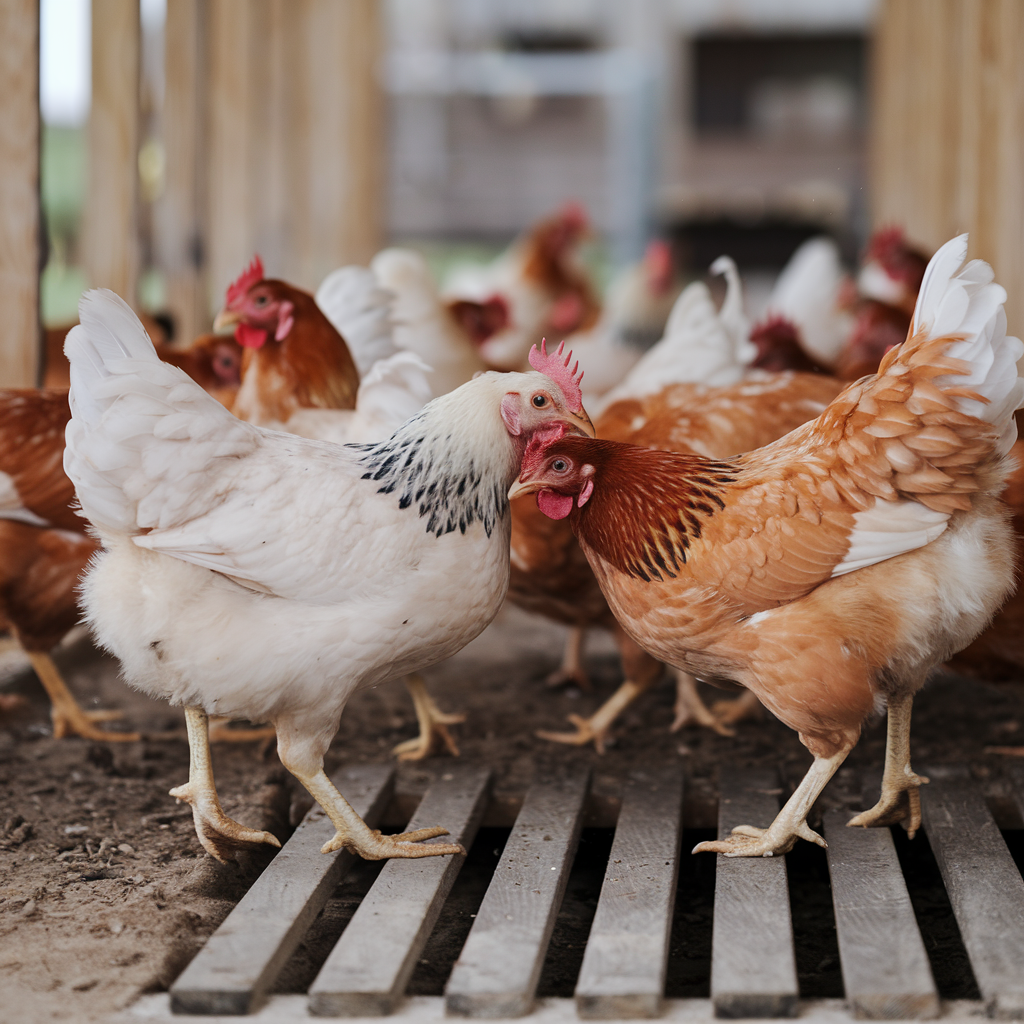
Our guide to stopping chickens from pecking and injuring each other covers additional management considerations when flock aggression becomes a problem.
Should You Buy More Hens to Fix an Incorrect Ratio?
Sometimes increasing the number of hens may help.
But before buying more chickens, I would look at the existing flock and housing.
Can the coop accommodate additional birds comfortably?
Is there enough run space?
Are there enough feeding and watering locations?
Can you quarantine new birds before introducing them?
Will adding hens actually reduce pressure on the birds currently being targeted?
A rooster that persistently favors two hens may continue doing so even after five more arrive.
And introducing new chickens brings its own challenges.
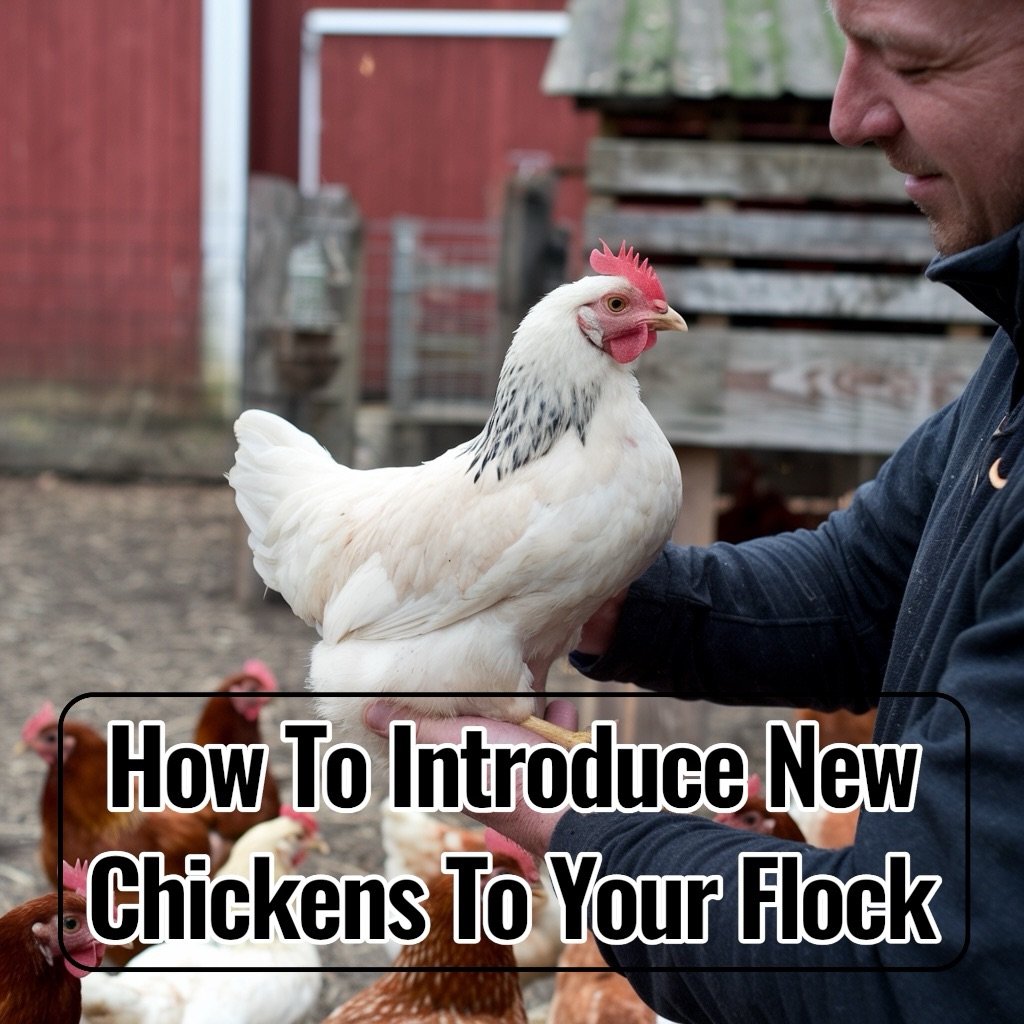
Our guide to introducing new chickens without unnecessary flock conflict explains why gradually integrating birds is generally preferable to putting unfamiliar hens straight into an established flock.
Don’t create a larger management problem trying to fix a smaller one.
What About Keeping a Separate Rooster Flock?
Some experienced chicken keepers maintain bachelor groups, which are groups of male chickens housed without hens.
Removing competition over females may make certain compatible males easier to manage together.
However, bachelor groups aren’t automatically peaceful.
Individual temperament, age, enclosure size, resource availability, and existing relationships between the males still matter.
Serious fighting requires intervention and potentially permanent separation.
I would have additional housing available before attempting this arrangement rather than assuming every rooster will get along.
The Five Things I Would Watch Every Week
Instead of obsessing over whether your rooster-to-hen ratio is mathematically perfect, spend a little time observing the flock.
1. Feather Condition
Look across the hens’ backs, shoulders, and necks for developing bare patches.
2. Access to Food and Water
Every hen should be able to eat and drink without constantly being chased away.
3. Resting and Grooming
Hens should have opportunities to rest, preen, and dust bathe without persistent interruptions.
4. Rooster Interactions
If you keep multiple males, distinguish occasional displays from prolonged chasing, serious fighting, or injuries.
5. Individual Behavior Changes
Watch for hens that become unusually withdrawn, hide for extended periods, or suddenly avoid parts of the enclosure.
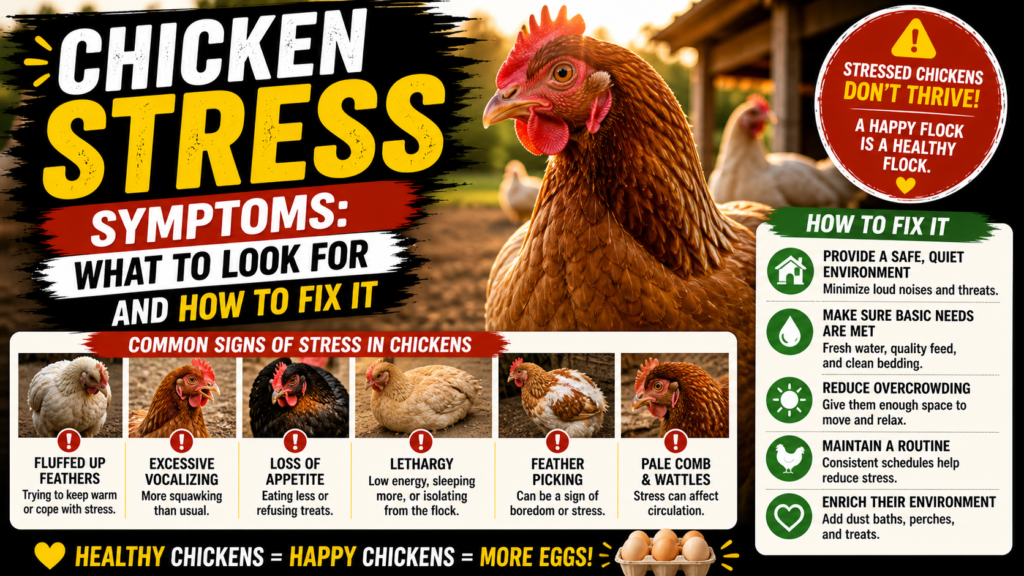
Persistent stress can affect more than the immediate interaction with a rooster. Our guide to recognizing chicken stress symptoms explains why changes in everyday behavior are worth paying attention to.
Those observations give you a far better picture of flock health than the ratio alone.
Frequently Asked Questions About Rooster-to-Hen Ratios
What is the best rooster-to-hen ratio?
One rooster for approximately 10 to 12 hens is a widely used starting point for backyard breeding flocks. Individual temperament, available space, and hen condition may require adjustments.
Is one rooster enough for 15 hens?
One healthy rooster may be sufficient for 15 hens, especially if maximum egg fertility isn’t your goal. Monitor actual fertility if you’re collecting eggs for hatching.
Is five hens enough for one rooster?
It can work in some circumstances, but five hens may receive excessive mating attention from an active rooster. Close monitoring and backup housing are important.
Can two roosters live with six hens?
I wouldn’t recommend that as a normal backyard arrangement. Competition between the roosters and excessive mating pressure on the hens can create problems.
How many hens should I have for two roosters?
Approximately 20 to 24 hens would follow the general breeding ratio of one rooster per 10 to 12 hens. However, adequate space and compatibility between the two males are equally important.
Why are my hens losing feathers on their backs?
Repeated mating can damage feathers across the back and shoulders. Other possible causes include molting, parasites, and feather pecking, so watch the flock before deciding what’s responsible.
Will a rooster mate with the same hen repeatedly?
Yes. Roosters may favor individual hens, which is why even a flock with an apparently appropriate ratio can experience overmating problems.
Can hens live happily without a rooster?
Yes. An all-hen flock can live comfortably and produce eggs without a rooster.
Does a rooster increase egg production?
A rooster isn’t required for egg production and doesn’t directly increase a hen’s ability to produce eggs. His reproductive role is fertilization.
How many roosters do I need for 30 hens?
Two or three compatible roosters may be appropriate for certain breeding arrangements involving 30 hens. If you’re primarily keeping chickens for eating eggs, you may need only one or none at all.
Should I remove a rooster that keeps hurting hens?
Yes, separate him from the affected hens while addressing their injuries and deciding on a safer long-term arrangement. Repeated injuries aren’t something I would accept as ordinary flock behavior.
Do more roosters make a flock safer?
Not necessarily. Additional roosters may provide more alarm behavior, but they can also increase competition and stress. Secure housing and predator protection remain far more dependable.