
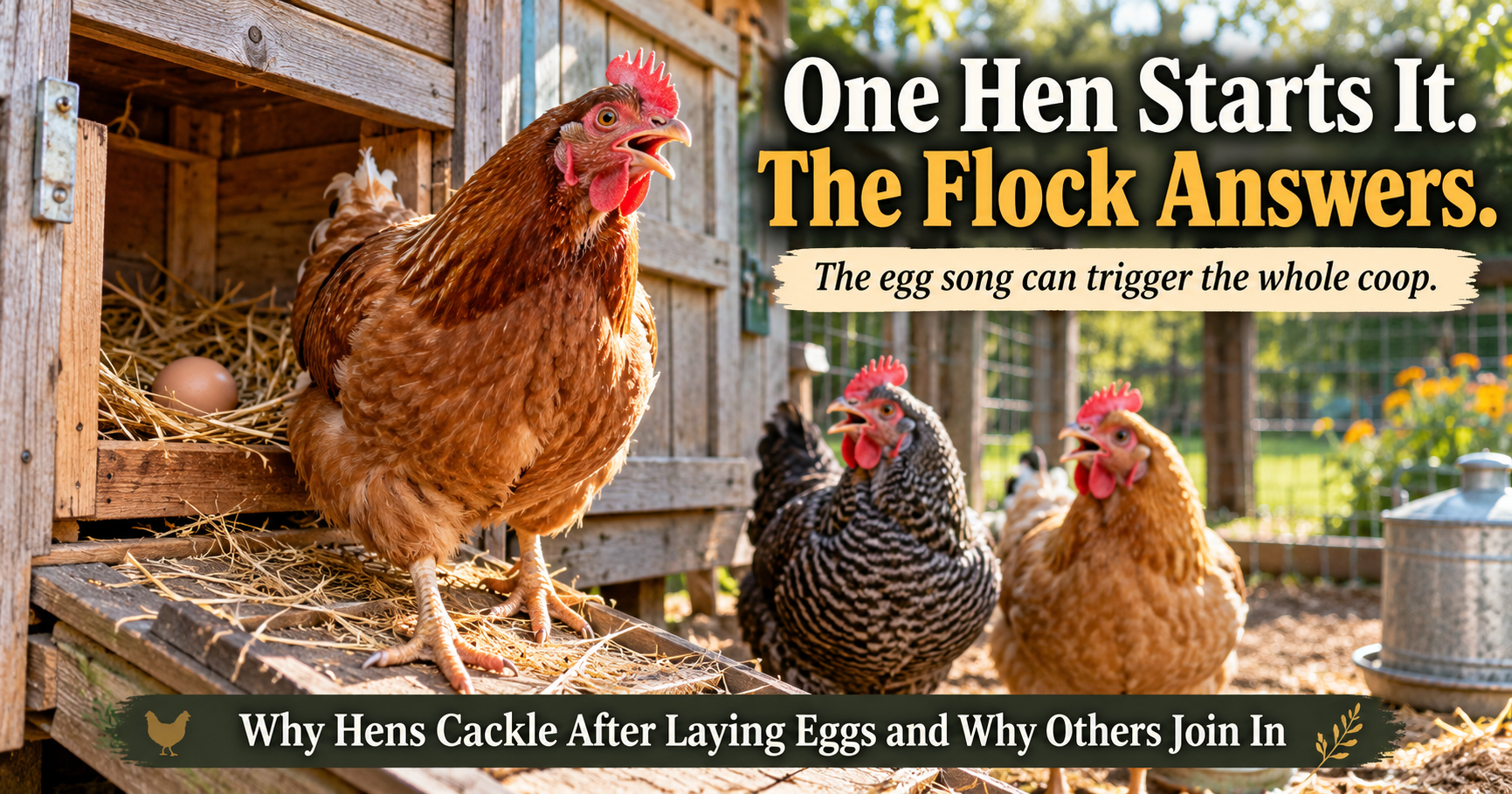
I’ve had hens lay an egg and then announce it like they just accomplished something nobody in the history of chickens has ever managed before.
The egg itself may have been produced quietly.
Then she steps out of the nesting box.
A few short calls start.
They get louder.
Another hen answers.
Before long, several chickens are carrying on while I’m standing there thinking, “Yes, I see the egg.”
If you’ve heard it, you already know the sound I’m talking about.
People usually call it the egg song.
It’s one of the most recognizable sounds a laying hen makes, and despite the name, it isn’t usually a beautiful little song. It can be loud, repetitive, and surprisingly dramatic.
What makes it even more interesting is that the hen who laid the egg may not be the only chicken making noise.
Sometimes another hen joins in.
Sometimes several do.
Sometimes a rooster gets involved too.
After spending enough time around laying hens, I’ve learned that the noise around egg laying isn’t nearly as random as it first seems.
Yes, Hens Really Do Have a Post-Laying Cackle
The loud cackling many of us hear after an egg is a recognized chicken vocalization.
Poultry researchers and Extension specialists refer to it as a post-laying cackle. University of Kentucky poultry guidance describes it as a series of shorter vocalizations followed by a longer sound.
Once you’ve heard your own hens do it repeatedly, you start recognizing the pattern.
It isn’t exactly the same from every hen.
Some birds barely make a fuss.
Others apparently believe the entire property needs an immediate update.
I’ve had hens that could lay an egg without attracting much attention at all, while another bird seems capable of making one egg sound like a flock-wide emergency.
That’s one thing I think gets missed in simple explanations of chicken behavior.
Individual chickens have personalities.
Some are just louder.


Chickens Can Get Vocal Before the Egg Too
The egg song isn’t always something that begins after the egg hits the nest.
Hens also make pre-lay vocalizations.
Before laying, I’ve watched hens become restless, investigate several nesting boxes, walk away, return, rearrange bedding, complain about another hen occupying a favorite box, and generally act like finding the correct place to lay an egg is a major decision.
Research describes similar pre-laying behavior. Hens may repeatedly inspect possible nests before finally entering one and settling down to lay.
This distinction matters because someone may hear their hen carrying on and assume:
“She must have just laid an egg.”
Then they check the box.
Nothing.
Give her some time.
She may be announcing the preparation rather than the finished product.

Why Do Hens Cackle After Laying an Egg?
This is where the answer gets more interesting than the common internet explanation.
You’ll often hear people say:
“She’s celebrating.”
That’s a cute way of describing it, and I understand why chicken keepers say it.
But we can’t confidently say a hen is proudly announcing her accomplishment in the human sense.
Researchers have proposed several functions for the post-lay cackle.
One hypothesis is that the call communicates reproductive information to males. Extension summaries note that post-laying cackling has actually been associated with less male attention immediately after laying, rather than serving as an invitation to mate.
So the real biological purpose may be more complicated than:
“Look at my egg!”
That said, from a backyard chicken keeper’s perspective, it certainly feels like an announcement.
Especially when everybody joins in.
Why Does Another Hen Join the Egg Song?
This is one of the funniest parts.
One hen lays.
Another hen that wasn’t even in the nesting box starts cackling.
Then maybe another.
I’ve seen enough flock behavior to know that chickens constantly respond to each other’s sounds and movements.
One chicken becomes alert and others look up.
One finds food and activity spreads.
One starts making noise and other birds become involved.
So when another hen joins the cackling, I don’t assume she secretly laid an invisible egg somewhere.
She’s responding to flock communication.
Chickens have a surprisingly broad vocabulary of calls used around food, danger, laying, frustration, social contact and other situations.
Sometimes the noise becomes a group event.
And if you have several laying hens, the morning can turn into a chain reaction.


This Is One Reason Chickens Get So Loud in the Morning
We just covered this because your flock’s morning noise can have several causes.
Egg laying is a big one.
A lot of hens tend to lay during the earlier part of the day, so nesting activity and post-laying cackling can pile up during the same few hours.
One hen is looking for a box.
Another hen is already occupying it.
A third just laid.
The first hen is complaining.
The third hen starts the egg song.
Now somebody else joins.
That’s how five chickens can sound like fifty.
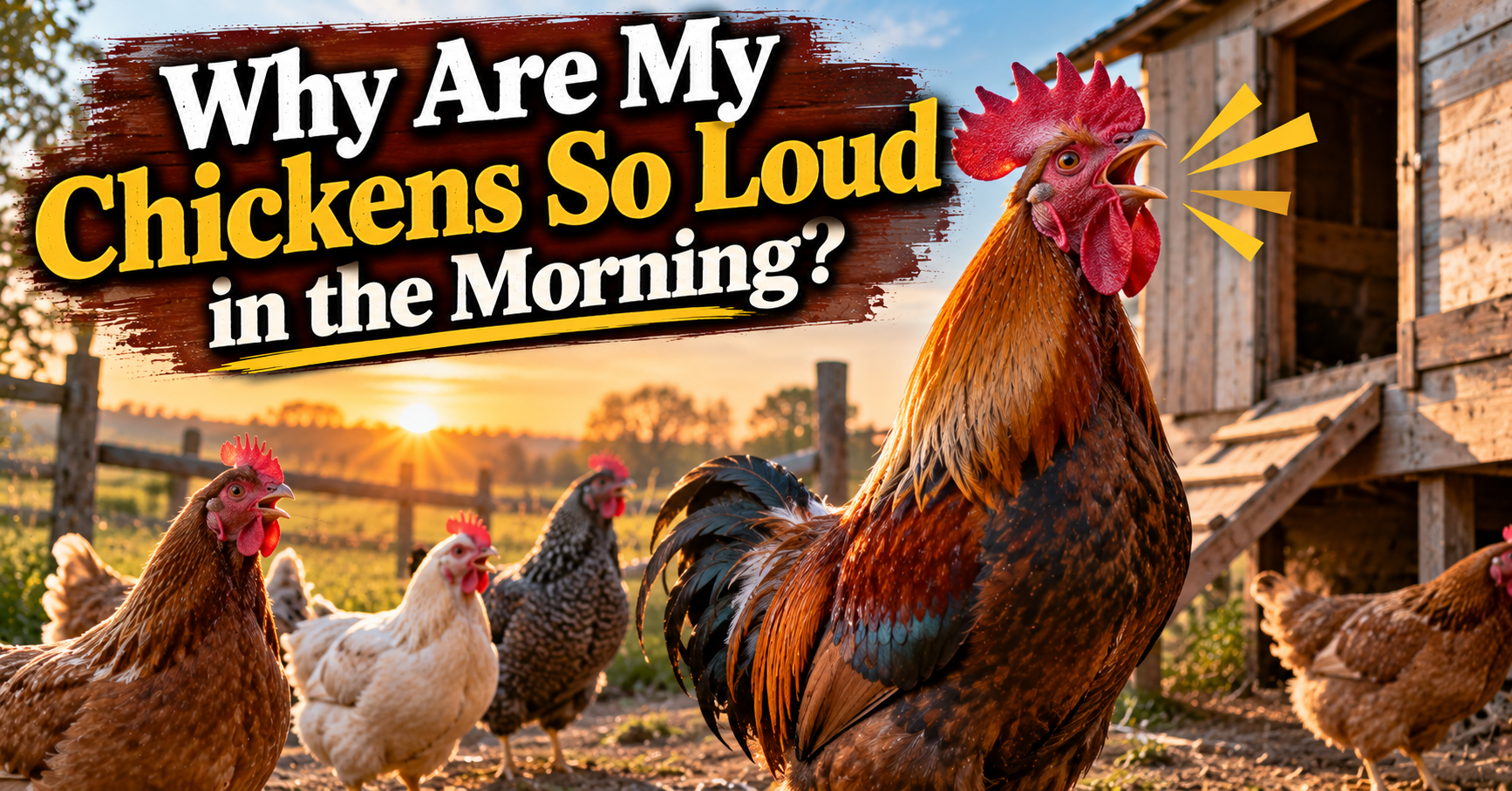
If the whole morning chorus is what has you wondering what’s going on, I broke that apart separately in why chickens can be so loud in the morning.
That article covers wanting out, food routines, alarms, laying, flock communication and the other reasons morning gets noisy.
Here I want to stay focused on the laying behavior itself.
Some Hens Are Much Louder Than Others
This is one of those things I don’t think you fully appreciate until you’ve had several hens long enough to learn who is who.
One hen gives a modest little cackle.
Another one comes out of the nesting box like she’s demanding a press conference.
Same species.
Same coop.
Sometimes even the same breed.
Completely different volume.
That’s why I always hesitate when people ask:
“Are hens noisy?”
Which hen?
Most of the day, a flock of hens can be remarkably quiet.
They’re scratching.
Eating.
Dust bathing.
Walking around.
Then one lays an egg and decides the neighborhood deserves to know.
Extension guidance similarly notes that hens are generally fairly quiet during normal foraging but may cluck and cackle around egg laying.
So if you live close to neighbors, don’t assume “no rooster” automatically means “no noise.”
It just removes the biggest repeat offender.


The Favorite Nesting Box Can Make the Noise Worse
Here’s chicken logic at its finest.
You provide four beautiful nesting boxes.
Three are empty.
One contains a hen.
Another hen decides the occupied box is the only place she could possibly lay her egg.
Now she’s standing outside complaining.
Loudly.
I’ve seen hens look directly at an empty box and apparently decide:
Absolutely not.
They want that box.
If this happens while the hen inside is already getting ready to lay, you’ve got pre-lay calls, frustration, movement and eventually a post-lay egg song happening in the same little area.
No wonder people think chickens scream for no reason.
Sometimes there is a reason.
It’s just not a reason that makes much sense to us.
Nesting Box Setup Can Affect How Much Drama You Get
If your hens are constantly fighting over nesting locations, I wouldn’t only blame their personalities.
I’d look at the setup.
Are the boxes comfortable?
Are they relatively private?
Is bedding clean?
Are chickens sleeping in them and leaving manure?
Is one box noticeably darker or better positioned?
Have all the hens decided they prefer the same spot?
Sometimes small adjustments make laying smoother.

We’ve already gone deeper into the practical side in the nesting box setup that finally ended the egg hunt.
A good nesting setup doesn’t guarantee quiet hens.
I don’t think anything guarantees that.
But it can remove some of the frustration surrounding laying.
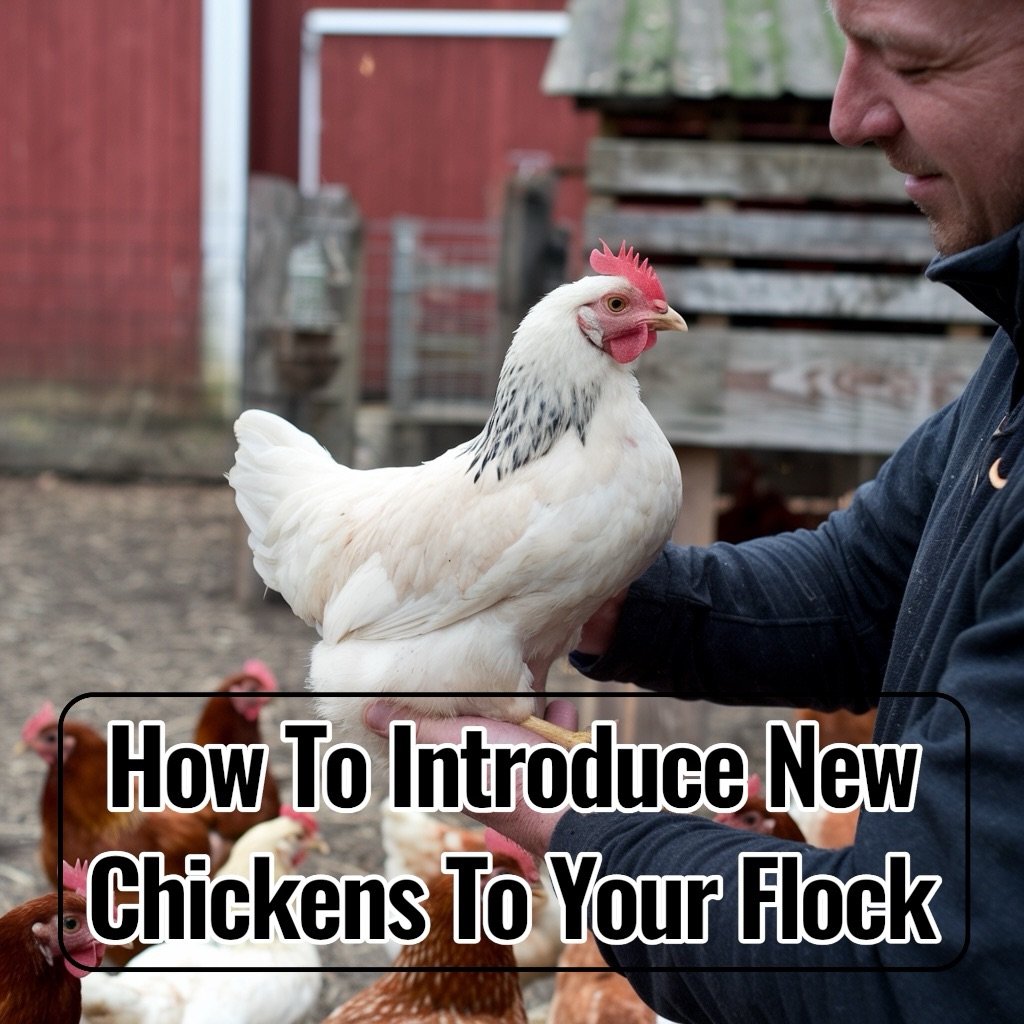
Why Does My Hen Pace and Yell Before Laying?
This is usually the part that makes people think something is wrong.
A hen nearing laying time may look restless.
She enters a nest.
Leaves.
Walks around.
Calls.
Returns.
Pokes her head into another box.
Leaves again.
It’s easy to interpret that as distress if you’ve never watched normal pre-laying behavior.
But nest searching and pre-lay vocalization are well documented. Hens can inspect multiple locations and become increasingly focused on finding a nesting spot as laying approaches.
What matters is what happens next.
If she eventually settles into a nest, lays normally, gets up and acts completely normal afterward, the earlier drama makes a lot more sense.
Don’t Assume Every Loud Laying Hen Is Normal
This is where experience matters.
A noisy hen around laying time can be completely normal.
But I don’t want somebody reading this and deciding every vocalizing hen is simply singing the egg song.
If she’s repeatedly straining without producing an egg, standing unusually upright, weak, constantly entering and leaving the nest, breathing hard, refusing food or acting obviously distressed, I would look closer.
Normal laying behavior should resolve.
The hen lays.
She leaves.
She goes back to being herself.
A bird that appears physically unable to lay or remains distressed needs more attention.
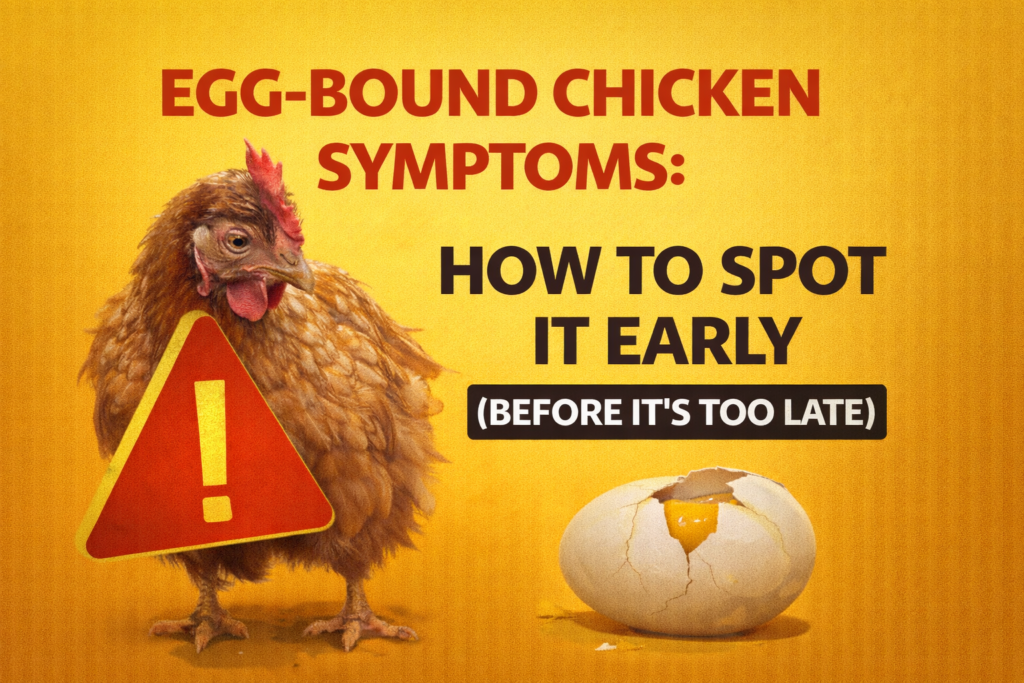
You already have detailed information on egg-bound chicken symptoms and how to spot trouble early if what you’re seeing goes beyond ordinary nesting behavior.
That’s an important distinction.
Egg song can be loud.
Egg binding can be dangerous.
Don’t confuse the two just because both involve a nesting hen.


Why Does My Hen Cackle but There Is No Egg?
I’ve seen this question a lot.
There are several possibilities.
She may be making a pre-lay call.
She may have laid somewhere else.
Another chicken may have laid in the box.
She may be reacting to another hen’s egg song.
She may simply be vocalizing for an unrelated reason that sounds similar to you.
Chicken sounds aren’t little spoken sentences where one noise always translates perfectly into one meaning.
Context matters.
Look at where she is.
What she was doing.
Whether she entered the nest.
Whether other chickens are involved.
Whether she eventually lays.
That’s much more useful than hearing one cackle and assuming an egg must exist.
Chickens Can Get Very Particular About When They Lay
Once you know your flock, you start noticing patterns.
Some hens are consistent.
Others seem less predictable.
Day length.
Age.
Breed.
Season.
Molting.
Stress.
Health.
All can influence laying.
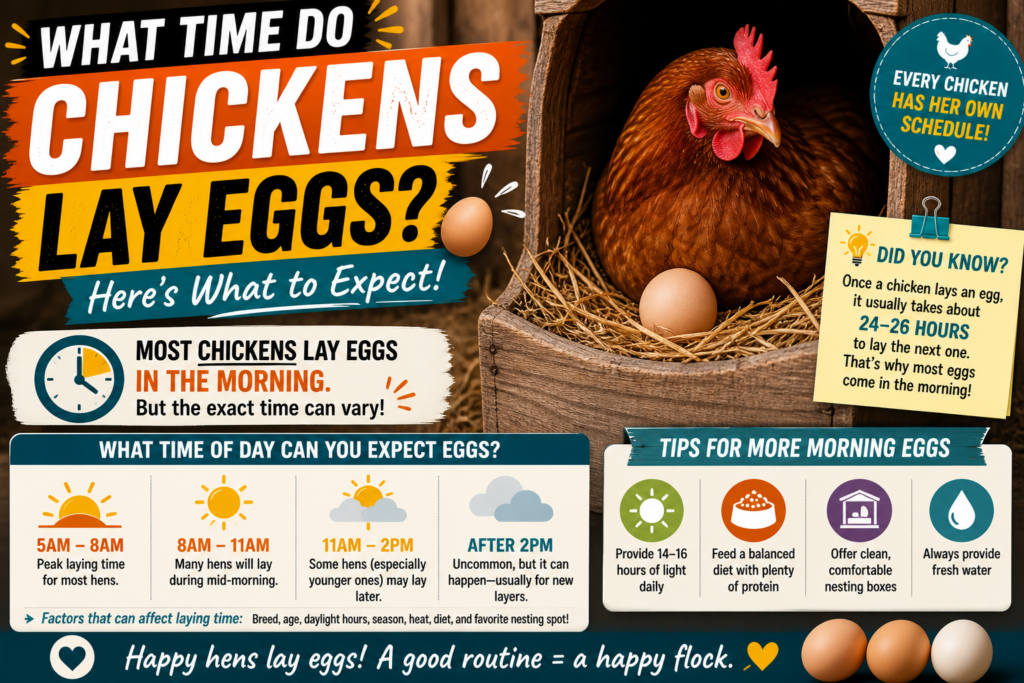
If you’re trying to figure out whether your hen’s schedule itself is unusual, what time chickens usually lay eggs is the better companion article.
This keeps us from turning one article into three.
Here we’re talking about the noise.
That article handles the timing.
Does the Egg Song Attract Predators?
This is something I’ve thought about because the call can be ridiculously loud.
Any loud animal can potentially advertise that animals are present.
But I wouldn’t try to stop normal post-laying vocalizations because of that possibility.
Your flock should already be protected from predators regardless of whether the hens are quiet.
Secure run.
Protected coop.
Strong fencing.
Good latches.
Safe nesting area.
Overhead protection where needed.
We spent a lot of time building out the predator-protection side of Backyard Chicken Pro specifically because predator safety needs to come from the setup, not from hoping chickens won’t make noise.
And chickens are absolutely going to make noise.
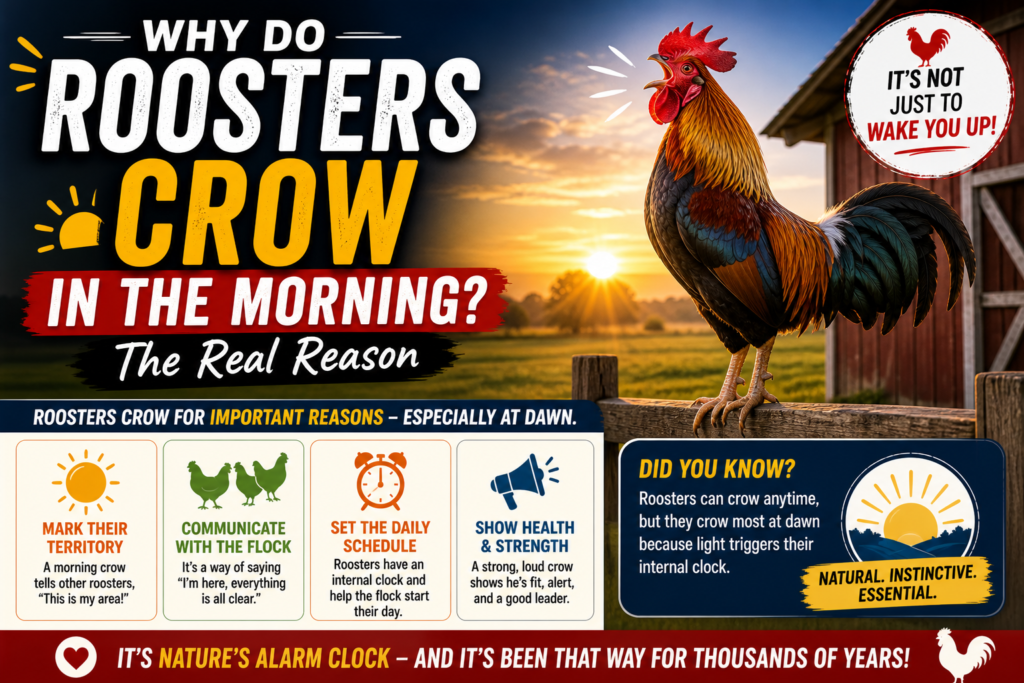
Why Does My Rooster Join In?
Roosters pay attention to what hens are doing.
They respond to flock sounds.
They may vocalize, move toward a hen or otherwise become involved in the commotion.
That doesn’t mean the rooster laid an egg.
I promise.
It means the flock is communicating.
Roosters are constantly monitoring hens, food, threats and other chickens.
The interesting part is that research into the post-lay cackle has suggested it may actually reduce male attention during the immediate post-laying period rather than attract mating attention.
Chicken communication is more sophisticated than it looks from outside the coop.
Why Is the Egg Song So Loud?
Because chickens did not evolve with suburban property lines in mind.
That’s my practical answer.
A chicken’s calls need to work within a social flock.
There may be distance between birds.
Vegetation.
Other animals.
General environmental noise.
The call isn’t designed around whether your neighbor is enjoying Saturday morning.
That means even a small flock can occasionally create a surprising amount of sound.
Fortunately, the classic post-laying cackle is usually temporary.
She makes her announcement.
The flock settles.
Life moves on.
It’s very different from a rooster that may crow repeatedly throughout the day.
Can You Stop a Hen From Doing the Egg Song?
I wouldn’t try to eliminate normal vocalization.
It’s part of being a chicken.
What I would do is reduce the unnecessary things that make laying more stressful or noisy.
Enough suitable nesting space.
Clean boxes.
Consistent routines.
Low competition.
No predators harassing the flock.
Good food and water access.
If one hen has to spend twenty minutes pacing because her only preferred nest is occupied, that’s different from the ordinary few minutes of cackling after a successful lay.
You may be able to reduce the drama.
You’re probably not going to turn chickens into silent pets.
Should You Put More Nesting Boxes In?
Maybe.
But here’s the funny thing.
You can add another box and they may still all choose the same one.
The usual guidance for nesting-box numbers is useful, but chickens get a vote too.
I’ve seen plenty of situations where a flock has enough boxes on paper and still crowds around a favorite.
So if one particular box gets all the traffic, I’d look at why.
Darker?
Quieter?
Different bedding?
Better height?
Farther from the door?
Sometimes the hens are telling you what they prefer.
The Egg Song Can Help You Find Hidden Nests
This is one of the practical benefits of having a loud hen.
If you’re free-ranging chickens and eggs start disappearing, listen.
A hen may quietly sneak off somewhere unexpected to lay.
But after the egg?
She might give herself away.
I’ve followed chicken noise and found eggs in places I wouldn’t have checked first.
Under shrubs.
Behind equipment.
In tucked-away corners.
Chickens are surprisingly good at finding private nesting sites when given enough freedom.
They’re not always good at keeping them secret afterward.
Free-Range Hens Can Make Laying More Interesting
With a confined flock, you know where the nesting boxes are.
With free-ranging birds, the possibilities expand dramatically.
That’s one tradeoff of giving chickens more space.
They get more opportunities to forage, explore and behave naturally.
You get more opportunities to ask:
Where did she put the egg this time?

Our real-life advantages of free-range chickens article covers why I still think the benefits can be worthwhile, but hidden nests are one of the little realities people don’t always mention.
The egg song can become an accidental tracking device.
Why Does One Hen Sing and Another Stay Quiet?
Individual variation.
That’s probably the biggest reason.
Breed may play a role.
Age may influence behavior.
Flock dynamics matter.
But within the exact same backyard flock, I still see personality differences.
One bird is dramatic.
Another isn’t.
Some chickens follow you everywhere.
Some keep their distance.
Some flap enthusiastically.
Some barely react.
Some seem determined to narrate their entire day.
The more of these behavior articles we’ve built, the clearer that pattern becomes.
There is no single “chicken personality.”
Do Young Pullets Sing the Egg Song?
Once pullets begin laying, you may start hearing vocal behavior around the nesting box too.
First eggs can come with plenty of restlessness and uncertainty while the young hen figures out the routine.
Before she begins laying at all, you may notice other maturity signs.
Comb changes.
Interest in nesting areas.
The famous submissive squat.
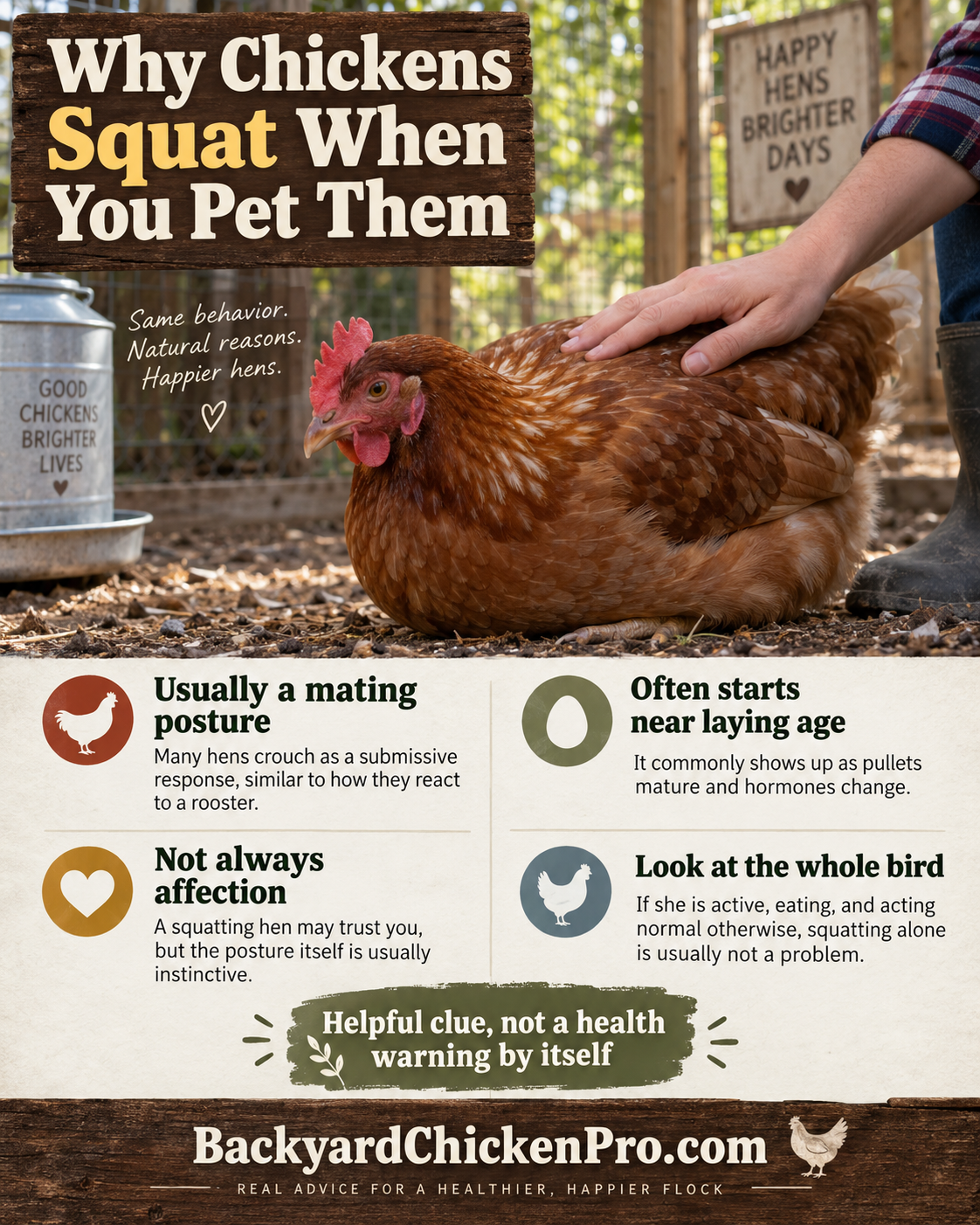
We’ve already covered why hens suddenly squat when you pet them because that behavior often starts appearing as pullets reach reproductive maturity.
Seeing those little changes together can tell you first eggs are getting closer.
What If My Hen Suddenly Stops Making the Egg Song?
Probably nothing worth panicking over.
Not every hen sings every time.
Behavior changes.
A bird that normally cackles loudly may occasionally lay quietly.
The sound itself isn’t something I use as a health measurement.
I’m much more interested in:
Is she still laying normally?
Eating?
Drinking?
Active?
Maintaining weight?
Behaving normally?
One missing egg song doesn’t concern me.
A major change in laying combined with other health or behavior changes deserves more attention.
Don’t Confuse the Egg Song With an Alarm Call
Once you’ve heard both enough, they usually feel different.
The egg song tends to happen around nesting and laying.
Alarm behavior changes the whole flock’s posture.
Heads come up.
Birds freeze or move toward cover.
Everybody looks in the same direction.
That’s when I stop thinking about eggs and start looking around the property.
Hawk?
Dog?
Fox?
Something unfamiliar?
Sounds become much easier to interpret when you watch the body language happening at the same time.
The Flock Teaches You Its Own Vocabulary
This is one of my favorite parts of keeping chickens.
You don’t need to memorize a dictionary of chicken sounds before owning a flock.
You learn them by hearing the same things happen repeatedly.
That hen makes that sound when she wants the nest.
This hen yells after laying.
That one complains when another bird gets too close.
The flock makes a completely different sound when a hawk goes over.
Eventually, you’ll hear noise from the house and have a pretty good guess what is happening before you ever walk outside.
That’s when chickens stop sounding like random noise.
They start sounding like communication.
What I Listen for Around Laying Time
When a hen gets vocal near the nesting boxes, I listen and watch together.
Is she entering and leaving boxes?
Normal pre-lay behavior is likely.
Is she leaving a box after sitting for awhile?
Egg song becomes likely.
Are several hens crowding one box?
Could be nesting competition.
Is she straining or acting physically distressed?
Now I’m paying closer attention.
Did the entire flock suddenly freeze?
I’m looking for a predator instead.
The sound alone is only half the information.
The chicken tells you the rest with her body.
Why the Egg Song Doesn’t Bother Me Anymore
At first, a loud hen makes you think something is wrong.
After awhile, you hear that familiar cackle and know exactly where to look.
Most of the time, there’s a warm egg waiting.
I’ve come to enjoy that.
It’s loud.
Sometimes obnoxiously loud.
Occasionally it starts a chain reaction that gets the whole flock involved.
But it’s one of those behaviors that makes keeping chickens interesting.
You start with:
Why is that chicken screaming?
And eventually you’re walking toward the coop thinking:
Somebody laid an egg.
That’s the difference a little time around chickens makes.
Frequently Asked Questions
Why does my hen cackle after laying an egg?
Hens have a recognized post-laying vocalization usually called the post-lay cackle. Its precise biological function isn’t completely settled, although research suggests it may communicate reproductive information and may reduce male attention immediately after laying.
Why do other chickens join the egg song?
Chickens respond socially to one another’s vocalizations. One hen’s post-laying cackle can trigger activity or vocal responses from other flock members even though they didn’t lay the egg.
Why does my hen make noise before laying?
Hens can make pre-lay calls and become restless while searching for a nesting site. Nest inspection and increased nest-focused activity are normal parts of pre-laying behavior.
Does every hen do the egg song?
No. Some hens are extremely vocal after laying while others are relatively quiet.
Why does my hen cackle but there is no egg?
She may be vocalizing before laying, responding to another hen, using a different social call, or she may have laid somewhere you haven’t found yet.
Is the egg song a sign that laying was painful?
Not by itself. Post-laying cackling is normal. Persistent straining, weakness, repeated unsuccessful nesting attempts or other physical distress is a different situation and deserves closer attention.
Can hens be loud enough to bother neighbors?
Yes, occasionally. Hens are generally quieter than roosters, but their laying cackles can be quite loud for short periods.
Do roosters make an egg song too?
Roosters may respond to hens’ activity and calls, but the classic post-laying cackle is associated with hens.
About the Author
Megan Whitaker covers chicken behavior and flock dynamics for Backyard Chicken Pro, focusing on the noises, habits and odd little routines that start making sense once you’ve spent enough time watching real chickens. Her work combines firsthand flock observations with established poultry behavior research, helping backyard chicken keepers understand what their birds are communicating without turning every strange sound into a problem.