When people build a chicken run, they usually spend weeks thinking about fencing.
Should they use chicken wire?
Hardware cloth?
How tall should the fence be?
Should they cover the roof?
Those are all important questions.
But after walking through the predator-proof chicken run at Weaver Family Farms, I realized another part of the design deserves just as much attention.
The ground.
Daxon explained that predators don’t always challenge the fence itself.
Many of them immediately begin testing the area underneath it.
That’s when I started paying much more attention to what goes inside a chicken run and how the flooring itself can either help or hurt your predator protection.
The good news is there isn’t just one good option.
The best flooring depends on your budget, your climate, and the kinds of predators you deal with.
Dirt Is Still the Most Common Choice
Most backyard chicken runs simply use natural ground.
There’s nothing wrong with that.
It’s inexpensive.
Chickens love scratching through it.
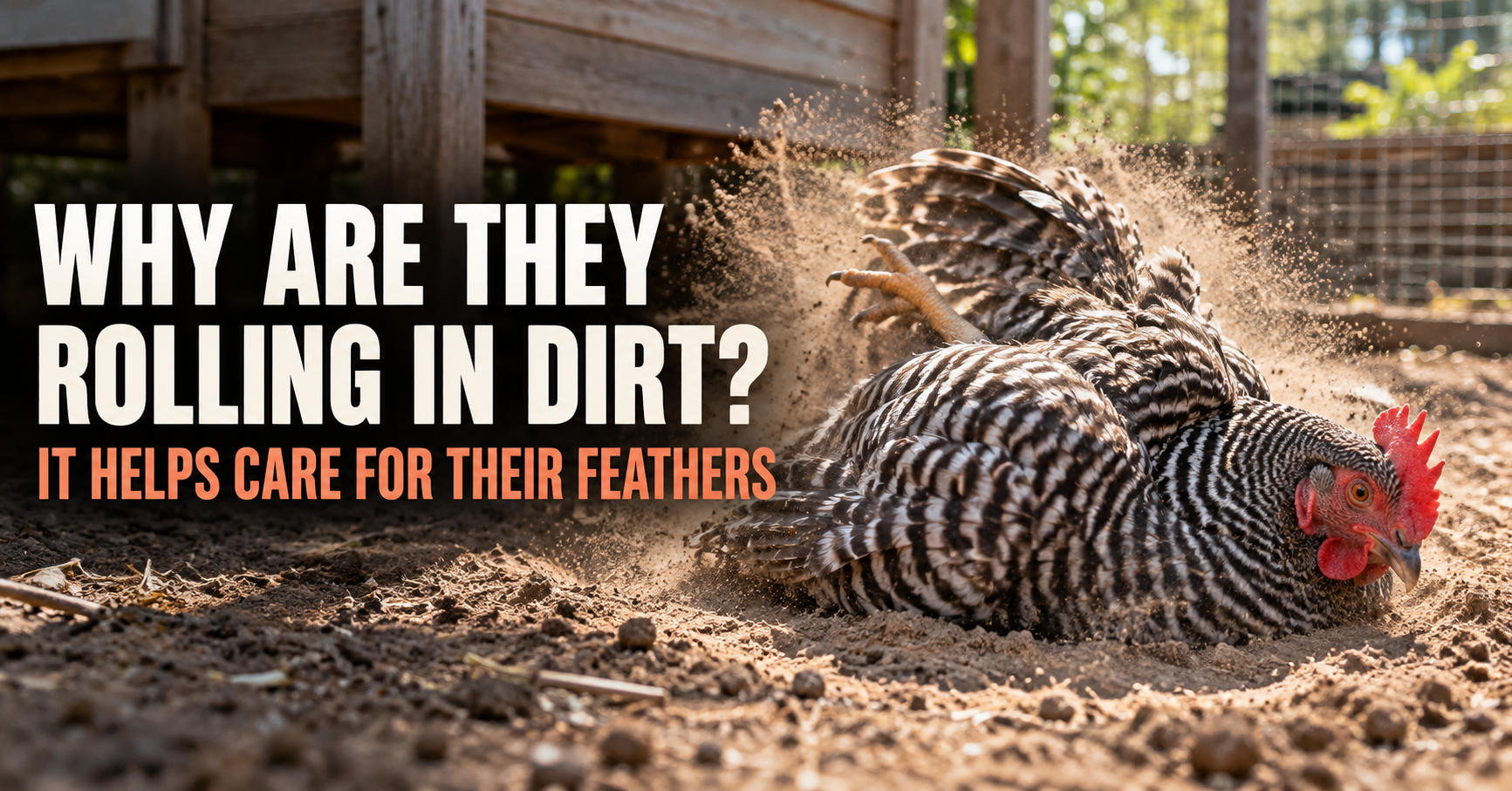
Dust bathing happens naturally.
Grass can grow if the run gets moved or rotated.
The downside is that dirt is also the easiest surface for predators to dig through.
Foxes, coyotes, neighborhood dogs, and even raccoons often begin investigating right along the edge of the fence where loose soil gives them the best chance of getting underneath.
That doesn’t mean dirt is a bad choice.
It simply means you’ll need additional protection around the perimeter.
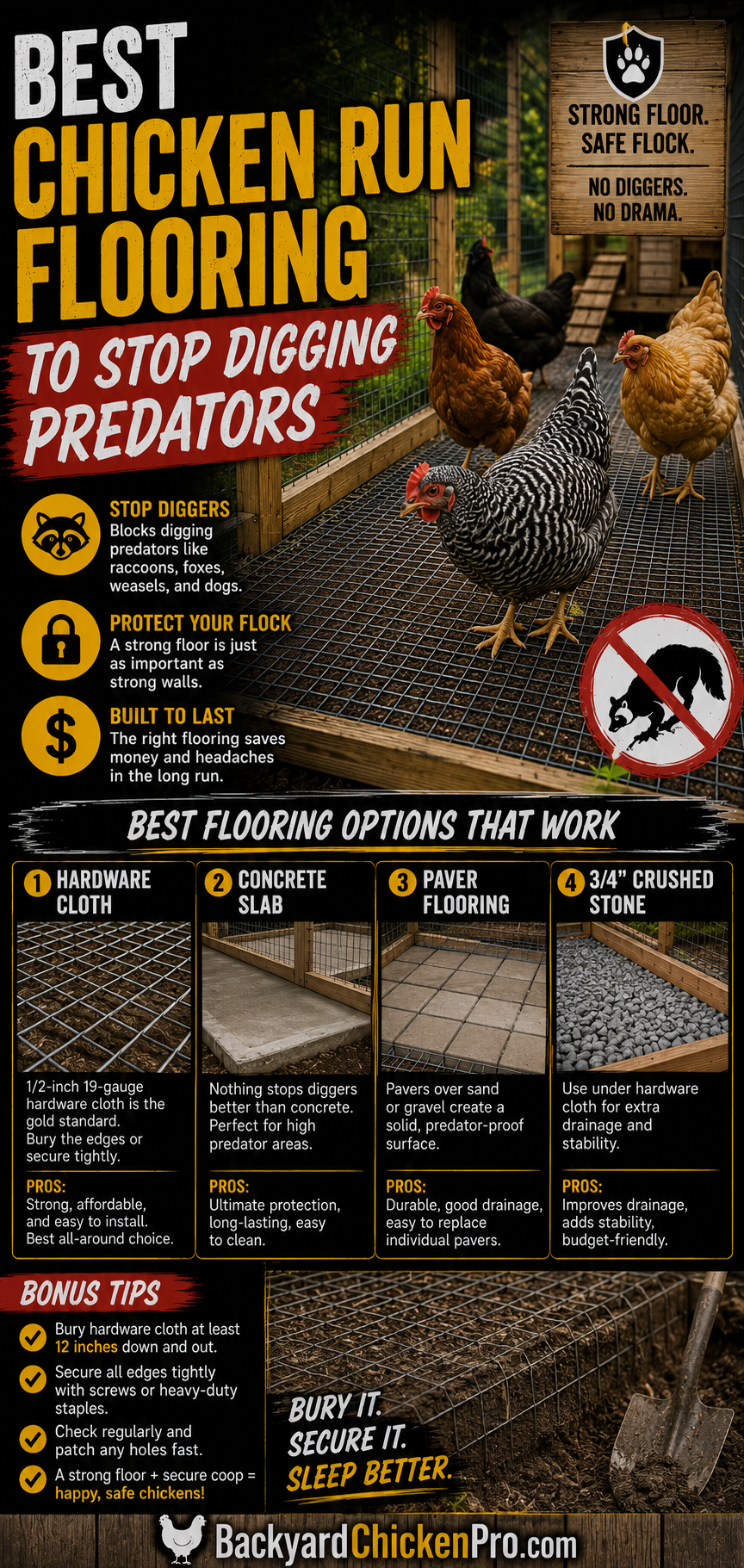
Hardware Cloth Under the Perimeter Is One of My Favorite Upgrades
If I were building a permanent chicken run today, one improvement I’d make from the beginning is reinforcing the lower perimeter with hardware cloth.
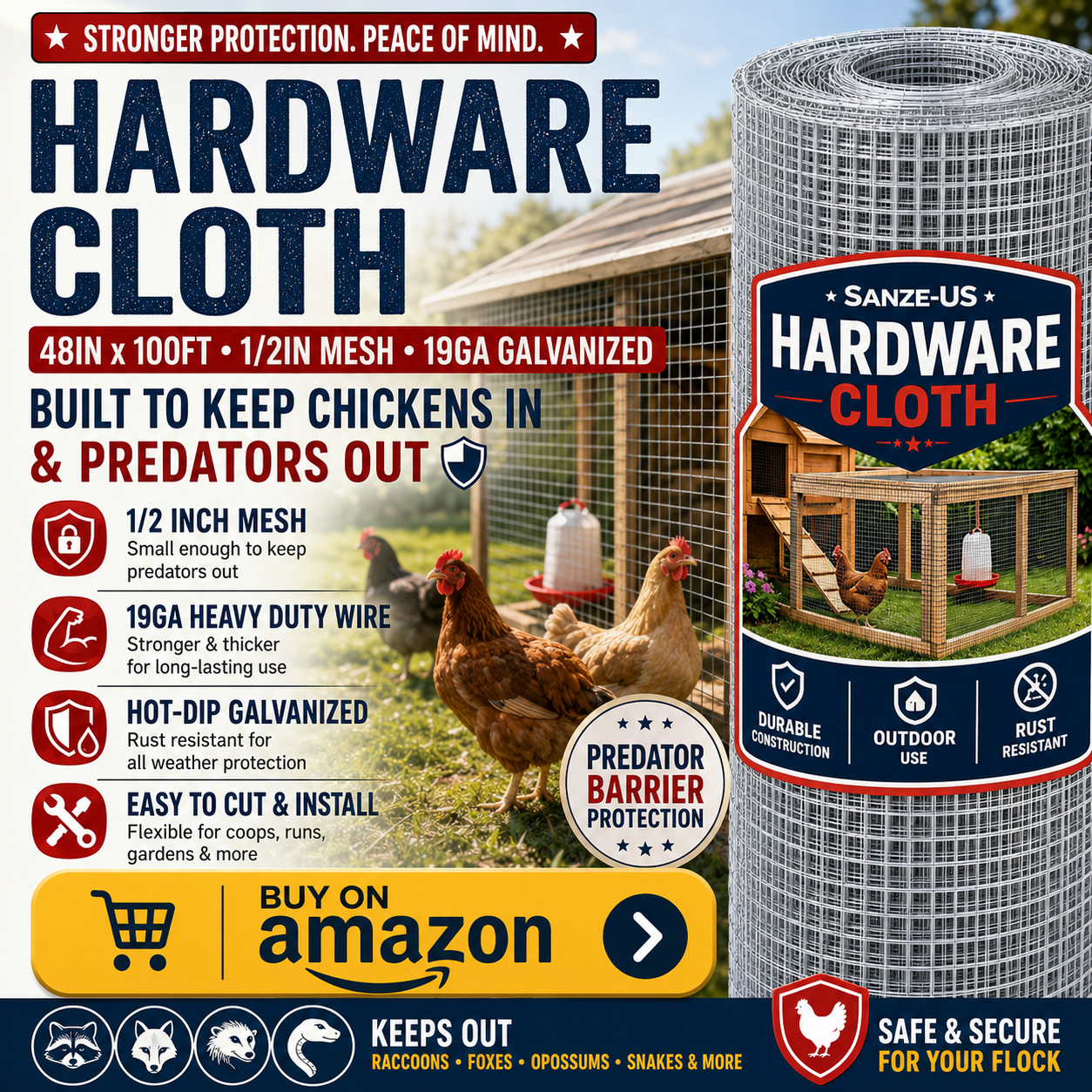
A quality 48-inch x 100-foot roll of galvanized ½-inch hardware cloth works extremely well for buried barriers and predator aprons because the welded mesh is much more difficult for digging predators to push through.
You don’t necessarily need to cover the entire floor.
Protecting the perimeter is where it usually makes the biggest difference.
Sand Drains Well and Stays Cleaner
Sand has become a very popular flooring choice over the past several years.
I understand why.
Rain drains through it much faster than heavy clay.
Droppings are easy to remove.
It dries quickly after storms.
Many chicken keepers also find that sand reduces muddy conditions during wet seasons.
The biggest drawback is cost.
Covering a large walk-in run with several inches of sand isn’t always cheap.
Still, if your property stays muddy most of the year, it can be well worth the investment.
Gravel Works in the Right Places
Gravel isn’t usually my first choice for the entire run because chickens prefer scratching through softer materials.
However, I do like using gravel around gates and high-traffic areas.
Those spots tend to become muddy first.
Adding gravel helps improve drainage while reducing the amount of dirt your boots track into the coop.
Grass Looks Beautiful…At First
Everyone loves the idea of a lush green chicken run.
The problem is that chickens do too.
They’ll quickly scratch, peck, and eat much of the vegetation.
Before long, many grassy runs become bare dirt anyway.
That’s one reason I appreciated the setup at Weaver Family Farms.
Instead of expecting the grass to survive forever, the design gave the chickens plenty of room to spread out while also using a connected chicken tractor that could be moved onto fresh grass whenever needed.
That combination keeps the flock happier while giving the ground time to recover.
If you haven’t seen that project yet, How a 10×75 Predator-Proof Chicken Run Was Built is worth reading because it shows how a permanent run and movable tractor can complement each other.
Wood Chips Make a Comfortable Surface
Another flooring material I like is coarse wood chips.
They help reduce mud.
They give chickens something fun to scratch through.
As they slowly break down, they can even improve the soil underneath.
The biggest downside is that they’ll eventually need replacing.
Depending on your climate and flock size, that might be every year or two.
Still, many chicken keepers find they’re worth it because they create a cleaner, more comfortable environment.
Concrete Stops Digging…But It Isn’t Perfect
Some people choose concrete because predators obviously can’t dig through it.
That’s certainly true.
Concrete also makes cleaning much easier.
However, it removes many of the natural behaviors chickens enjoy.
Scratching.
Dust bathing.
Foraging.
Most backyard chicken owners prefer giving their flock a softer, more natural surface whenever possible while using other methods to stop digging predators.
Pavers Create a Tough Barrier Around the Perimeter
One flooring idea I don’t see talked about enough is using concrete pavers around the outside edge of the chicken run.
Instead of covering the entire floor, some chicken keepers lay a row of pavers directly along the fence line.
That creates another obstacle for digging predators.
Foxes.
Coyotes.
Neighborhood dogs.
They usually start digging right beside the fencing.
Running into solid pavers often encourages them to move somewhere else.
It’s a relatively inexpensive upgrade that can last for many years.

Mixing Flooring Materials Often Works Best
After looking at different chicken setups over the years, I’ve realized there usually isn’t one perfect flooring material.
The best runs often combine several.
For example:
- Dirt or grass in most of the run.
- Sand inside high-traffic areas.
- Gravel near gates.
- Wood chips under shaded sections.
- Hardware cloth protecting the perimeter.
That’s exactly the type of practical thinking I appreciated while touring the chicken setup at Weaver Family Farms.
Instead of trying to force one material to do every job, different materials were used where they made the most sense.
Good Drainage Is Just as Important as Predator Protection

One mistake many new chicken owners make is focusing only on predators while forgetting about water. A large chicken waterer can be a practical addition when you are improving daily run setup alongside predator protection.
Standing water creates mud.
Mud creates bacteria.
Wet conditions attract flies and make daily chores much less enjoyable.
If your run naturally collects water after every rain, I’d seriously consider adding sand or gravel to improve drainage before the problem gets worse.
Keeping the run dry benefits both your chickens and the overall condition of your coop.
Don’t Forget About Your Chickens’ Comfort
Predator protection matters.
But your chickens still have to live there every day.
They enjoy scratching through loose materials.
Looking for bugs.
Taking dust baths.
Exploring.
A completely hard surface may stop digging predators, but it also removes many of the behaviors that make chickens…well…chickens.
That’s why I usually recommend balancing predator protection with giving your flock an environment they’ll actually enjoy.

Common Flooring Mistakes I See
The flooring itself usually isn’t the problem.
It’s how people install it.
Some of the most common mistakes include:
- Forgetting to improve drainage before adding new material.
- Allowing mud to build up around gates.
- Ignoring low spots where water always collects.
- Assuming flooring alone will stop predators.
- Never replacing worn-out bedding or wood chips.
Small improvements over time almost always work better than waiting until the entire run needs rebuilding.
Flooring Alone Won’t Stop Predators
One thing I always remind people is that flooring is only one part of your overall defense system.
Strong flooring won’t help much if your doors don’t latch securely.
Likewise, excellent fencing can’t compensate for large gaps underneath the run.
Everything works together.
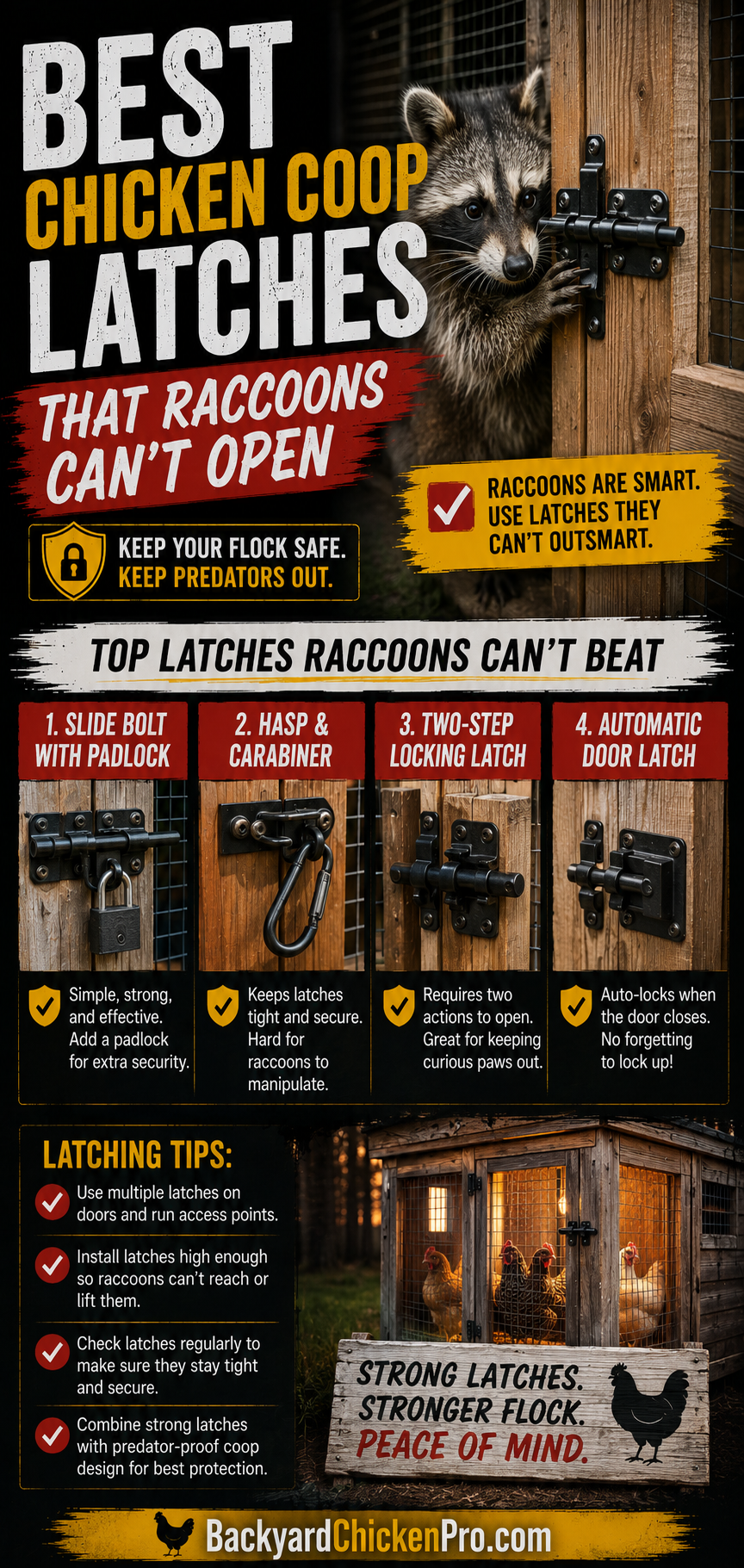
Earlier I explained why secure chicken coop latches matter so much because predators often investigate the doors just as much as the ground.
Building several layers of protection always works better than relying on one feature.


Build for the Predators You Actually Have
Every property is different.
If foxes are your biggest concern, you’ll probably focus more on digging protection.
If raccoons regularly visit your yard, stronger latches and better fencing may deserve more attention.
If coyotes pass through every evening, taller fencing and secure overnight housing become even more important.
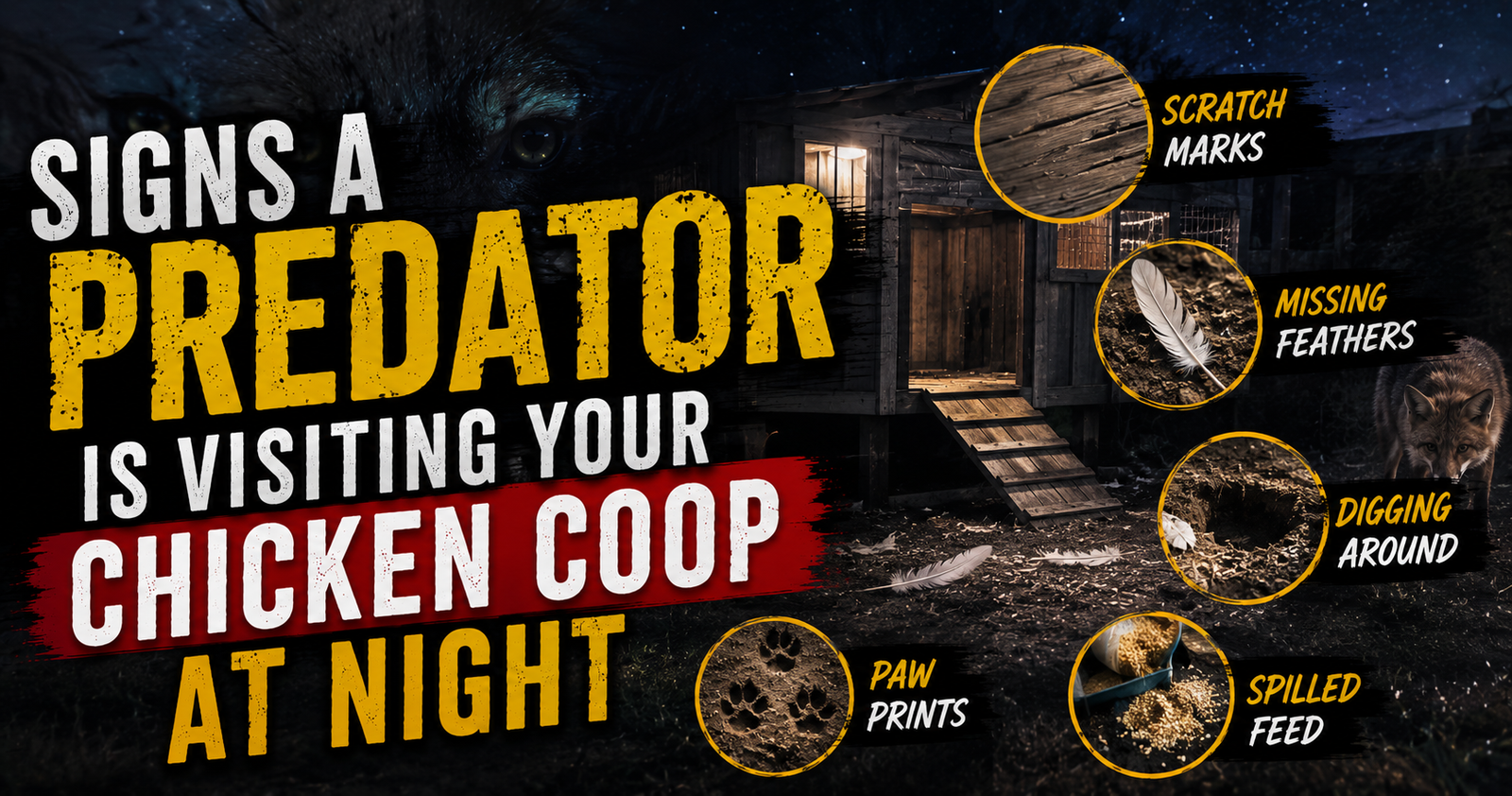
Earlier I shared how to recognize the signs that a predator is visiting your chicken coop at night because identifying the predator often tells you exactly which improvements should come first.
There’s no sense spending money solving the wrong problem.
My Recommendation
After seeing one of the best backyard chicken setups I’ve visited and talking with experienced poultry keepers, this is the combination I’d choose if I were starting from scratch.
Natural dirt or grass across most of the run.
Hardware cloth protecting the perimeter.
Gravel around the gate.
Wood chips in heavily used areas.
Good drainage throughout.
That combination gives chickens a comfortable place to spend their day while making life much harder for predators looking for an easy meal.
No flooring material is perfect by itself.
But paired with strong fencing, secure latches, and regular maintenance, it becomes another important piece of a much larger predator protection plan.
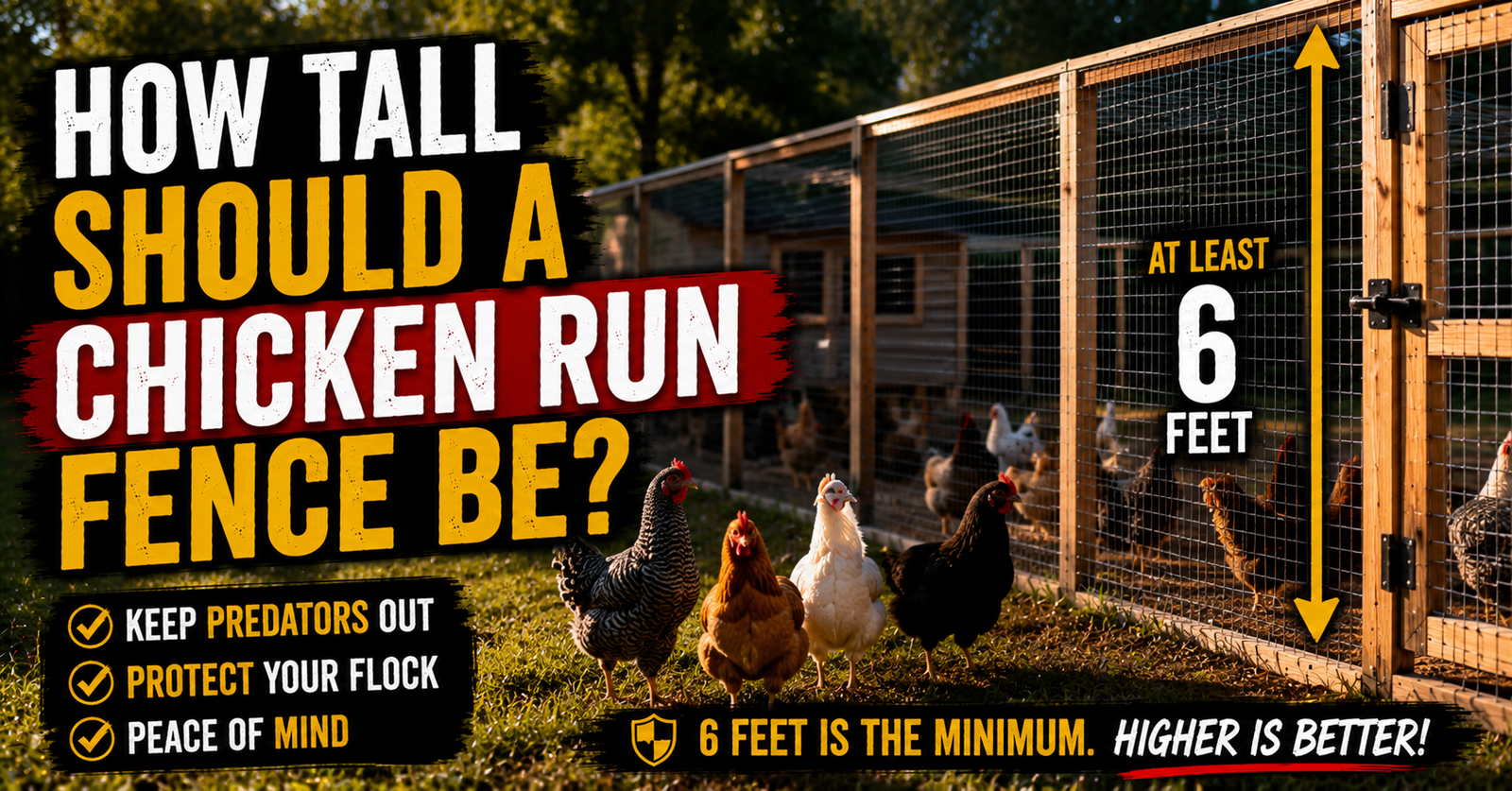
The flooring inside your run works hand in hand with the height of your fencing. Strong ground protection won’t do much good if curious chickens or climbing predators can simply go over the top. If you’re still designing your enclosure, How Tall Should a Chicken Run Fence Be? explains why fence height deserves just as much planning as the flooring underneath it.
Frequently Asked Questions
What is the best flooring for a chicken run?

For most backyard flocks, a combination of natural ground, wood chips, sand, and hardware cloth around the perimeter provides a good balance of drainage, comfort, and predator protection. Natural ground also gives chickens more opportunities to scratch and forage, benefits covered in natural ground for chicken foraging.
Is sand better than dirt in a chicken run?
Sand drains better and is easier to clean, while dirt allows more natural scratching and foraging. The better choice depends on your climate and how much maintenance you’re willing to do.
Will hardware cloth under a chicken run stop predators?
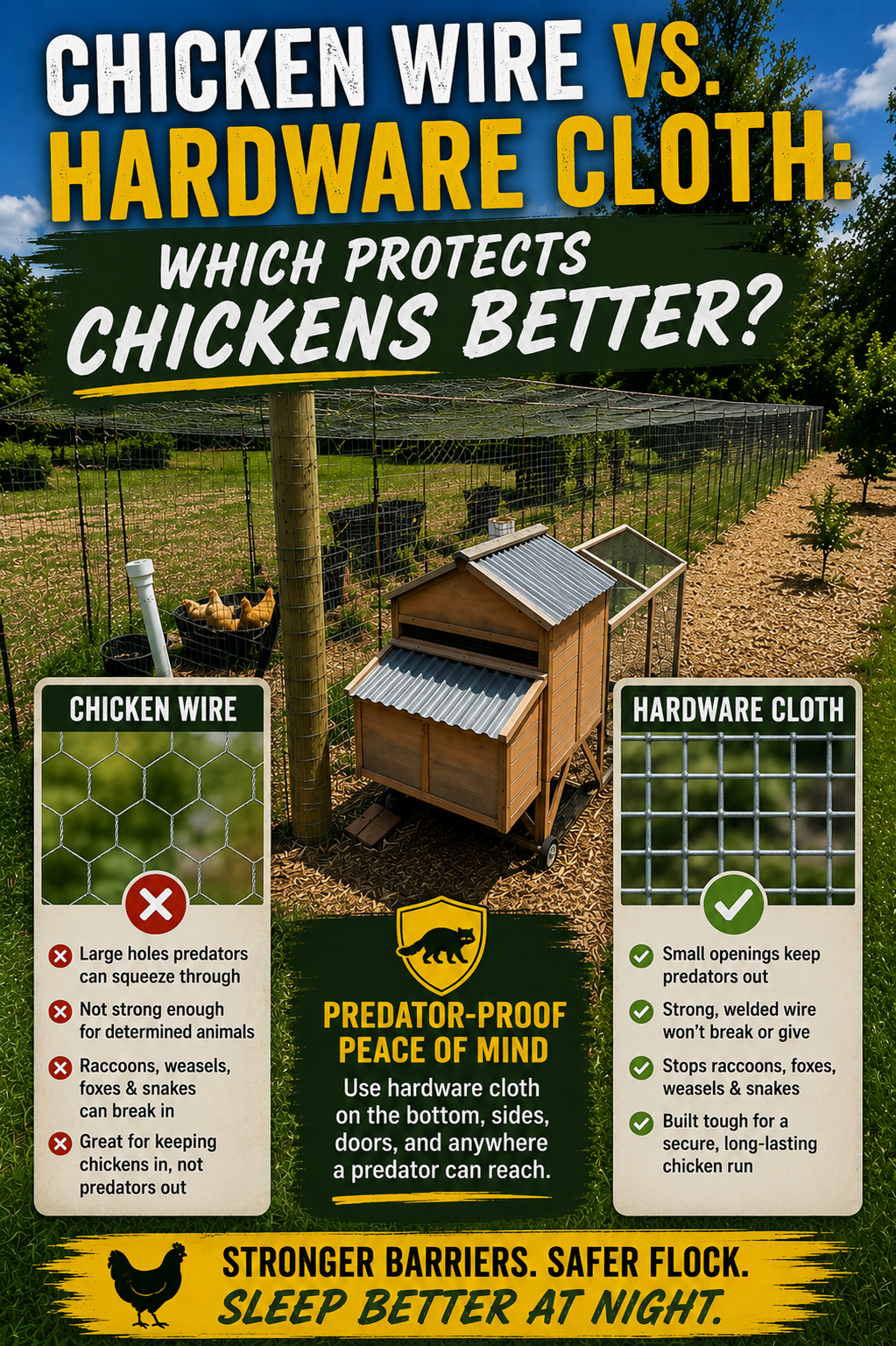
Installing hardware cloth around the perimeter or beneath vulnerable areas can be extremely effective at discouraging digging predators like foxes and coyotes. The same material can also protect other vulnerable parts of the enclosure, and where hardware cloth works best explains how chicken wire compares in those locations.
Should I put gravel in my chicken run?
Gravel works especially well around gates and other high-traffic areas where mud tends to develop. It’s usually less comfortable as the primary flooring throughout the entire run.
Can chickens live on concrete?
They can, but concrete removes many natural behaviors like scratching and dust bathing. Most backyard chicken keepers prefer softer, more natural flooring whenever possible.
About the Author
Nathan Holloway
Nathan Holloway specializes in predator prevention, chicken coop construction, and practical backyard flock security. He regularly visits farms, studies real-world chicken housing designs, and learns directly from experienced poultry keepers to discover what works in everyday backyard flocks. Through Backyard Chicken Pro, Nathan shares practical observations, construction ideas, and straightforward advice that help chicken owners build safer coops, healthier chicken runs, and long-lasting protection for their flocks.