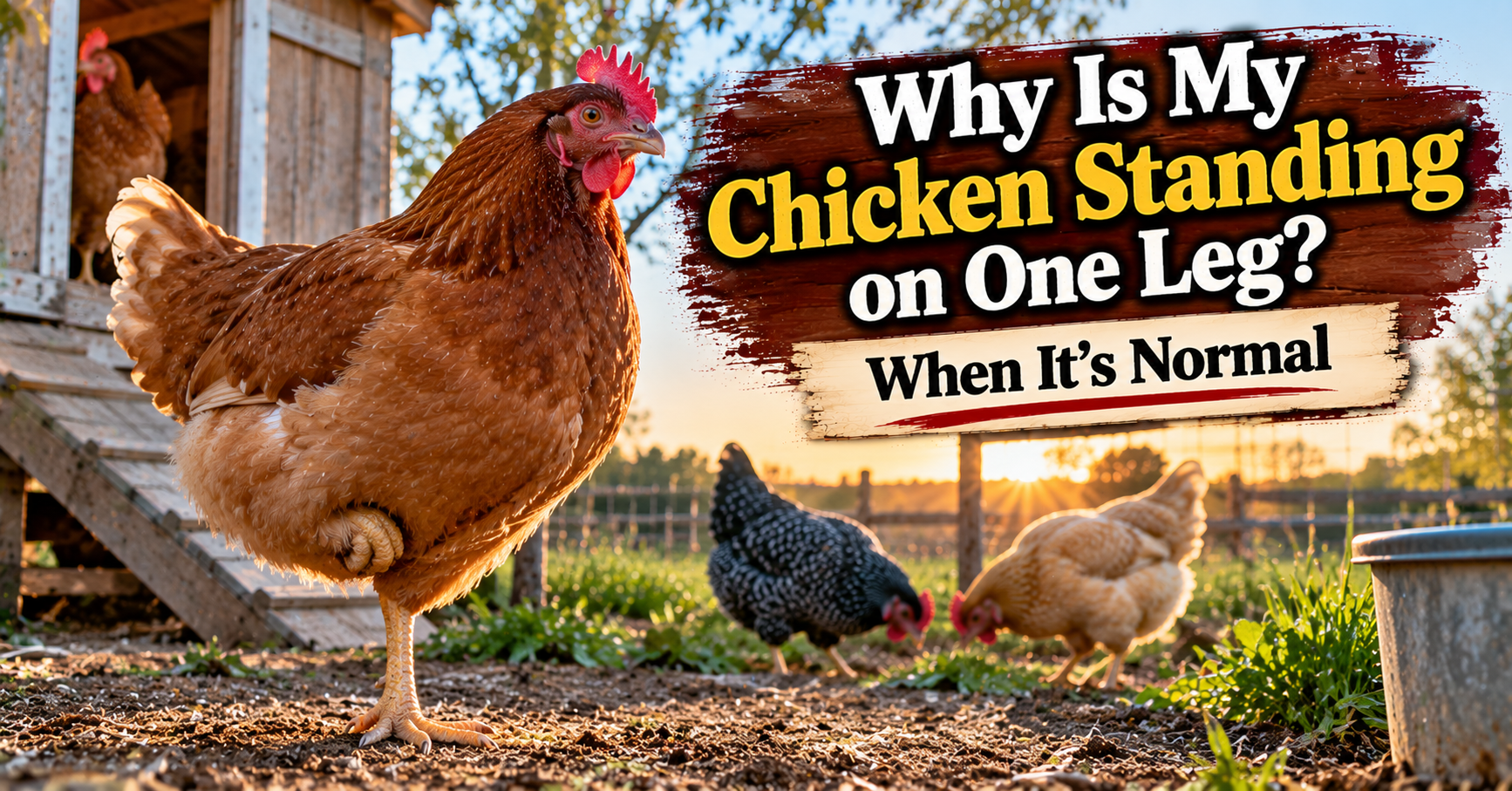
I’ve walked past chickens plenty of times and seen one standing there with a foot completely tucked up like she somehow misplaced a leg.
The first time you notice it, it looks strange.
Especially when every other chicken is standing normally.
One leg is planted on the ground.
The other has disappeared up into the feathers.
Sometimes the hen looks half asleep while she’s doing it.
Other times she’s perfectly alert and watching everything around her.
Most of the time, I don’t immediately worry.
Chickens regularly stand on one leg when they’re resting, keeping a foot warm, or simply comfortable.
But there is one important catch.
A chicken can also hold one leg up because putting weight on that foot hurts.
That’s why I’ve learned not to judge this behavior from the standing position alone.
I watch what happens when the chicken starts walking.
That usually tells me much more.
A Chicken Standing on One Leg Is Often Completely Normal
If I see a healthy chicken calmly standing on one foot, my first thought is usually rest or warmth.
Chickens spend a huge part of the day on their feet.
They’re walking.
Scratching.
Digging.
Running.
Jumping onto things.
Foraging.
Their legs and feet get plenty of use.
So it doesn’t surprise me when a chicken occasionally gives one foot a break.
You’ll often see the unused foot pulled up close against the body and tucked into the feathers.
If she eventually switches feet or puts the raised foot down and walks away normally, I usually don’t give it another thought.

Cold Weather Is One of the Biggest Reasons
This is probably the easiest version of the behavior to understand.
Chicken legs and feet aren’t covered with the same thick layer of feathers that protects most of the body.
On a cold morning, you’ll sometimes see a bird lift one foot up and tuck it against her warm body.
Later she may switch feet.
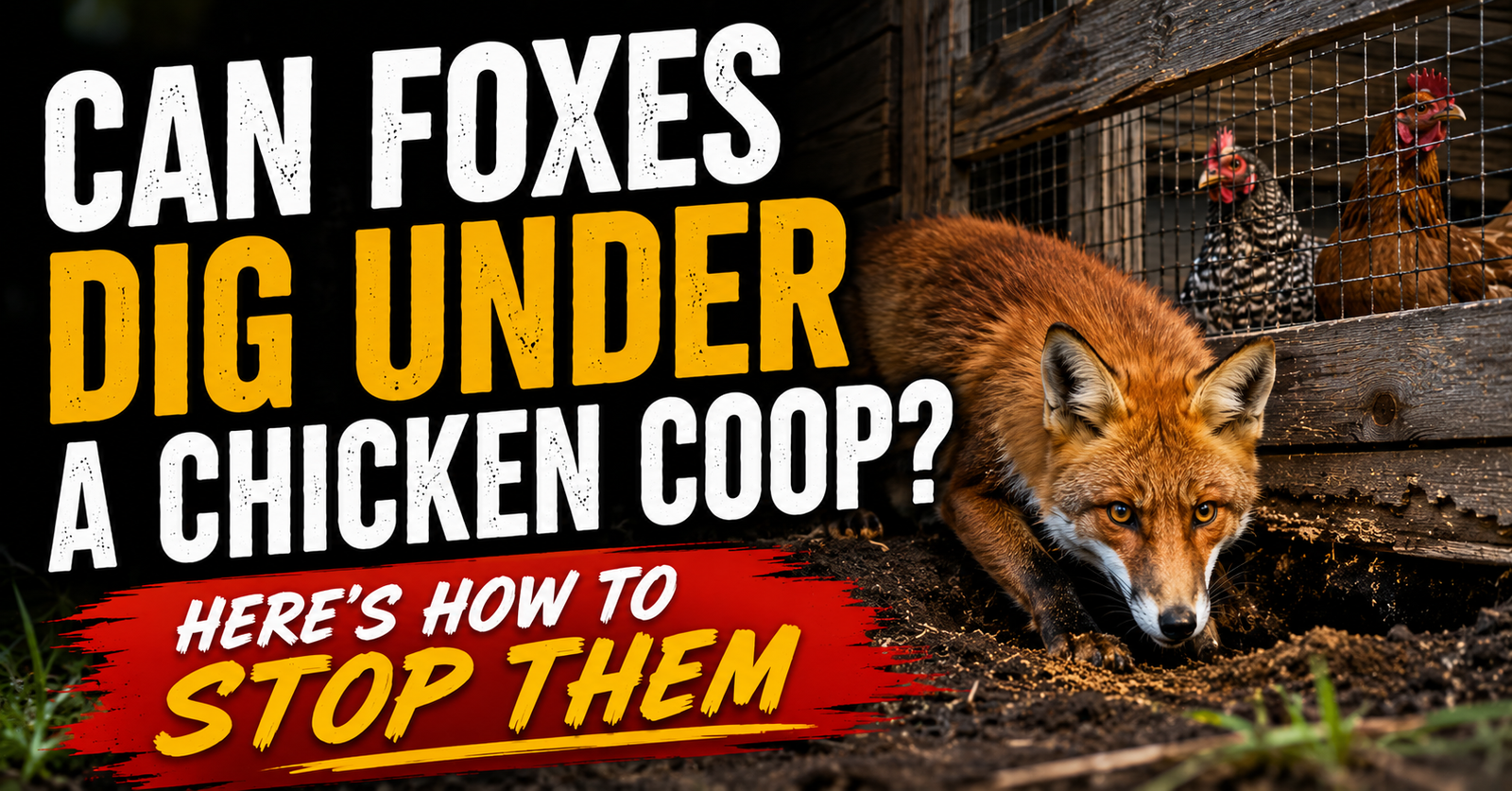
I’ve seen chickens do the same thing while fluffing their body feathers in cold weather.
They’re basically reducing how much exposed skin is sitting out in the cold at one time.
So if it’s January, the ground is frozen, and several otherwise healthy chickens are occasionally standing on one leg, that situation makes a lot more sense than one hen suddenly refusing to use a foot on a warm afternoon.
Context matters.
If cold weather is what has you worried, whether chickens actually need heat in winter is worth reading before automatically hanging a heat lamp in the coop.
Chickens handle cold better than many new owners expect when they have a dry, well-ventilated shelter and protection from harsh weather.
Puffed Feathers and One Raised Foot Often Go Together
You’ve probably seen this combination.
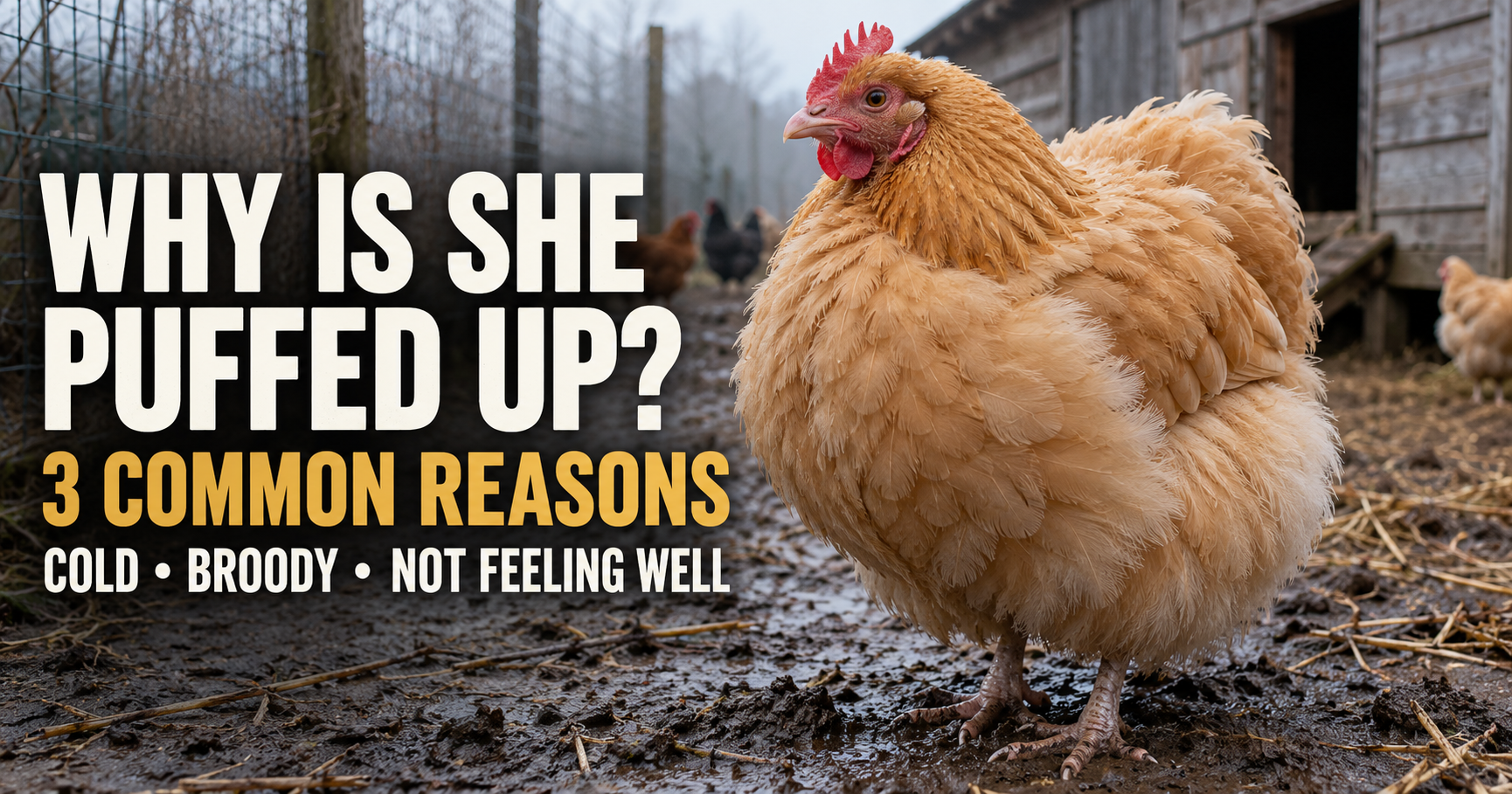
The chicken looks round.
Feathers are fluffed.
One foot is tucked up.
Head may be pulled slightly toward the body.
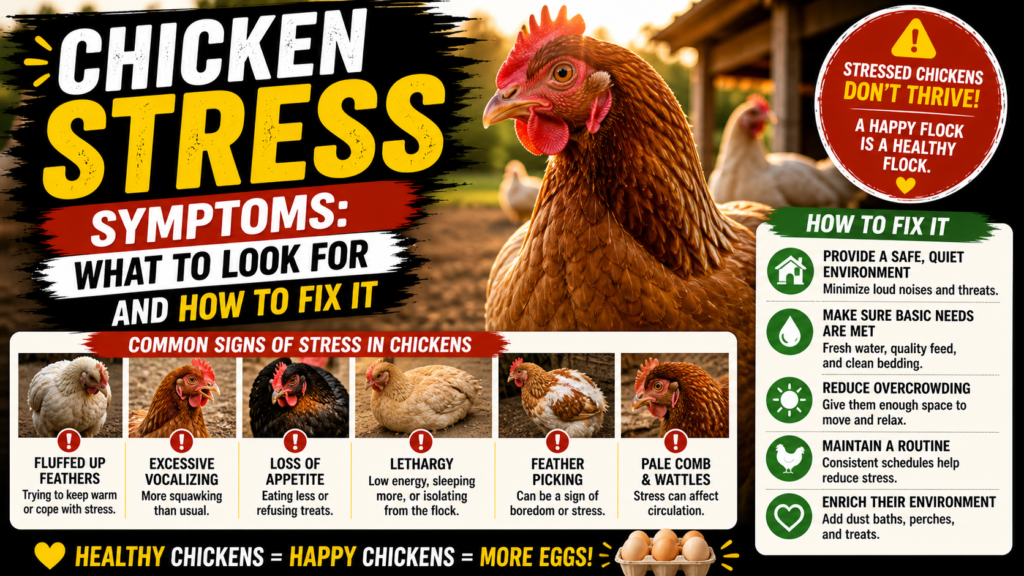
On a cold day, that’s often a chicken conserving warmth.
The feathers trap insulating air around the body while the raised foot gets tucked into that warmer feathered area.
But the exact same general appearance can worry people because sick chickens can also stand hunched and puffed up.
That’s why I never use one symptom by itself.
If feather posture is the part you’re unsure about, why chickens puff up their feathers goes into the difference between ordinary fluffing and the kind that makes me look closer.
A cold chicken that immediately runs over when food appears is very different from a bird that stays hunched, ignores the flock, and doesn’t want to eat.
Sometimes They’re Just Resting
Chickens are funny because they can look uncomfortable while apparently being perfectly comfortable.
Standing on one foot is a good example.
A hen may be hanging around in the shade, half asleep, with one foot tucked away.
Nothing is wrong.
She’s just resting.
I’ve noticed that when this is the reason, the rest of the body usually looks relaxed too.
No frantic breathing.
No obvious pain.
No repeated attempts to reposition the leg.
No trouble getting around.
She may put the foot down a few minutes later and walk off like nothing happened.
That’s what I want to see.

The Walking Test Tells Me a Lot
If I’m unsure whether the bird is resting or protecting an injured foot, I watch her move.
I don’t chase her across the yard.
Usually I just approach normally or wait until the flock moves.
Then I watch.
Does she put the raised foot down?
Does she bear weight normally?
Does she limp?
Does she take a few steps and immediately lift it again?
Does she avoid putting the foot on the ground entirely?
A chicken that stands on one leg while relaxing but walks perfectly normally afterward usually doesn’t concern me much.
A chicken that keeps the same leg raised while trying to move deserves a closer inspection.
Repeatedly Favoring the Same Leg Is Different
This is probably the biggest clue.
Normal resting behavior can involve either foot.
The chicken may tuck one.
Later she tucks the other.
No obvious preference.
An injury tends to be much more consistent.
The left foot stays up.
Every time.
When she does put it down, she limps.
Now I want to know why.
The pattern matters more than one moment.
That’s why I don’t panic the first time I notice a hen standing on one leg.
I watch her again later.


Check the Bottom of the Foot
If a chicken is consistently favoring one foot, I eventually pick her up and look.
The bottom of a chicken foot can hide problems surprisingly well if you’re only watching from above.
I look for:
- Swelling.
- Redness.
- A dark scab.
- Cuts or punctures.
- Something stuck in the foot.
- A damaged toenail.
- Unusual heat compared with the other foot.
- Swelling between the toes.
You don’t have to diagnose everything immediately.
You’re simply trying to answer:
Does this foot actually look different?
If one foot looks perfectly normal and the other is swollen with a dark sore on the pad, you’ve learned something useful.
Bumblefoot Is One Reason I Take Persistent One-Leg Standing Seriously
Bumblefoot is a bacterial infection involving the foot, often associated with damage to the footpad.
One common sign is swelling or a dark scab on the underside of the foot.
A chicken with a painful foot may avoid putting normal weight on it.
That’s why a bird repeatedly standing on one leg can be worth checking even though one-leg resting itself is completely normal.
I wouldn’t assume every raised foot is bumblefoot.
Not even close.
But if the bird also limps and the footpad looks abnormal, I’d want proper treatment advice rather than ignoring it for another month.

Toenails Can Cause More Trouble Than You’d Think
A broken or damaged toenail can make a chicken suddenly favor one foot.
Chickens scratch constantly.
They catch their feet on things.
They jump from roosts.
They walk over rough ground.
A toenail injury may not look dramatic from several feet away.
But the bird knows it hurts.
If I see a sudden limp after a chicken was perfectly normal earlier, I check each toe and nail carefully.
Sometimes the explanation is much smaller than you’d expect.
Look Between the Toes
This is another place that’s easy to overlook.
Mud.
String.
Plant material.
Hair.
Small injuries.
Swelling.
All can hide between toes or around the foot.
Long pieces of string or hair can become particularly dangerous if they wrap tightly around a toe or foot.
That’s why I like physically inspecting a bird that’s repeatedly favoring one leg instead of assuming I can see everything while she’s walking.


Leg Mites Can Make the Legs Uncomfortable Too
Your chicken’s leg scales should normally lie relatively smooth.
Scaly leg mites can cause the scales to become raised and crusty as the problem worsens.
A badly irritated leg or foot can obviously affect how comfortable a bird is standing.
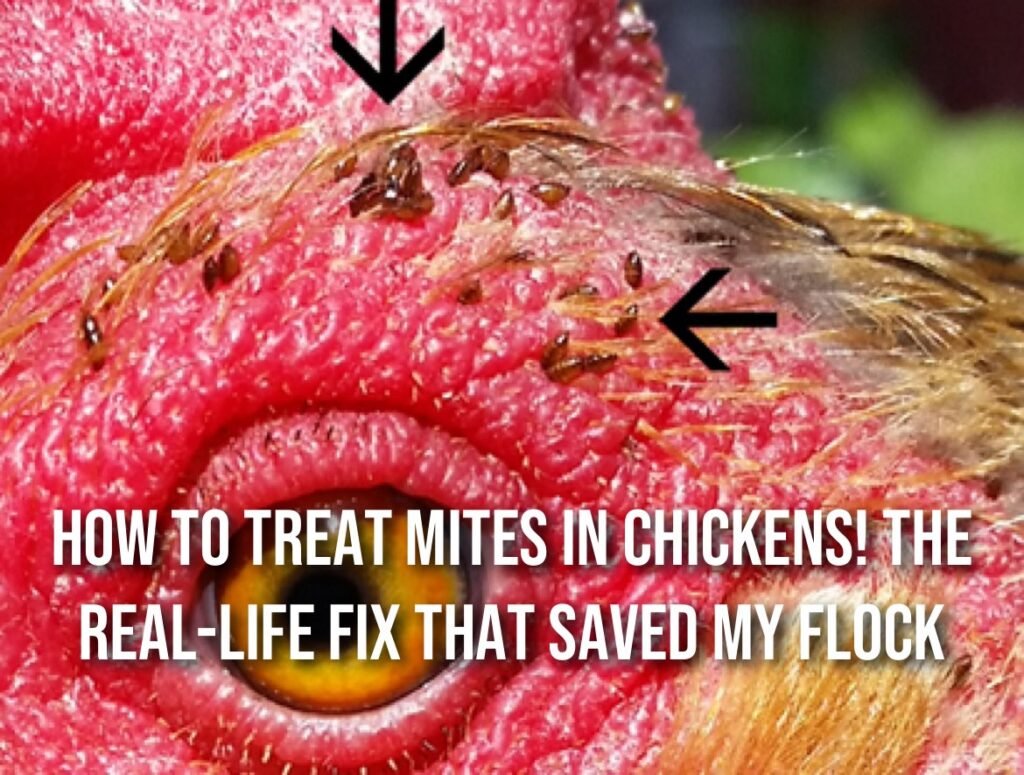
You already have several parasite resources on Backyard Chicken Pro, including how we’ve dealt with mites in chickens.
Just remember that not every mite problem is identical.
Mites affecting the body and scaly leg mites involve different areas, so inspect what you’re actually seeing before throwing random products at the flock.
Check the Roost Height
Sometimes the problem isn’t disease.
It’s the setup.
A heavy hen jumping repeatedly from a very high roost onto a hard floor can put a lot of force on her feet and legs.
Lighter breeds often handle higher jumps better.
Big, heavy chickens may not.
That’s one reason I’m not a fan of designing every coop around one universal measurement.
Watch how your chickens actually use it.
Are they flying gracefully down?
Or are they basically falling with style?
If several birds develop foot problems, I’d look at the environment rather than treating each chicken like an isolated case.
The Landing Surface Matters Too
A chicken jumping onto soft bedding is different from a chicken jumping onto hard concrete.
Good bedding helps.
So does sensible roost placement.
If a bird has to launch herself from an awkward angle every morning, that repeated stress can eventually matter.
This is where coop design and chicken health overlap more than people realize.
A lot of problems that appear to belong to the chicken actually begin with the environment.
Heavy Breeds Deserve Extra Attention
Big chickens carry more weight on the same two feet.
Brahmas.
Orpingtons.
Other heavier breeds.
They may be less athletic than lighter chickens and can land harder when jumping.
That doesn’t mean heavy breeds are constantly injured.
It simply means I pay closer attention to roost height and landing areas when keeping larger birds.
A setup that works beautifully for a lightweight Leghorn may not be ideal for a huge hen.
Does Standing on One Leg Mean the Chicken Is Cold?
It can.
Especially when several birds are doing it and the temperature is low.
But I wouldn’t use one raised foot as a thermometer.
If I’m trying to figure out whether chickens are genuinely uncomfortable in the cold, I look at the whole flock.
Are they staying inside all day?
Huddling constantly?
Avoiding frozen ground?
Fluffing heavily?
Switching feet repeatedly?
Are the combs showing frostbite risk?
One chicken casually tucking a foot for five minutes doesn’t tell me much by itself.
Frostbite Makes Me Pay Closer Attention to Feet
Extreme cold can create real foot problems.
Chickens walking through snow, wet conditions, or very cold surfaces for long periods can be at greater risk, especially when the coop stays damp.
That’s one reason dry housing matters so much in winter.
Moisture combined with cold creates more problems than cold alone.
If the chicken is lifting a foot during severe weather and the toes themselves look discolored, swollen, or damaged, I wouldn’t treat that as ordinary resting behavior.
What If My Chicken Stands on One Leg in Summer?
Then warmth probably isn’t the explanation.
But comfort still could be.
Chickens don’t only stand on one foot when they’re cold.
A relaxed bird can simply rest that way.
Again, watch her walk.
If she uses both feet normally once she moves, I usually let it go.
If she limps in July exactly the same way she was standing, then I’m inspecting the foot.
Chickens Can Hide Pain Surprisingly Well
This is one reason I like watching behavior instead of waiting for something dramatic.
Chickens are prey animals.
Showing obvious weakness isn’t exactly an advantage in nature.
Sometimes the first clue that something hurts is subtle.
A foot gets lifted more often.
The bird doesn’t scratch as enthusiastically.
She spends more time sitting.
She hesitates before jumping onto the roost.
No huge emergency.
Just small changes.
Learning those normal routines makes it easier to catch problems earlier.
A Chicken Standing on One Leg but Eating Normally Is Reassuring
Food isn’t a perfect health test, but it’s one clue I like.
If the hen is standing on one foot, then sees treats and immediately puts both feet down and races across the yard, I’m feeling pretty good about the situation.
She was probably comfortable.
If she wants the treat but hops over on one leg because she refuses to use the other foot, that’s different.
Same original behavior.
Completely different result.
Hopping Is More Concerning Than Resting on One Leg
This distinction is important.
Standing on one leg while stationary can be normal.
Moving around on one leg usually means I need to investigate.
A chicken shouldn’t normally need to hop through the yard to avoid putting one foot down.
Possible causes include:
Foot injury.
Toe injury.
Bumblefoot.
Leg injury.
Joint problems.
Something stuck in the foot.
Other health issues affecting mobility.
That’s where I’d stop treating this as a quirky behavior article and start treating it as a health concern.
Don’t Forget to Watch the Hip and Leg Above the Foot
Sometimes the foot itself looks perfect.
No scab.
No swelling.
No broken nail.
Yet the chicken still limps.
The problem may be higher.
An injured leg.
Sprain.
Joint issue.
Hip problem.
That’s another reason I don’t automatically try to treat the foot just because the bird is standing on one leg.
You have to look at the whole limb.
Why Does My Chicken Stand on One Leg and Close Her Eyes?
If she’s relaxed and otherwise healthy, she may simply be resting.
I’ve seen chickens get comfortable enough to stand there half asleep with a foot tucked.
That doesn’t bother me by itself.
What changes my interpretation is the rest of the posture.
Relaxed bird, normal activity before and after?
Probably resting.
Puffed-up bird standing alone with eyes closed all afternoon and no interest in food?
Different story.
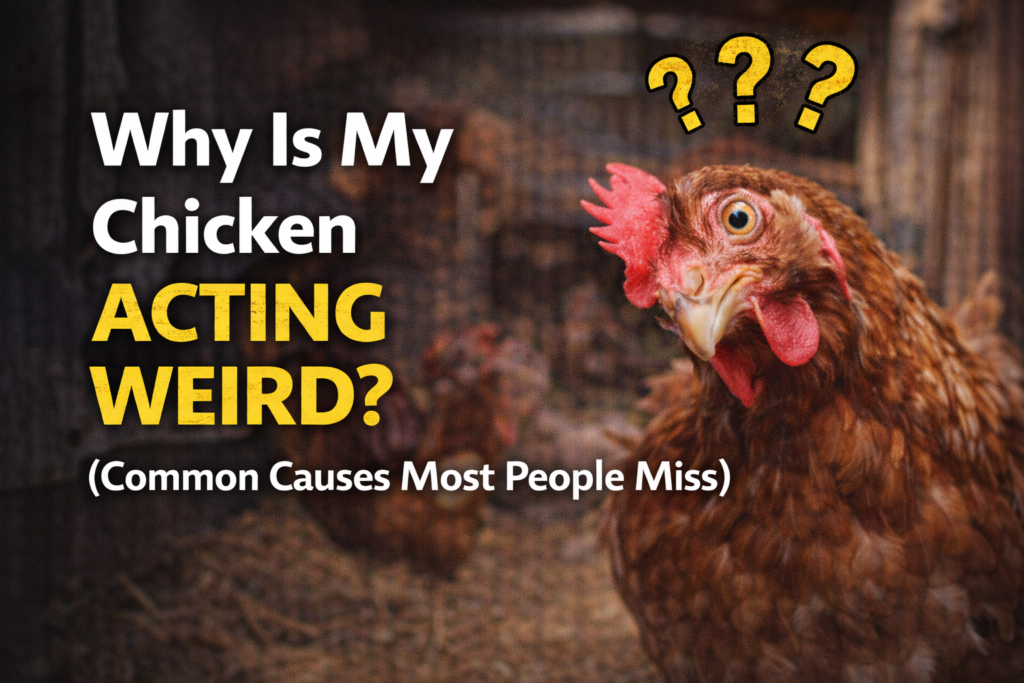
If several behaviors suddenly seem strange at once, why a chicken may start acting weird is a better place to start looking at the whole bird rather than one foot.
Why Does My Chicken Stand on One Leg While Purring?
Now we’re stacking normal behaviors together.
A relaxed chicken may tuck one foot and make quiet little sounds while settling down.
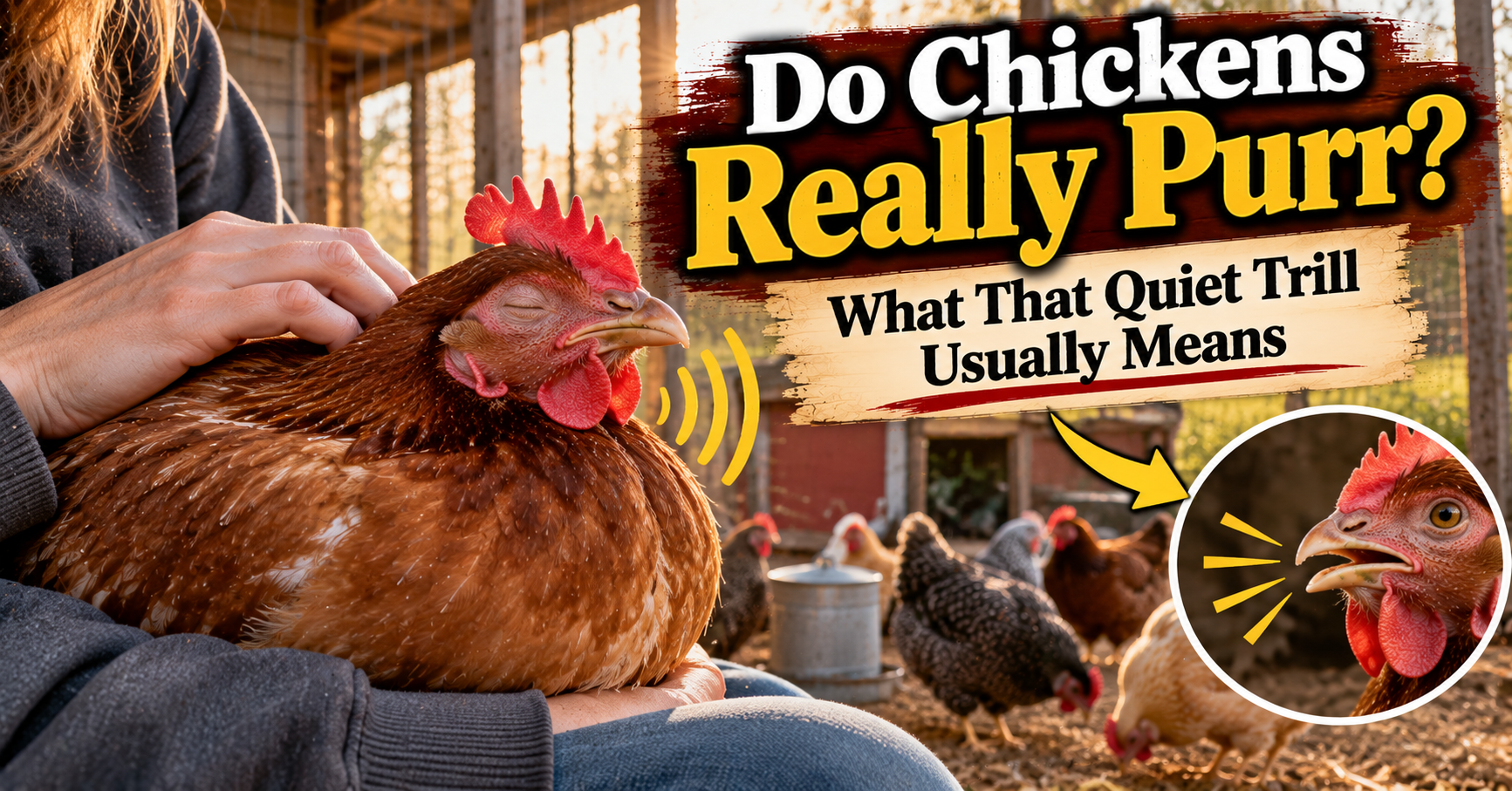
We just covered what chicken purring and low trilling can actually mean because context matters with those sounds too.
If the chicken looks comfortable, breathes normally, uses both legs when she moves, and behaves normally afterward, I don’t assume the combination is a problem.
Chickens are capable of looking incredibly strange while simply relaxing.
What About Standing on One Leg While Sunbathing?
Same thing.
A relaxed hen may shift into all kinds of ridiculous positions.
One leg tucked.
One leg stretched.
Wing open.
Body sideways.
Eyes closed.
From across the yard, it can look terrible.
But if she gets up and walks away normally, the position itself doesn’t worry me much.
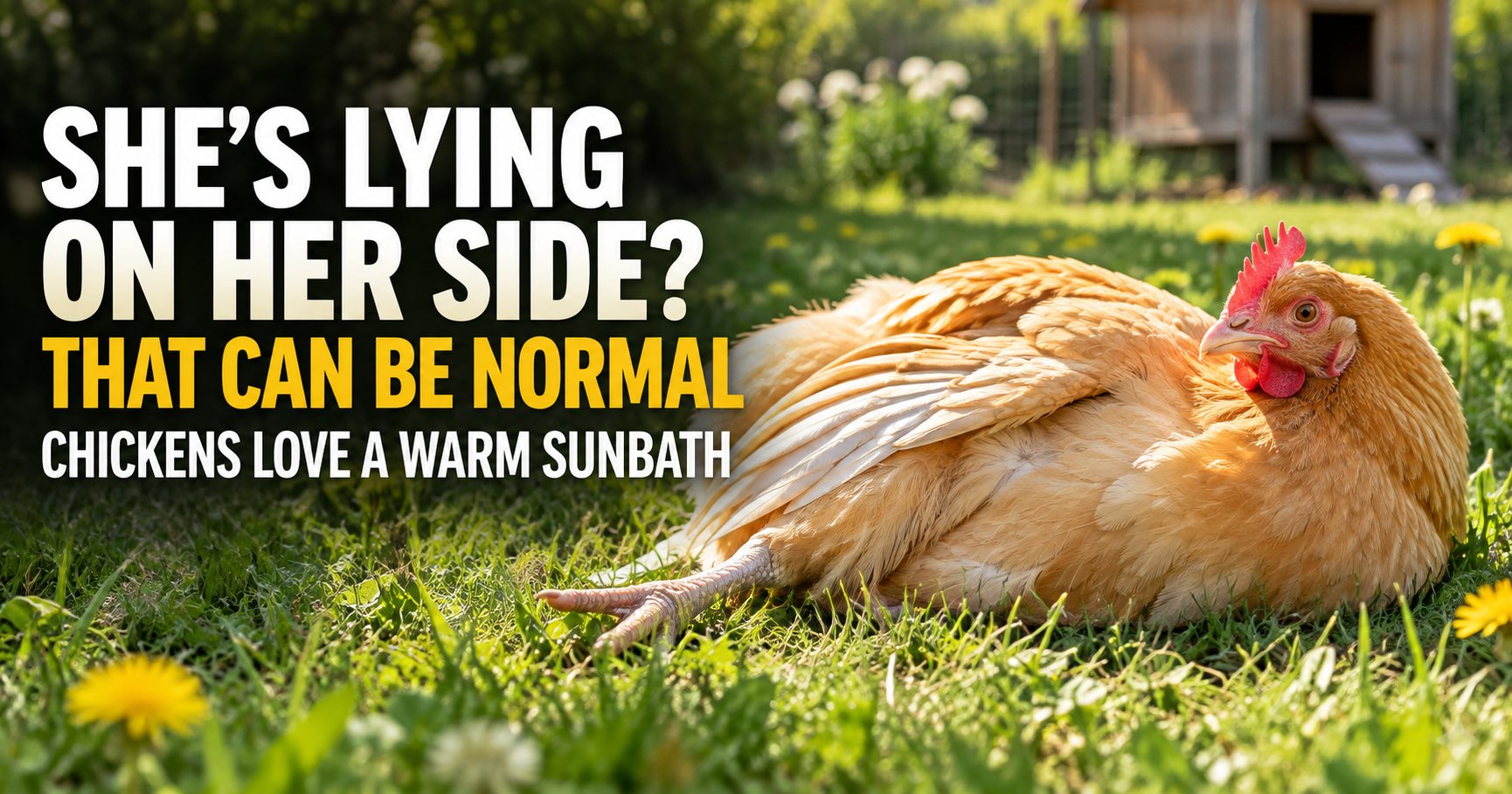
Our article on why chickens sunbathe and lie on their side covers some of those other strange resting positions.
The pattern throughout all of these articles is the same.
Watch what happens next.
Standing on One Leg Can Be a Useful Early Warning
This is why I don’t want to dismiss the behavior completely.
Most of the time, it’s harmless.
But because chickens naturally stand on one leg, it can be easy to overlook the bird that’s actually protecting an injury.
I’ve learned to pay attention to repetition.
Same hen.
Same leg.
Day after day.
That’s worth checking.
You don’t need to panic.
You simply investigate before a small problem has time to become a bigger one.
How I Check a Chicken’s Foot Without Turning It Into a Rodeo
Some hens are easy to pick up.
Others act like you’ve declared war.
I prefer checking birds when they’re calm.
Evening can sometimes be easier because chickens are naturally quieter once they’ve settled onto the roost.
I support the body securely, keep the wings controlled, and inspect the feet without letting the bird dangle.

For birds that are especially difficult to handle, the chicken holder bag we’ve used for easier handling and nail trimming can make close inspections much easier.
The goal isn’t to scare the chicken.
It’s to get a good look.
Compare Both Feet
This little trick helps a lot.
Don’t just inspect the foot you think is bad.
Look at both.
Is one warmer?
One more swollen?
One darker?
Are the scales different?
Does one footpad have a scab while the other looks clean?
Comparing the two gives you a built-in reference.
Sometimes something that looked strange at first turns out to be completely normal for that chicken.
Other times the difference becomes obvious the moment you compare sides.
When I Would Get More Concerned
I would take the behavior more seriously if the chicken:
- Refuses to put the foot down.
- Hops instead of walking.
- Has obvious swelling.
- Has a dark footpad scab.
- Has bleeding or a damaged nail.
- Has raised or crusty leg scales.
- Stops eating.
- Separates herself from the flock.
- Can’t get onto the roost.
- Becomes weak or unable to stand.
Those aren’t just “my chicken likes standing on one foot.”
They’re telling me something else is happening.
What I Wouldn’t Do
I wouldn’t medicate a chicken simply because she stood on one leg for ten minutes.
I wouldn’t start treating for mites without seeing evidence.
I wouldn’t cut into a foot because somebody online said every dark spot is bumblefoot.
And I wouldn’t assume the bird needs heat just because she tucked a foot.
Chicken keeping gets much easier when you resist the urge to treat every normal behavior like a disease.
Observe first.
Inspect if needed.
Then make decisions based on what you actually find.
This Is Another Reason Daily Observation Matters
I know this sounds simple, but spending a few minutes watching the flock every day is one of the most useful things you can do.
You’ll learn:
Which hen always stands on one foot while resting.
Which bird runs everywhere.
Which chicken hates being handled.
Which one sleeps on the highest roost.
Which bird is always first to the feeder.
Then when something changes, you notice.
That’s far more useful than comparing every chicken to a generic description online.
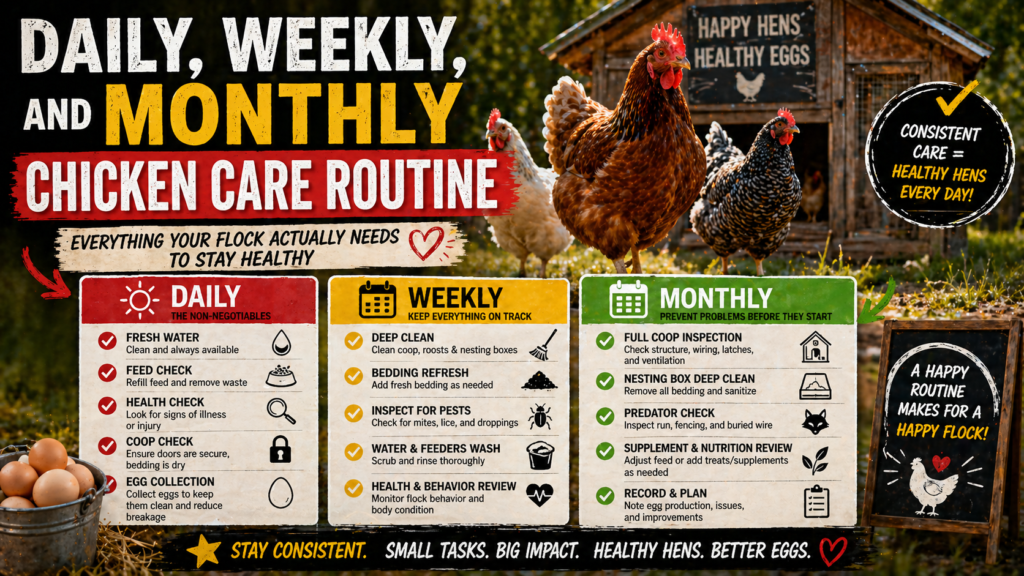
Our daily, weekly, and monthly chicken care routine is built around that same idea.
A lot of chicken health care is simply noticing problems early.
The Normal Version Becomes Easy to Recognize
After you’ve seen enough healthy chickens tuck one foot up, you stop thinking every one-legged chicken is injured.
You recognize the relaxed posture.
The tucked foot.
The normal body language.
And most importantly, you watch the bird put the foot down and walk perfectly normally afterward.
That’s the part I care about.
Not:
Is she standing on one leg?
But:
Can she use both legs normally when she wants to?
That one question clears up most of the mystery.
Frequently Asked Questions
Why is my chicken standing on one leg?
Most often she’s resting a foot or reducing heat loss during cold weather. If she walks normally afterward and uses both feet comfortably, the behavior is usually nothing to worry about.
Do chickens stand on one leg when they’re cold?
Yes. Chickens may tuck one foot against the body during cold conditions, especially since their feet and lower legs are less insulated than their feather-covered body.
How can I tell whether my chicken’s foot hurts?
Watch her walk. A chicken resting on one leg should normally use both feet when moving. Limping, hopping, repeatedly lifting the same foot, or refusing to bear weight deserves a closer inspection.
Does standing on one foot mean bumblefoot?
Not automatically. Bumblefoot is only one possible reason a chicken might favor a foot. Look for swelling, tenderness, or an abnormal dark scab on the footpad rather than diagnosing it from posture alone.
Why does my chicken stand on one leg and puff up?
On a cold day, both behaviors may help conserve warmth. Persistent puffing, lethargy, appetite loss, or isolation makes me look more closely for illness.
Why does my chicken keep the same foot raised all day?
That’s more concerning than briefly switching feet while resting. Inspect the foot, toes, nails, leg, and joints, and watch how the bird walks.
Why does my chicken stand on one leg with her eyes closed?
She may simply be resting. If she wakes normally, uses both legs, eats, and rejoins the flock, that is reassuring. Persistent lethargy or inability to walk normally is different.
Should I pick up a chicken that keeps standing on one foot?
If the same foot stays raised repeatedly or the chicken limps, yes, I’d calmly inspect the foot and leg for swelling, wounds, damaged nails, abnormal scales, or other obvious problems.
About the Author
Megan Whitaker writes about chicken behavior and flock dynamics for Backyard Chicken Pro, focusing on the small everyday habits that often look alarming until you understand what a healthy chicken normally does. Her work combines close observation of backyard flocks with practical poultry knowledge, helping chicken keepers recognize ordinary behavior while catching changes that deserve a closer look.